English
You have probably been clicking through supplier listings for hours, and every single page looks the same—row after row of product photos, vague pricing, and claims about "factory direct" that you cannot verify. Finding reliable party LED video wall manufacturers that actually deliver on quality, pricing, and after-sales support is not as simple as picking the lowest quote on a B2B platform. We have helped dozens of event rental companies, DJs, wedding planners, and AV integrators navigate this exact problem, and we are going to walk you through the real landscape of manufacturers, what separates a trustworthy factory from a risky one, and how to match the right supplier to your specific project. Let us get into it.
Before we start comparing factories, let us make sure we are on the same page about what actually matters when you are buying party LED video walls. The pixel pitch is where most buyers start, and for good reason—it determines how close viewers can sit before the image looks pixelated.
Here is a quick breakdown of the most common pixel pitches for party and event use:
| Pixel Pitch | Min. Viewing Distance | Best Use Case | Wholesale Price Range (per sqm) |
|---|---|---|---|
| P1.86 - P2.0 | 2 - 3 meters | VIP backdrops, close-up camera stages | $2,500 - $4,500 |
| P2.5 - P2.6 | 3 - 4 meters | Indoor weddings, corporate parties, clubs | $1,500 - $2,800 |
| P2.9 - P3.9 | 4 - 5 meters | Large indoor events, outdoor parties | $1,000 - $2,000 |
| P4.8 - P6.25 | 5 - 8 meters | Outdoor festivals, stadium parties | $600 - $1,400 |
Brightness is another spec that gets overlooked. For indoor party environments, you want 800-1,500 nits—enough to fight ambient lighting without blinding people in the front row. For outdoor events, you need 4,000+ nits to compete with sunlight. Anything above 5,000 nits for a party setting is usually overkill and wastes power.
Refresh rate matters more than most buyers realize. If you are using the wall for camera-based applications—live streaming weddings, corporate broadcasts, social media content—you need at least 3840Hz. Lower refresh rates create visible scan lines on camera footage, and no amount of post-production can fix that.
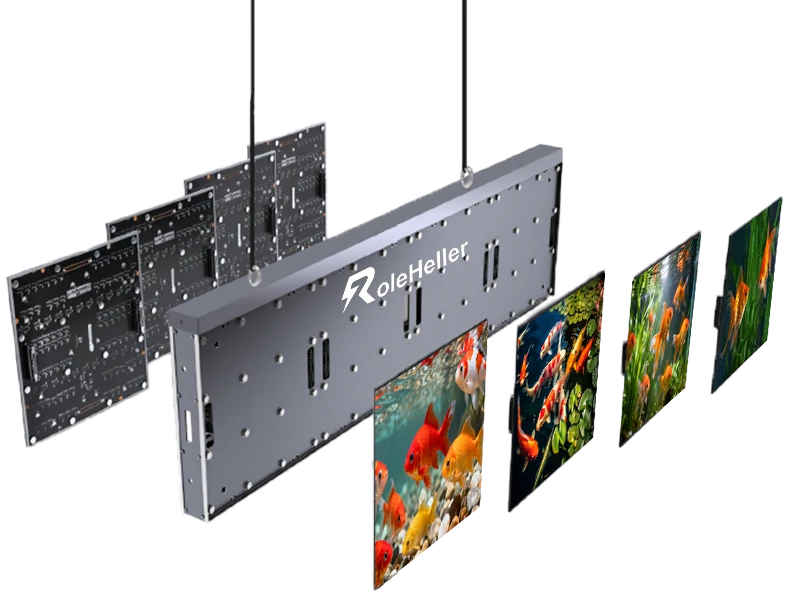
Cabinet construction is where you see the biggest quality gap between manufacturers. Die-cast aluminum cabinets are the standard for good reason—they are lightweight, dimensionally precise, and dissipate heat efficiently. Some budget manufacturers still use stamped steel cabinets, which are heavier and prone to warping over time. We always tell our clients: if the cabinet feels heavy and the edges are not razor-sharp, walk away.
This is the part you have been waiting for. We have narrowed down the field to manufacturers that have a proven track record with party and event LED walls—not companies that list "event" on their storefront but have never fulfilled an order for an actual event production.
Absen — The export champion. Absen has held the top spot for LED display exports from China for over a decade. Their AX series covers P1.5 to P3.9, and they have one of the most extensive international service networks in the industry. For buyers in North America, Europe, or the Middle East, Absen's regional warehouses and service centers mean faster spare parts delivery and local technical support. Pricing is mid-to-premium, but the total cost of ownership is competitive because of lower failure rates.
Unilumin — The innovation leader. Unilumin has made aggressive moves in fine-pitch and event-specific technology. Their Upad III series offers some of the lightest cabinets in the industry at under 7.5kg for a 500x500mm panel, which matters for event crews who need to set up and tear down fast. They are particularly strong in the corporate event and large-scale party segments. Wholesale pricing is competitive with Absen, and their MOQ is more flexible for mid-size orders.
Infiled — The value pick. If you are a rental startup or a small event company building your first inventory, Infiled offers solid party LED panels at 15-25% below the major brands. Their P2.6 and P3.9 event cabinets are workhorses—nothing fancy, but reliable for the price. The catch is their international service network is thinner, so you will rely more on remote support and ship spare parts from Shenzhen.
Gloshine — The fast-turnaround specialist. Gloshine focuses on quick delivery for standard configurations. If you need 15 sqm of P2.6 party panels and you need them in three weeks, Gloshine is often the manufacturer that can make it happen. They keep popular specs in stock, which is a huge advantage for time-sensitive event orders.
Leyard / Planar — The industry heavyweight. Leyard is the world's largest LED display manufacturer by revenue, and their Planar brand handles the North American and European markets. Their indoor product line covers everything from P0.9 to P4.0, and their color calibration consistency across large batches is among the best available. The tradeoff is pricing—they sit at the premium end, and their MOQ for custom configurations can be 20+ sqm. Best for buyers who need broadcast-grade quality and have the budget to match.
Prima — The mid-range all-rounder. Prima's RS series covers the P2.9 to P3.9 range that most party and event buyers actually need. Their panels are well-built, priced competitively, and they have been gaining traction with small-to-mid event rental companies who want reliability without the premium brand tax.
Let us talk numbers, because this is where most buyers get confused. The price you see on a B2B platform is almost never the price you will actually pay for a complete, deployed system. Here is a realistic breakdown of costs for a party LED video wall order:
Panel cost typically represents 55-65% of your total budget. For a standard P2.6 indoor party wall, expect to pay $1,500-$2,500 per square meter at wholesale quantities (30+ sqm). Smaller orders (10-20 sqm) will run 15-25% higher per square meter.
Control system and processing adds another 10-15%. A Novastar-based system with receiving cards, sending cards, and a processor runs $2,500-$6,000 depending on resolution and output channels. Brompton processors are the premium option at $6,000-$12,000 but offer superior color management for demanding camera-based applications.
Shipping and logistics account for 8-12% of total cost. Sea freight from Shenzhen to Los Angeles or Rotterdam runs $3-$5 per kg, and LED cabinets are heavy. A 20 sqm order of P2.6 panels weighs roughly 1,000-1,200 kg with packaging, so budget $3,500-$6,000 for ocean freight plus customs clearance.
Spare parts inventory should be 3-5% of your panel order value. This covers replacement modules, power supplies, receiving cards, and cables. When a panel fails during a live event at 11pm, you will be very glad you have spares on the shelf.
Here is a quick cost comparison for a 25 sqm P2.6 indoor party wall from three different manufacturer tiers:
| Cost Component | Premium Tier (Absen/Leyard) | Mid Tier (Unilumin/Prima) | Budget Tier (Infiled/Gloshine) |
|---|---|---|---|
| Panels (25 sqm) | $50,000 | $37,500 | $28,000 |
| Control System | $5,500 | $4,000 | $3,000 |
| Shipping & Customs | $5,000 | $5,000 | $5,000 |
| Spare Parts | $2,200 | $1,600 | $1,100 |
| Total Landed Cost | $62,700 | $48,100 | $37,100 |
| Cost per sqm (all-in) | $2,508 | $1,924 | $1,484 |
The gap between premium and budget is significant, but here is what that gap actually buys you: tighter color uniformity across batches (delta u'v' under 0.003 vs. 0.005-0.008), better long-term brightness retention, more reliable connectors, and faster warranty support. For a corporate event client who needs the wall to look perfect every single time, the premium tier is worth it. For a wedding rental company that replaces gear every two to three years, the budget tier makes financial sense.
This is where we see buyers lose the most money. They find a great price, place a large order, and then discover problems that could have been caught with basic due diligence. Here is a verification process we recommend for every new manufacturer relationship:
Step 1: Check their export track record. Use customs data platforms like ImportGenius or Panjiva to search the manufacturer's name. This shows you real shipment records—who they have shipped to, how often, and what volumes. A manufacturer who has been shipping regularly to your region for 3+ years is a very different risk profile from one with no export history.
Step 2: Request a live factory tour. Not a pre-recorded video, not a showroom tour—a live video call walking through the actual production line. You want to see SMT machines running, aging racks loaded with panels, and QC stations in operation. If a manufacturer resists a live tour, that is a significant red flag.
Step 3: Verify certifications independently. Do not just accept a PDF of a CE or ETL certificate—these can be faked or borrowed. Check the CE certificate on the EU's NANDO database. For ETL, verify on the Intertek directory. For ISO 9001, check the CNCA (China National Certification and Accreditation Administration) database.
Step 4: Order samples before committing to bulk. A 1-2 sqm sample order costs more per square meter, but it lets you test color accuracy, brightness uniformity, build quality, and connector fit in person. Run a 72-hour continuous burn-in test on the sample to catch any early LED failures.
Step 5: Ask for references in your market. A manufacturer who can connect you with two or three existing customers in your country who will speak openly about their experience is demonstrating real confidence in their product. If they cannot provide references, ask yourself why.
Let us talk about the pitfalls, because these are the mistakes that cost real money and real time.
Choosing based on unit price alone. We cannot stress this enough—the per-square-meter panel price is not your total cost. A manufacturer quoting $900/sqm with a 5% annual module failure rate will cost you more over three years than one quoting $1,400/sqm with a 0.5% failure rate. Always calculate the three-year total cost of ownership, including spare parts, labor for field repairs, and revenue lost to downtime.
Ignoring the control system compatibility. Some manufacturers use proprietary receiving cards that only work with their own sending cards and processors. This locks you into a single-vendor ecosystem and makes future expansion expensive. Insist on open-standard systems compatible with Novastar, Brompton, or Colorlight—these are the global standards and give you flexibility.
Not specifying viewing distance requirements. We have seen buyers order P1.86 panels for a venue where the closest viewer sits 8 meters away. That is a massive waste of money. Use the simple formula: minimum viewing distance in meters equals approximately the pixel pitch in millimeters times 2.5. For an 8-meter viewing distance, P2.6 or P3.9 is perfectly adequate.
Forgetting about power infrastructure. Party LED walls draw significant power. A 25 sqm P2.6 wall at average brightness consumes around 8-10 kW. You need dedicated electrical circuits, and in many venues, upgrading the power supply is a hidden cost that catches buyers off guard. Always confirm your venue's electrical capacity before finalizing your wall size.
Skipping the spare parts conversation. When you order 25 square meters of party panels, you should also order 1-2 square meters of spare modules plus extra receiving cards, power cables, and signal cables. When a panel dies during load-in at 3pm for a 7pm wedding, you do not have time to wait for international shipping.
This is the part that nobody warns you about until your first container arrives with crushed cabinets. LED panels are heavy, fragile, and valuable—three characteristics that make logistics a genuine challenge.
Packaging specifications matter enormously. Insist on the following for every shipment:
Individual foam-molded inserts for each cabinet
Corner protectors on every carton
Palletized loading with industrial stretch wrap
"Fragile" and "This Side Up" markings in both English and the destination language
Humidity indicator cards inside sealed cabinets for ocean freight
Shipping method selection depends on your timeline and budget:
Ocean freight (FCL): Best for orders over 15 sqm. Transit time 18-35 days depending on destination. Cost $3-5/kg. This is the default choice for wholesale orders.
Ocean freight (LCL): For smaller orders sharing a container. Cheaper per kg but higher risk of damage from other cargo. Only use if your order is under 10 sqm.
Air freight: $8-14/kg, 5-8 days. Only viable for urgent spare parts or small sample orders.
Express courier: $15-25/kg. Only for emergency single-cabinet replacements.
We always recommend FCL for wholesale orders. The per-unit shipping cost is lower, and your panels are not sharing container space with unknown cargo that could shift during transit.
Every manufacturer promises great quality before you pay. The real test is what happens eighteen months later when a batch of modules starts showing color shift and you need warranty support across an ocean.
When evaluating warranty terms, focus on these specifics:
Duration: Industry standard is 2-3 years. Anything less is a red flag.
Coverage scope: Does "warranty" exclude "normal wear" which for portable or frequently-reconfigured installations could mean almost everything? Get the exclusions list in writing.
Response time: A 48-hour dispatch guarantee means nothing if shipping takes three weeks. Ask about regional spare parts depots in your market.
Remote support quality: Can you get an English-speaking engineer on a video call within hours? This is the difference between a 4-hour repair and a 4-day downtime.
On-site commissioning: For orders over 30 sqm, some manufacturers will send a technician for first-time setup and calibration. This is extremely valuable for ensuring your wall performs as designed from day one.
Absen and Leyard both maintain regional service centers in major markets across North America, Europe, and the Middle East, which gives them a clear advantage for international buyers. Smaller manufacturers rely more on remote support and international spare parts shipping, which works but adds time to your repair cycle.
After years of helping buyers navigate this market, here is what we have learned. The cheapest manufacturer is rarely the most expensive mistake—the second cheapest is. The absolute bottom-tier factories produce panels that fail so obviously you catch the problem during inspection. It is the mid-tier manufacturers who look legitimate on paper, offer tempting prices, but cut corners on aging tests and connector quality who cause the real headaches six months down the line.
If your budget allows, start your relationship with Absen or Unilumin. You pay a 15-20% premium over the budget options, but you get consistent color matching across production batches, a reliable spare parts supply chain, and service teams that respond within hours rather than days. Once your technical team has built experience with installation and maintenance, you can confidently explore smaller manufacturers for expansion orders where the risk is more manageable and your team knows what to inspect.
One more piece of advice we give to every buyer: visit the factory in person if you can. A three-day trip to Shenzhen to walk the production floor, meet the engineering team, and test panels in their demo rooms will give you more confidence than six months of email exchanges. And if travel is not possible, at minimum insist on a live video factory tour and order physical samples before committing to any bulk purchase. The manufacturers who resist these requests are usually the ones you want to avoid.
1. What is the minimum order quantity for party LED video wall panels?
Most established manufacturers set their MOQ at 5-10 square meters for standard party and event configurations. Some offer lower MOQs of 2-3 sqm for first-time sample orders, but per-square-meter pricing increases significantly for smaller quantities. True wholesale pricing typically kicks in at 20+ sqm.
2. How long does production take for a party LED video wall order?
Standard lead time is 15-25 working days for orders under 30 sqm. Orders above 30 sqm typically require 25-35 working days. During peak season from May to August ahead of the summer event season, add 7-10 extra days to these estimates.
3. What payment terms do Chinese party LED manufacturers typically offer?
The industry standard is 30% deposit upon order confirmation with the remaining 70% due before shipment. For orders exceeding $30,000, many manufacturers accept irrevocable letters of credit. Avoid any manufacturer that demands 100% payment upfront.
4. What certifications should I require from party LED video wall manufacturers?
Essential certifications include CE marking for European markets, FCC Part 15 for North America, RoHS for environmental compliance, and ETL or UL listing for US safety standards. For outdoor-rated party panels, also verify the IP65 rating through independent test reports.
5. Can I get custom-sized party LED cabinets from manufacturers?
Most manufacturers offer standard cabinet sizes including 500x500mm, 500x1000mm, and 480x480mm. Custom sizes are possible but typically require a minimum order of 30+ sqm and add 10-15 working days to production. Standard sizes are almost always the better choice for event use because they are compatible with off-the-shelf flight cases and rigging hardware.
6. How do I handle customs clearance when importing party LED video walls?
The standard HS code for LED display panels is 8528.59. Work with a licensed customs broker experienced in electronics imports. You will need a commercial invoice, packing list, bill of lading, certificate of origin, and copies of all relevant product certifications.
7. What is the difference between die-cast aluminum and stamped steel cabinets for party LED walls?
Die-cast aluminum cabinets are lighter (typically 6-8 kg per 500x500mm cabinet), more dimensionally precise, and offer better heat dissipation. Stamped steel cabinets are heavier and less precise but cheaper to produce. For party and event applications where panels are frequently transported and assembled, die-cast aluminum is strongly recommended.
8. Do party LED video wall manufacturers provide video processor recommendations?
Most manufacturers recommend or bundle compatible control systems from Novastar, Colorlight, or Brompton. They can configure the receiving cards and provide processor settings optimized for their specific panels. Always confirm processor compatibility before placing your order to avoid ecosystem lock-in.
9. What is the typical warranty period for party LED video walls?
The industry standard is 2-3 years covering defects in materials and workmanship. Premium manufacturers like Absen and Leyard offer 3-year standard warranties with optional extensions to 5 years. Always read the exclusions carefully—some warranties do not cover damage from power surges, liquid spills, or improper handling during transport.
10. Can I expand my party LED video wall system later with additional panels?
Yes, but with an important caveat. Panels manufactured in different production batches—even from the same manufacturer—may show slight color and brightness differences that become visible when placed side by side. We strongly recommend ordering your full planned size upfront plus 5-10% extra panels for future expansion and spare parts. This ensures batch-to-batch color consistency across your entire installation.
.jpg "Top LED Video Wall Manufacturers | Best Brands Compared")