 English
If you're sourcing LED video walls for projects across South Asia, the Middle East, or even Western markets, you've probably noticed India's LED display manufacturing sector has grown way beyond just assembly over the last few years. The real reliable LED video wall manufacturers in India are split into three groups: homegrown brands with their own production lines in Mumbai, Delhi, Bengaluru, and Pune, international brands like Samsung, LG, ViewSonic that run local manufacturing facilities, and a growing number of fully automated plants that produce everything from PCBs to finished cabinets in-house. Factory-direct pricing for standard indoor P2.5-P4 panels starts at around ₹18,000-₹35,000 per square meter depending on component tier, outdoor P4-P6 panels run ₹14,000-₹38,000 per square meter, and the key differentiator between a legit manufacturer and a reseller is whether they can show you their own SMT lines and aging test rooms on a factory visit.
For the past two decades, "Made in India" LED screens mostly meant importing modules and driver ICs from Shenzhen, assembling them in local workshops, and slapping a domestic label on the finished product. But that's changed fast over the last three years. The government's Production Linked Incentive (PLI) scheme and the Electronics Component Manufacturing Scheme (ECMS) have poured over ₹400 billion into supporting local production of PCBs, subsystems, and core display components. Import tariffs on finished LED modules have been recalibrated to make local deep manufacturing economically viable instead of just a strategic choice.
Now you've got companies like LEDX Technology running India's first fully automated LED display manufacturing facility that handles everything from PCB assembly to final calibration in-house, and Crystal Matrix just got government approval for a ₹30.68 billion Micro LED production plant in Gujarat that will produce 72,000 square meters of display panels annually. Even global brands like ViewSonic launched COB LED displays with 40% lower power consumption at InfoComm India 2025, and Leyard supplied 20 custom circular LED displays for the New Mumbai International Airport project. The market isn't just growing — it's moving up the value chain.
Not all companies marketing themselves as "manufacturers" actually make anything. Here's the breakdown of what you'll run into:
| Manufacturer Type | Production Capability | Price Range (per m²) | After-Sales Support | Best For |
|---|---|---|---|---|
| Homegrown Full-Service Manufacturers | Own SMT lines, aging rooms, calibration equipment, cabinet fabrication | ₹18,000-₹65,000 | On-site support within 24-48 hours in major cities | Large-scale projects, long-term installations, export orders |
| International Brand Local Plants | Local assembly of imported core components, local quality control | ₹35,000-₹1,20,000 | Global warranty support, local service teams | Premium corporate, broadcast, high-end retail projects |
| Assembly-Only Integrators | No in-house production, sources modules from China/other Indian factories | ₹10,000-₹25,000 | Limited, depends on upstream supplier | Small-budget temporary installations, low-stakes projects |
The homegrown full-service manufacturers are the ones worth your time if you're looking for reliable quality and long-term support. Companies like Vision Display (established 1996, factory in Vasai near Mumbai, supplied 300+ LED screens for India's Smart City projects across Pune, Noida, Kolkata, Delhi), Xtreme Media (specializes in energy-efficient LED video walls and interactive displays), and Titan Intech's UltraLED Displays brand (co-developed with South Korean tech partner MIC, produces COB, SMD, Mini/Micro-LED panels in-house) are the ones that actually control their own production process.
This is the question that matters most. Here's what I look for when vetting a supplier:
Own SMT production lines
Surface Mount Technology machines are where LED modules get built — where the tiny LED chips, driver ICs, resistors, and capacitors get placed onto the PCB. A decent SMT line costs ₹2-5 crore. A legitimate manufacturer will have at least one or two SMT lines running, and they'll let you see them during a factory visit. If a company says "our manufacturing unit is in another city" or "we'll arrange a factory tour next month," be cautious. Real manufacturers are usually happy to show you their production floor on short notice.
In-house aging test facility
Every LED panel needs to run continuously for 48-72 hours before shipping. This catches early failures — dead pixels, color inconsistency, power supply issues — that would otherwise show up at your site. A proper aging room will have rows of panels running simultaneously under monitored conditions. If a supplier doesn't have an aging facility, they're skipping one of the most critical quality control steps in LED manufacturing.
Module-level calibration equipment
Calibration ensures that every module in your video wall has consistent brightness and color temperature. Without per-module calibration, you'll see visible color patches across the wall — especially noticeable on white or light-colored content. Budget operations skip calibration entirely or do only batch-level calibration.
Direct engineering and after-sales support
When you have a technical question — about pixel mapping for a curved installation, or refresh rate settings for camera capture, or power load calculations for your venue — you should be able to talk to an engineer, not just a sales representative. I always test this during the quoting phase by asking specific technical questions. If the responses are vague or take days to come back, that's a red flag for after-sales support too.
These are factory-direct prices for LED video wall cabinets/panels only — video processors, mounting structures, cabling, installation labor, and GST are all extra:
| Product Type | Small Quantity (1-10 m²) | Medium Orders (20-50 m²) | Large Orders (100+ m²) |
|---|---|---|---|
| Indoor Fixed P2.5 | ₹35,000-₹55,000/m² | ₹28,000-₹45,000/m² | ₹22,000-₹38,000/m² |
| Indoor Fixed P3 | ₹25,000-₹40,000/m² | ₹20,000-₹32,000/m² | ₹16,000-₹28,000/m² |
| Indoor Rental P2.6/P2.9 | ₹40,000-₹65,000/m² | ₹32,000-₹52,000/m² | ₹26,000-₹42,000/m² |
| Outdoor Fixed P4/P5 (IP65) | ₹22,000-₹38,000/m² | ₹18,000-₹30,000/m² | ₹14,000-₹25,000/m² |
| Outdoor Rental P3.91 (IP65) | ₹38,000-₹60,000/m² | ₹30,000-₹48,000/m² | ₹24,000-₹40,000/m² |
A few important notes about these prices:
GST at 18% is typically extra and should be factored into your budget
Payment terms vary — some manufacturers ask for 50% advance and 50% before delivery, others do 30/70. Negotiate based on order size and your relationship with the supplier
If someone quotes you a P3 indoor panel at ₹10,000 per m², something is seriously wrong. They're using B-grade LED chips, skipping the aging test, or using the cheapest possible power supplies
For large-scale projects (100+ m²), manufacturers often offer significant volume discounts — sometimes 20-30% below the prices listed above
I've watched these happen so many times that I feel like I should have them printed on cards.
Buying based on price alone
The cheapest LED panel is cheap for a reason. B-grade LED chips that fade within months, no per-module calibration leading to visible color inconsistency across the wall, generic power supplies that fail under India's voltage fluctuations, inflated brightness claims. When a panel fails six months into a three-year installation, the cost of that failure — replacement panels, labor, downtime, reputation damage — far exceeds whatever was saved on the initial purchase.
Ignoring power quality
India's power grid can be unpredictable. Voltage fluctuations, sudden surges, and frequent power cuts are a reality in many areas. Your LED video wall needs proper power conditioning — online UPS systems, surge protectors, and voltage stabilizers. Some buyers skip this to save money, and then wonder why their power supplies are burning out every few months. A good UPS and surge protection setup costs ₹50,000-₹1,50,000 depending on the size of your installation, but it protects an investment that could be 10-20 times that amount.
Skipping the video processor
Your LED video wall is only as good as the signal feeding it. A quality video processor from Novastar, Colorlight, or Brompton handles content scaling, color management, brightness adjustment, and input switching. Budget at least ₹50,000-₹2,00,000 for a processor depending on your resolution and input requirements. The processor is the brain of your entire system.
Not planning for heat management
Indian summers are brutal in most regions. Ambient temperatures regularly exceed 45°C in North and Central India, and indoor spaces without adequate air conditioning can get even hotter behind an LED wall. LED panels generate significant heat, and without proper ventilation or cooling, the LEDs degrade faster, color shift occurs, and component lifespan drops dramatically. For indoor installations, ensure your venue has adequate HVAC capacity to handle the additional heat load from the LED wall.
Look, the Indian LED video wall manufacturing scene has its strengths and its weaknesses, and I think it's important to be honest about both.
The strengths are real — faster turnaround times than importing from China, easier communication in the same timezone, on-site warranty support that you can actually access without waiting for international shipping, and a growing number of manufacturers who are investing in genuine production capability rather than just assembly. The weaknesses are also real — the market is fragmented, quality varies enormously between suppliers, and the barrier to entry is low enough that questionable operators can set up shop with minimal investment.
My biggest piece of advice: visit the factory. Most major manufacturing hubs are accessible enough that a site visit is practical for most buyers. Walk the production floor, see the SMT lines, check the aging room, look at the calibration equipment, and talk to the engineers. A legitimate manufacturer will welcome the visit. A reseller or a very small operation will make excuses.
Start with a small order. Buy a few panels, test them in real conditions, check the color uniformity, run them for a week, and see how they perform. Build a relationship with one good manufacturer rather than shopping around for the cheapest option every time.
Once you find a supplier you trust, the whole process becomes smooth and predictable. They know your specs, they know your quality expectations, and they'll flag potential issues before they become problems. That kind of partnership is worth more than saving a few thousand rupees per square meter from an unknown supplier.
Don't chase the absolute lowest price. The difference between a ₹20,000 per m² panel and a ₹35,000 per m² panel might seem significant when you're covering a 50 m² installation, but over five years of use, that ₹15,000 per m² difference buys you consistent color uniformity, reliable performance through brutal summers, responsive after-sales support when something goes wrong, and no emergency replacement orders with two-day turnaround costs. That peace of mind is worth every rupee.
1. How many genuine LED video wall manufacturers are there in India?
There are approximately 15-25 companies with genuine in-house manufacturing capability (own SMT lines, aging facilities, and calibration equipment) across India, concentrated in Mumbai, Delhi NCR, Bengaluru, and Pune. Another 50-80 companies market themselves as manufacturers but are primarily assembly integrators or resellers.
2. What is the typical lead time for LED video walls from Indian manufacturers?
Standard products in common pixel pitches (P2.5, P3, P4, P5) typically have a lead time of 10-20 working days from order confirmation to delivery, assuming components are in stock. Custom specifications, non-standard sizes, or very large orders (100+ m²) may take 20-35 working days.
3. Can Indian LED manufacturers export to Western markets?
Yes, many established Indian manufacturers export to the Middle East, Southeast Asia, Africa, and increasingly to Europe and North America. They hold relevant certifications including CE, RoHS, and in some cases ETL/FCC for the US market. Recent trade agreements like the India-UAE CEPA and India-EU FTA have reduced tariff barriers for Indian-made LED displays in key export markets.
4. What certifications should I look for when buying LED video walls from India?
For domestic use, BIS (Bureau of Indian Standards) certification is required for electrical safety. For export to the EU, CE marking (covering LVD, EMC, and RoHS) is mandatory. For the US market, ETL or UL listing and FCC Part 15 compliance are required. Always verify certificates on the issuing body's official website.
5. Can Indian manufacturers produce fine pitch LED walls (P1.5 and below)?
A growing number of Indian manufacturers now produce fine pitch LED panels (P1.2, P1.5) using imported LED chips and driver ICs assembled on their own SMT lines. Companies like Titan Intech's UltraLED brand produce Mini/Micro-LED panels with COB and MiP packaging technologies. For sub-P1 products, many buyers still import directly from Shenzhen, though the gap is narrowing.
6. What is the difference between COB and SMD LED technology?
SMD (Surface Mount Device) is the traditional LED packaging technology where individual red, green, and blue LED chips are mounted on a PCB. Most LED video walls in the P2.5 to P10 range use SMD technology. COB (Chip on Board) directly bonds LED chips to the PCB and encapsulates them, creating a smoother surface with better protection against physical damage and improved contrast ratios. COB is becoming more popular for fine pitch applications (P1.5 and below) but is typically 20-40% more expensive than equivalent SMD panels.
7. How do I verify the quality of LED chips used in my panels?
Ask the manufacturer for the LED chip brand and batch information on your purchase order. Reputable manufacturers will specify the LED chip brand (Nationstar, Epistar, Kinglight, etc.) and can provide batch certificates. You can also request a sample module and have it independently tested for chromaticity coordinates, luminance, and wavelength consistency.
8. What power requirements does an LED video wall need in India?
Power requirements depend on the pixel pitch, panel size, and brightness level. As a general guideline, indoor LED walls consume 150-300W per m² on average, while outdoor walls consume 300-600W per m². For a 20 m² indoor P3 wall, you'd need approximately 3-6 kW of power capacity. Always pair your LED wall with an online UPS and surge protector to handle India's voltage fluctuations.
9. Do I need a video processor for my LED video wall?
Yes, a video processor (also called a LED controller or sending card system) is essential. It handles content scaling, signal conversion, color management, brightness adjustment, and input switching. Popular brands in the Indian market include Novastar, Colorlight, and Linsn for standard applications, and Brompton for high-end broadcast and premium corporate installations.
10. Can I upgrade or expand my existing LED video wall later?
In most cases, yes — but with important caveats. Adding panels to an existing wall requires that the new panels match the existing ones in LED chip batch, color temperature, brightness, and driver IC specifications. Even panels from the same manufacturer produced six months apart can show visible differences when placed side by side. If you're planning to expand in the future, order your initial panels with this in mind — request that the manufacturer reserve matching LED chip batches for your future expansion, or order spare panels at the same time as your initial installation and store them for later use.
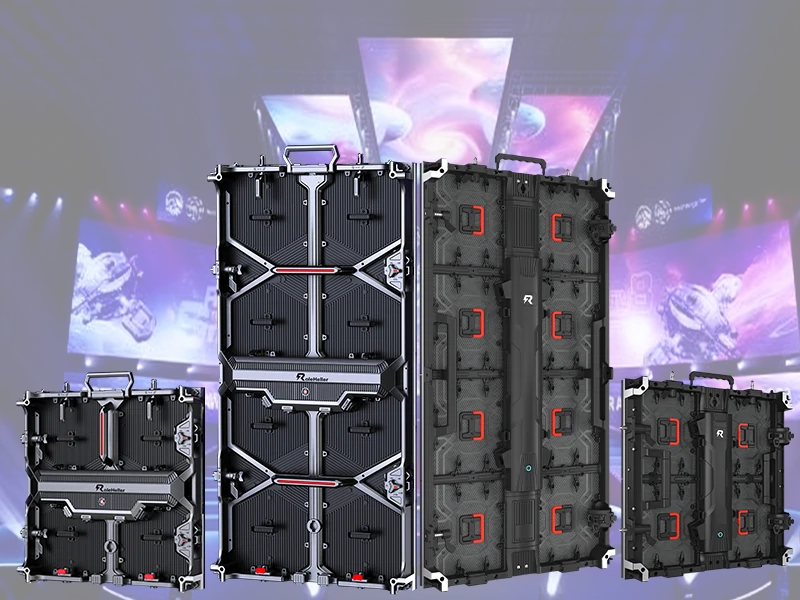
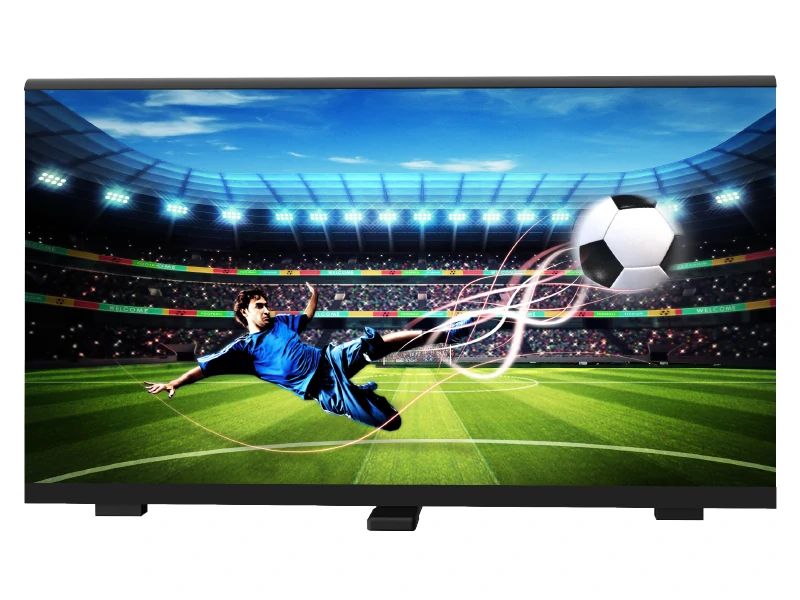
.jpg "China Indoor Stage LED Video Wall Manufacturers, Rental Panels, High Refresh")
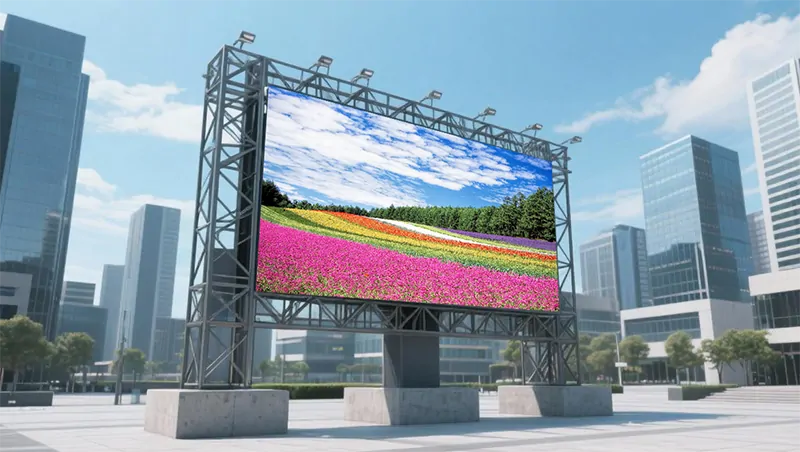
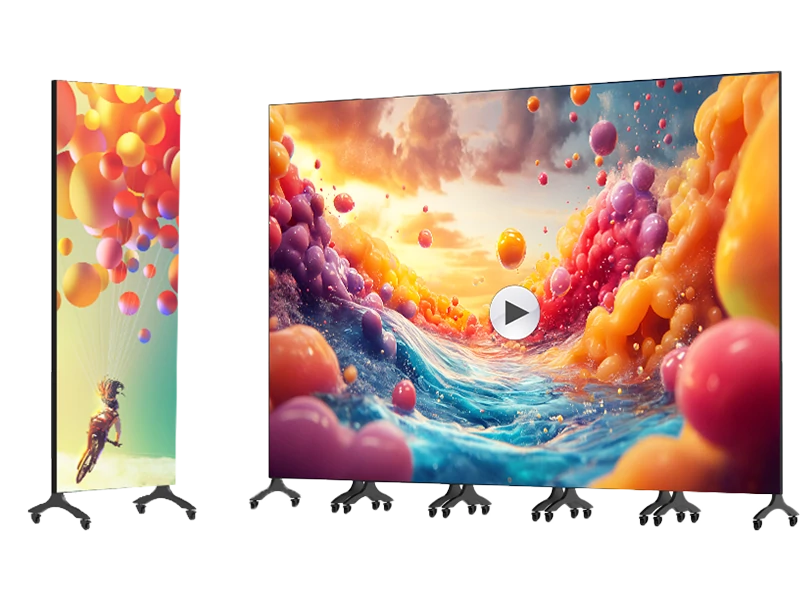
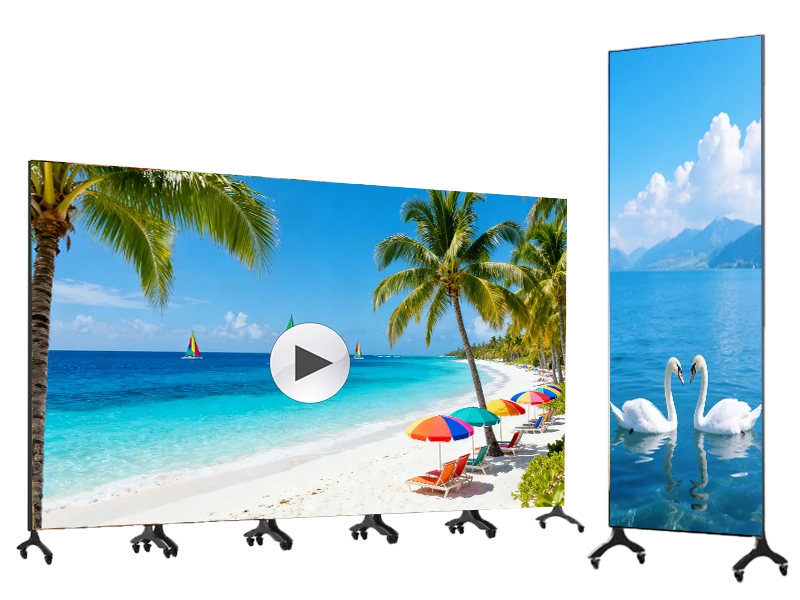
.jpg "P2.6 LED Video Wall Manufacturers | Price")