What factors affect the lifespan of an LED screen, and how can we make it last longer? The theoretical lifespan of an
LED display screen can hit 100,000 hours—that’s roughly 11 years of non-stop operation. But in reality, its lifespan is greatly influenced by things like product quality from LED display manufacturers and how you use it. With proper operation and regular maintenance, you can effectively extend its service life. Let’s break down the key points.
Key Factors That Impact LED Screen Lifespan
Luminous decay is the core indicator for measuring an LED display’s lifespan. The industry uses“L70 lifespan”—when brightness drops to 70% of its initial value—as the standard. Here are the main factors:
Chip quality and type: The chip is what determines how fast luminous decay happens. Direct-view LED screen panels have higher power, so their luminous decay is faster than backlit ones. GaN-based blue LEDs with poor heat resistance speed up decay, while AlGaInP-based red and yellow LEDs decay more slowly at high temperatures. Top-brand chips (used by reputable China LED display factories and LED screen manufacturers in China) have an L70 lifespan of 50,000 to 100,000 hours, but shoddy chips from unqualified
LED screen suppliers show obvious decay after just 10,000 to 20,000 hours.
Operating intensity: Running an LED screen at 100% full brightness makes luminous decay 2 to 3 times faster than at 50% brightness. High-power operation generates a lot of heat, and running it 24 hours straight leads to a decay rate about 3 times higher than using it 8 hours a day—this is especially noticeable forrental LED display factories’ products that are used frequently.
Usage environment and heat dissipation: For every 10°C increase in the LED junction temperature, lifespan can drop by 50%. High temperature, humidity, and dusty environments accelerate decay or corrode components—this is a big issue for outdoor LED screens. Equipping screens with good heat dissipation (a key feature of quality LED display screen factories’products) can reduce decay rates by 30% to 50%.
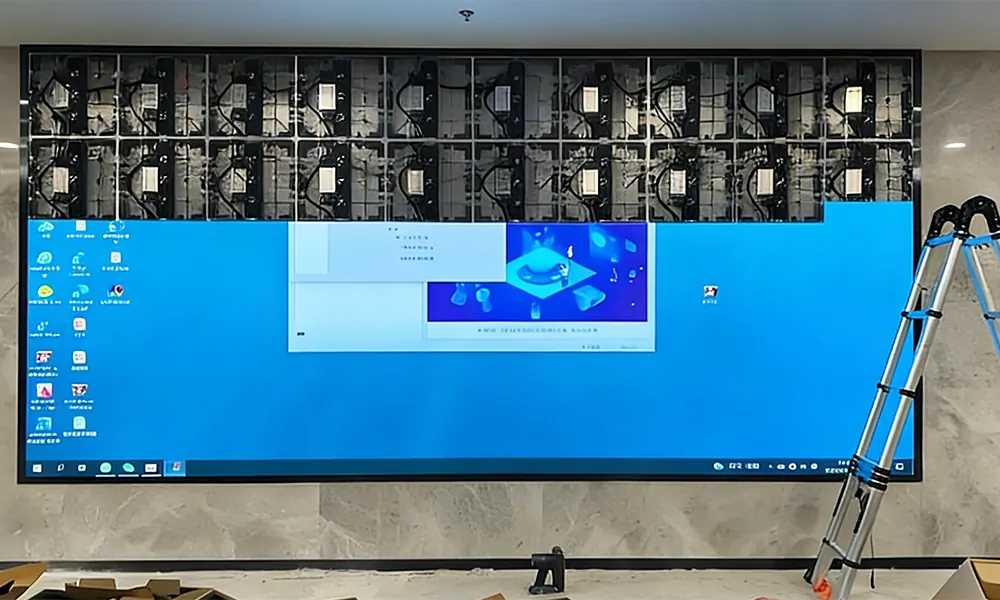
Signs Your LED Screen Is Nearing the End of Its Lifespan
If you notice these issues, your LED panel is probably close to its limit, and you should consider repairing or replacing it:
Why LED Screens Have Short Lifespans
Humidity and dust clogging heat dissipation holes raises internal temperature, speeding up component aging—this is common for LED screens used in harsh outdoor conditions.
Frequent sudden on/off cycles, shoddy power supplies, or voltage fluctuations easily burn the driver IC (causing 40% of failures). This is whyChina LED display suppliers emphasize quality power components.
Lack of moisture-proof and anti-corrosion treatment (a must for custom LED displays in coastal areas) accelerates screen corrosion.
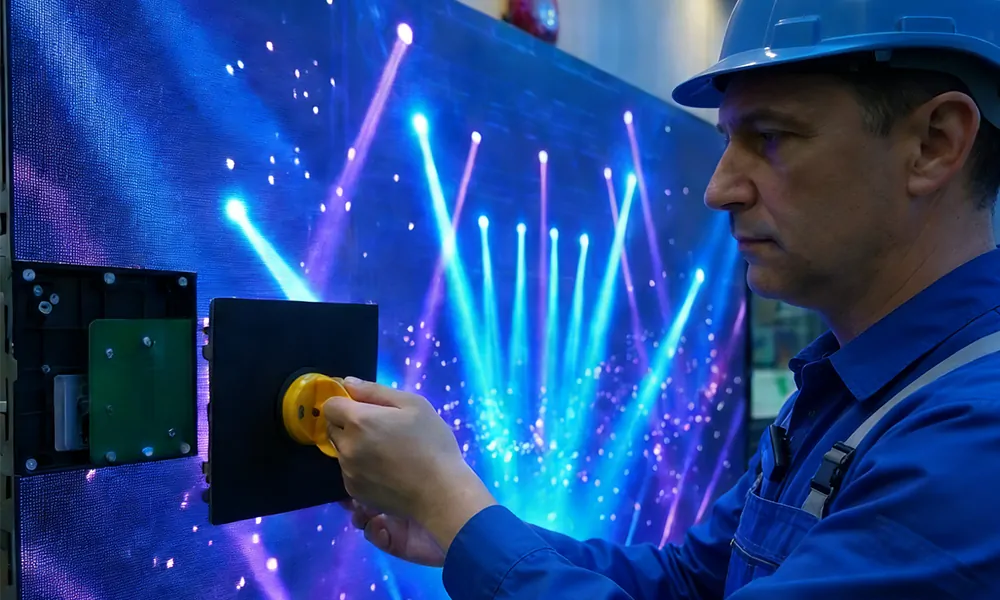
How to Extend LED Screen Lifespan Scientifically
Choose quality products and control production processes: Pick first-tier brand LED chips, ICs, and power supplies—look for LED display china manufacturers with 3C certification and a good reputation. Reputable creative LED display factories and 3D LED display factories use dust-free workshops and anti-static measures during production. Pay attention to core indicators like brightness uniformity and refresh rate when selecting from LED screen china manufacturers.
Follow standard operating procedures: Adjust brightness based on ambient light—outdoor LED screens can use auto-adjustment, dropping to 30%-50% brightness at night. Avoid showing high-brightness static images for too long. Turn on the control device first, then the screen; turn off the screen first, then the control device. Don’t cycle power more than 3 times a day, and wait at least 10 minutes between cycles—this applies to all LED screen displays.
Optimize the operating environment: Keep indoor LED walls in 20-30℃ environments. For outdoor use, choose high-temperature resistant models (offered by top LED screen china brands) and install cooling equipment. Keep humidity below 65%—if it exceeds 80% or temperature goes above 40℃/below -20℃, take protective measures or shut down. Clean dust regularly to avoid blocking vents.
Store spare screens properly: Power on spare LED screen panels for 2 hours every 3 months to prevent moisture damage. Store them in 10-30℃ environments with 30%-60% humidity—dry, ventilated, and free of corrosive gases. This is a common tip from
LED advertising displays factories for inventory management.
Do regular maintenance: Upgrade firmware to boost stability. Clean the screen with a special cleaner—avoid water stains and corrosive reagents. Check wiring every 6 months and replace aging components promptly. Use intelligent monitoring and thermal imaging to spot problems early.
In short, choosing high-quality products from reliable LED display suppliers and LED screen factories, following standard operations, and doing regular maintenance can greatly extend your LED screens’lifespan and cut operating costs.
 English
.jpg "How do you pick the right China LED digital display manufacturer?")
.jpg "How Do You Choose Indoor HD LED Display Manufacturers?")