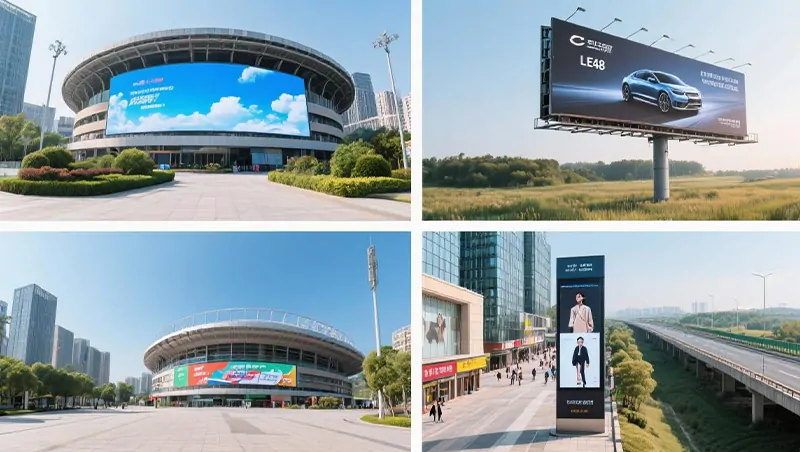
When planning an event production, whether it’s a church screen installation, a concert led screen for stage rental, or an outdoor led screen hire, ensuring reliable control signal transmission is critical. For
large led screen rental projects, especially in big led displays for major venues, signal transmission over distance is a common technical challenge.
During the design and installation phase, applications often require long-distance transmission of control signals. Typically, the control signals for the LED display screen or video wall are transmitted using network cables. However, in large venues—due to scale, layout, or the need to place equipment in a designated location—the distance between the controller and the receiving card can increase significantly.
Currently, standard network cables have a maximum reliable transmission distance of about 80m. Beyond this, signal attenuation or interference can occur, leading to issues like partial black screens, flickering, or signal loss during playback—a major concern for
screen hire for events where reliability is paramount.
Additionally, the distance between the video source (like a media player) and the controller or video processor is another challenge. Standard DVI cables max out at ~5m, and HDMI at ~30m. Exceeding these limits without proper solutions can degrade signal quality, affecting the final output on your
rental display video wall.
Therefore, solving ultra-long-distance control transmission for large LED screens involves addressing two cable-related attenuation issues: 1) network cables, and 2) video cables.
What methods are used in planning to overcome this?
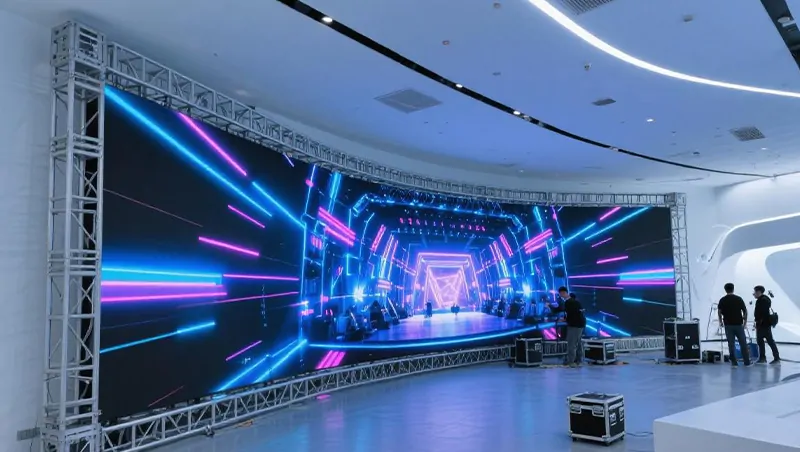
Using Fiber Optic Converters (A Key for Reliable Rentals)
A photoelectric converter (or fiber optic transceiver) is a common solution. The controller converts image data into an electrical signal, sent via network cable to the converter. This device converts the electrical signal to an optical signal, which then travels over long distances via fiber optic cable with minimal loss. At the other end, another converter changes it back to an electrical signal for the receiving card. This method is essential for stable performance in led screen hire for events, both indoor and for outdoor screen hire where conditions are harsher.
Using Fiber Optic Video Transmission for Video Signals
For long-distance video signal transmission, fiber optic video transmitters/receivers are used. For example, a DVI signal from a video processor is converted to an optical signal, sent over fiber, then reconverted to DVI at the destination before reaching the controller. This leverages fiber’s high bandwidth, immunity to interference, and long transmission range—ideal when the LED video wall is far from the source, such as in outdoor hd projector rental setups or large-scale stage productions.
Given the expanding applications and sizes of LED screen rentals—from
led video banners to massive led wall hire for stadiums—long-distance transmission is now a core part of the control system. The industry offers various fiber optic solutions. For most projects, general-purpose equipment is available and effective. However, for major events or high-stakes installations, a dedicated, integrated solution is often preferred to ensure compatibility and reduce risk.
For instance, NovaStar offers specialized fiber optic transmission devices like the CVT310/CVT320, CVT10, and CVT4K series to suit different scales. Some high-end LED sending cards (like the MCTRL4K) even integrate fiber optic ports, allowing direct optical output. Controllers like the MCTRL660 PRO also feature optoelectronic conversion modes, offering flexibility and cost savings—especially valuable for rental companies managing diverse gear like tv monitor rental, led screens for rent, and led backdrop screen rental.
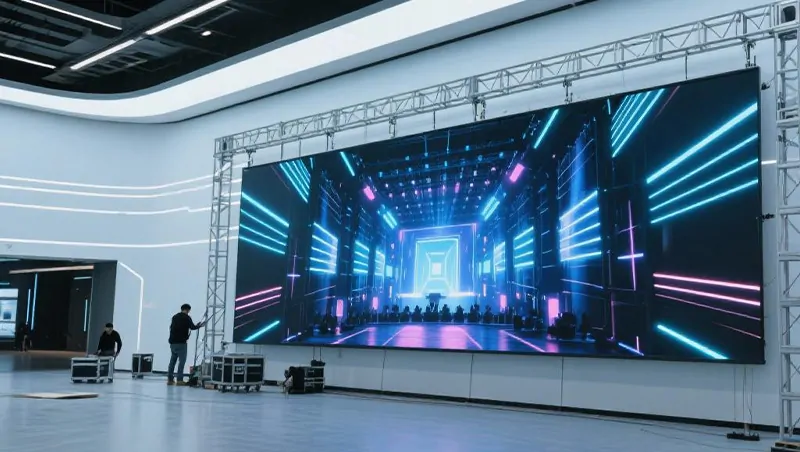
Selecting the Right Converter for the Scale
Photoelectric converters come in different configurations based on transmission rate: 1-to-1, 1-to-8, and 1-to-10. A 1-to-1 converter (e.g., CVT310) suits smaller setups with few cables over long distances. For larger projects—like a big led display requiring many outputs—using multiple 1-to-1 units can make the system complex and cumbersome. For large-scale events, higher-capacity converters like the CVT10 (1-to-10) simplify wiring by handling multiple network ports over a single fiber link.
For very large or mission-critical installations, such as a major led screen rental for a broadcast event, professional solutions like the CVT4K are used. It supports multiple fiber interfaces with backup capabilities, ensuring reliability. Other manufacturers, like Lingxingyu and Colorlight, also offer similar photoelectric conversion equipment (e.g., SC801/MC801, H2F, H16F).
Conclusion
In summary, planning long-distance signal transmission for large LED screens—whether for a church screen,
outdoor led screen hire, or a concert stage—requires fiber optic solutions to prevent signal degradation. Understanding the available technology, from basic converters to integrated systems, helps ensure a flawless show. When considering led wall rental cost or led screen hire price, investing in robust transmission infrastructure is key to avoiding costly failures. For those seeking a complete package—from television rental to a full led video wall hire—partnering with a provider that understands these technical details is crucial.
For specific inquiries like led display rental Miami, waterproof
outdoor video panel needs, or what are the costs for led posters, consulting with a professional rental company that offers comprehensive solutions—including reliable long-distance transmission—will help you achieve the ideal display result.
 English
.jpg "Where to Find Wholesale P2 LED Video Wall Manufacturers That Actually Deliver?")