English
If you've been searching for reliable indoor LED video wall manufacturers, here's the short answer: the best choice depends on your pixel pitch needs, budget range, and whether you prioritize cutting-edge COB technology or proven SMD reliability. The global market is dominated by a mix of established players — Leyard/Planar, Unilumin, Samsung, Barco, Absen, and Daktronics — each carving out distinct niches from control rooms to retail environments. I'll walk you through everything you need to know so you can make a confident decision without getting buried in spec sheets.
Let me be real with you — buying an LED video wall isn't like picking out a new TV. We're talking about a significant capital investment that'll define how your space communicates for the next decade. I've seen projects where companies rushed into purchasing without understanding the landscape, and trust me, those mistakes are expensive.
The indoor LED video wall market has been growing steadily, with the global market valued at over $6 billion and projected to expand at a CAGR of around 8% through 2035. What this means for you is simple: more options, more competition, and unfortunately, more noise. That's exactly why understanding who the key indoor LED video wall manufacturers are — and what actually differentiates them — becomes your most valuable tool.
I've spent considerable time analyzing the competitive landscape, and here's what the data tells us. The market is essentially split into tiers based on technology leadership, global reach, and application specialization.
| Manufacturer | HQ | Key Strength | Notable Products |
|---|---|---|---|
| Leyard/Planar | China/USA | Narrow pixel pitch leader, 28% NPP market share | DirectLight Ultra, Komodo Series (0.7–1.8mm) |
| Unilumin | China | #1 by revenue in LED video walls, 160+ countries | UTV series, MIP technology |
| Samsung | South Korea | The Wall microLED ecosystem, AI calibration | The Wall IAC (1.5mm), All-in-One |
| Barco | Belgium | Mission-critical control rooms, TruePix processing | Odin series (2.6mm), UniSee |
| Absen | China | Export champion, 120+ countries | NXTGEN driver ICs, V2.5 virtual wall |
Leyard (together with its subsidiary Planar) has historically held the position of market leader in narrow pixel pitch LED video walls, with a market share nearly three times its nearest competitor. Unilumin, on the other hand, topped the revenue charts with RMB 7.41 billion in annual revenue and has maintained the #1 position in LED video wall shipments for multiple consecutive years.
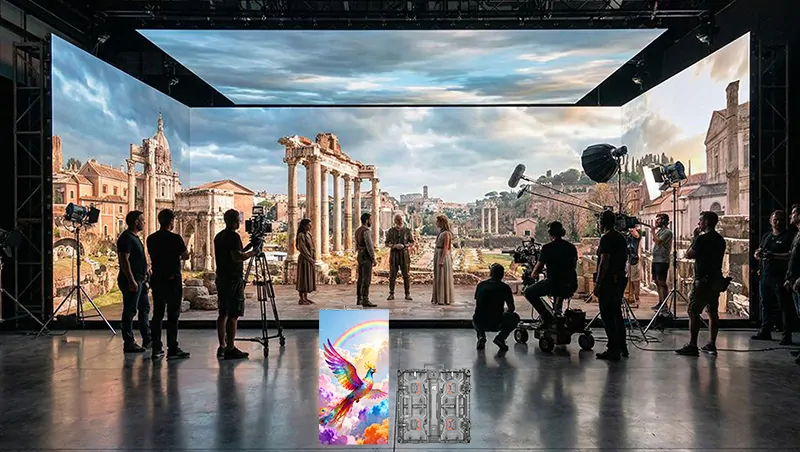
Then you've got companies like Daktronics, which dominates the sports and large-scale venue segment; ROE Visual (Germany), which has become the go-to for virtual production LED volumes; and Christie Digital, known for high-end projection and display integration.
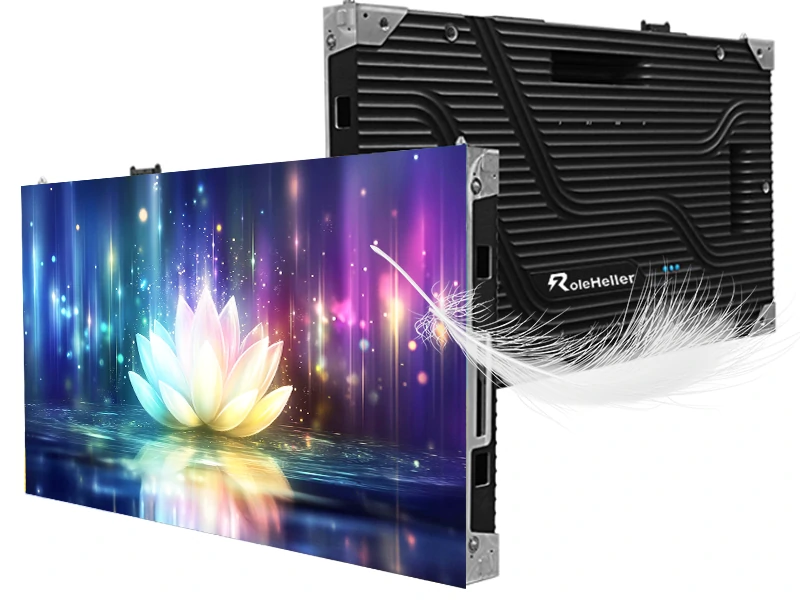
Brands like Roleheller have captured a massive market share thanks to an aggressive distribution network—particularly in the Asia-Pacific region. They are veritable "sales giants," boasting over 32,000 service outlets and product lines that span virtually every price point.
Here's where a lot of buyers get tripped up. You'll hear manufacturers throw around terms like "COB" and "SMD" as if one is universally better. It's not that simple.
SMD (Surface Mounted Device) technology is the traditional approach — individual LED lamp beads are soldered onto a PCB board. It's mature, cost-effective, and field-repairable (you can swap individual beads). However, the exposed lamp beads are vulnerable to moisture, dust, and physical impact.
COB (Chip on Board) technology bonds bare LED chips directly to the PCB and seals everything under a protective layer. The result? A smooth, flat surface with superior protection (IP54–IP65), better heat dissipation, and a contrast ratio that can exceed 20,000:1 compared to SMD's typical 3,000:1–8,000:1.
| Factor | SMD | COB |
|---|---|---|
| Upfront cost | Lower (30–50% less) | Higher |
| Durability | Moderate (IP44 typical) | High (IP54–IP65) |
| Viewing comfort | Point light source, visible grain up close | Area light source, no grain |
| Repairability | Easy (swap individual beads) | Harder (module-level replacement) |
| Lifespan | ~50,000–60,000 hours | ~80,000–100,000 hours |
| Best for | Budget projects, larger pixel pitches (P2.5+) | Premium installations, P1.5 and below |
Personally, I'd recommend COB for any installation where viewers will be within 3 meters of the screen — think executive boardrooms, broadcast studios, or high-end retail. For auditoriums or large lobbies where the nearest viewer is 5+ meters away, SMD delivers perfectly acceptable results at a significantly lower price point.
This is probably the single most misunderstood specification in the entire buying process. Here's the rule of thumb that Barco and Samsung both recommend: your optimal viewing distance (in meters) divided by 2 gives you the ideal pixel pitch (in mm).
So if your closest viewer sits 4 meters from the wall, a P2.0 pitch is your sweet spot. Going smaller (say, P1.2) means you're paying a premium for resolution that the human eye literally cannot perceive at that distance.
| Application | Typical Viewing Distance | Recommended Pitch |
|---|---|---|
| Control room / monitoring | 1–3 meters | P0.9–P1.5 |
| Executive boardroom | 2–5 meters | P1.2–P1.8 |
| Corporate lobby / showroom | 3–8 meters | P1.5–P2.5 |
| Retail / shopping mall atrium | 5–15 meters | P2.5–P4.0 |
| Auditorium / house of worship | 8–30 meters | P3.0–P6.0 |
One thing I want to emphasize: don't fall into the "smaller is always better" trap. I've visited installations where someone spec'd a P0.9 screen for a retail environment with 6-meter viewing distances. The extra clarity? Completely invisible. The extra cost? Very visible on the balance sheet.
Let's talk money, because this is where expectations often collide with reality. The hardware itself is only part of the equation.
According to industry data, indoor LED video wall hardware typically ranges from $800 to $2,000+ per square meter depending on pixel pitch and technology. But here's what catches people off guard — the total installed cost usually runs 30–50% higher than the panel price alone, factoring in:
Control systems (transmitter cards, receiver cards, video processors): ~10–15% of hardware cost
Structural mounting and installation: ~10–20%
Cabling, power distribution, and cooling: ~5–10%
Content management software and calibration: variable
For a practical example, a 4K LED wall using P1.25mm pitch panels (roughly 13 square meters) might cost between $60,000–$70,000 for a mid-range solution, or $100,000–$120,000 if you go with sub-1mm pitch.
| Pixel Pitch | Approx. Hardware Cost/m² | Total System Cost (13m² 4K wall) |
|---|---|---|
| P1.8+ | $1,400–$2,800 | $25,000–$45,000 |
| P1.25 | $2,800–$5,500 | $60,000–$70,000 |
| P0.9 | $5,500–$9,700 | $100,000–$120,000 |
| P0.6–P0.8 | $9,700–$20,000+ | $150,000–$250,000+ |
One insight I've picked up: several manufacturers now offer "razor-and-blade" models where hardware is priced at lower margins with recurring service and maintenance contracts. This can actually improve your total cost of ownership over a 5–10 year period.
I cannot stress this enough — the best LED panels in the world will underperform if the installation is botched. Here are the non-negotiables:
Structural assessment. Indoor LED panels weigh 20–50 kg per square meter. Your wall needs to support that load, plus dynamic forces. Lightweight drywall? You'll need a steel frame. Always get a structural engineer involved before finalizing your mounting plan.
Ventilation and thermal management. LED panels generate heat. In enclosed spaces or recessed installations, inadequate airflow accelerates lumen depreciation and shortens component life. Plan for at least 100mm of clearance behind the wall for air circulation, and consider active cooling for installations exceeding 15 square meters.
Power planning. A typical indoor LED wall consumes 100–300W per square meter. A 20-square-meter wall could draw 2–6kW continuously. Make sure your electrical infrastructure can handle the load, and always include a dedicated circuit with surge protection.
Signal infrastructure. For 4K content, you'll need proper HDMI 2.0/2.1 or DisplayPort connections, plus a capable media processor. Don't skimp on cable quality — I've seen signal degradation issues traced back to cheap cables running longer than 10 meters.
Here's something manufacturers don't always volunteer: your LED video wall will need ongoing maintenance to perform at its best over its 10+ year expected lifespan.
Brightness calibration. LED panels naturally dim over time. Plan for professional recalibration at least annually to maintain color consistency across all modules. This is especially critical for multi-wall installations where even slight color drift becomes obvious.
Cleaning protocol. For COB panels, a soft microfiber cloth with distilled water works well. Never use alcohol-based cleaners — they can degrade the protective coating. SMD panels require extra care since the exposed beads can be dislodged by aggressive wiping.
Spare parts strategy. Keep a minimum of 2–3% spare modules on hand. Nothing kills momentum like a dead pixel cluster during a live presentation and a 3-week lead time for replacements. This is where choosing manufacturers with local warehousing or regional service centers becomes a genuine advantage.
Firmware updates. Leading manufacturers like Samsung and Barco regularly release firmware updates that improve color processing, add features, and patch security vulnerabilities. Make sure your maintenance agreement includes these updates.
After reviewing dozens of installations and analyzing market data, here's how I'd break it down:
For control rooms and mission-critical environments: Look at Barco's Odin series or Planar's DirectLight Ultra. You need 24/7 reliability, redundant power, and sub-1.5mm pitch for detailed data visualization. Budget accordingly — this is premium territory.
For corporate meeting rooms: Unilumin's UTV series or Samsung's The Wall IAC at P1.5mm offer an excellent balance of clarity and cost. If you're doing a lot of video conferencing, prioritize high refresh rates (3840Hz+) to avoid flicker on camera.
For retail and hospitality: Absen and Leyard both offer strong P2.5 solutions that deliver vibrant imagery without breaking the bank. Focus on brightness (800+ nits for well-lit spaces) and ease of content management.
For virtual production and broadcast: ROE Visual's Black Pearl series remains the industry benchmark, with Barco and Absen closing the gap. You'll need P1.5–P2.6 with high grayscale depth and camera-friendly refresh rates.
1. Who are the top indoor LED video wall manufacturers globally?
The leading manufacturers include Leyard/Planar, Unilumin, Samsung, Barco, Absen, Daktronics, and ROE Visual. Leyard holds the largest market share in narrow pixel pitch displays, while Unilumin leads in overall revenue. Samsung and Barco dominate the premium enterprise segment.
2. What pixel pitch should I choose for my indoor LED video wall?
Use the formula: ideal pixel pitch (mm) = optimal viewing distance (meters) ÷ 2. For boardrooms (2–5m viewing), P1.2–P1.8 works well. For lobbies and retail (5–10m), P2.5 is cost-effective. For control rooms (1–3m), go with P0.9–P1.5.
3. How much does an indoor LED video wall cost?
Hardware costs range from $800/m² (entry-level P2.5+) to $2,000+/m² (sub-1mm fine pitch). Total installed cost including controls, mounting, and calibration typically adds 30–50% on top of hardware pricing.
4. What's the difference between COB and SMD LED technology?
COB (Chip on Board) bonds chips directly to the PCB with a protective seal, offering better durability, higher contrast, and smoother appearance. SMD (Surface Mounted Device) uses individual lamp beads, is more affordable, and easier to repair in the field. COB is preferred for close viewing; SMD suits budget-conscious or long-distance applications.
5. How long do indoor LED video walls last?
Quality indoor LED panels are rated for 80,000–100,000 hours of operation (roughly 10–15 years at 24/7 use). COB technology typically offers longer lifespan due to better thermal management. Actual longevity depends on operating conditions, maintenance, and environmental factors.
6. Can I install an LED video wall on any wall?
Not without assessment. LED panels add 20–50 kg/m² of load. Drywall and lightweight partitions usually require steel reinforcement. Always consult a structural engineer to verify load-bearing capacity before installation.
7. What maintenance does an indoor LED video wall require?
Annual professional color and brightness calibration, regular surface cleaning with a microfiber cloth, firmware updates from the manufacturer, and keeping 2–3% spare modules on hand for quick replacements.
8. Is COB technology worth the premium over SMD?
For installations where viewers are within 3 meters, absolutely — the superior contrast, grain-free appearance, and enhanced durability justify the 30–50% cost premium. For larger spaces with 5+ meter viewing distances, SMD delivers comparable visual results at lower cost.
9. What's the best refresh rate for an indoor LED video wall?
For standard display (presentations, signage), 1920Hz is sufficient. For broadcast, virtual production, or any scenario involving camera capture, 3840Hz or higher is essential to eliminate flicker and moiré patterns on camera.
10. How do I choose between different indoor LED video wall manufacturers?
Evaluate based on: (1) pixel pitch range matching your viewing distance, (2) technology platform (COB vs. SMD), (3) local service and warranty support, (4) total cost of ownership rather than just panel price, and (5) proven track record in your specific application vertical. Request reference installations similar to your use case before committing.
.jpg "Best China 2K LED Video Wall Manufacturers?")