English
If you have been searching for outdoor LED video wall manufacturers lately, you probably already noticed something — the list of names out there is massive, and honestly, it can feel a bit overwhelming. Whether you are planning a billboard installation in Causeway Bay, a stadium scoreboard somewhere in Southeast Asia, or a rental setup for a music festival, the question always comes back to the same thing: who actually makes reliable outdoor LED displays that won't let you down after six months of rain and sun exposure?
We get it. The outdoor LED video wall market has grown enormously, with the global market expected to surpass USD 12 billion in 2026, driven by digital out-of-home advertising, smart city projects, and the post-pandemic revival of live events and sports. But growth also means noise — more brands, more marketing claims, and sometimes, more confusion than clarity. So let us cut through that noise together and look at what really matters when you are picking a manufacturer for your outdoor LED video wall project.
Before we jump into specific names and comparisons, there is something worth thinking about first. Not all outdoor LED video wall manufacturers are built the same way. Some of them focus purely on volume — churning out panels as fast as possible, competing mainly on price. Others invest heavily in R&D, weatherproofing technology, and after-sales service networks that span multiple continents. And then there are the ones sitting somewhere in between. The trick is figuring out which category matches what you actually need.
When we talk about outdoor LED video wall manufacturers, we are really talking about companies that design, produce, and often install LED display systems meant to operate in open-air environments — meaning they have to handle rain, dust, extreme heat, freezing cold, UV exposure, and sometimes even typhoon-level winds. That is a very different engineering challenge compared to indoor displays, and the manufacturers who do it well tend to share a few common traits.
So what should you look for? Let us break it down into the things that genuinely matter:
Brightness and visibility. Outdoor screens need to compete with direct sunlight. The industry benchmark for a decent outdoor LED video wall sits around 5,000 to 7,000 nits, but the top-tier manufacturers are now pushing 10,000 nits and even beyond. If your installation faces south and gets blasted by afternoon sun, you want to be at the higher end of that range.
Ingress protection ratings. You will see IP65, IP66, and sometimes IP68 thrown around. These numbers tell you how well the display is sealed against dust and water. For most outdoor advertising applications, IP65 is the minimum acceptable standard. But if you are in a coastal city like Hong Kong where salt spray and humidity are constant factors, going for IP66 or higher is a smart move.
Energy efficiency. This one matters more than people think. An outdoor LED video wall running 18 hours a day can consume a serious amount of electricity. Manufacturers like Absen have been pushing hard on this front — their A25 series, launched in early 2025, claims to consume less than 1 kWh per square meter per day, which is genuinely impressive. Lower power consumption does not just save you money on electricity bills; it also reduces heat output, which extends the lifespan of the panels.
Service network and warranty. Here is where things get interesting. You can buy the best screen in the world, but if something goes wrong and there is nobody in your region who can fix it, you are in trouble. Some manufacturers have service partners in 160+ countries. Others... not so much. Always check this before you commit.
Now, let us get into the actual manufacturers. We are going to look at the major players — the ones that keep showing up in industry reports, major project installations, and trade shows like ISE, InfoComm, and ISLE.
Unilumin Group — Based in Shenzhen, Unilumin has been one of the dominant forces in the outdoor LED display space for years. They have supplied screens for three consecutive FIFA World Cups, including the upcoming 2026 tournament across the USA, Canada, and Mexico. Their UsurfaceIII Pro outdoor series delivers up to 10,000 nits of brightness, and they have been investing heavily in what they call "LED + AI" — basically making screens smarter with environmental sensing and interactive capabilities. They also partnered with Barco for system-level integration, which matters if you are doing large-scale venue installations. Unilumin's export volume has been number one for seven consecutive years, and their product range covers everything from fixed outdoor billboards to rental screens for events.
Absen Optoelectronic — Also headquartered in Shenzhen, Absen has carved out a strong reputation particularly in the rental and sports segments. They delivered over 600 square meters of central LED funnel screens for BC Place stadium in Vancouver for the 2026 FIFA World Cup — the largest central hanging display system in Canada. Their A25 series has become something of a benchmark for energy-efficient outdoor displays, and they were the first in the industry to offer a 10-year warranty on certain product lines. Absen's service network covers 165 countries and territories, which is hard to beat. They also made waves at the World Out of Home Advertising conference in London in June 2026, where they were the only Chinese brand invited to the roundtable discussion alongside global media giants.
Leyard Optoelectronic — Beijing-based Leyard is another heavyweight. They are a pioneer in fine-pitch LED technology and have deep expertise in both broadcast and outdoor applications. Their revenue exceeded USD 1 billion in 2024, and they launched a remote monitoring SaaS platform that lets operators keep an eye on their displays from anywhere. Leyard's outdoor products are used everywhere from Madison Square Garden to major transportation hubs. They also supply the Planar brand for the North American market, which gives them additional reach.
Daktronics — If you are in North America and need an outdoor LED video wall for a stadium, highway billboard, or transportation hub, Daktronics is often the first name that comes up. Headquartered in Brookings, South Dakota, they have been a Tier-1 supplier for decades. Their DVX-3220 series, unveiled in 2025, was designed specifically for faster installation and lower power consumption while maintaining high brightness levels up to 10,000 nits. Daktronics' strength lies in their custom engineering capability — they can design modular systems for virtually any mounting configuration. Their advanced monitoring tools and proactive service model set a high bar for operational uptime.
Samsung Electronics — Samsung's approach to outdoor LED video walls is a bit different from the pure-play display manufacturers. They entered the market through their premium indoor LED products (like The Wall and the Onyx Cinema line) and have been expanding outward. Their outdoor digital signage displays are known for weatherproof durability and strong sunlight readability. Samsung's advantage is their brand recognition and the fact that many buyers already have Samsung equipment in their ecosystem. But they tend to be priced at a premium, and their outdoor LED video wall range is not as deep as some of the dedicated manufacturers.
LG Electronics — Similar story to Samsung. LG has been pushing their MAGNIT Micro LED line for high-end commercial environments and launched new outdoor LED signage solutions in 2025 targeting retail and public venues. Their XE3P outdoor line, introduced in April 2025, focuses on all-weather performance. LG's strength is in creative and shaped displays — curved screens, transparent displays, and architecturally integrated solutions. If your project calls for something visually unconventional, LG is worth a serious look.
Barco — The Belgian visualization company is a specialist rather than a volume player. They focus heavily on sports and entertainment LED applications, and their partnership with Unilumin for outdoor solutions shows how they prefer to leverage ecosystem collaborations. Barco's products are known for exceptional color accuracy and reliability, which is why they are popular in broadcast and premium venue environments.
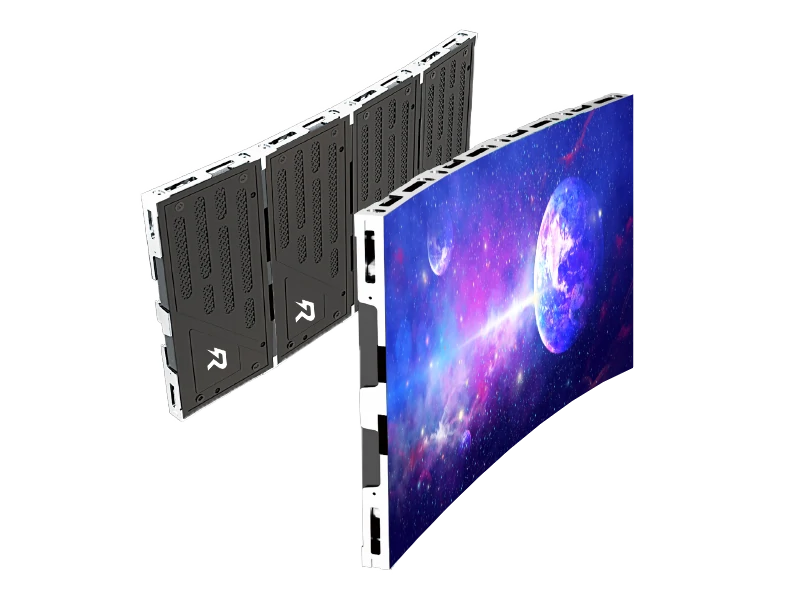
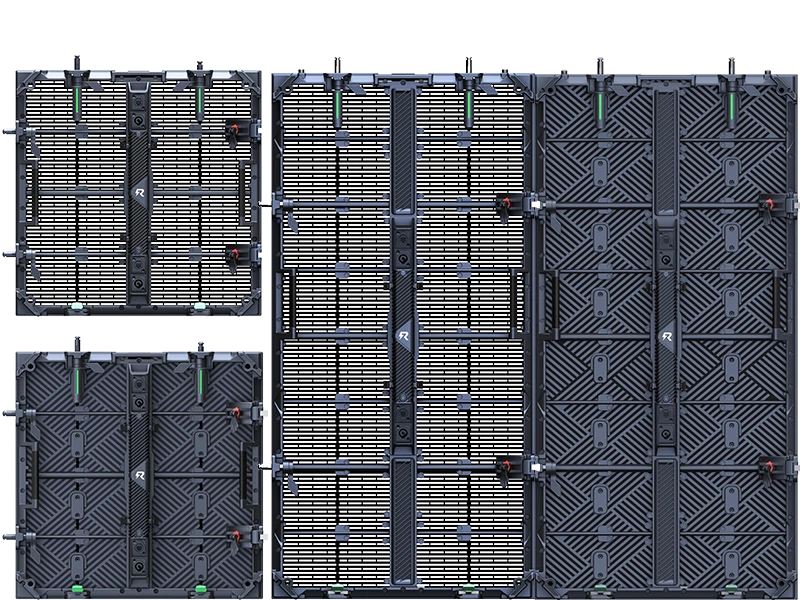
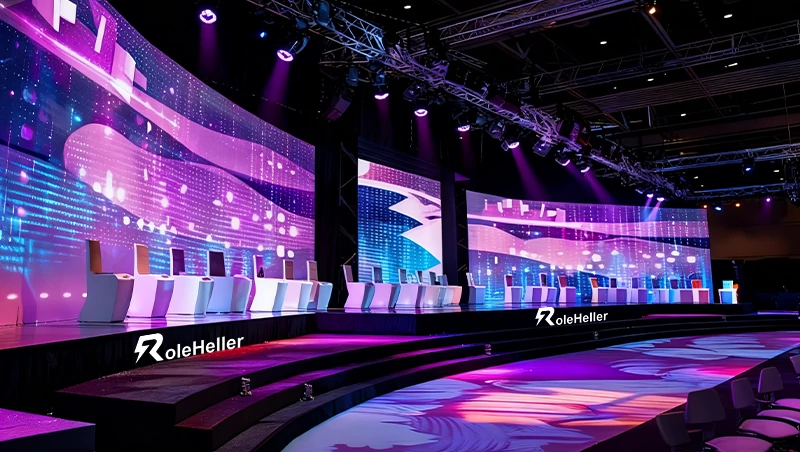
ROE Visual — Based in Shenzhen but with strong European connections (Unilumin acquired their EU integrator network), ROE Visual is renowned for premium LED displays used in large-scale events and creative architectural installations. Their products emphasize image clarity, lightweight construction, and rapid deployment. If you are doing temporary outdoor installations for concerts, fashion shows, or film production, ROE is a name you will encounter frequently.
Let us put some of these manufacturers side by side so you can see how they compare on the dimensions that matter most:
| Manufacturer | HQ Location | Max Brightness | IP Rating | Key Strength | Notable Projects |
|---|---|---|---|---|---|
| Unilumin | Shenzhen, China | 13,000 nits | IP65/IP66 | Scale & export volume | FIFA World Cup, UEFA, Paris Metro |
| Absen | Shenzhen, China | 10,000 nits | IP65/IP66 | Energy efficiency & warranty | 2026 FIFA World Cup, NBA All-Star, Paris Olympics |
| Leyard | Beijing, China | 10,000 nits | IP65+ | Fine-pitch & SaaS monitoring | Madison Square Garden, Fox Sports |
| Daktronics | South Dakota, USA | 10,000 nits | IP65+ | Custom engineering & service | NFL stadiums, US highway billboards |
| Samsung | Suwon, South Korea | Varies by model | IP56/IP65 | Brand ecosystem & premium positioning | The Wall, Onyx Cinema |
| LG | Seoul, South Korea | Varies by model | IP65 | Creative/shaped displays | Smart city projects, retail |
| Barco | Kortrijk, Belgium | Varies by model | IP65+ | Color accuracy & entertainment | Stadiums, broadcast, cinemas |
| ROE Visual | Shenzhen, China | 5,500+ nits | IP65 | Lightweight & fast deployment | Concerts, film production, events |
Now here is a question we get asked a lot — and it is probably the one you are thinking about too: how do you actually choose between these manufacturers?
The honest answer is that it depends on your specific situation, but let us share some frameworks that might help.
If you are doing a large-scale permanent installation — think a building facade, a highway billboard, or a stadium scoreboard — you want a manufacturer with strong engineering capabilities, proven weatherproofing, and a solid service presence in your region. Daktronics is hard to beat in North America for this. In Asia-Pacific, Unilumin and Absen have the deepest installation experience. In Europe, Barco and Unilumin both have strong track records.
If you are in the rental and events business — concerts, exhibitions, corporate events, film production — then weight, setup speed, and modular flexibility become critical. This is where companies like ROE Visual, Absen (their rental lines), and Unilumin's Upanel series really shine. You want panels that a small crew can assemble and disassemble quickly, that are light enough to rig on stage structures, and that maintain consistent color and brightness across multiple cabinets.
If your priority is energy efficiency and total cost of ownership — maybe you are running a 24/7 digital billboard or a transportation information display — then Absen's A25 series and the newer energy-saving technologies from companies like Liantronics deserve serious consideration. The difference in electricity costs over a 5-to-10-year deployment can be substantial, sometimes amounting to tens of thousands of dollars.
And if you need something architecturally unique — curved facades, cylindrical displays, transparent screens integrated into building designs — then LG, NanoLumens, and Liantronics are the specialists you should be talking to.
Let us address another question that comes up constantly: what about the smaller or newer manufacturers?
Look, the outdoor LED video wall market has attracted a lot of new entrants, especially from Shenzhen and the broader Pearl River Delta region. Some of them offer genuinely competitive products at lower price points. Companies like Qiangli Jucai (Strong Color) have achieved massive volume by focusing on the value segment — they have been the global sales volume champion for LED displays for three consecutive years. Their products are widely used in small-to-medium commercial signage and have a huge service network in China.
But here is the thing — when you are buying an outdoor LED video wall, you are making a long-term investment. These displays are expected to run for 5, 7, even 10 years in harsh conditions. The cheapest option upfront can become the most expensive option over time if you are dealing with frequent panel failures, color inconsistency, or a manufacturer that goes out of business before your warranty expires.
That said, there are some emerging players worth watching. Infiled, for example, has been scaling rapidly with sub-1mm outdoor pixel pitch at prices below USD 2,500 per square meter. Nanolumens in the US is commercializing flexible nano-pixel film that reduces weight by 40 percent. And YesTech is making foldable stadium screens that are winning contracts for FIFA fan zones. These are not yet at the scale of the major players, but they represent where the technology is heading.
Now, let us talk about something that does not get enough attention in these discussions — the pixel pitch question for outdoor applications.
There is a tendency to assume that smaller pixel pitch is always better. And in some cases, it is. If your outdoor LED video wall will be viewed from close range — say, pedestrians walking past a building-mounted display in a dense urban area like Mong Kok or Tsim Sha Tsui — then a finer pixel pitch (P2.5 to P4) makes a real difference in image quality.
But if your screen is going on a highway billboard where viewers are 50 to 100 meters away, a P6 to P10 pitch is perfectly adequate and will save you a significant amount of money. The key is matching the pixel pitch to the actual viewing distance of your installation. Do not over-spec and waste budget on resolution that nobody will ever notice.
TrendForce's 2025 market outlook noted that outdoor fine-pitch LED displays (P1.5 and below) are primarily being used for street furniture displays and bus shelter applications, with growing demand in the US and Europe. NBC even adopted Leyard's LUO-1.5 outdoor fine-pitch display for broadcasting the 2024 Paris Olympics. So the technology is maturing, but it is still a premium option for most applications.
Here is another area where buyers sometimes get tripped up: the control system and content management side.
The LED panels themselves are only half the equation. You also need a control system that can manage content scheduling, brightness adjustment (automatic dimming at night to comply with local regulations and save power), remote monitoring, and fault detection. Some manufacturers bundle their own control systems with their displays. Others work with third-party providers like Novastar, Colorlight, or Brompton Technology.
The reason this matters is that a great display paired with a poor control system can still give you a frustrating experience. You want seamless integration, reliable remote access, and the ability to push content updates without physically visiting the site. Manufacturers like Leyard, with their SaaS monitoring platform, and Daktronics, with their advanced monitoring tools, have invested heavily in this area. It is worth asking about during your evaluation process.
Let us also touch on regulatory and certification considerations, because these vary significantly by market.
In Europe, CE marking and compliance with EN standards are mandatory. The European green-procurement wave is also pushing buyers toward manufacturers who can demonstrate environmental credentials — things like RoHS compliance, energy efficiency certifications, and increasingly, carbon footprint labeling. Unilumin became the first LED display company to obtain a TÜV SÜD carbon label verification certificate, which gives them an edge in European public tenders.
In North America, UL listing and FCC compliance are the baseline requirements. Daktronics and Planar (a Leyard brand) have deep experience navigating these standards.
In the Middle East and Southeast Asia — markets that are seeing rapid growth in outdoor LED installations — the regulatory landscape is still developing, but buyers are increasingly specifying international certifications as a quality filter.
For buyers in Hong Kong specifically, you are in a relatively good position because most major manufacturers ship to the region regularly and have established logistics channels. The subtropical climate here — high humidity, frequent rain, occasional typhoons — does mean you should prioritize IP66 or higher ratings and make sure the manufacturer has tested their products in similar conditions.
We should probably talk about pricing, because that is always on people's minds. But giving you exact numbers is tricky — outdoor LED video wall pricing depends on so many variables: pixel pitch, brightness level, total screen size, cabinet material, control system, installation complexity, and whether you are buying outright or leasing.
That said, here are some rough ranges based on 2025-2026 market data:
Standard outdoor fixed installation (P4-P8, 5,000-7,000 nits): USD 1,500 to 3,500 per square meter for the display hardware
High-brightness premium outdoor (P3-P5, 8,000-10,000+ nits): USD 3,000 to 6,000+ per square meter
Rental outdoor LED walls (P3.9-P4.8, die-cast aluminum cabinets): USD 2,000 to 4,500 per square meter
Fine-pitch outdoor (P1.5-P2.5): USD 5,000 to 10,000+ per square meter
Chinese manufacturers like Unilumin, Absen, and Leyard generally offer the most competitive pricing in the mid-range segments. Daktronics and Samsung tend to be at the premium end. The gap has been narrowing as Chinese brands improve their quality and brand perception, but there is still a price differential, especially at the high end.
One thing worth noting — the total cost of ownership story can look very different from the upfront purchase price. A screen that costs 20% more but uses 30% less electricity and lasts 3 years longer might actually be the cheaper option over a 7-year deployment. This is why manufacturers like Absen are making such a big deal about their energy efficiency numbers.
Now let us get into something that I think is really important but rarely discussed in enough detail — the difference between buying from a manufacturer directly versus going through a distributor or system integrator.
When you buy directly from a manufacturer like Unilumin or Absen, you typically get better pricing and direct access to their technical team. But you also take on more responsibility for system design, installation support, and troubleshooting. The manufacturer will sell you the panels and maybe the control system, but the integration into your specific site — structural engineering, power supply design, content management setup — that often falls on you or a local contractor.
Going through a system integrator or authorized distributor costs more, but you get a turnkey solution. They handle the site survey, structural assessment, electrical design, installation, commissioning, and often provide ongoing maintenance. For buyers who have not done an outdoor LED video wall installation before, this can be worth the premium.
In Hong Kong and the broader Greater Bay Area, there is a healthy ecosystem of system integrators who work with multiple manufacturers. This gives you the flexibility to compare solutions from different brands while having a single point of contact for the entire project. It is worth exploring this route, especially for first-time buyers.
Let me share a personal observation here. Over the past couple of years, I have noticed a clear trend in how outdoor LED video wall manufacturers are positioning themselves. The old model — where you basically sold boxes of LED panels and hoped for the best — is dying. The winners in this market are the ones who are moving toward being solution providers rather than just hardware vendors.
What does that mean in practice? It means offering remote monitoring and predictive maintenance (catching problems before they cause visible failures). It means providing content management platforms that make it easy for non-technical operators to schedule and update content. It means designing products with serviceability in mind — front-access cabinets, modular components that can be swapped out without dismantling the entire wall. It means offering extended warranties and service-level agreements that give buyers confidence in their long-term investment.
Absen's global service inspection program, launched in 2026, is a good example of this shift. They are proactively sending teams to inspect and maintain their landmark installations around the world, rather than waiting for customers to report problems. Daktronics' monitoring tools similarly allow for proactive service. These are not just nice-to-haves — they are becoming competitive differentiators.
OK, so let us wrap up this section with some practical advice for anyone who is seriously considering an outdoor LED video wall purchase:
Define your viewing distance first, then work backward to determine the right pixel pitch. Do not let a salesperson talk you into a finer pitch than you need.
Specify your brightness requirement based on the actual orientation and environment of your installation. South-facing in a tropical city? You need 7,000+ nits minimum.
Ask about the manufacturer's service presence in your region before you sign anything. A great product with no local support is a liability.
Request references from similar installations — same climate, same application type. Talk to the actual end users, not just the manufacturer's sales team.
Calculate total cost of ownership, not just purchase price. Factor in electricity, maintenance, potential downtime, and expected lifespan.
Check the manufacturer's financial stability. The LED display industry has seen consolidation, and you do not want your warranty to become worthless because the company went under.
Consider the control system as carefully as the panels. A weak control system can undermine even the best display hardware.
If you are in a typhoon-prone area like Hong Kong, make sure the structural design accounts for wind load. This is not just about the screen itself — it is about the mounting structure, the building attachment points, and compliance with local building codes.
The outdoor LED video wall market is exciting right now. Technology is advancing fast — micro LED, MIP packaging, AI-driven content optimization, solar-integrated displays. New applications are emerging all the time, from immersive urban experiences to smart transit information systems. But with all this excitement, it is easy to get distracted by shiny new features and lose sight of the fundamentals: reliability, visibility, efficiency, and support.
The manufacturers we have discussed here — Unilumin, Absen, Leyard, Daktronics, Samsung, LG, Barco, ROE Visual, and the emerging players — each have their strengths. There is no single "best" manufacturer for every situation. The right choice depends on your specific project requirements, your budget, your location, and how much ongoing support you need.
My suggestion? Start by clearly defining what you need the screen to do, where it will live, and who will be responsible for maintaining it. Then talk to two or three manufacturers who have proven experience in that exact type of application. Ask hard questions about their service capabilities, their track record in similar climates, and their total cost of ownership projections. The answers you get will tell you a lot more than any spec sheet ever could.
Hopefully this gives you a solid foundation for your research. The outdoor LED video wall market rewards informed buyers — the more you understand about what goes into these systems, the better decisions you will make. Good luck with your project.
1. What is the typical lifespan of an outdoor LED video wall?
Most quality outdoor LED video walls from reputable manufacturers are designed to last between 50,000 and 100,000 operating hours, which translates to roughly 7 to 12 years of continuous use. Actual lifespan depends on environmental conditions, brightness settings, and maintenance practices. Running the screen at lower brightness levels when full output is not needed can significantly extend LED lifespan.
2. How much does an outdoor LED video wall cost per square meter?
Pricing varies widely based on pixel pitch, brightness, and brand. As of 2025-2026, standard outdoor installations range from approximately USD 1,500 to 3,500 per square meter for the display hardware alone. High-brightness premium models can cost USD 3,000 to 6,000+ per square meter. Installation, control systems, and structural work are additional costs.
3. What IP rating do I need for an outdoor LED video wall in Hong Kong?
Given Hong Kong's subtropical climate with high humidity, heavy rainfall, and occasional typhoons, IP66 is the recommended minimum rating. IP65 may be acceptable for semi-sheltered installations, but for fully exposed positions, IP66 or higher provides better protection against heavy rain and water jets. Some manufacturers like Fabulux offer IP68-rated outdoor aluminum screens for extreme conditions.
4. Can outdoor LED video walls be seen clearly in direct sunlight?
Yes, provided the screen has sufficient brightness. For direct sunlight conditions, you need a minimum of 5,000 nits, with 7,000 to 10,000 nits being ideal for south-facing installations in tropical and subtropical regions. Top manufacturers like Unilumin offer models reaching 13,000 nits for the most demanding environments.
5. What is the difference between SMD and COB LED technology for outdoor displays?
SMD (Surface Mounted Device) is the traditional LED packaging technology, widely used and cost-effective. COB (Chip on Board) offers better protection against impact and moisture since the LED chips are encapsulated in a single module, providing improved durability for outdoor use. COB also tends to offer better contrast and wider viewing angles. Both technologies are used in outdoor applications, with COB gaining popularity for premium installations.
6. How do I maintain an outdoor LED video wall?
Regular maintenance includes cleaning the display surface to remove dust and debris, checking cable connections, verifying cooling system function, and inspecting for any damaged modules. Many modern outdoor LED walls feature front-access designs that allow individual module replacement without dismantling the entire structure. Remote monitoring systems can alert you to issues before they become visible problems.
7. Are outdoor LED video walls energy-efficient?
Energy efficiency has improved dramatically in recent years. Leading manufacturers like Absen have developed products that consume less than 1 kWh per square meter per day — a significant reduction compared to older technologies. Common-cathode driver technology, intelligent brightness adjustment, and efficient power supplies all contribute to lower energy consumption. Over a multi-year deployment, these savings can be substantial.
8. What pixel pitch should I choose for my outdoor LED video wall?
The right pixel pitch depends on your viewing distance. As a general rule, the minimum viewing distance in meters is approximately equal to the pixel pitch number. So a P4 screen is optimal for viewers 4 meters or more away, while a P8 screen works well for viewers 8 meters or more away. For highway billboards viewed from 50-100 meters, P6 to P10 is sufficient. For urban pedestrian-level displays, P2.5 to P4 is recommended.
9. Can outdoor LED video walls be used for rental and temporary events?
Absolutely. Rental outdoor LED video walls are a major segment of the market. These screens use die-cast aluminum cabinets that are lightweight, quick to assemble and disassemble, and designed for repeated transport and setup. Manufacturers like Absen, ROE Visual, and Unilumin all have dedicated rental product lines with brightness levels of 5,000 to 6,500+ nits suitable for outdoor events.
10. Which outdoor LED video wall manufacturer has the best global service network?
Absen currently operates one of the most extensive global service networks, covering 165 countries and territories with 24/7 support and a three-tier technical support system. Unilumin has partnerships with over 5,600 distributors across 160+ countries. Daktronics has deep service coverage across North America. The best choice depends on your specific location — always verify that the manufacturer has active service capabilities in your region before making a purchase decision.
.jpg "Find Wholesale P1.8 LED Video Wall?")