English
You've probably been there — scrolling through page after page of Alibaba listings, watching YouTube videos from factories that all look the same, trying to figure out which LED video wall manufacturers in China can actually be trusted with your money. Maybe you got burned before. Maybe a supplier promised you P3.9 outdoor panels with 5,000 nits brightness, and what showed up at your warehouse was dim, uneven, and falling apart after two months. Or maybe this is your first time sourcing from China, and the whole process feels like walking into a dark room full of obstacles. Either way, you're not wrong to be cautious. China produces roughly 85% of the world's LED displays, and with hundreds of manufacturers competing for your business, separating the real players from the fly-by-night operations takes some effort. Let me walk you through what I've learned after years of working directly with Chinese LED factories, visiting their production lines, and helping clients on three continents get screens that actually perform.
It's not really a mystery when you think about it. The entire LED display supply chain — from chip manufacturing to cabinet assembly to control system development — is concentrated in the Pearl River Delta region, mostly around Shenzhen. This means Chinese manufacturers have access to components, skilled labor, and logistics infrastructure that simply doesn't exist anywhere else at the same scale. When we're talking about LED video wall manufacturers in China, we're talking about an ecosystem where a factory can source driver ICs, LED lamp beads, PCB boards, power supplies, and aluminum cabinets all within a 50-kilometer radius. That kind of vertical integration drives costs down and speeds up production in ways that Western competitors can't match.
But here's the thing that confuses a lot of first-time buyers — just because the supply chain is concentrated doesn't mean every factory in Shenzhen produces the same quality. The gap between a top-tier manufacturer and a small workshop assembling panels from the cheapest components they can find is enormous. And unfortunately, both of them can show up on your Google search with similar-looking websites and similar-sounding claims.
I've visited over a dozen LED display factories in the Shenzhen area, and the differences between the good ones and the mediocre ones become obvious pretty fast. Let me break down the key indicators:
Production equipment and clean room standards. The best manufacturers operate in dust-controlled environments with automated SMT (Surface Mount Technology) lines. When LED lamp beads are mounted by hand or in a dusty workshop, you get inconsistent color uniformity and higher failure rates down the line. I've seen factories where workers solder modules at open benches with no climate control — and then wonder why their return rates are 8-10%.
Aging and burn-in testing. This is probably the single most important quality control step, and it's also the one that budget manufacturers skip or shortcut. Proper aging means running every single LED module at full brightness for 48 to 72 hours before shipping. This catches dead pixels, color shifts, and power supply issues before the product ever leaves the factory. Some smaller operations do a 4-hour "aging" and call it a day. You can guess what happens when their screens hit a hot rooftop in Dubai.
Component sourcing. Top manufacturers use branded LED chips (Nationstar, Kinglight, or Cree for premium lines), reliable driver ICs (Macroblock, Chipone), and quality power supplies (Mean Well or their own certified designs). Budget factories substitute with unbranded components that might work fine for the first few hundred hours but degrade rapidly after that. The difference in component cost might be $30-50 per square meter, but it translates into thousands of dollars in warranty claims and replacements over the product's lifetime.
Certifications and compliance. If you're importing into Europe, you need CE, RoHS, and ideally ETL or TÜV certifications. For the US market, UL listing is essential for commercial installations. The top Chinese manufacturers invest heavily in these certifications because they understand that international buyers require them. Smaller factories often skip this step or — and this is worse — forge certification documents. Always verify certifications directly with the issuing body, not just by looking at a PDF the supplier sends you.
Let me give you a rundown of the manufacturers that consistently show up at the top of industry rankings, trade show floors, and major project installations worldwide. These are the companies I'd point you toward if you asked me for a recommendation tomorrow.
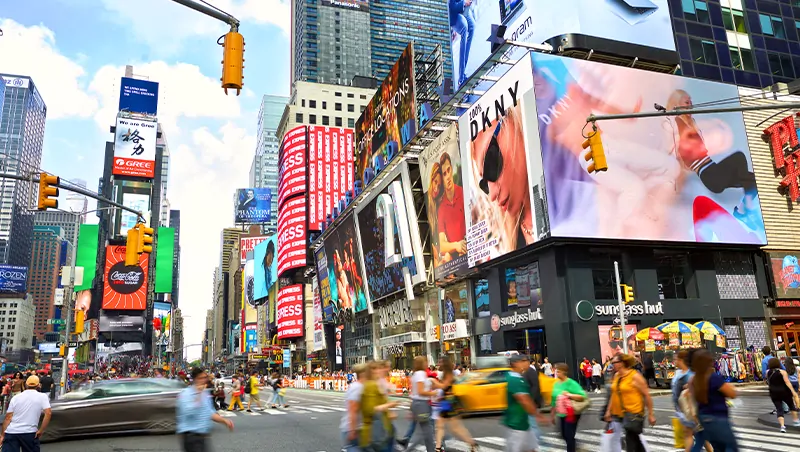
Absen Optoelectronic — Headquartered in Shenzhen, Absen has built one of the strongest global brands in the LED display space. They were the first Chinese LED manufacturer to offer a 10-year warranty on select product lines, and their service network covers 165 countries. Their rental products (the ERT and XRT series) are staples at events worldwide, and their fixed outdoor installations handle everything from Times Square billboards to stadium scoreboards. What I appreciate about Absen is their transparency — they publish detailed spec sheets, energy consumption data, and real-world case studies. Their A25 series, launched in 2025, achieves under 1 kWh per square meter per day, which is a game-changer for 24/7 outdoor installations where electricity costs add up fast.
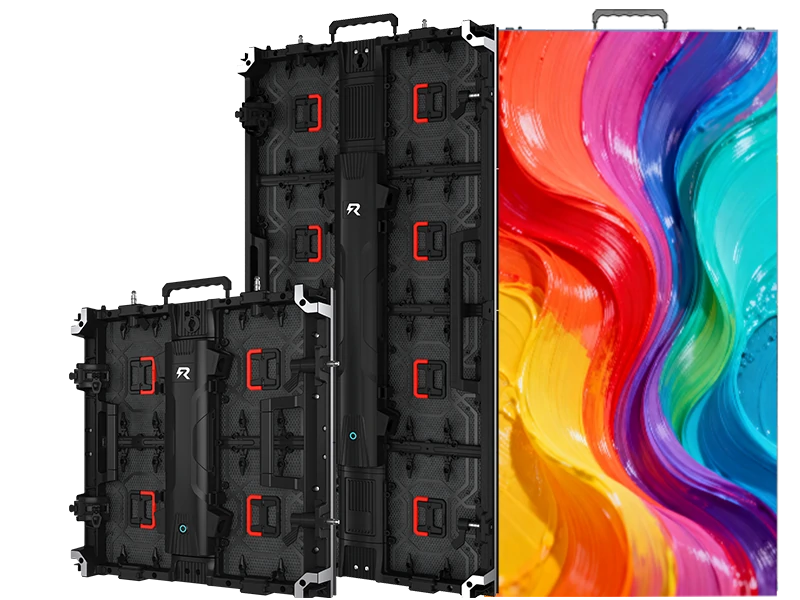
Unilumin Group — Also based in Shenzhen, Unilumin is the parent company of ROE Visual and one of the largest LED display exporters in the world by volume. They've supplied screens for three consecutive FIFA World Cups, multiple UEFA Champions League finals, and the Paris Metro system. Their UsurfaceIII series for outdoor advertising delivers up to 10,000 nits of brightness, and their Upanel rental series is one of the most widely used event display systems globally. Unilumin's strength is their scale — they can handle massive orders with consistent quality because their production lines are among the most automated in the industry.
Leyard Optoelectronic — Beijing-based Leyard is a pioneer in fine-pitch LED technology and operates the Planar brand for the North American market. They were one of the first to commercialize sub-1mm pixel pitch for outdoor applications, and their remote monitoring SaaS platform lets operators manage display networks from a single dashboard. Leyard's revenue crossed the $1 billion mark in 2024, and they invest heavily in R&D — they hold over 1,800 patents related to LED display technology.
Liantronics — A Shenzhen-based manufacturer that's particularly strong in the creative display segment. If you need curved screens, cylindrical displays, transparent LED walls, or any non-standard form factor, Liantronics is one of the go-to specialists. They've done some impressive work with architectural LED installations — wrapping building facades, creating immersive tunnel experiences, and building interactive retail displays. Their engineering team is comfortable working with complex CAD files and custom mounting solutions.
Qiangli Jucai (Strong Color) — This is the volume king. They've been the global sales volume champion for LED displays for three consecutive years, and their products are everywhere in the small-to-medium commercial signage segment. Their strength is price — they can deliver a standard P4 outdoor fixed installation at a price point that's hard to beat. If you're doing a chain of retail storefronts or a network of bus shelter displays where consistency and cost matter more than cutting-edge specs, Strong Color deserves a serious look.
Infiled — A newer player that's been scaling rapidly by focusing on the value segment with surprisingly good quality. They've been pushing sub-1mm outdoor pixel pitch at prices below $2,500 per square meter, which was unheard of just a few years ago. Their products aren't quite at the level of Absen or Unilumin in terms of long-term reliability data, but for the price, they're worth considering — especially if you're doing a project where the display will be replaced or upgraded within 3-5 years anyway.
Here's a breakdown of how the top manufacturers stack up across the dimensions that matter most for most buyers:
| Manufacturer | HQ | Brightness Range | IP Rating | Warranty | Global Service | Best For |
|---|---|---|---|---|---|---|
| Absen | Shenzhen | 5,000-10,000 nits | IP65/IP66 | Up to 10 years | 165 countries | Rental, sports, DOOH |
| Unilumin | Shenzhen | 5,000-13,000 nits | IP65/IP66 | 3-5 years | 160+ countries | Large-scale venues, events |
| Leyard | Beijing | 5,000-10,000 nits | IP65+ | 3-5 years | 100+ countries | Fine-pitch, broadcast |
| Liantronics | Shenzhen | 4,500-8,000 nits | IP65 | 3 years | 80+ countries | Creative/custom shapes |
| Strong Color | Shenzhen | 5,000-7,500 nits | IP65 | 2-3 years | 60+ countries | Volume commercial signage |
| Infiled | Shenzhen | 5,000-8,000 nits | IP65 | 2-3 years | 50+ countries | Budget-conscious projects |
This is the part where I see the most mistakes happen. Sourcing LED displays from China is not complicated, but it does require some discipline and attention to detail. Here's a step-by-step approach that I've refined over the years:
Step 1: Define your specs before you contact anyone. Know your pixel pitch requirement (based on viewing distance), brightness requirement (based on installation orientation and ambient light), total screen size, indoor or outdoor, fixed or rental, and your target budget per square meter. If you contact a manufacturer without clear specs, you'll get a generic quote that doesn't tell you much.
Step 2: Reach out to 3-5 manufacturers. Don't just pick the first one that shows up on Google. Cast a wider net. Attend trade shows like ISE in Barcelona, InfoComm in the US, or ISLE in Shenzhen if you can — nothing beats seeing the products in person and talking to the engineering teams face to face.
Step 3: Request samples. Before committing to a large order, ask for a single cabinet or module sample. Test it yourself — run it for a week, check for color uniformity, measure actual brightness with a lux meter, and see how the calibration holds up. A manufacturer who refuses to send samples is a red flag.
Step 4: Verify certifications independently. Don't just accept a PDF certificate. Go to the TÜV, UL, or CE database and look up the manufacturer's certification by their company name and certificate number. I've seen fake certificates from factories that simply photoshopped another company's certification document. It happens more than you'd think.
Step 5: Visit the factory if the order is significant. For orders above $100,000, I always recommend visiting the production facility. You'll learn more in a two-day factory visit than in six months of email correspondence. You'll see the actual production lines, the quality control processes, the warehouse conditions, and get a feel for the company's culture and capabilities. Most top-tier manufacturers welcome factory visits and will even arrange airport pickup and hotel accommodation.
Step 6: Negotiate payment terms carefully. Standard practice is 30% deposit, 70% before shipment. For first-time orders, I'd push for payment against inspection — meaning you hire a third-party inspection company (like SGS or Bureau Veritas) to check the goods at the factory before the final 70% is released. This costs a few hundred dollars but protects you from receiving a container full of defective panels.
Let me address the elephant in the room. Pricing is always the first question, and it's also the most misleading one because there are so many variables. But here are some realistic ranges based on 2025-2026 market conditions for standard products from reputable Chinese manufacturers:
| Product Type | Pixel Pitch | Brightness | Price Range (per sqm) |
|---|---|---|---|
| Outdoor fixed (standard) | P4-P8 | 5,000-7,000 nits | $1,200 - $2,800 |
| Outdoor fixed (high-bright) | P3-P5 | 8,000-10,000+ nits | $2,500 - $5,000 |
| Outdoor rental | P3.9-P4.8 | 5,000-6,500 nits | $1,800 - $3,500 |
| Indoor rental | P2.6-P3.9 | 800-1,500 nits | $1,500 - $3,000 |
| Fine-pitch outdoor | P1.5-P2.5 | 5,000-8,000 nits | $4,000 - $9,000 |
These prices are for the display hardware only — control systems, installation, shipping, and structural work are separate. And keep in mind, the gap between the cheapest and most expensive options within each category can be 40-60%. The cheaper end usually means smaller factories using lower-grade components and minimal quality control. The higher end means established brands with full certifications, aging tests, and warranty support.
I've seen these mistakes so many times that I could write a book about them. Let me highlight the ones that cost people the most money:
Buying on price alone. The cheapest quote is almost never the best deal. When two manufacturers quote you $1,500 and $2,400 for what looks like the same P4 outdoor panel, the difference is usually in the LED chips, the driver ICs, the power supply quality, the cabinet material thickness, and — most importantly — the quality control processes. The $1,500 panel might look identical on day one but start developing dead pixels and color shift within six months.
Not specifying the right brightness. I've had clients who bought 5,000-nit screens for south-facing installations in Florida, only to find the content was barely readable in afternoon sunlight. For direct sun exposure, you need 7,000 nits minimum. For tropical climates with intense UV exposure, 8,000+ nits gives you headroom. Don't let a salesperson talk you into lower brightness to close the deal.
Ignoring the control system. The LED panels are only half the equation. You need a reliable receiving card system (Novastar, Colorlight, or Brompton are the industry standards) and a content management solution. Some Chinese manufacturers bundle proprietary control systems that work fine initially but become a nightmare when you need firmware updates or technical support. Stick with established third-party control systems unless the manufacturer's in-house solution has a proven track record.
Skipping third-party inspection. I mentioned this earlier but it bears repeating. For any order over $50,000, hire an independent inspection company to verify the goods before they ship. The cost is typically $300-600 per man-day, and it can save you tens of thousands in returns, replacements, and project delays.
The industry is evolving fast. Micro LED and MIP (Micro LED in Package) technology is moving from lab prototypes to commercial products, with manufacturers like Absen and Unilumin already shipping early-generation micro LED displays for premium applications. AI-driven content optimization — where the display automatically adjusts brightness, color temperature, and content based on ambient conditions and audience behavior — is moving from concept to reality. And sustainability is becoming a bigger factor, with manufacturers like Unilumin obtaining carbon footprint certifications and Absen pushing energy efficiency as a core differentiator.
For buyers, this means the gap between Chinese manufacturers and their Western competitors is narrowing in terms of technology and quality. The remaining advantages of Chinese manufacturers are primarily in cost, supply chain speed, and customization flexibility. If you're sourcing smart — choosing established brands, verifying quality, and building long-term relationships with your suppliers — Chinese LED video wall manufacturers offer an unmatched combination of quality, price, and variety.
After years of working with Chinese LED factories, here's what I've come to believe: the industry has matured enormously. The days of ordering from China and getting unpredictable quality are largely over — at least if you're working with the established manufacturers. The key is doing your due diligence, understanding what you're buying, and building relationships with suppliers who have something to lose if they deliver a bad product. Absen, Unilumin, Leyard, and the other manufacturers I've mentioned have built their reputations over decades, and they're not going to risk that on a single order.
If you're new to sourcing from China, start with a smaller order. Test the product. Build trust with the supplier. Then scale up. It's not rocket science, but it does require patience and attention to detail. The manufacturers who make this process easy for you — with clear communication, transparent pricing, and reliable delivery — are the ones worth your long-term business.
1. Are Chinese LED video wall manufacturers reliable for commercial projects?
Yes, the top-tier Chinese manufacturers like Absen, Unilumin, and Leyard supply major commercial installations worldwide, including stadiums, airports, and digital billboards in Times Square. Their products meet international quality and safety standards. The key is choosing established brands with proven track records rather than unknown factories offering rock-bottom prices.
2. What is the typical lead time for ordering LED video walls from China?
Standard products usually ship within 15-25 working days after deposit confirmation. Custom sizes or non-standard configurations may take 30-45 working days. During peak season (typically Q3-Q4 ahead of the holiday event season), add another 5-10 working days. Always confirm lead times in writing before placing your order.
3. What certifications should I look for when importing LED displays from China?
For Europe, you need CE marking and RoHS compliance at minimum. For North America, UL listing is essential for commercial installations. Additional certifications like TÜV, ETL, and FCC add credibility. Always verify certifications directly with the issuing body rather than accepting PDF documents from the supplier.
4. How do I verify the quality of LED panels before placing a large order?
Request a sample cabinet or module and test it thoroughly — run it continuously for at least one week, check color uniformity across the panel, measure actual brightness output, and inspect build quality. For larger orders, hire a third-party inspection company like SGS or Bureau Veritas to conduct a pre-shipment inspection at the factory.
5. What pixel pitch is best for outdoor LED video walls?
It depends on your viewing distance. As a general rule, the minimum comfortable viewing distance in meters roughly equals the pixel pitch number. P4 works well for viewers 4+ meters away (urban storefronts, building facades). P6-P8 is suitable for highway billboards and large venue screens where viewers are 6-10+ meters away. P2.5-P3 is ideal for close-range pedestrian areas.
6. Can Chinese manufacturers provide on-site installation support?
Most top-tier manufacturers offer on-site installation support or can connect you with certified installation partners in your region. Absen, for example, has service partners in 165 countries. For complex installations, some manufacturers will send their own engineering team to supervise the setup, though this comes at an additional cost for travel and labor.
7. What warranty terms are standard from Chinese LED manufacturers?
Standard warranties range from 2 to 5 years depending on the manufacturer and product line. Absen offers up to 10 years on select products. Warranty typically covers manufacturing defects and component failures under normal operating conditions. It does not cover physical damage, water intrusion from improper installation, or acts of nature. Always read the warranty terms carefully and clarify what is and isn't covered.
8. How do I handle shipping and logistics when importing LED displays from China?
Most manufacturers offer FOB (Free on Board) Shenzhen pricing, meaning they handle delivery to the port. From there, you arrange ocean freight to your destination. A 20-foot container can hold approximately 40-60 square meters of LED panels depending on cabinet size. Shipping typically takes 25-35 days by sea to North America or Europe. Work with a freight forwarder who has experience handling electronic equipment.
9. What is the expected lifespan of an LED video wall from a Chinese manufacturer?
Quality LED displays from reputable Chinese manufacturers are rated for 50,000 to 100,000 operating hours, which translates to roughly 7-12 years of continuous use. Actual lifespan depends on operating conditions — brightness settings, ambient temperature, humidity, and maintenance practices all play a role. Running screens at 80% brightness instead of 100% can significantly extend LED lifespan.
10. Is it cheaper to buy LED video walls from China compared to Western manufacturers?
Generally, yes — Chinese manufacturers offer 30-50% cost savings compared to equivalent Western brands for similar specifications. However, the total cost of ownership should factor in shipping, import duties, installation, and potential warranty service costs. When you work with established Chinese brands that have local service networks, the total cost advantage typically remains significant, often 20-35% lower than buying from Western manufacturers for comparable quality.
.jpg "LED Video Wall Hire Manufacturers, Event Screen Rental")