English

If you want the direct, bottom-line answer before digging into the engineering specifics: the leading china soft led display module manufacturers fall into two primary groups. For large-scale architectural projects, luxury retail flagship columns, and corporate lobbies with substantial budgets, tier-one manufacturers like Absen, Unilumin, and INFiLED provide certified, pre-engineered flexible systems with full UL and CE safety listings. Meanwhile, specialized OEM/ODM flexible display innovators such as Apexls, CreateLED, Gloshine, and dedicated module specialists like Meiyad and Royal Display produce high-precision FPC (Flexible Printed Circuit) silicone rubber modules that deliver identical visual curvature at roughly 35% to 50% lower capital cost. To ensure long-term durability on curved, wavy, or cylindrical installations, you should never buy based on lowest square-meter pricing alone; you must explicitly mandate 4-layer rolled-copper FPC boards, Grade-N45 neodymium magnets, Nationstar gold-wire LEDs, and high-refresh driver ICs capable of maintaining 3,840Hz at low brightness levels.
Now, let us examine the mechanical realities, component chemistry, and factory sourcing standards required to successfully execute curved video projects.
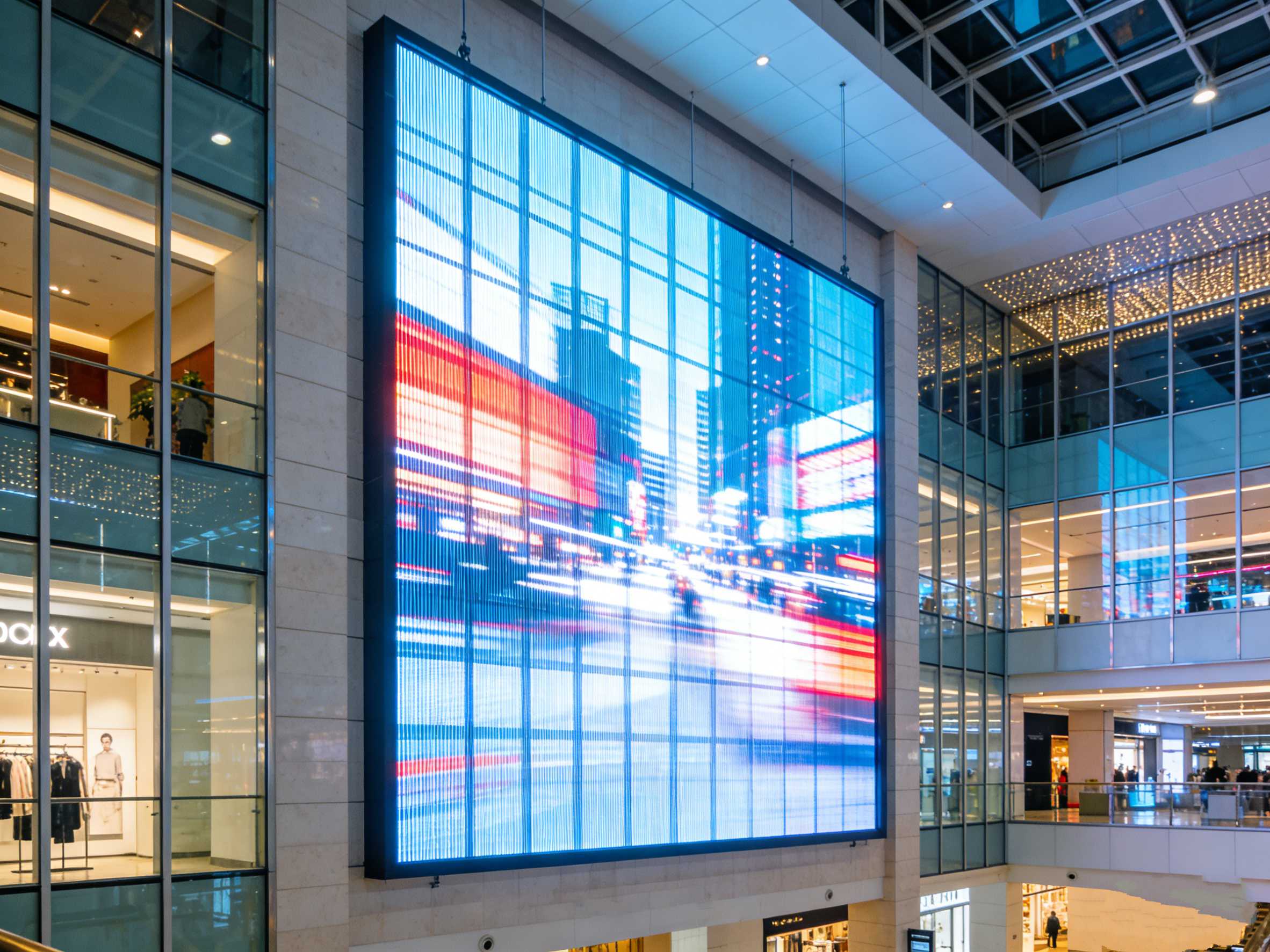
Picture this scenario: you are standing inside an upscale shopping mall or a newly renovated casino lobby, staring up at a stunning curved pillar or an undulating ribbon display hanging from the ceiling. From twenty feet away, the concept looks brilliant. But as you step closer, you notice visible vertical creases every 320 millimeters, jagged angular faceting instead of a smooth geometric curve, and random horizontal rows of blinking pixels where the copper traces inside the board have begun to fracture under physical tension.
This exact situation represents the primary nightmare for AV integrators and digital sign contractors. When commercial designers imagine flowing, organic visual surfaces, traditional rigid LED cabinets made of aluminum or steel are completely out of the question. That is where flexible, soft LED modules step into the spotlight.
Yet when searching for china soft led display module manufacturers, buyers encounter hundreds of suppliers claiming their rubber-backed panels can bend into any radius imaginable without breaking. In reality, manufacturing a high-reliability soft display module is significantly more challenging than assembling a standard rigid panel. If an inexperienced factory uses brittle electrolytic copper foil or inferior low-elasticity silicone masks, physical flexing will shear internal solder joints within months.
Let us cut through generic sales brochures and explore how high-performance flexible LED hardware is properly specified, manufactured, and installed.
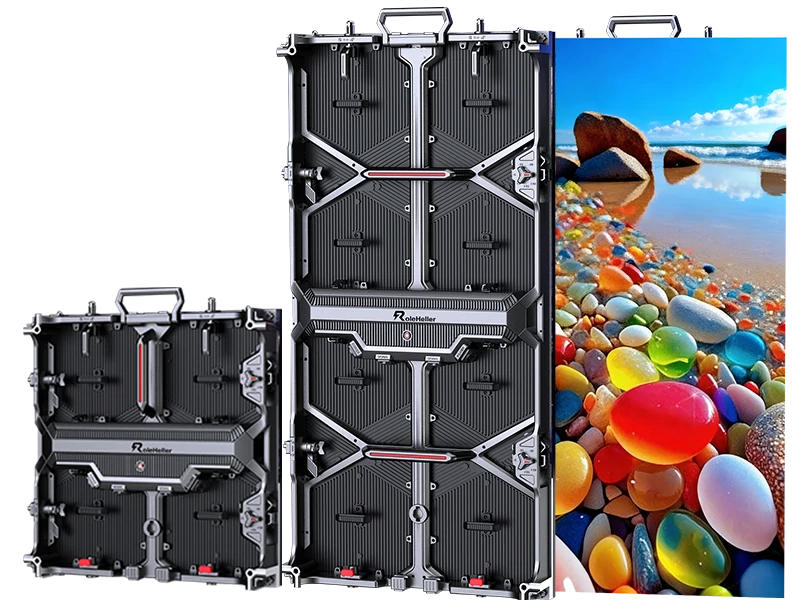
A soft LED display module replaces traditional rigid fiberglass FR4 circuit boards with an ultra-thin, flexible polyimide or polyester film base, commonly known as a Flexible Printed Circuit (FPC). Instead of being housed inside an unyielding cast-metal chassis, the electronic assembly is encased within a high-elasticity silicone or polyurethane bottom shell equipped with embedded neodymium magnets.
       +-------------------------------------------------------------+
       |             SOFT LED MODULE CROSS-SECTION                   |
       +-------------------------------------------------------------+
       | [Layer 1] Anti-Glare Silicone Mask / Micro-Louver Facings   |
       |-------------------------------------------------------------|
       | [Layer 2] High-Reliability SMD LEDs (1212 / 1515 / 2020)    |
       |-------------------------------------------------------------|
       | [Layer 3] Multilayer Rolled Annealed Copper FPC Substrate   |
       |-------------------------------------------------------------|
       | [Layer 4] High-PWM Constant-Current Driver IC Matrix        |
       |-------------------------------------------------------------|
       | [Layer 5] Heat-Conductive Flexible Silicone Potting         |
       |-------------------------------------------------------------|
       | [Layer 6] Precision Silicone Base Shell + N45/N52 Magnets   |
       +-------------------------------------------------------------+
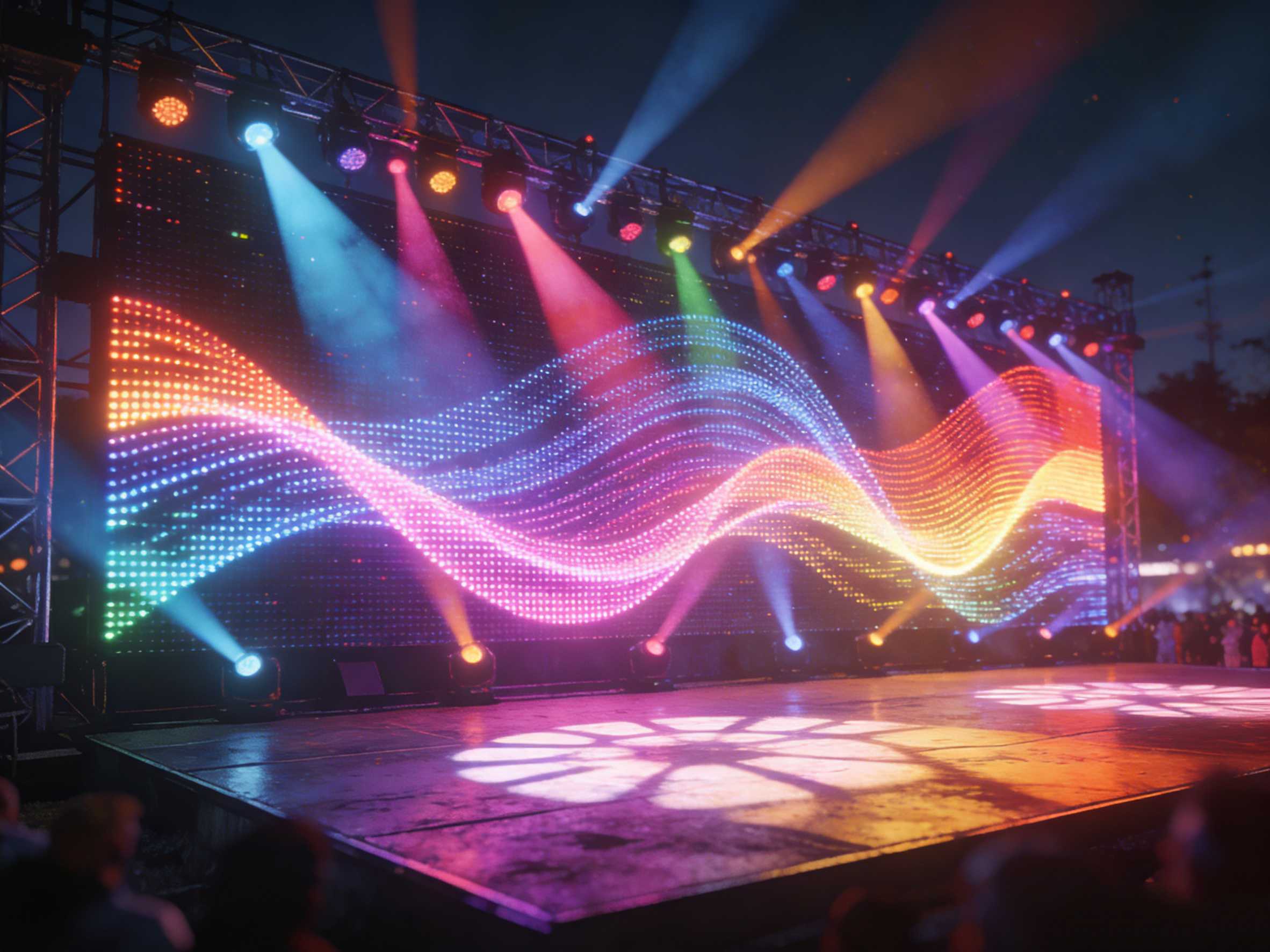
Because the entire module can flex smoothly along its horizontal or vertical axes, installers can shape panels around cylindrical structural columns, construct smooth concave arcs in broadcast studios, wrap around tight 90-degree outer corners, or forge free-form architectural ribbons.
When we are using soft LED modules on tight-radius projects, standard evaluation criteria for rigid panels do not fully apply. Flexibility introduces dynamic mechanical stress. Every time an electronic board flexes, tensile stress stretches the outer perimeter while compressive stress compacts the inner face.
Here is an analysis of the specific electronic and structural components that separate industrial-grade flexible modules from budget imitations.
The copper conductive layer carries both driving current and digital control signals directly across the flexing zone.
Rolled Annealed (RA) Copper: Manufactured by repeatedly passing solid copper ingots through heavy rollers under controlled thermal conditions. This mechanical rolling process aligns copper crystals into long, horizontal, overlapping grain structures. RA copper can endure tens of thousands of dynamic bending cycles without developing microscopic hairline fractures. Premium manufacturers exclusively utilize RA copper foils with a weight rating of 1.5oz to 2.0oz.
Electro-Deposited (ED) Copper: Formed by chemically depositing copper ions out of an acid bath onto a rotating drum. ED copper possesses a vertical, columnar crystalline structure. While cheaper and perfectly acceptable for rigid circuit boards, ED copper is brittle. When bent repeatedly around a column or curved frame, these vertical crystals shear apart, causing intermittent open circuits, flickering driver channels, and dead pixel lines.
The bottom shell protects electronic components while providing structural alignment against the mounting frame.
Engineered Silicone Elastomers: High-grade modules utilize specialized silicone formulations that maintain flexibility across temperatures from -20°C to +60°C. These materials do not leach plasticizers, retain high tensile elasticity, resist UV degradation, and meet UL94-V0 self-extinguishing flame retardancy ratings.
Low-Cost PVC or Reclaimed Rubber: Inexpensive modules often utilize rigid plastics blended with cheap chemical plasticizers to achieve temporary flexibility. Over eighteen to twenty-four months of operation, internal heat from driver ICs bakes these plasticizers out of the material. The rubber hardens, shrinks, curls along the edges, and pulls diodes off the circuit traces.
Unlike rigid displays bolted directly to aluminum sub-frames, soft modules adhere to curved sheet-metal frameworks primarily via integrated permanent magnets.
Neodymium Iron Boron (NdFeB) Magnets (Grade N45 to N52): Top manufacturers embed nickel-plated N45 or N52 rare-earth magnets directly into molded silicone housings during injection. Each magnet provides between 2.5kg and 4.0kg of vertical holding force, preventing creeping or gravitational slippage on vertical walls.
Anti-Shear Alignment Dowels: Premium soft modules feature precision-molded silicone positioning pins alongside the magnets. These dowels drop into CNC-milled index holes on the structural frame, preventing modules from sliding sideways under their own weight.
Selecting the proper pixel pitch for a curved installation depends directly on viewing distance and the minimum physical radius of the host structure. Review this comprehensive engineering matrix before drafting architectural shop drawings:
| Pixel Pitch | Native Module Size (mm) | Diode Packaging | Minimum Arc Radius (Outer/Convex) | Minimum Arc Radius (Inner/Concave) | Peak Brightness (Nits) | Max Power Consumption | Optimal Viewing Distance |
|---|---|---|---|---|---|---|---|
| P1.25 | 240 x 120 | SMD1010 / Mini-LED | 250 mm (~9.8 in) | 280 mm (~11.0 in) | 600 – 800 nits | 550 W / m² | 1.2 m – 3.0 m |
| P1.56 | 240 x 120 / 320 x 160 | SMD1212 | 220 mm (~8.6 in) | 250 mm (~9.8 in) | 600 – 900 nits | 520 W / m² | 1.5 m – 4.5 m |
| P1.875 | 240 x 120 / 300 x 169 | SMD1515 | 180 mm (~7.0 in) | 200 mm (~7.8 in) | 800 – 1,000 nits | 480 W / m² | 1.8 m – 6.0 m |
| P2.0 | 240 x 120 / 320 x 160 | SMD1515 | 150 mm (~5.9 in) | 180 mm (~7.0 in) | 800 – 1,200 nits | 460 W / m² | 2.0 m – 8.0 m |
| P2.5 | 320 x 160 / 240 x 120 | SMD2020 / SMD1515 | 130 mm (~5.1 in) | 160 mm (~6.3 in) | 800 – 1,200 nits | 450 W / m² | 2.5 m – 12.0 m |
| P3.0 | 240 x 120 / 320 x 160 | SMD2020 | 120 mm (~4.7 in) | 140 mm (~5.5 in) | 900 – 1,400 nits | 420 W / m² | 3.0 m – 15.0 m |
| P4.0 | 320 x 160 | SMD2121 / SMD2727 | 100 mm (~3.9 in) | 120 mm (~4.7 in) | 1,000 – 4,500 nits | 500 W / m² | 4.0 m – 20.0 m |
When sourcing soft LED display panels from Chinese industrial clusters, identifying the manufacturer's exact operational focus is critical. Sourcing managers classify the supply chain into three tiers:
+--------------------------------------------------------------------------+
|                  SUPPLY CHAIN STRUCTURAL BREAKDOWN                       |
+--------------------------------------------------------------------------+
|  [TIER 1: Brand Leaders] Absen, Unilumin, INFiLED                         |
|   -> Strengths: Full global compliance, turnkey systems, branch offices  |
|   -> Best For: Mega-projects, public transportation, corporate flagships  |
|--------------------------------------------------------------------------|
|  [TIER 2: Specialized Flex Innovators] Apexls, CreateLED, Gloshine       |
|   -> Strengths: Deep R&D on bespoke geometries, responsive CAD design     |
|   -> Best For: Architectural retail, curved columns, creative staging    |
|--------------------------------------------------------------------------|
|  [TIER 3: Wholesale Module Assemblers] Royal Display, Meiyad, Qiangli    |
|   -> Strengths: Aggressive unit pricing, high production volume          |
|   -> Best For: Standard curved installations, cost-sensitive sign shops  |
+--------------------------------------------------------------------------+
Representative Manufacturers: Absen, Unilumin, INFiLED, Leyard.
Manufacturing Profile: These conglomerates focus primarily on comprehensive turnkey systems. They maintain extensive in-house SMT cleanrooms and provide full architectural mounting sub-structures along with complete engineering documentation.
Trade-Offs: Their flexible modules carry premium price structures. Furthermore, because their business model prioritizes standardized mass-production product lines, securing bespoke module dimensions or non-standard radius cuts for specialized spatial architecture can involve lengthy engineering lead times and steep minimum order volumes.
Representative Manufacturers: Apexls (pioneers in creative spherical and flexible LED displays), CreateLED, Gloshine, Uniview LED, Dicolor.
Manufacturing Profile: These facilities focus squarely on non-standard, creative, and rental-staging display technology. They maintain dedicated tooling for custom silicone molds and offer rapid turnaround on non-rectangular geometries, spherical installations, and variable-radius waving ribbons.
Trade-Offs: Buyers must possess solid technical literacy. Because these engineering plants offer broad component configurability, you must explicitly define your bill of materials to avoid getting their mid-tier configurations when your project requires enterprise endurance.
Representative Manufacturers: Meiyad, Royal Display, and regional module assembly operations located throughout Shenzhen's Bao'an district.
Manufacturing Profile: Highly focused on volume production of standard flexible panels (primarily 320x160mm and 240x120mm form factors). They supply regional AV dealers and local domestic fabricators.
Trade-Offs: While unit costs are exceptionally low, module flatness tolerances, silicone batch elasticity, and optical diode binning consistency can fluctuate between production runs. They are best suited for static, single-curve installations where the display is mounted once and never flexed again.
| Evaluation Metric | Tier 1: Enterprise Brand Leaders | Tier 2: Creative & Flex Specialists | Tier 3: High-Volume Wholesalers |
|---|---|---|---|
| Typical Cost (P2.0 per m²) | $2,200 – $3,800 USD | $1,200 – $2,000 USD | $750 – $1,100 USD |
| FPC Base Layer Architecture | 4-Layer Rolled Annealed Copper | 2 to 4-Layer Rolled Annealed Copper | 2-Layer Electro-Deposited Copper |
| Base Shell Polymer | Premium Grade-A Liquid Silicone | High-Flex Industrial Silicone | Standard PVC or Blend Rubber |
| Magnet Grade & Plating | N48 / N52 Triple-Coated Ni-Cu-Ni | N45 / N48 Dual-Coated Nickel | N35 Single-Coated or Unplated |
| Driver IC Class | Macroblock MBI5359 / Chipone 2065 | Chipone ICND2153 / MBI5153 | Basic Generic Dual-Latch ICs |
| Safety Certifications | Full UL, cUL, CE-LVD, CE-EMC, FCC | Project-Specific ETL / CE Listings | Self-Declared CE Markings |
| Structural CAD Support | Complete structural framework supplied | Rapid 3D structural drawings provided | Basic module dimensional sheets only |
| Optical Warranty Coverage | 3 to 5 Years Comprehensive | 2 to 3 Years Standard | 1 Year (Return to Factory) |
When planning a curved display at ground level or in spaces with heavy pedestrian traffic, protecting delicate LED diodes becomes a major operational priority.
+--------------------------------------------------------------------------+
|                 SMD vs. GOB FOR FLEXIBLE INSTALLATIONS                   |
+--------------------------------------------------------------------------+
|  STANDARD FLEXIBLE SMD:                                                  |
|  [Diode]  [Diode]  [Diode]  <- Individual diodes soldered on FPC face   |
|  =========================  <- Exposed pins subject to mechanical shear  |
|  Pros: Maximum flexibility, tightest bend radius, easy diode repair      |
|  Cons: Diodes can be knocked off during cleaning or accidental bumps     |
|--------------------------------------------------------------------------|
|  GOB (GLUE-ON-BOARD) COATED FLEX:                                        |
|  ~~~~~~~~~~~~~~~~~~~~~~~~~  <- Optically clear polyurethane resin coat   |
|  [Diode]  [Diode]  [Diode]  <- Fully encapsulated diode matrix           |
|  =========================  <- Complete surface impact protection        |
|  Pros: Impact resistant, waterproof face (IP65), dust-proof, wipe-clean  |
|  Cons: Slightly stiffer bending radius, requires specialized repair tool |
+--------------------------------------------------------------------------+
Standard SMD Flexible Panels: Best suited for elevated curved displays, ceiling ribbons, or installations positioned safely out of reach of the public. They achieve the absolute tightest bend radiuses without physical resistance.
GOB (Glue-on-Board) Flexible Panels: Essential for retail columns, casino pillars, museum touch-walls, or any installation below eight feet. The optical resin prevents cleaning crews from knocking diodes off the board with vacuums or mops, while providing resistance to moisture and accidental spills.
Achieving a seamless curved visual wall requires meticulous physical preparation. Because soft modules lack a rigid metal backplate to force them flat, any imperfection in the structural frame telegraphs straight through to the front display face.
       +-------------------------------------------------------+
       |             CURVED WALL STRUCTURAL DETAIL             |
       +-------------------------------------------------------+
       | [1] Primary Steel Uprights (Tubular Steel Frame)      |
       |-------------------------------------------------------|
       | [2] CNC Laser-Cut Curved Ribs (Sheet Steel / Plate)   |
       |-------------------------------------------------------|
       | [3] Galvanized Sheet-Metal Skin (1.5mm - 2.0mm Thick) |
       |-------------------------------------------------------|
       | [4] Embedded Neodymium Magnets Snap Directly to Skin  |
       |-------------------------------------------------------|
       | [5] Soft LED Modules (Seamless Perimeter Jointing)    |
       +-------------------------------------------------------+
Follow this sequential engineering procedure for a successful installation:
Fabricate the Curved Sub-Structure: Build your primary structural framework using vertical structural steel tubing. Weld precision CNC laser-cut horizontal steel ribs matching the exact designed architectural radius.
Skin the Structure with Galvanized Steel: Fasten a continuous 1.5mm to 2.0mm thick galvanized cold-rolled steel sheet over the curved ribs. Fasteners must be countersunk flush with the metal face. Avoid using stainless steel or aluminum for this skin layer, as rare-earth magnets will not adhere to non-ferrous metals.
Inspect Frame Curvature with Radius Gauges: Sweep a precision physical template along the entire curved surface. Any localized ridge or valley exceeding 0.5mm will cause adjacent soft modules to pinch together or spread apart, resulting in visible bright or dark lines on the active display.
Route Power and Data Infrastructure: Cut pass-through wire access ports through the steel skin at designated intervals. Terminate 5V DC power busbars and Gigabit Ethernet data cables through these access openings before applying modules.
Snap Modules from Center to Edges: Begin placing soft modules at the visual center of the curve, working outward toward the perimeters. Use the silicone alignment dowels to lock adjoining edges together. Never pull or stretch a flexible module across a curve; allow the magnets to seat the module naturally against the steel skin.
Verify Flatness with Low-Angle Illumination: Shine a handheld inspection light parallel across the module face at a sharp grazing angle. Adjust magnetic seating to eliminate micro-steps between modules before powering up the display system.
"The most common failure mode on architectural curved LED columns is not electrical component breakdown—it is localized thermal trapping. Integrators build tight cylindrical structures, wrap them in steel plate, seal both ends with decorative millwork, and trap hundreds of watts of power supply heat inside the core."
Soft LED modules sit directly against mounting skins without large cabinet cooling fans. Because silicone and air are both thermal insulators, heat generated by driver ICs must transfer conductively through the FPC board and steel plate into the inner structural void.
To prevent premature LED lumen degradation:
Always mount 5V DC power supplies and NovaStar or Colorlight receiving cards remotely inside an external, ventilated AV equipment rack if structural space is tight.
If power supplies must sit inside the column, install continuous low-noise cross-flow exhaust blowers at the top of the structure with intake louvers at the base to maintain a continuous vertical chimney cooling effect.
To help you navigate technical discussions during manufacturer procurement, let us examine the critical engineering questions that field engineers confront most often.
No. Soft LED modules can only flex along a single cylindrical axis at a time (either horizontally or vertically). They cannot form compound spherical curves or double-curved saddle shapes.
Attempting to force a flat rectangular flexible module into a compound spherical curve introduces torsional shear across the FPC board. This tears internal copper traces and shears the four micro-solder legs connecting each SMD diode to the substrate.
If your design requires a true spherical dome or multi-axis compound curvature, you must request specialized wedge-shaped or triangular flexible modules tailored specifically to that geometry.
This visual flaw typically stems from magnetic tension errors or improper mask beveling:
When a soft module is bent into a concave curve (curving inward toward the viewer), the outer edges of the black plastic or silicone mask compress together. If the manufacturer did not mold angled relief bevels into the module edges, neighboring modules will collide, lifting slightly away from the metal frame.
Conversely, on a convex curve (curving outward toward the viewer), the module edges spread apart. If the FPC edge margin is too wide, the physical gap between the last pixel column of Module A and the first pixel column of Module B becomes wider than the native pixel pitch, generating a visible dark seam.
Top-tier manufacturers engineer their silicone edge louvers with micro-beveled relief angles designed specifically for tight inner and outer bending radii.
Because soft modules are held in place solely by magnetic attraction, they are naturally front-serviceable.
Never use flat metal pry tools or screwdrivers to remove a module; metal edges will crush pixel borders and strip corner diodes right off the FPC substrate. Always use an adjustable electric vacuum-suction extraction tool. The technician centers the rubber suction cup over the module face, engages the vacuum pump to create a firm mechanical seal, and gently pulls outward perpendicular to the display wall. The magnets release cleanly without placing mechanical strain on neighboring panels.
Before clearing balance payments to an overseas manufacturer, insist on third-party verification or live interactive video testing covering these four quality control procedures:
+--------------------------------------------------------------------------+
|                     FLEXIBLE MODULE AUDIT CHECKLIST                      |
+--------------------------------------------------------------------------+
|  [ ] STEP 1: Automated Bending Fatigue Testing                           |
|      - Sample modules mounted to mechanical cycling jigs                 |
|      - Minimum 2,000 continuous flex cycles across design radius         |
|      - Real-time signal monitoring to catch intermittent trace breaks    |
|--------------------------------------------------------------------------|
|  [ ] STEP 2: Thermal Chamber Cycling (-10°C to +50°C)                    |
|      - 24-hour soak under continuous high/low temperature shifts         |
|      - Verifies silicone elasticity and adhesive lamination integrity    |
|--------------------------------------------------------------------------|
|  [ ] STEP 3: Magnetic Shear Force Testing                                |
|      - Digital pull-gauge measurement of perpendicular and shear force   |
|      - Confirm holding force meets minimum 2.5kg per magnet assembly     |
|--------------------------------------------------------------------------|
|  [ ] STEP 4: Low-Grayscale Uniformity Scan                               |
|      - Full-screen gray raster check at 5%, 10%, and 20% brightness      |
|      - Verifies driver IC constant-current delivery under board flex     |
+--------------------------------------------------------------------------+
When inspecting video of the production line, look closely at how the SMT assembly line handles the bare FPC boards. Flexible substrates cannot pass through standard high-speed pick-and-place conveyors unsupported; they must be clamped into rigid, high-precision magnetic carrier jigs. If a factory runs flexible FPC sheets loose through solder paste printers or reflow ovens without tooling plates, solder paste thickness will vary wildly, causing high failure rates down the road.
Working with flexible LED modules has convinced me of one fundamental rule: mechanical execution matters just as much as optical performance. On standard flat displays, a minor structural error can often be hidden inside adjustable cabinet brackets. On a curved soft display, every mechanical imperfection on the mounting wall transfers directly to the visual surface.
When engaging with Chinese manufacturing partners, avoid broad, generic requests like "give me your lowest quote for a curved P2 display." Broad requests will prompt factory sales reps to quote low-tier components: thin 2-layer FPC boards, cheap copper-wire LEDs, weak N35 magnets, and basic driver chips.
Instead, frame your project with exact engineering specifications:
State the precise physical radius of your curved structure.
Specify whether the curve is convex (outward-facing) or concave (inward-facing).
Mandate 4-layer Rolled Annealed copper FPC construction.
Require Nationstar or high-tier Kinglight diodes with high-PWM driver ICs (such as Macroblock MBI5153 or Chipone ICND2153).
Demand N45 or higher neodymium magnetic hardware with mechanical anti-shear pins.
When a manufacturer sees that level of technical detail in your initial inquiry, they route your project to their senior engineering department rather than an entry-level sales desk. That ensures you receive high-reliability hardware that installs smoothly, curves seamlessly, and operates reliably for years to come.
Using standard P2 or P2.5 flexible modules with a native length of 240mm or 320mm, the minimum safe outside cylinder diameter is approximately 300mm to 320mm (about 12 to 12.6 inches). Bending modules tighter than this minimum threshold compresses the silicone mask louvers, pinches surface diodes together, and risks delaminating internal FPC copper traces.
While the majority of flexible modules are engineered for indoor commercial applications, several specialized manufacturers produce outdoor-rated soft modules. Outdoor flexible panels require UV-stabilized silicone front potting, fully encapsulated waterproof drive electronics, and an IP65 or IP66 rating on both front and rear surfaces. Outdoor installations also require high-brightness diodes delivering 4,500 to 5,500 nits to remain legible against direct sunlight.
Seam prevention requires three elements: precision CNC laser-cut curved mounting ribs, high-strength N45/N52 neodymium magnets to hold modules firmly against the steel skin, and modules engineered with beveled relief edges on their silicone masks. Ensuring the mounting radius remains perfectly uniform across the entire wall prevents modules from pinching or spreading at joint lines.
A 2-layer FPC routes both power traces and high-speed digital signal lines across just two copper layers, resulting in higher electrical resistance, increased operating heat, and greater susceptibility to trace breakage under tight bends. A 4-layer FPC features dedicated internal ground and power planes separated from high-speed differential signal traces. This four-layer architecture provides superior heat dissipation, lower electromagnetic interference (EMI), and vastly higher fatigue resistance during bending.
Flexible modules rely entirely on magnetic attraction to maintain their curved profile without mechanical chassis locks. Ferrite magnets lack sufficient magnetic pull to resist the natural mechanical spring-back force of bent FPC boards and silicone shells. High-grade neodymium (NdFeB) magnets provide five to seven times the holding force of ferrite magnets, ensuring modules remain anchored flush against vertical steel surfaces over years of service.
No. Soft LED modules contain intricate multi-layer circuit traces, power distribution busbars, and surface-mount driver components routed throughout the FPC board. Cutting a module severs critical circuit loops and destroys the entire panel. Custom display perimeters must be achieved by combining standard module sizes with factory-engineered fractional modules, or by masking the display perimeter using decorative architectural reveals.
GOB applies a clear structural epoxy or polyurethane resin coating across the module face, locking the diodes securely to the board. While GOB dramatically improves impact resistance and surface waterproofing, it increases overall module stiffness. GOB-coated soft panels generally require a 15% to 20% larger minimum bending radius compared to non-coated flexible modules to avoid micro-cracking the protective resin layer.
Because soft modules are manufactured in tightly binned diode and silicon wafer batches, always mandate a spare parts cache containing at least 5% to 8% spare flexible LED modules originating from the exact same production batch. Additionally, include 5% spare 5V power supplies, 3% spare receiving cards, extra flexible data ribbons, and a dedicated electric vacuum-suction removal tool.
NovaStar (using their COEX or Taurus multimedia platforms paired with Armor or A-series receiving cards) and Colorlight represent the global industry standard. These systems support custom module mapping, irregular geometric coordinate configuration, and pixel-level chromatic and luminance calibration, allowing seamless video playback across complex curved, wavy, or cylindrical canvases.
For standard flexible modules utilizing established silicone molds and readily available pixel pitches (such as P1.875, P2, or P2.5), production lead times typically range from 15 to 22 business days, including the mandatory 72-hour continuous aging and burn-in test. Fully customized silicone molds, bespoke module dimensions, or unique architectural structural frames require 30 to 45 business days for tooling fabrication and quality validation.