 English
You've been going down the rabbit hole searching for china concert led video wall manufacturers and honestly, the more you dig, the more confusing it gets. One factory quotes you $1,500 per square metre for a P3.91 rental cabinet, another wants $3,200 for what looks like the same spec sheet, and a third won't even give you a number until you "submit a project inquiry form." It's frustrating, right? Maybe you're running a rental company and need to expand your fleet before festival season. Maybe you're an AV integrator putting together a bid for a mid-size concert venue. Or maybe you just got handed a brief that says "we need LED walls for our touring production" and now you're scrambling to figure out what's realistic. Let me share what I've picked up over the years working with LED display factories in Shenzhen — who actually builds reliable concert-grade panels, what you should realistically be paying, and how to avoid the traps that catch first-time buyers.
Concert and live event LED walls operate in a completely different world compared to permanent lobby displays or retail signage. The demands are harsher, the expectations are higher, and the equipment takes a beating that most fixed installations never experience.
Here's what sets concert LED walls apart:
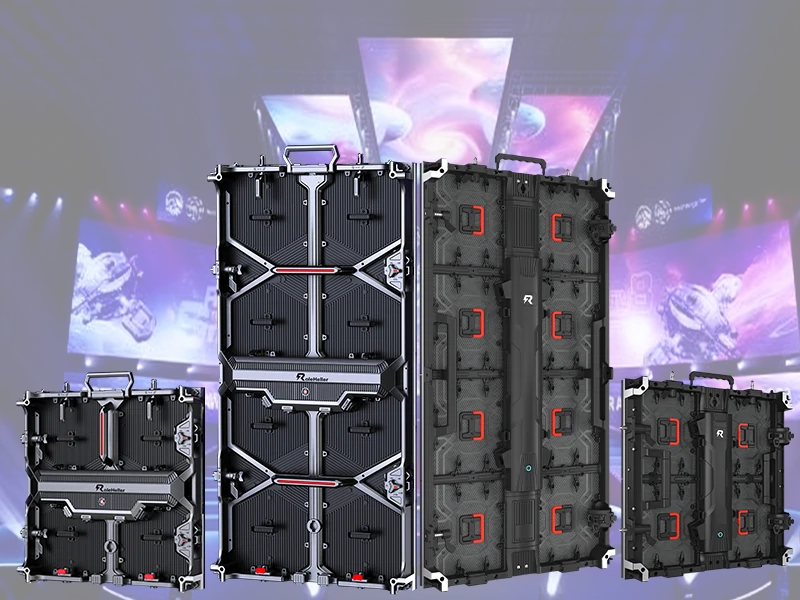
Rental cabinets need to be lightweight — crew members are loading these into trucks, carrying them up stairs, and assembling them on stage in under an hour. Every kilogram matters.
Fast lock systems are critical — concert rigs get built and struck repeatedly. Cabinets need tool-free or quick-lock mechanisms that hold tight during the show but release in seconds during load-out.
High refresh rates are non-negotiable — every concert gets filmed, livestreamed, or captured for social media. You need 3840Hz minimum so cameras don't pick up flicker or scan lines.
Durability under transport — these panels get packed into flight cases, thrown on trucks, driven hundreds of kilometres, set up in rain or dust, and then packed up again. The build quality needs to handle this cycle hundreds of times per year.
Bright enough for stage lighting — concert stages are flooded with moving heads, follow spots, and wash lights. Indoor concert panels typically need 4,000–5,500 nits to compete with stage lighting.
Understanding these requirements helps you evaluate whether a manufacturer truly specialises in concert and rental product — or whether they're just selling standard fixed-install panels and calling them "rental."
Let me break down the cost drivers so you can look at any quote and understand where the money's going.
LED chip brand. The chips inside each pixel determine colour accuracy, brightness uniformity, and long-term reliability. Nationstar and Kinglight are the workhorses of the concert LED industry — they deliver solid performance at reasonable cost. Nichia (Japan) chips sit at the premium end with tighter colour consistency. Budget panels using Silan or unbranded chips might save you 15–20% upfront but tend to show colour drift and higher dead pixel rates after a season of heavy touring.
Driver IC selection. For concert applications, you need high-refresh driver ICs. The Macroblock MBI6353+ and Chipone ICN2038S are the go-to choices for 3840Hz+ performance. Some budget manufacturers default to FM6124 drivers that cap out at 1920Hz — fine for a static lobby sign but a dealbreaker when cameras are rolling at a live show.
Cabinet material and weight. Concert rental cabinets are almost exclusively die-cast magnesium alloy or die-cast aluminium. Magnesium alloy is lighter (roughly 25–30% lighter than aluminium) which makes a real difference when your crew is hanging 200+ cabinets on a motor rig. The trade-off is that magnesium costs more and is more brittle under impact. Aluminium is heavier but more forgiving if a cabinet gets dropped during load-in.
Locking mechanism quality. This is one of the most overlooked cost factors. Premium quick-lock systems from manufacturers like Fastlock or HangerTec cost more per cabinet but save your crew hours of assembly time and eliminate the risk of a cabinet coming loose mid-show. Budget cabinets using simple bolt-and-pin systems are cheaper but slower to assemble and more prone to alignment issues over time.
Pixel pitch. For concert LED walls, P2.6, P2.97, P3.91, and P4.81 are the most common pitches. Finer pitches cost more per square metre but deliver sharper images for camera capture and close-up viewing. P3.91 is the industry workhorse for mid-size venues — it hits the sweet spot between image quality and price.
Here's what you should expect to pay for concert-grade rental panels per square metre at wholesale volumes (typically 20+ sqm orders):
| Pixel Pitch | Budget Tier ($/sqm) | Mid Tier ($/sqm) | Premium Tier ($/sqm) | Typical Use |
|---|---|---|---|---|
| P2.6 | $2,200–$3,000 | $3,000–$4,500 | $4,500–$6,500 | Intimate venues, broadcast stages |
| P2.97 | $1,800–$2,600 | $2,600–$3,800 | $3,800–$5,500 | Corporate events, houses of worship |
| P3.91 | $1,200–$1,800 | $1,800–$2,800 | $2,800–$4,200 | Concerts, festivals, mid-size venues |
| P4.81 | $900–$1,400 | $1,400–$2,200 | $2,200–$3,500 | Large outdoor stages, arena backdrops |
These are panel-only prices. Total system cost — including video processors, flight cases, spare modules, cabling, and shipping — typically adds 35–60% on top. For a rental company buying a 50 sqm fleet of P3.91 mid-tier panels, you're looking at roughly $90,000–$140,000 all-in for the LED system. That number catches a lot of people off guard when they've only budgeted for the panel price.
Here's a practical breakdown of manufacturers with genuine credibility in the concert and rental LED segment:
| Manufacturer | HQ | Price Position | Concert LED Strengths | Best For |
|---|---|---|---|---|
| Unilumin | Shenzhen | Mid-to-high | Massive rental product range; strong global support | Large rental fleets, touring productions |
| Absen | Shenzhen | Mid-to-high | ETL/FCC certified; excellent Western after-sales | Corporate events, houses of worship |
| LianTronics | Shenzhen | Mid-to-high | Good customisation; strong European presence | European rental market, custom configurations |
| ROE Visual | Shenzhen | High | Exceptional build quality; dominant in virtual production | Premium touring, film/TV LED stages |
| Gloshine | Shenzhen | Mid-to-budget | High production capacity; fast turnaround | Budget-conscious rental fleets |
| Prism LED | Shenzhen | Mid-range | Strong rental-focused product line | Mid-size rental companies, event producers |
| DX LED | Shenzhen | Budget-to-mid | Aggressive pricing; large inventory | High-volume orders, multi-site rollouts |
A note on pricing — the gap between these manufacturers is real and it shows up in ways that matter for concert applications. A P3.91 rental cabinet from ROE Visual will cost considerably more than the same pitch from Gloshine. The difference shows up in cabinet weight, lock mechanism quality, colour uniformity out of the box, and how well the panels hold up after 200+ load-in/load-out cycles. It's not always visible on day one, but it becomes very apparent after a season of heavy touring.
You've narrowed your list to a few candidates. Here's a vetting process that'll save you from costly mistakes.
Request a live factory tour. Not a polished marketing video — a live video call where they walk you through their SMT production lines, cabinet assembly area, aging test room, and QC stations. A real concert LED manufacturer will happily show you their equipment, introduce you to their engineering team, and answer technical questions about refresh rate testing, cabinet drop tests, and IP rating procedures. A trading company will make excuses or redirect you to a showroom.
Ask for component documentation. Specifically: which LED chip brand and bin range, which driver IC model, which power supply brand, and which receiving card system. A legitimate manufacturer provides this immediately. If they say "our own proprietary chips" for all three components, that's usually code for "the cheapest option available."
Verify certifications for your market. For North America, you need ETL or UL listing plus FCC Part 15. For Europe, CE marking covering LVD, EMC, and RoHS. Ask to see actual certificates and verify the certificate numbers with the issuing lab. Some manufacturers display expired certs or certs belonging to a different product line.
Order sample cabinets and abuse them. For any order above $20,000, get 4–6 sample rental cabinets. Here's what to test:
Assemble and disassemble them 10+ times to test the lock mechanisms
Run them at full brightness for 72+ hours and monitor for colour shift or dead pixels
Check the weight — a P3.91 die-cast aluminium cabinet should be around 7–9 kg; significantly heavier usually means sheet metal or thicker casting
Test with cameras at various shutter speeds to verify refresh rate
Check the seam between two joined cabinets — it should be under 0.3mm for concert-grade product
After years of watching people navigate this market, here are the errors that keep showing up:
Choosing on price alone without testing durability. The cheapest concert LED quote almost always means compromises — mixed-bin chips, budget driver ICs, heavier cabinets, weaker lock mechanisms. On a rental fleet that gets loaded and struck hundreds of times per year, these compromises translate into higher maintenance costs, more dead pixels in the field, and crew frustration during load-in.
Not specifying refresh rate upfront. Some manufacturers default to 1920Hz because it's cheaper. If your concert wall will ever be on camera — and in 2026, virtually every concert gets livestreamed or recorded — you need 3840Hz minimum. Get this in writing before production starts.
Forgetting spare modules from the same batch. Order 8–10% spare panels from your original production run. Concert LED walls take more abuse than fixed installations, and you'll need field replacements. LED chips from different batches have slightly different colour characteristics, and mixing them creates visible patches on a live stage.
Ignoring cabinet weight for rigging calculations. A 1 kg difference per cabinet adds up fast when you're hanging a 12m × 6m wall on motor chains. Always confirm cabinet weight before finalising your rigging plan and motor load calculations.
Skipping professional calibration. Even premium concert panels have slight brightness and colour variations between cabinets out of the box. On a large stage wall, these variations become very noticeable — especially when side-fill lighting hits the wall at an angle. Professional camera-based calibration brings the entire wall into uniform alignment.
Buying direct from the manufacturer gives you the lowest per-unit price — typically 15–30% less than buying through a distributor. But you take on logistics, import clearance, warranty claims, and technical support across time zones.
Working with a local distributor or rental equipment dealer costs more, but you get local technical support, faster warranty resolution, help with system design, and someone who can send a technician to your venue if something goes wrong during a show. For a touring production where a panel failure mid-show could mean a six-figure liability, having a local partner who can respond quickly is often worth the premium.
My suggestion? If you're an experienced rental company with your own technical team and logistics infrastructure, going direct works well. If you're new to concert LED or the production has a hard deadline with penalties for delays, work with a reputable local partner. The markup they charge is essentially insurance against show-stopping risk.
Having evaluated panels from factories across all tiers, here's where I land. The concert LED segment has matured a lot over the past few years. A well-made P3.91 rental cabinet from a solid mid-tier manufacturer performs very close to the same spec from a premium brand when you're standing 10+ metres away in a venue. Where the differences emerge is in long-term durability, weight consistency, and after-sales responsiveness when you need replacement parts fast.
For large rental fleets and touring productions, I'd lean toward Unilumin, Absen, or LianTronics. The price premium over budget options is real — maybe 30–50% more per square metre — but the reliability difference pays for itself when you're standing in front of a client at soundcheck and the wall needs to perform flawlessly.
For rental companies building high-volume fleets on tight budgets, Gloshine, Prism LED, or DX LED can deliver functional concert product at attractive prices. Just be disciplined about sample evaluation and pre-shipment inspection. The risk at this tier isn't that the product is terrible — it's that quality varies between batches and you need to catch inconsistencies before they ship.
One thing I've noticed over the years — the relationship you build with a manufacturer matters more than most buyers realise. Your first order is always the most expensive. The second and third orders come with better pricing, priority production scheduling, and more flexible payment terms. Find a manufacturer that checks your boxes and stick with them.
At the end of the day, concert LED walls are workhorses that need to perform under pressure, night after night. Spending a bit more upfront on quality components, proper calibration, and a reliable manufacturer saves real money — and real headaches — when you're in the middle of a 30-city tour and can't afford a single panel failure. Hope this helps you make a confident decision for your next project.
What pixel pitch is best for concert LED video walls?
P3.91 is the most popular choice for mid-size concert venues and touring productions — it delivers sharp images at viewing distances of 4+ metres while keeping costs reasonable. P2.6 and P2.97 work well for intimate venues, broadcast stages, or situations where the camera gets close to the wall. P4.81 is ideal for large outdoor stages and arena backdrops where viewing distances are longer and budget matters more than pixel density.
How much does a concert LED video wall cost per square metre?
Panel prices range from $900/sqm for budget P4.81 panels to $6,500/sqm for premium P2.6 panels. For the most common concert pitch at P3.91, expect $1,200–$4,200/sqm depending on manufacturer tier and component quality. Total system cost including processors, flight cases, spares, cabling, and shipping typically adds 35–60% on top of the panel price.
What refresh rate do concert LED walls need?
A minimum of 3840Hz is required for any concert LED wall that will be captured by cameras — which is virtually all of them in 2026. Below 3840Hz, camera sensors pick up flicker, scan lines, and colour banding that ruin broadcast and livestream quality. Some budget panels ship at 1920Hz by default, so always confirm refresh rate in writing before production.
Which LED chip brands are best for concert panels?
Nationstar and Kinglight are the industry workhorses for concert LED panels — they deliver solid colour consistency and reliability at reasonable cost. Nichia (Japan) chips sit at the premium end with tighter wavelength control. Silan is common in budget panels. For touring productions where colour consistency across hundreds of cabinets matters, single-bin Nationstar or Kinglight chips offer the best value.
How do I verify a concert LED manufacturer is legitimate?
Request a live virtual factory tour showing their SMT lines, aging test room, and QC stations. Ask for specific component brands (LED chips, driver ICs, power supplies). Verify certifications (ETL, FCC, CE) with the issuing laboratories. Order sample cabinets and test them thoroughly — assemble and disassemble multiple times, run at full brightness for 72+ hours, and test with cameras at various shutter speeds.
What's the difference between rental cabinets and fixed-install cabinets?
Rental cabinets are designed for frequent assembly and disassembly. They use lightweight die-cast magnesium or aluminium, quick-lock mechanisms for tool-free assembly, reinforced corners for transport durability, and integrated handles for carrying. Fixed-install cabinets are heavier, use simpler mounting methods, and don't need to withstand the rigours of repeated transport. Using fixed-install cabinets for concert applications leads to faster wear, alignment issues, and crew frustration.
How many spare modules should I order for a concert LED fleet?
For rental and touring applications, order 8–10% spare panels from the same production batch. Concert LED walls take more physical abuse than fixed installations — cabinets get dropped, connectors get damaged, and individual modules fail more frequently under touring conditions. Having spares from the same batch ensures colour-matched replacements in the field.
What video processor works with concert LED walls?
NovaStar is the most widely compatible and cost-effective platform — their MCTRL660 Pro and VX600 processors handle most concert applications. Brompton Technology's Tessera SX40 is the premium choice for broadcast and virtual production where colour accuracy is paramount. Colorlight offers budget-friendly alternatives. Confirm compatibility with your chosen processor and receiving cards before ordering panels.
How long do concert LED panels last?
Quality concert LED panels from reputable manufacturers typically last 50,000–100,000 hours to half-brightness. In a touring context with heavy use (roughly 2,000–3,000 hours per year), that translates to 15–30+ years of LED lifespan. In practice, most rental companies replace or upgrade their fleet after 5–8 years due to physical wear on cabinets, connectors, and lock mechanisms rather than LED failure.
What is the typical lead time for ordering concert LED panels from China?
For standard concert specifications like P3.91 or P4.81 rental cabinets, production takes 25–40 days from deposit receipt for orders of 20–50 sqm. Custom pixel pitches or unusual cabinet sizes may extend to 40–55 days. Add 18–35 days for ocean freight or 5–7 days for air freight. Plan for a minimum of 6–10 weeks total from order to delivery. During peak season (Q2–Q3 ahead of summer festival season), lead times can extend by 1–3 weeks.
.jpg "China P2.9 Indoor LED Video Wall Manufacturers: Who Delivers?")