English
So you've been Googling china advertising led video wall manufacturers for the past week and the search results look like a used car lot — everyone's waving their hands, shouting "best price," and promising the moon. One factory says their panels last 100,000 hours. Another claims 85% energy savings. A third won't even give you a price until you fill out a "project consultation form" that asks for your blood type and firstborn's name. It's exhausting, and honestly, a little unnerving when you realise how much money is on the line. Maybe you're a digital signage company expanding into outdoor LED. Maybe you're a media buyer who just got tasked with sourcing a 200-sqm billboard display for a shopping mall. Or maybe your boss dropped a brief on your desk that says "find us an advertising LED wall supplier in China" and now you're wondering where to even start. Let me walk you through what I've learned from years of working with LED display factories — who actually builds reliable advertising-grade panels, what realistic pricing looks like, and how to avoid the traps that catch first-time buyers.
Advertising LED walls sit in a unique position in the LED display market. They're not quite the same as rental/stage panels, and they're definitely not the same as indoor fine-pitch corporate displays. Advertising LED walls have their own set of demands that shape everything from component selection to cabinet design.
Here's what sets advertising LED walls apart:
Outdoor durability is mandatory — advertising displays face rain, UV exposure, temperature swings from -20°C to 50°C, dust, pollution, and sometimes salt spray in coastal cities. IP65 front protection is the baseline; IP65 front and rear is preferred for full outdoor exposure.
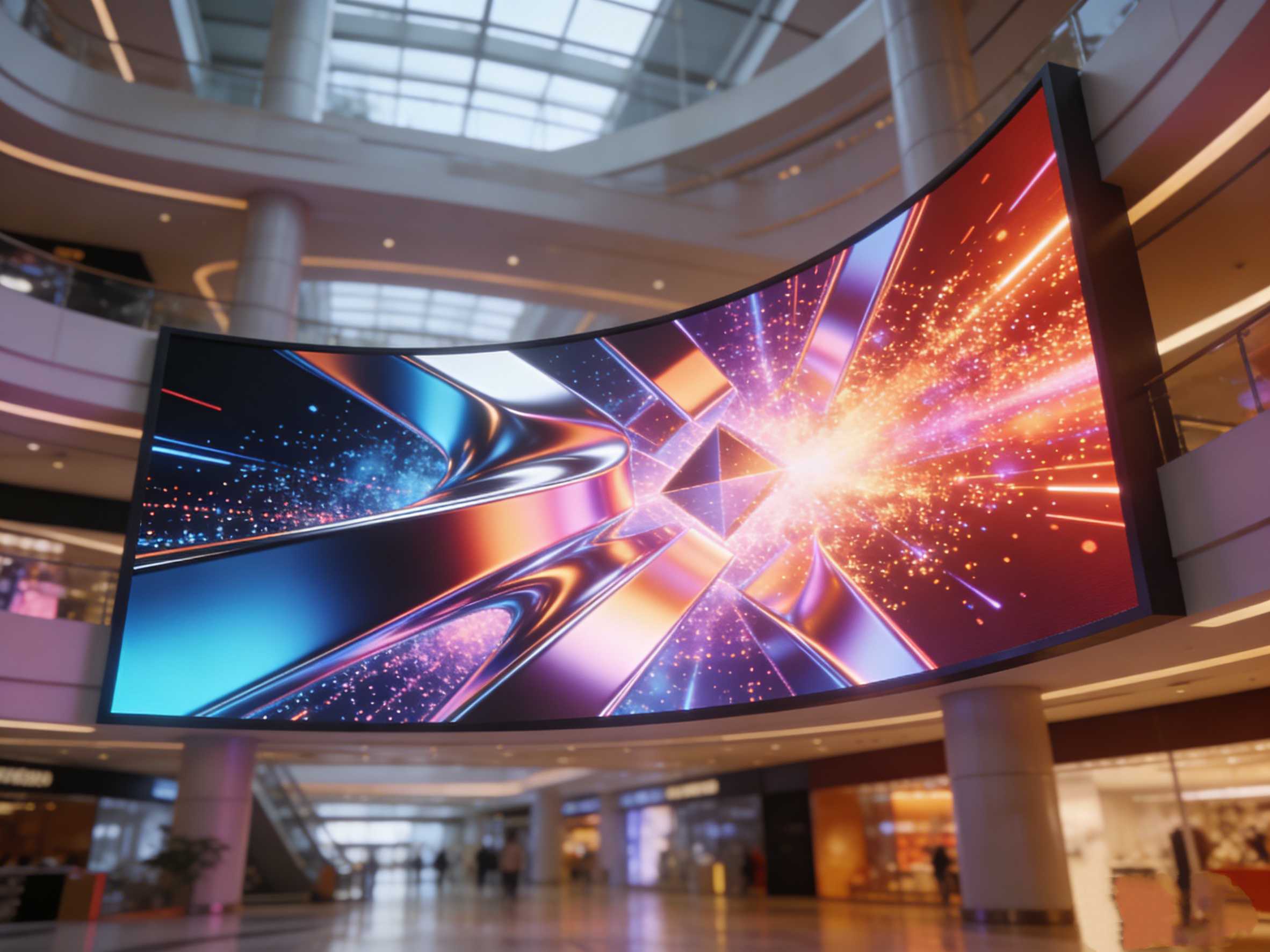
High brightness for daylight visibility — outdoor advertising panels need 5,000–10,000 nits to remain readable under direct sunlight. Indoor advertising (mall atriums, airport terminals) typically needs 1,500–3,000 nits.
24/7 operation capability — advertising walls don't get turned off at night. They run continuously, which means power supplies, fans, and LED chips need to handle constant thermal load without degradation.
Remote content management — advertising displays are often deployed across multiple locations. Built-in or compatible remote management systems (like NovaStar's cloud platform) let operators push content updates, monitor panel health, and schedule playlists from a central dashboard.
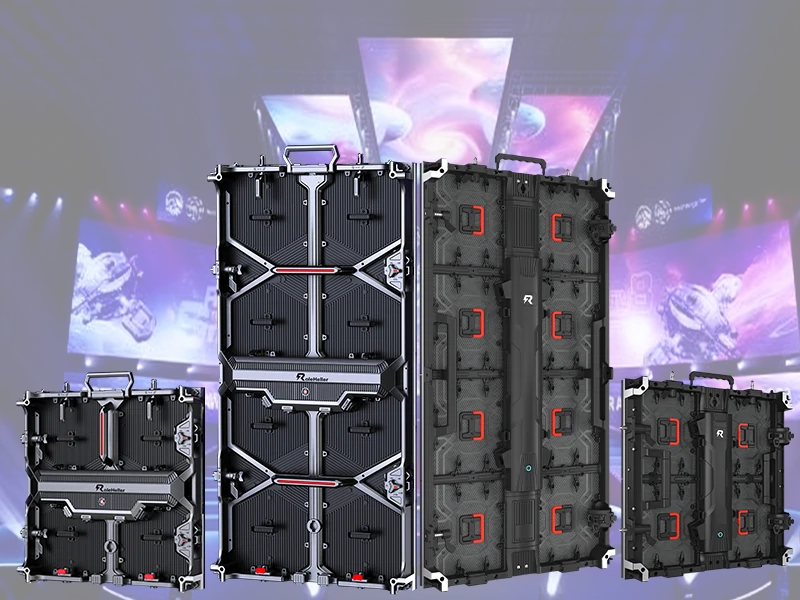
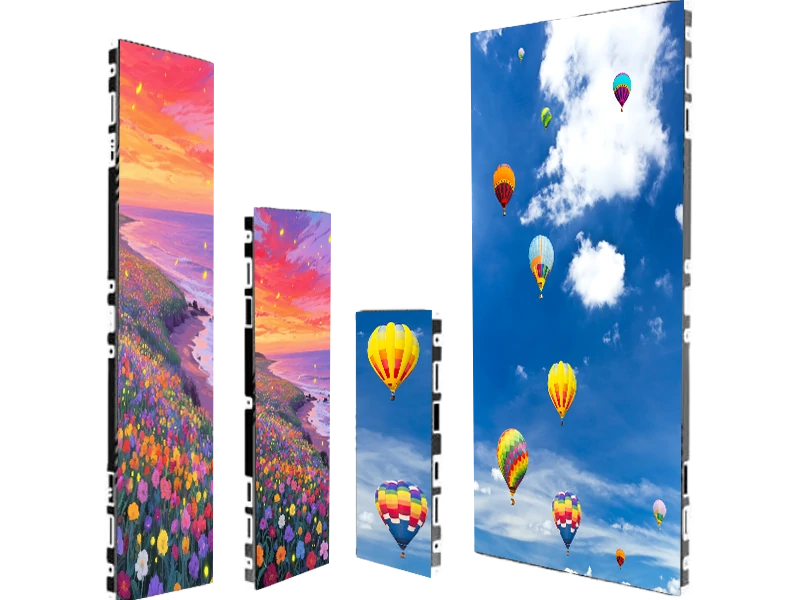
Large format with modular scalability — advertising walls are typically 20 sqm to 500+ sqm. The modular cabinet design needs to scale seamlessly from a single 3m × 2m display to a massive building-wrap installation without visible seams.
Understanding these requirements helps you evaluate whether a manufacturer truly specialises in advertising LED product — or whether they're just selling standard indoor panels and slapping an "outdoor" label on them.
Let me break down the cost drivers so you can look at any quote and understand where the money's going.
LED chip brand and brightness rating. For outdoor advertising, the chips need to deliver high luminance — typically 6,000–10,000 nits at full power. Nationstar and Kinglight dominate this segment with their high-brightness SMD packages. Nichia chips are available but less common in advertising applications since their strength is colour precision rather than raw brightness. Budget panels using unbranded or re-binned chips might save 15–20% upfront but tend to lose brightness faster under continuous UV exposure — you'll notice significant lumen depreciation after 12–18 months.
Pixel pitch and resolution. Advertising LED walls commonly use P4, P5, P6, P8, P10, and P16 pixel pitches. The pitch you choose depends on viewing distance and content type. P4–P6 works for close-up advertising (pedestrian-facing mall displays, bus shelters). P8–P10 is the sweet spot for highway billboards and building facades. P16 is used for very large installations viewed from 15+ metres away. Finer pitches cost more per square metre because they pack more LEDs — a P4 outdoor panel has roughly four times the LED count of a P8 panel at the same size.
Cabinet material and weatherproofing. Outdoor advertising cabinets are almost exclusively die-cast aluminium with IP65 sealing. The aluminium provides structural rigidity, heat dissipation, and corrosion resistance. Some budget options use sheet metal with silicone gaskets — they're cheaper but the seams degrade faster under UV exposure, leading to moisture ingress and premature failure. For coastal or high-humidity installations, powder-coated aluminium with marine-grade seals is worth the premium.
Power supply capacity and efficiency. Advertising walls run 24/7, so power efficiency directly impacts your operating cost. Mean Well power supplies with 90%+ efficiency are the industry standard. Some manufacturers cut costs with lower-efficiency units that save maybe $200 per cabinet upfront but cost you thousands in extra electricity over a 5-year installation life. At 50 sqm running 24/7, the difference between 85% and 92% efficiency translates to roughly $3,000–$5,000 per year in electricity savings.
Control system and remote management. NovaStar and Colorlight are the dominant control platforms for advertising LED walls. The receiving cards, sending cards, and cloud management software all factor into total cost. Some manufacturers include basic NovaStar systems in their panel price; others quote panels without any control system and expect you to source it separately. Always clarify what's included.
Here's what you should expect to pay for advertising-grade LED panels per square metre at wholesale volumes (typically 20+ sqm orders):
| Pixel Pitch | Application | Budget Tier ($/sqm) | Mid Tier ($/sqm) | Premium Tier ($/sqm) |
|---|---|---|---|---|
| P4–P5 | Close-up outdoor, pedestrian-facing | $1,800–$2,800 | $2,800–$4,200 | $4,200–$6,000 |
| P6–P8 | Street-facing, building facades | $1,200–$1,800 | $1,800–$2,800 | $2,800–$4,000 |
| P10 | Highway billboards, large facades | $800–$1,200 | $1,200–$1,800 | $1,800–$2,800 |
| P16 | Very large format, long viewing distance | $500–$800 | $800–$1,200 | $1,200–$1,800 |
These are panel-only prices. Total system cost — including video processors, control software, power distribution, mounting structures, cabling, and shipping — typically adds 40–65% on top. For a 50 sqm outdoor P8 advertising wall at mid-tier, you're looking at roughly $100,000–$160,000 all-in. That number catches a lot of people off guard when they've only budgeted for the panel price.
Here's a practical breakdown of manufacturers with genuine credibility in the advertising LED segment:
| Manufacturer | HQ | Price Position | Advertising LED Strengths | Best For |
|---|---|---|---|---|
| Unilumin | Shenzhen | Mid-to-high | Full range P3–P16; strong outdoor engineering | Large-scale billboards, building wraps |
| Absen | Shenzhen | Mid-to-high | ETL/FCC/CE certified; strong Western after-sales | DOOH networks, shopping mall displays |
| Leyard/Planar | Beijing/Oregon | High | Fine-pitch outdoor leader; Planar brand for premium Western market | Premium advertising, flagship retail |
| LianTronics | Shenzhen | Mid-to-high | Strong European presence; good customisation | European DOOH, transit advertising |
| Gloshine | Shenzhen | Mid-to-budget | High production capacity; fast turnaround | Budget DOOH rollouts, high-volume orders |
| Hikvision LED | Hangzhou | Mid-range | Integrated with surveillance ecosystem; strong software platform | Smart city advertising, integrated projects |
| RC LED | Shenzhen | Budget-to-mid | Aggressive pricing; large standard inventory | Cost-sensitive billboard projects |
A note on pricing — the gap between these manufacturers is real and it shows up in ways that matter for advertising applications. An outdoor P8 cabinet from Absen will cost considerably more than the same pitch from RC LED. The difference shows up in weatherproofing quality, power efficiency, colour consistency across large installations, and how well the panels hold up after 3–5 years of continuous outdoor operation. It's not always visible on day one, but it becomes very apparent when you're comparing energy bills and maintenance costs after year two.
You've narrowed your list to a few candidates. Here's a vetting process that'll save you from costly mistakes.
Request a live factory tour. Not a polished marketing video — a live video call where they walk you through their SMT production lines, cabinet assembly area, aging test room, and QC stations. A real advertising LED manufacturer will happily show you their equipment, introduce you to their engineering team, and answer technical questions about IP testing procedures, UV resistance testing, and thermal management design. A trading company will make excuses or redirect you to a showroom.
Ask for component documentation. Specifically: which LED chip brand and brightness rating, which driver IC model, which power supply brand and efficiency rating, and which control system. A legitimate manufacturer provides this immediately. If they say "our own proprietary chips" for all three components, that's usually code for "the cheapest option available."
Verify certifications for your market. For North America, you need ETL or UL listing plus FCC Part 15. For Europe, CE marking covering LVD, EMC, and RoHS. For outdoor advertising specifically, ask about IP rating test reports from accredited labs — not just the manufacturer's self-declaration. Some manufacturers claim IP65 but have never had their product independently tested. Ask to see the actual test report with the lab's watermark.
Order sample cabinets and stress-test them. For any order above $20,000, get 3–5 sample advertising cabinets. Here's what to test:
Run them at full brightness continuously for 7–14 days and monitor for brightness decay or colour shift
Spray them with water for 30+ minutes to verify IP sealing (this won't void warranty if done reasonably)
Check the cabinet weight — a P8 outdoor die-cast aluminium cabinet should be around 25–35 kg; significantly heavier usually means thicker gauge steel
Measure actual brightness with a lux meter at 1 metre distance and compare to spec sheet claims
Check the seam between two joined cabinets — it should be under 0.5mm for advertising-grade product
After years of watching people navigate this market, here are the errors that keep showing up:
Comparing indoor and outdoor quotes as if they're the same product. An indoor P6 panel at $1,200/sqm and an outdoor P6 panel at $1,800/sqm are fundamentally different products. The outdoor version has higher-brightness LEDs, IP65 sealing, UV-resistant materials, and enhanced thermal management. If a manufacturer quotes you indoor prices for an outdoor project, run — the panels will fail within months.
Ignoring total cost of ownership. The panel price is just the beginning. For a 50 sqm outdoor advertising wall running 24/7, annual electricity costs can range from $8,000–$15,000 depending on panel efficiency. Over a 5-year installation life, that's $40,000–$75,000 in electricity alone. Choosing panels with 90%+ efficiency power supplies might cost $5,000 more upfront but saves $15,000–$25,000 in energy costs over the installation life.
Not specifying brightness requirements upfront. Outdoor advertising panels facing direct sunlight need 6,500+ nits. Panels facing north or in shaded locations might be fine at 4,500–5,500 nits. Some manufacturers default to lower brightness to save on LED costs — the panels look great in the factory but become unreadable when installed on a south-facing building facade. Always specify your installation orientation and ambient light conditions.
Forgetting about mounting structure costs. A 50 sqm outdoor advertising wall needs a steel mounting structure that can withstand local wind load requirements — which in some regions means resisting 150 km/h wind speeds. The mounting structure can cost $15,000–$40,000 depending on height, location, and engineering requirements. This is almost never included in panel quotes.
Skipping remote management capability. Modern advertising LED walls should include remote monitoring and content management. Being able to check panel health, adjust brightness schedules, and push content updates remotely saves significant operational cost — especially for multi-site deployments. Make sure your control system supports cloud-based management.
Buying direct from the manufacturer gives you the lowest per-unit price — typically 15–30% less than buying through a distributor. But you take on logistics, import clearance, warranty claims, and technical support across time zones.
Working with a local distributor or digital signage integrator costs more, but you get local technical support, faster warranty resolution, help with system design and content management setup, and someone who understands your local regulations for outdoor advertising (permits, brightness restrictions, zoning laws). For advertising installations that often involve municipal permits and compliance with local signage ordinances, having a local partner who can navigate the regulatory landscape is often worth the premium.
My suggestion? If you're an experienced digital signage company with your own installation team and import infrastructure, going direct works well. If you're new to outdoor LED advertising or the project involves complex permitting and structural engineering, work with a reputable local partner. The markup they charge covers not just the product — it covers the regulatory navigation, structural engineering, and ongoing maintenance that keep your advertising wall running for years.
Having worked with panels from factories across all tiers, here's where I land. The advertising LED segment has matured considerably over the past few years. A well-made P8 outdoor panel from a solid mid-tier manufacturer delivers impressive brightness and durability at a reasonable price point. The gap between mid-tier and premium has narrowed — you're mostly paying for brand recognition, extended warranty, and global support infrastructure at the top end.
For large-scale billboard installations and premium DOOH networks, I'd lean toward Unilumin, Absen, or LianTronics. The price premium over budget options is real — maybe 30–50% more per square metre — but the reliability difference pays for itself when you're dealing with a client who expects 99.9% uptime on a high-revenue advertising location.
For cost-sensitive DOOH rollouts or advertising installations in secondary markets, Gloshine, RC LED, or Hikvision LED can deliver functional advertising product at attractive prices. Just be disciplined about sample evaluation and pre-shipment inspection. The risk at this tier isn't that the product is terrible — it's that quality varies between batches and you need to catch inconsistencies before they ship.
One thing I've noticed over the years — the relationship you build with a manufacturer matters more than most buyers realise. Your first order is always the most expensive. The second and third orders come with better pricing, priority production scheduling, and more flexible payment terms. Find a manufacturer that checks your boxes and stick with them. The best deals go to loyal buyers, not deal-hoppers.
At the end of the day, an advertising LED video wall is a significant investment that'll define the visual presence of your brand or your client's brand for years. Spending a bit more upfront on quality components, proper weatherproofing, and a reliable manufacturer saves real money — and real headaches — down the road. Hope this helps you make a confident decision for your next project.
What pixel pitch is best for outdoor advertising LED walls?
P8 and P10 are the most popular choices for outdoor advertising — P8 works well for viewing distances of 8+ metres (street-facing billboards, building facades), while P10 is ideal for 10+ metre viewing distances (highway billboards, large building wraps). For pedestrian-facing advertising at close range (3–6 metres), P4–P6 delivers sharper imagery but at higher cost. Your ideal pitch depends on the minimum viewing distance, content type, and budget.
How much does an outdoor advertising LED video wall cost?
Panel prices range from $500/sqm for budget P16 panels to $6,000/sqm for premium P4 panels. For the most common advertising pitches, expect $800–$4,000/sqm depending on pixel pitch, manufacturer tier, and component quality. Total installed system cost — including processors, mounting structures, power distribution, cabling, and shipping — typically adds 40–65% on top. For a 50 sqm P8 outdoor wall, expect $100,000–$160,000 all-in.
What brightness level do outdoor advertising LED walls need?
For outdoor advertising facing direct sunlight, you need 6,500–10,000 nits minimum. Panels facing north or in shaded urban locations can operate at 4,500–5,500 nits. Indoor advertising in well-lit environments (mall atriums, airports) typically needs 1,500–3,000 nits. Always specify your installation orientation and ambient light conditions when requesting quotes — under-bright panels become invisible in daylight.
Which LED chip brands are best for advertising panels?
Nationstar and Kinglight dominate the outdoor advertising segment with their high-brightness SMD LED packages that deliver 6,000–10,000 nits with good long-term stability. Nichia chips offer excellent colour consistency but are less commonly used in advertising due to their premium pricing. Budget panels using unbranded chips may save upfront but tend to show significant brightness decay after 12–18 months of continuous outdoor operation.
How do I verify an advertising LED manufacturer is legitimate?
Request a live virtual factory tour showing their SMT lines, aging test room, and QC stations. Ask for specific component brands (LED chips, driver ICs, power supplies). Verify certifications (ETL, FCC, CE) with the issuing laboratories. For outdoor products specifically, ask for independent IP rating test reports from accredited labs — not just self-declarations. Order sample cabinets and stress-test them with continuous operation and water exposure.
What's the typical lifespan of an outdoor advertising LED wall?
Quality outdoor advertising LED panels from reputable manufacturers typically last 50,000–100,000 hours to half-brightness — roughly 5.7–11.4 years of continuous 24/7 operation. In practice, most advertising installations are upgraded after 5–7 years due to technology improvements (finer pitch, better efficiency) rather than panel failure. Components most likely to need replacement before end-of-life are power supplies and cooling fans.
How do I manage content on an advertising LED wall remotely?
Most modern advertising LED systems use NovaStar or Colorlight control platforms with cloud-based management software. These platforms let you schedule content playlists, adjust brightness based on time of day, monitor panel health in real-time, and push content updates to multiple locations from a single dashboard. Some manufacturers offer their own proprietary cloud platforms as well. Confirm remote management capability when requesting quotes.
What power consumption should I expect from an advertising LED wall?
Average power consumption for outdoor advertising panels ranges from 300–800 watts per square metre depending on pixel pitch, brightness setting, and content type (static images consume less than video). A 50 sqm P8 wall running at 70% average brightness might draw 15–25 kW continuously. Over a year, that translates to $8,000–$15,000 in electricity costs at typical commercial rates. Choosing high-efficiency power supplies (90%+) can reduce this by 15–20%.
What mounting structure do I need for an outdoor advertising LED wall?
Mounting structures vary by installation type — building facade mounts use steel bracket systems anchored to the building structure, freestanding billboards require engineered foundations and steel pole or frame structures, and rooftop installations need ballast or penetrative mounting with wind load engineering. Wind load requirements vary significantly by region — coastal areas may require structures rated for 150+ km/h winds. Always engage a structural engineer before finalising your mounting plan.
What is the typical lead time for ordering advertising LED panels from China?
For standard advertising specifications like P8 or P10 outdoor cabinets, production takes 25–40 days from deposit receipt for orders of 20–50 sqm. Custom pixel pitches, unusual cabinet sizes, or very large orders (100+ sqm) may extend to 40–60 days. Add 18–35 days for ocean freight or 5–7 days for air freight. Plan for a minimum of 6–10 weeks total from order to delivery. During peak season (Q3–Q4 ahead of holiday advertising campaigns), lead times can extend by 2–3 weeks.