 English
Hey there! If you're planning an event and wondering about LED screen rental costs, you've come to the right place. Figuring out the price can feel confusing because, let's be honest, it's not a one-size-fits-all situation. The cost depends on a bunch of factors working together .
But don't worry, we're going to break it all down in simple terms. By the end of this, you'll know exactly what you're paying for and how to get the best value for your event. So, grab a coffee, and let's get into it!
First things first, let's talk numbers. While the final price tag depends on your specific needs, it helps to have a ballpark figure.
Generally, you can expect to pay somewhere between $500 to $5,000+ per day for the screen rental itself . That's a wide range, right? Think of it this way: a smaller screen for a company meeting will be at the lower end, while a massive video wall for a music festival will be at the top.
A common way prices are calculated is by the square foot. You might see rates of $50 to $70 per square foot, per day . So, a 100-square-foot screen could cost between $5,000 and $7,000 for a single day. The good news is, if you need the screen for more than a day, many companies offer discounts of 10-20% for multi-day rentals .
Here’s a quick table to give you a better idea of what to expect for different event sizes :
Okay, so why is there such a huge range in prices? It all comes down to the specs of your event. Here are the big players:
This is probably the most obvious one. Larger screens cost more because they use more materials and are more complex to handle .
But just as important is the pixel pitch. This is the distance, in millimeters, between the tiny light dots (pixels) on the screen. A smaller pixel pitch (like P2.5) means the dots are closer together, creating a super sharp image even if you're standing really close. A larger pixel pitch (like P6 or P10) is fine for audiences viewing from a distance .
Here's the catch: a smaller pixel pitch is more expensive. Sometimes, a screen with a P2.5 pitch can cost 25-40% more than one with a P4.8 pitch . So, if your audience will be far away, you can save a good chunk of money by opting for a larger pixel pitch.
Where you're using the screen makes a massive difference. Outdoor LED screens are built tougher. They need to be much brighter (5,000+ nits) to compete with the sun and are weatherproofed (usually with an IP65 rating) to handle rain or dust .
All this extra engineering means an outdoor screen can be 20-50% more expensive than a similarly sized indoor screen . You're paying for that durability and brightness.
How long you need the screen is a huge factor. Single-day rentals often have a premium. Once you go beyond a day, discounts kick in .
Multi-day rentals (3+ days): Often see discounts of 10-25% on the daily rate .
Weekly/Monthly rentals: Can be even more cost-effective on a per-day basis.
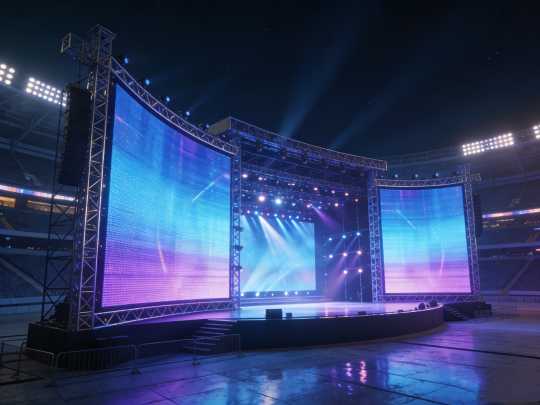
Now, here's where many people get surprised. The rental fee for the screen itself is often only 60-70% of the total cost. You need to account for the essential services that bring that screen to life .
When you get a quote, make sure it includes or clearly states the cost for:
Professional Installation & Setup: This isn't just plugging in a TV. It requires skilled technicians and can cost $1,000 to $6,000 or more, depending on how complex the setup is . Outdoor setups that need scaffolding or heavy-duty trusses will be on the higher end.
Delivery & Transport: Getting a large, fragile screen to your venue isn't free. Costs depend on distance and can range from $300 for a local delivery to $2,000+ for long-distance trips .
On-Site Technician: Having a technician present during your event is like an insurance policy. For about $250-$500 per day, they handle any glitches, manage content playback, and ensure everything runs smoothly . It's highly recommended, especially for important events.
Other Potential Fees:
Power Solutions: Outdoor events may require a generator, adding $150-$500 per day .
Insurance: Optional damage/theft coverage might cost $50-$150 per day .
Content Creation: If you need help designing videos or graphics, budget $200-$1,000 or more .
The key is to ask for an itemized quote that breaks down all these costs. A reputable company like RoleHeller will be transparent about this from the start.
Who doesn't love a good saving? Here are some practical tips to keep your costs under control without sacrificing quality:
Book Early: Planning ahead pays off, literally. Securing your rental 4-6 weeks in advance can sometimes get you early-bird discounts of 15-30% .
Be Smart with Specs: Choose a pixel pitch that's "good enough" for your audience's viewing distance. You don't need a super-fine P2.5 screen if the closest person is 10 meters away. A P3.9 or P4.8 screen can save you a lot .
Consider Weekday or Off-Season Dates: Rental rates for Monday-Thursday events can be up to 20% lower than peak weekend prices .
Ask About Package Deals: If you also need a sound system, lighting, or staging, bundling everything with one provider can often save you 10-20% .
Get Multiple Quotes: This is a no-brainer. Contact a few different rental companies and compare their itemized quotes. But remember, the cheapest option isn't always the best—consider their reputation and what's included in the service .
At the end of the day, renting an LED screen is about creating an amazing experience for your audience. By understanding the costs involved and planning strategically, you can make a smart investment that makes your event unforgettable. The goal is to find the right balance between your budget and the impact you want to create.
Q1: Does the rental price usually include VAT?
A: Not always. Many quotes exclude VAT (Value Added Tax), which can add a significant percentage (e.g., 20%) to your final bill. Always ask if the price is "all-inclusive" or "plus VAT" .
Q2: Can I rent an LED screen for just a few hours?
A: It's possible but less common. Some suppliers offer hourly rates for small screens, but there's usually a minimum rental period of one day. Half-day rates might be available at a slight discount compared to a full day .
Q3: What happens if the screen gets damaged during my event?
A: This depends on the rental agreement. Many companies include basic insurance, but you may be liable for damages due to negligence. Some suppliers offer additional insurance coverage for a daily fee for extra protection .
Q4: How far in advance should I book for a major event?
A: For large or high-profile events, it's wise to start the process 8-12 weeks in advance. This gives you enough time to secure the best equipment. For smaller events, 4-6 weeks is a good timeframe .
Q5: What's the difference between renting an LED wall and using a large projector?
A: LED walls are significantly brighter, more vibrant, and work in lit conditions. They are also modular and seamless. Projectors require a dark environment and can be affected by shadows, but they may be a more budget-friendly option for some simple applications .
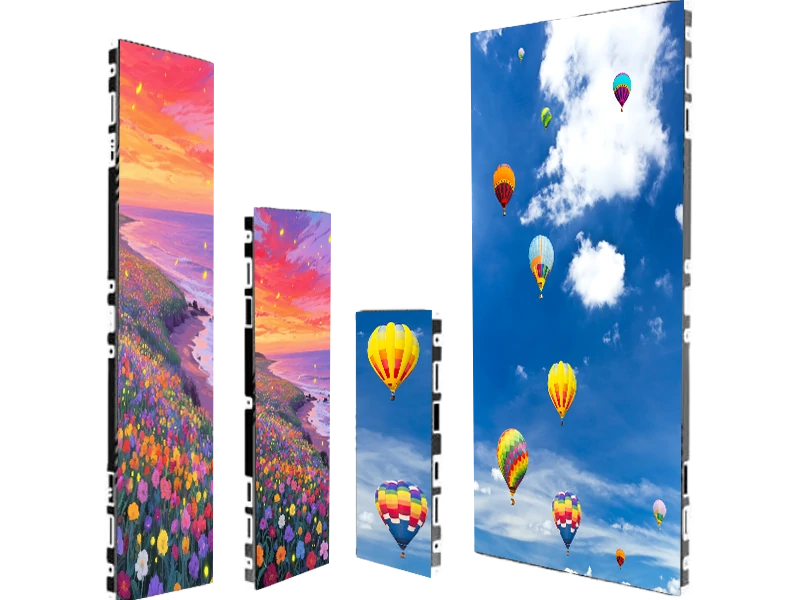
.jpg "Wholesale LED Counter Display Manufacturers_Direct")
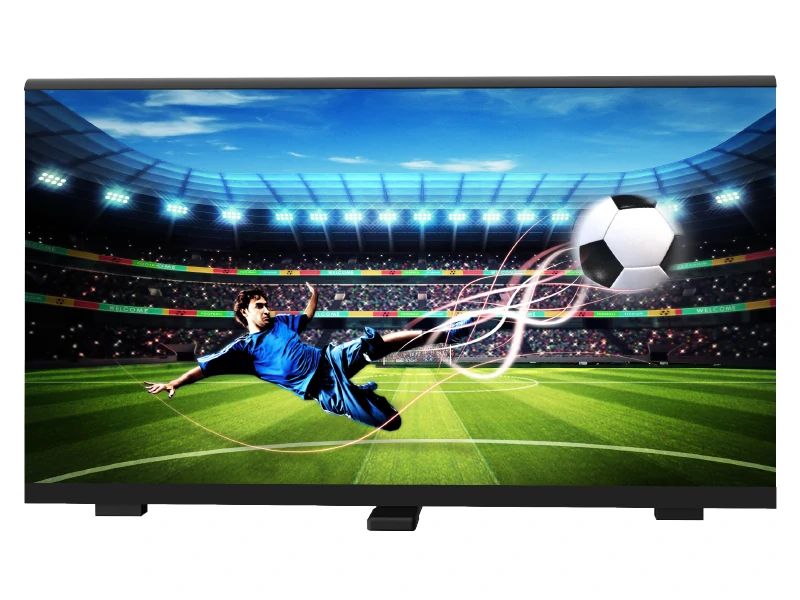
.jpg "Flexible LED panels: how to choose?")
.jpg "Who Makes China P16 Outdoor LEDs?")