English

If you are sourcing directly from rental LED display manufacturers in China, here is the short, unvarnished truth: skip the trading firms in downtown Shenzhen and head straight to the certified assembly and fabrication hubs in Bao'an District, Huizhou, or Dongguan. Focus your shortlisting strictly on factories that run automated surface-mount technology (SMT) lines in-house, machine their own die-cast magnesium or aluminum alloy cabinets to a verified tolerance under 0.1 mm, use gold-wire Nationstar or Kinglight LEDs, and pair them with high-refresh driver ICs like Macroblock MBI5153 or Chipone ICN2153. If a vendor cannot provide unedited video proof of a continuous 72-hour full-white burn-in test alongside batch-matched single-bin LED calibration data, drop them from your list regardless of how attractive their per-square-meter quote looks.
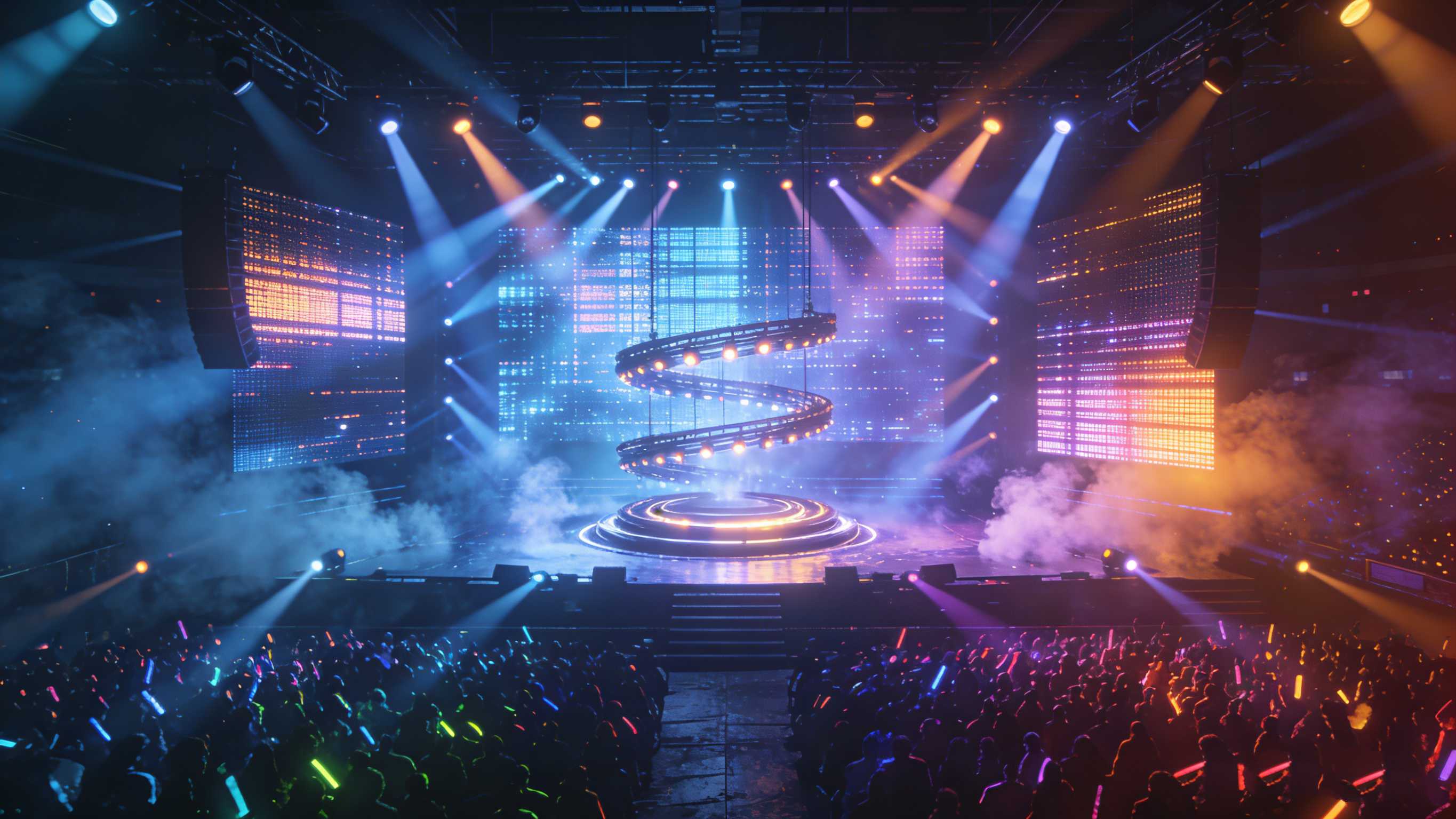
Picture this: you run an AV production house or an event gear rental firm in Texas or Rotterdam. You land a contract for a summer music festival tour or a series of high-profile corporate conferences. You need 150 square meters of indoor P2.6 and outdoor P3.9 rental panels. You hit up Google or Alibaba, and within 24 hours your inbox is flooded with forty slick brochures. Half the suppliers claim to be the number-one manufacturer in China, promising rock-bottom rates like $380 per square meter with "Grade A" components.
Sounds like a steal, right? Fast-forward four months: the flight cases arrive at your warehouse, your crew builds a 10-meter-wide wall for rehearsal, and you notice visible dark seam lines between cabinets. Even worse, after two truck moves, corner pixels start popping off like dry corn, and under stage spotlights the refresh rate causes ugly black scan lines on the client's camera feed. Replacing bad modules mid-tour while arguing over WhatsApp with an overseas rep who suddenly stopped answering quickly turns into an expensive disaster. To make sure that never happens to you, let's break down how to evaluate these factories, calculate actual production costs, and secure gear that actually survives life on the road.
When we are talking about fixed commercial displays—like an advertising billboard bolted to a highway pylon or a retail video wall inside a shopping mall—the panels get mounted once, calibrated, and sit there untouched for years. Rental displays live in hell by comparison.
A touring rental panel gets pulled out of a road case, slammed onto hanging truss bars by local stagehands who may not handle your gear gently, locked in place, powered up for eighteen hours, torn down at midnight, packed back into foam-lined flight cases, and rattled around in the back of a semi-truck for 400 miles to the next gig.
[Factory Assembly & Single-Bin Calibration]
                     │
                     ▼
[Flight Case Transport & Road Shock]
                     │
                     ▼
[Fast-Lock Rigging on Stage Truss (Hanging / Ground Stack)]
                     │
                     ▼
[14-18 Hours Live Runtime (Thermal & High Refresh Stress)]
                     │
                     ▼
[Midnight Teardown & High-Frequency Mechanical Wear]
Because of this constant mechanical abuse, your checklist when evaluating Chinese manufacturers must prioritize mechanical build quality just as much as optical performance.
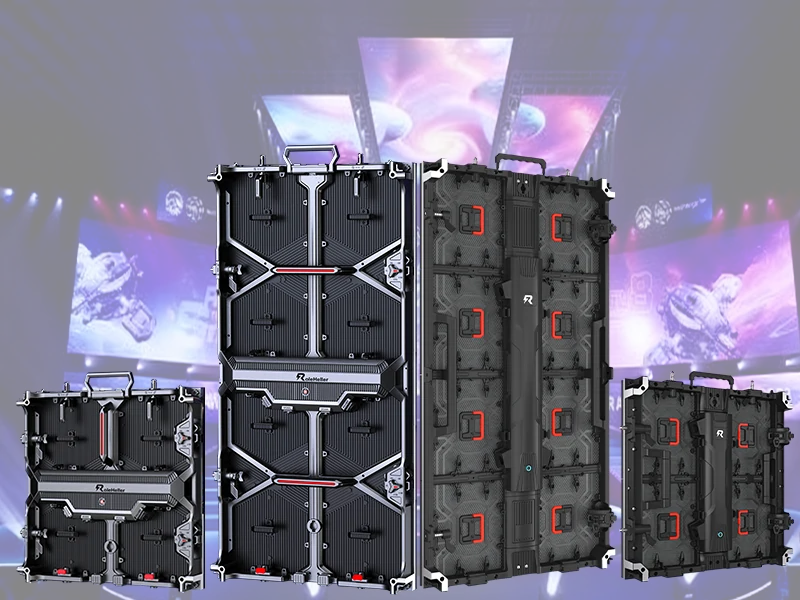
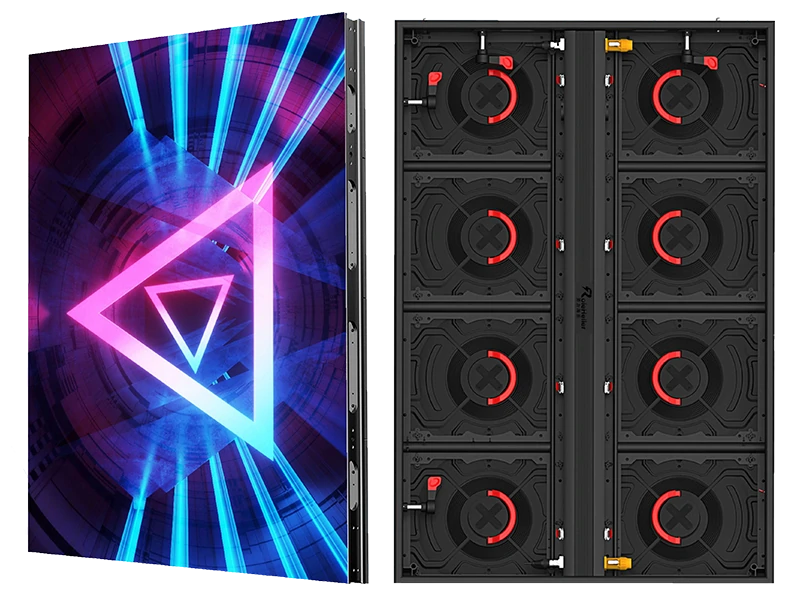
Cabinet Material Rigidity: Never buy heavy iron or cheap gravity-cast aluminum cabinets for touring. Look for high-precision die-cast aluminum or magnesium alloy frames. Magnesium is roughly 30% lighter, which saves your crew's backs and reduces freight weight, but aluminum provides slightly better rigidity for massive outdoor curved walls.
Tolerance Stacking: If a cabinet's corner machining tolerance is off by even 0.15 mm, that tiny gap compounds across a 12-cabinet wide run, leaving an unsightly black seam right down the center of your main video wall.
Corner and Edge Protection: The best touring panels have integrated, spring-loaded flip-out corner protectors on all four corners. If a stagehand drops a cabinet onto a concrete arena floor, the metal tab takes the hit instead of crushing the fragile corner SMD diodes.
Fast-Locking Mechanisms: Look for oversized, ergonomic industrial latches that can be operated single-handedly with a positive mechanical click. If an operator needs two hands and a hex wrench just to lock two panels together, your load-in times will double.
Curving Capabilities: If you do creative stage designs, you need modular curving locks built directly into the cabinet joints, allowing smooth concave and convex angles (typically from -10° to +10° in precise 2.5° steps).
When reviewing a bill of materials (BOM) from a Chinese manufacturer, the sales rep will throw dozens of technical acronyms at you. Let's cut through the jargon and look at what actually matters under the hood.
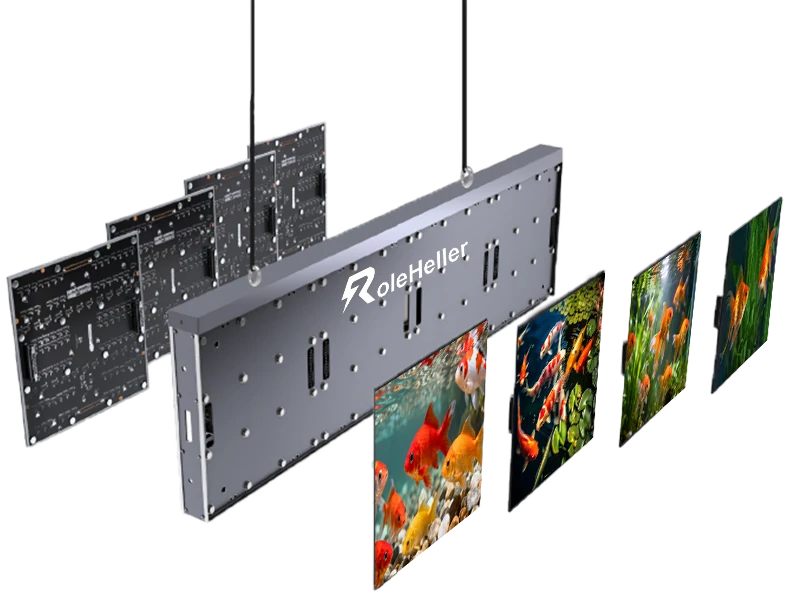
Inside every surface-mount LED diode, a microscopic wire connects the semiconductor die to the lead frame.
Gold-Wire Bonding (Nationstar Gold / Cree / Nichia): Gold does not oxidize, handles heat cycles without brittleness, and delivers an operating life well past 50,000 to 100,000 hours with minimal color shift.
Copper/Alloy Wire: Much cheaper, but copper oxidizes rapidly if moisture penetrates the epoxy lens. After a few rainy outdoor festivals, thermal expansion causes micro-fractures in the bond wire, resulting in random dead pixels across your screen.
Rule of thumb: Always insist on written contract clauses specifying gold-wire packaging for your rental inventory.
If your corporate clients film their keynote speakers or stage productions for livestreaming, display refresh rate is critical.
3,840 Hz Refresh Rate: The standard minimum for modern live events. Achieved with drivers like Chipone ICN2153 or Macroblock MBI5124. This eliminates camera scan lines at standard shutter speeds.
7,680 Hz Refresh Rate (High-End Broadcast / XR): Driven by high-performance ICs like Macroblock MBI5264 or MBI5153 with 16-bit grayscale. This allows high-speed broadcast cameras to shoot directly at the screen without moiré or flicker, even when dimmed down to 20% brightness in dark theatrical settings.
NovaStar is the undeniable workhorse across Chinese rental manufacturing, but the specific model card makes a huge difference:
NovaStar A5s Plus / A7s Plus: Reliable, industry-standard cards suitable for general corporate staging and music events.
NovaStar A8s / A10s: Adds advanced features like low latency, HDR10 support, and precise color management.
Brompton Technology (Tessera R2/R2+): The undisputed king for high-end film production, virtual production (XR), and elite concert tours. Some high-tier Shenzhen manufacturers offer Brompton receiver cards as an optional upgrade. It adds significant cost, but rental houses specializing in film and luxury brand events can charge premium dry-hire rates for it.
To help you benchmark quotes, here is how parts typically shake out across different price brackets from Chinese factories:
| Component Category | Budget Rental Spec (High Risk) | Touring Standard (Sweet Spot) | Broadcast & XR Elite Tier |
|---|---|---|---|
| Target Price / m² (P2.6-P3.9) | $350 – $500 | $650 – $950 | $1,200 – $2,200+ |
| LED Packaging | Generic Copper Wire SMD | Nationstar Copper/Gold Wire | Nationstar Gold / Cree / IMD 4-in-1 |
| Cabinet Construction | Standard Die-Cast Aluminum | CNC-Machined Magnesium Alloy | Ultra-Precise CNC Magnesium / Carbon Fiber |
| Driver IC & Refresh | Basic IC, 1,920 – 3,840 Hz | High-Refresh IC, 3,840 – 7,680 Hz | High-End IC, 7,680 Hz with 16-bit Grayscale |
| Receiving Card | Colorlight or NovaStar basic | NovaStar A5s Plus / A8s | NovaStar A10s Pro or Brompton R2+ |
| Connectors (Power/Data) | Generic unbranded twist-locks | Seetronic Waterproof IP65 | Genuine Neutrik powerCON TRUE1 TOP & etherCON |
| Power Supplies | Generic domestic brand | Chuanglian / Megmeet | Mean Well UHP Low-Noise Series |
| Typical Lifespan on Tour | 12 – 18 months before high failure | 4 – 6 years of active rental use | 6 – 8+ years with tight optical uniformity |
Let's talk raw numbers. Pricing from Chinese factories fluctuates depending on raw material costs (silicon, copper, resin), but the table below outlines realistic ex-works (FOB Shenzhen) baseline pricing for complete rental packages.
Note: A "complete rental package" should include the display cabinet, internal receiving card, power supply, inter-cabinet connection cables, and a dedicated share of a road-ready flight case (typically 6 to 8 panels per case).
| Pixel Pitch & Environment | Typical Brightness (Nits) | Optimal Viewing Distance | Average FOB China Price (per m²) | Ideal Production Applications |
|---|---|---|---|---|
| P1.95 Indoor | 800 – 1,000 | 2 meters (6.5 ft) | $1,100 – $1,600 | High-end corporate executive summits, auto shows, TV studio backdrops |
| P2.60 Indoor | 1,000 – 1,200 | 2.5 meters (8.2 ft) | $650 – $950 | The undisputed industry standard for indoor corporate galas and trade show booths |
| P2.97 Indoor / Outdoor | 1,200 (In) / 4,500 (Out) | 3 meters (10 ft) | $700 – $1,050 | Versatile hybrid workhorse for indoor events and evening outdoor concerts |
| P3.91 Outdoor | 4,500 – 6,000 | 4 meters (13 ft) | $550 – $800 | Daylight music festivals, sports arenas, outdoor public viewing zones |
| P4.81 Outdoor | 5,500 – 7,000 | 5 meters (16.4 ft) | $480 – $680 | Large festival side-screens, highway staging, budget outdoor perimeter walls |
When you negotiate with suppliers, make sure your quotation includes:
Flight Cases: High-grade 9mm or 12mm birch plywood road cases with heavy-duty Penn Elcom hardware, recessed butterfly latches, and 4-inch blue elastic casters. Cheap plywood cases will fall apart after three load-ins.
Hanging / Ground-Stack Bars: Dual-purpose rigging fly-bars that hook onto your truss clamps or ground-stack base plates.
The 5% Single-Bin Spare Parts Rule: Never accept an order without 5% spare bare LED modules, spare power supplies, receiving cards, and ribbon cables—all drawn from the exact same manufacturing batch (same LED binning lot). If you need replacement modules a year later, the factory cannot match the color temperature of your original run.
If you are spending $50,000 or more on rental gear, flying to China for a factory audit—or hiring an independent quality-control inspector like QIMA or Bureau Veritas—pays for itself tenfold. Here is the exact walkthrough process you should follow on the factory floor:
[SMT Component Inspection] ──► [Automated Solder Paste & AOI]
                                         │
                                         ▼
[Cabinet CNC Tolerance Check] ──► [Manual Assembly & Potting]
                                         │
                                         ▼
[Waterproof Dunk Tank Test (Outdoor)] ──► [72-Hour Continuous Burn-in]
                                         │
                                         ▼
[Optical Chroma Calibration] ──► [Flight Case Packing & Drop Check]
A reputable manufacturer runs high-speed automated SMT placement machines (such as Yamaha, Panasonic, or Fuji). Watch how they store bare LED diodes; diodes must be kept in climate-controlled dehumidifying storage cabinets. If modules sit out on open workbenches absorbing ambient humidity before soldering, moisture will turn to steam inside the reflow oven, causing micro-popcorn cracking inside the diodes.
For outdoor-rated panels (IP65), the factory must put finished modules through automated conformal coating or silicone potting. Ask to see their water test station. High-standard factories don't just spray water from a garden hose; they run pressurized oscillating water jet chambers and submerge sample modules in water tanks for 30 minutes before running insulation resistance tests.
This is where the truth comes out. Walk into the aging room and look for the following:
Are the screens running at 100% full-white brightness for extended stretches? Full-white draws maximum current and generates the most heat, stressing the power supplies and solder joints.
Are there flickering pixels, color banding, or hot-running modules? Bring a handheld thermal imaging camera. If a specific cluster of driver ICs runs hotter than 70°C in an air-conditioned factory, those panels will overheat and fail under direct summer sunlight.
Have the factory technicians hang a 5x5 cabinet array right in front of you using hanging bars. Grab the wall and shake it. Inspect the vertical and horizontal seams under both flat white and low-brightness gray test patterns. If you see light leakage, dark gaps, or steps between adjacent panels, reject the batch until the mechanical pins and latches are recalibrated.
Question: Can I mix panels bought today with panels I buy from the same factory two years from now?
Answer: Physically, yes, if the cabinet tooling hasn't changed. Optically, almost certainly not without recalibration. LED chip manufacturers produce diodes in varying wafer batches. Even within the same factory, batch A will have slight wavelength and forward-voltage variances compared to batch B. If you mix them on the same wall, you will see a checkerboard effect. To mitigate this, always buy 10% to 15% more inventory than your typical maximum stage size in one single order, or ensure your processor supports full-wall camera-based optical calibration.
Question: Is Brompton processing worth the extra investment over NovaStar for an AV rental fleet?
Answer: For standard corporate keynotes, outdoor concerts, and general event staging, modern NovaStar processing (such as the MX40 Pro with A10s Pro cards) offers superb visual performance and reliability at roughly half the total control cost. However, if your business rents to high-end television studios, feature film sets, or virtual production volume stages, Brompton is non-negotiable. Directors of photography specifically demand Brompton for its proprietary ShutterSync, pure tone reproduction, and ultra-low frame latency.
Question: What is the real difference between GOB, COB, and standard SMD for rental panels?
Answer: Standard SMD leaves the three-color diodes exposed on the PCB surface, making them prone to physical impact damage when bumped. GOB (Glue-on-Board) applies a transparent epoxy shield over the SMD diodes, dramatically increasing impact resistance and waterproof ratings—ideal for tough rental tours. COB (Chip-on-Board) mounts bare micro-LED chips directly onto the substrate with no individual packaging, delivering exceptional black levels and durability, though on-site module repair is virtually impossible without sending the tile back to the factory.
To be honest, we've seen plenty of experienced rental operators get burned simply because they prioritized saving $50 per square meter during contract negotiations. In the LED manufacturing ecosystem, factories will build to whatever budget you give them. If you aggressively grind a sales manager down on price, they rarely walk away from the deal; instead, they quietly swap out gold-wire LEDs for copper-wire alternatives, downgrade the power supply series, or cut the factory burn-in time from 72 hours down to 12 hours.
When drafting your purchase contract, make your engineering requirements airtight:
Specify Exact Component Brands: Never write "High quality LED and power supply." Write "Nationstar Gold-Wire SMD2121, Macroblock MBI5153 Driver IC, Mean Well UHP-350-5 Power Supplies, and NovaStar A8s Receiving Cards."
Tie Payment Milestones to Verified Inspection: Standard commercial terms are 30% deposit to start production, and 70% balance before dispatch. Never wire that final 70% based on photos. Pay only after your third-party inspection agent has verified the complete serial number batch, tested the panels on the aging line, and supervised the crating into flight cases.
Demand Modular Front & Rear Servicing: On tour, you don't want to dismantle half a video wall just to fix one bad module. Make sure your rental cabinets allow fast magnetic front maintenance using a vacuum suction tool, as well as quick-release rear latches for servicing power boxes without cutting power to the rest of the chain.