 English
Picking an LED display manufacturer sounds simple until you get three quotes that look nothing alike. Same size, same pitch—yet the prices differ by forty percent. So who is actually telling you the truth?
The short answer: the right manufacturer is not necessarily the biggest brand or the cheapest factory. It is the one whose production capability matches your pixel pitch, brightness, and installation environment—and who can prove it with verifiable certifications, a real factory audit trail, and a quote that lists every component.
The industry has a clear tier structure, and knowing it saves you from comparing apples to warehouses.
Tier-1 global brands (Chinese): Leyard (Beijing), Unilumin (Shenzhen), Absen (Shenzhen), Ledman, LianTronics, AOTO, Qiangli Jucai. Leyard has held the top global share position for years; Absen leads in export volume with products shipped to 140+ countries; Unilumin covers 160+ countries with strong outdoor and creative-display lines.
Tier-1 international: Daktronics (US, stadiums/scoreboards), Planar (US), Samsung & LG (Micro LED premium indoor), Barco.
Mid-tier Shenzhen/Dongguan factories: solid for standard indoor/outdoor fixed-install and rental screens at much better pricing, provided you verify them properly. This is where most importers actually buy.
Trading companies: no production line. Not automatically bad—they can be faster and more flexible—but you must know you are dealing with one, because warranty and component traceability flow differently.
My take: if your project is a landmark installation, a broadcast studio, or a stadium scoreboard, go Tier-1. If you need ten lobby screens, a church video wall, or rental cabinets for events, a verified mid-tier factory will usually deliver better value without noticeable quality loss.
This is the single most valuable filter, and almost nobody applies it correctly.
Ask for these five items. A genuine manufacturer produces all of them within 48 hours:
Business license + VAT invoice registration — check that the registered scope includes "manufacturing/production," not just "sales."
ISO 9001 certificate with certificate number — verify it on the registrar's website, not just a PDF they emailed.
A live video walk-through of the production floor — ask them to show you the SMT line, the aging/rack-testing area, and a cabinet being assembled. Request that they place a handwritten note with today's date and your company name in frame. Trading companies routinely fail this one.
Component traceability list — brand of LED lamp (Nationstar, Kinglight, Cree), driver IC, power supply (Mean Well, Great Power), receiving card (Novastar, Colorlight), and PCB layer count. Factories list these proudly; traders blur them.
Test reports tied to their own company name — FCC/CE reports issued to the manufacturer, not reassigned.
One more thing I do without fail: run the company name through the exhibition records. ISLE (Shenzhen), InfoComm, ISE Barcelona, and Dubai Integrated Systems are where real manufacturers exhibit year after year. Booth history is harder to fake than a brochure.
Most bad purchases happen here, not at the price negotiation. Get the spec wrong and no amount of brand prestige fixes it.
| Scenario | Recommended Pitch | Brightness | Key Notes |
|---|---|---|---|
| Small meeting room (viewing 3–6 m) | P1.2 – P1.8 COB/fine pitch | 600–1000 nits | Low-light gray-scale performance matters more than raw brightness |
| Lobby / retail / church | P2.5 – P3.9 | 800–1500 nits | Prioritize color uniformity; dead-pixel rate ≤5 ppm is a good benchmark |
| Control room, 24/7 operation | P0.9 – P1.5, dual power/signal backup | 600–800 nits | Require redundancy, fanless design, documented MTBF |
| Outdoor billboard / DOOH | P4 – P10 | 5000–10000 nits | IP65 front/rear, anti-UV, common-cathode drive for power savings |
| Stadium / facade media | P6 – P16 | 6000+ nits | Wind-load structural calc and maintenance access matter more than pitch |
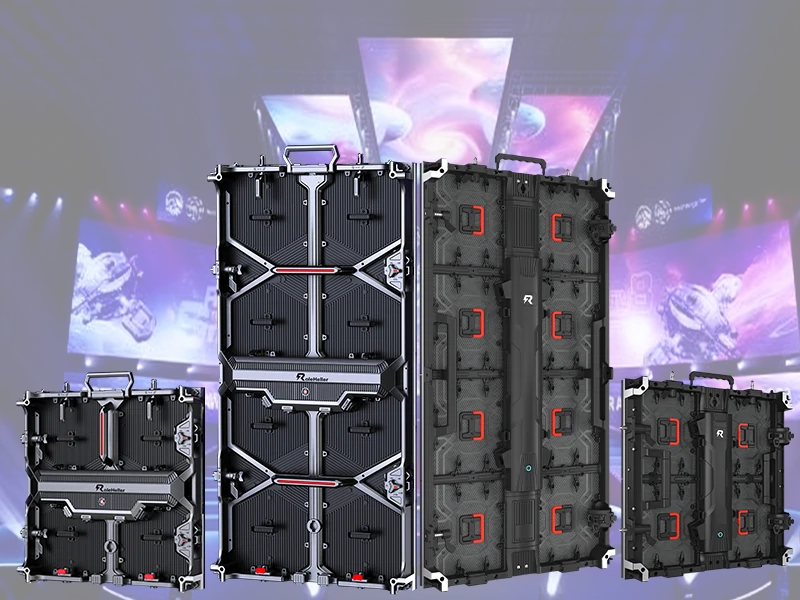
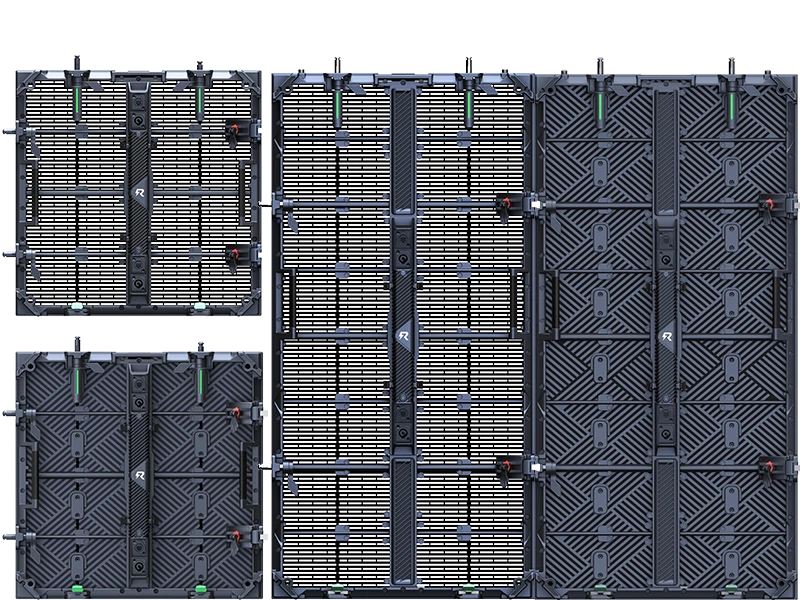
| Rental/stage | P2.6 – P3.9 die-cast cabinets | 4500+ nits | Weight per panel, lock system, refresh ≥3840 Hz for camera work |
A rule of thumb I use: minimum comfortable viewing distance in meters ≈ pixel pitch number × 1 to 1.5. So a P2.5 screen reads cleanly from about 2.5–4 meters. If your audience sits closer than that, bump down a pitch—or accept visible grain.
Brightness is not quality. An overdriven screen looks harsh, kills its own power supply faster, and creates glare complaints. Properly tuned uniformity beats a big nit number every time.
FCC Part 15 — mandatory. Class A for commercial/industrial, Class B for residential environments. Without it, the shipment risks being held at customs.
UL — technically voluntary, but functionally required for government tenders, many insurers, and several retailers. ETL is the common alternative.
DOE / California Title 20 energy compliance for applicable categories; California Prop 65 labeling if applicable.
Note: FCC rules on foreign-controlled labs and SDoC responsible parties have been tightening—confirm the test lab's accreditation status and that the responsible party has a real US address.
CE marking covering LVD (EN 62368-1), EMC (EN 55032/55035), and RoHS. The technical file must be kept for at least 10 years.
If the screen has Wi-Fi/Bluetooth, RED applies too.
UKCA for Great Britain post-Brexit.
SASO/SABER for Saudi Arabia, plus local civil-defense requirements for some venues.
ISO 9001, ISO 14001, IP rating test report (IP65 for outdoor), and EMC Class B if the screen goes near offices or residences.
Practical tip: ask for the report number and issuing body, then verify. A scanned certificate with a blurry logo proves nothing.
If the quotation only states "P3.91 outdoor screen, 20 m², $X," walk away. A proper quote itemizes:
Module/cabinet model and dimensions, pixel pitch, resolution
LED brand & bin, encapsulation type (SMD/COB/GOB/MIP)
Driver IC, refresh rate, gray scale
Power supply brand and rated wattage (and whether the design is common-cathode)
Receiving card and controller brand, license count
Cabinet material, weight, IP rating, maintenance direction (front/rear)
Spare parts ratio (industry norm: 3–5% modules, plus spare power supplies/cards)
Warranty length and what it covers—parts, labor, shipping, and response time
Packaging (wooden case, flight case), Incoterms, lead time, payment terms
Exclusions: structure, installation, commissioning, content, import duties
Two traps I see constantly: bare-screen pricing that later grows with "accessory fees," and component substitution where the sample uses top-bin LEDs and the production run does not. Lock the exact component list into the purchase order with a clause that any substitution requires written approval. Also insist that production samples match the mass-production units—this should be written in, not promised verbally.
Typical lead time for custom orders runs 20–35 days after deposit; standard products can be faster. MOQ for private-label rental cabinets usually starts around a few dozen panels. Those are ballparks, not guarantees—always confirm against current capacity.
They cannot or will not do a live factory video call.
The FCC/CE report is issued to a different company name.
"We can do any pitch, any brightness, any price" — real factories have limits and they state them.
Price significantly below the market band with vague component specs.
Warranty language like "1 year" with no detail on who pays return freight.
Payment demanded 100% upfront or into a personal account.
No reference projects in your application category.
Do you manufacture modules and cabinets in-house, or do you assemble purchased modules?
Which LED brand and bin do you use for my order, and can it be locked in the PO?
What is your standard aging test duration and procedure before packing?
Can you provide a project in my country with a contactable reference?
What is your actual defect rate over the last 12 months, and how do you measure it?
Where are your service points or local partners for my region?
What happens if a batch fails after two years—who covers parts, labor, and freight?
Can you support the control system I already use (Novastar/Colorlight/Brompton)?
Do you offer design assistance: load calculations, power distribution, heat dissipation?
Can we start with a sample or a small pilot batch?
Honestly, question 10 is the cheapest insurance you can buy. A single sample panel reveals more than twenty pages of brochures.
I have seen buyers chase the lowest quote and end up replacing power supplies every eighteen months. I have also seen buyers overpay for a Tier-1 logo when a verified mid-tier factory would have done the job perfectly. The difference between those outcomes is rarely the brand—it is the checklist.
What actually matters long-term comes down to three things: component transparency, verifiable testing, and a warranty with a real address behind it. Everything else is marketing.
If I had to do it again with zero prior knowledge, I would: shortlist three suppliers using the factory-vs-trader filter above, demand itemized quotes with locked components, verify one certification each, order one sample, and then negotiate from there. That process takes about three weeks and eliminates most of the risk.
One last honest note: do not skip the structural and electrical engineering on the install side. The best screen in the world looks terrible on a poorly designed steel frame, and nobody's warranty covers that.
1. Who are the largest LED display manufacturers?
Leyard, Unilumin, Absen, Qiangli Jucai, Ledman, LianTronics, and AOTO lead in China; Daktronics, Planar, Samsung, and LG lead internationally. "Largest" does not automatically mean "best for your project"—match capability to your use case.
2. Are Chinese LED display manufacturers reliable?
Yes, the vast majority of the world's LED screens come from Shenzhen/Dongguan/Huizhou clusters. Reliability depends on the individual supplier's quality system, not the country. Verify with audits and test reports.
3. What is the difference between an LED display manufacturer and a supplier?
A manufacturer owns the production line; a supplier may be a manufacturer, distributor, or trading company. If you want direct pricing and component control, insist on a manufacturer.
4. How do I verify an LED display factory without traveling?
Business license scope check, ISO certificate verification on the registrar's site, a dated live video walk-through, certification report numbers checked against issuing bodies, and a reference customer call.
5. What certifications do I need to import LED displays to the US?
FCC Part 15 (mandatory), plus UL/ETL which is often required in practice. DOE/Title 20 and Prop 65 may apply. Confirm lab accreditation under current rules.
6. What certifications do I need for Europe?
CE covering LVD, EMC, and RoHS, with a technical file retained for 10 years. UKCA for Great Britain. RED if wireless functions are included.
7. What pixel pitch should I choose?
Use the rule: minimum viewing distance (meters) ≈ pitch × 1–1.5. P1.2–P1.8 for close-view meeting rooms, P2.5–P3.9 for lobbies and churches, P4–P10 for outdoor billboards.
8. How long does production take?
Standard products can ship quickly; custom orders typically run 20–35 days after deposit, plus transit. Always build in buffer for commissioning.
9. What warranty should I expect?
Industry norm is 2–3 years on key components. The critical detail is who pays for parts, labor, and freight, and what the response time is. Get it in writing.
10. Should I buy from a trading company instead of a factory?
Sometimes. Traders can offer faster delivery, mixed product sourcing, and better small-order flexibility. But you lose direct component traceability and may face slower warranty resolution. Know which one you are dealing with and price accordingly.
.jpg "How to Choose China Outdoor Stage LED Video Wall Manufacturers?")
.jpg "China Curved LED Video Wall Rental Manufacturers | Price Guide")
.jpg "China LED Video Wall Hire Manufacturers | Event Rental & Outdoor Display")