English

Picture this scenario: you just signed off on an agreement to install twenty-four digital signage video displays across a multi-story commercial retail atrium or corporate headquarters. You transfer forty thousand dollars to an exporter in Guangdong who promised pristine panels, fast delivery schedules, and factory-direct pricing. Six weeks later, the wooden crates arrive at your staging warehouse. You pull out the magnetic front-service tool, snap a module into place, power up the system, and your heart sinks. The white balance leans noticeably magenta on half the cabinets, internal transformers emit a high-pitched coil whine, and every smartphone camera in the room picks up nasty rolling black bands across the screen.
If you want the straightforward verdict before getting buried under dozens of glossy trade catalogs, navigating china indoor led display signs manufacturers comes down to choosing between two completely different procurement models. If you have an institutional or enterprise client with an open checkbook and zero appetite for managing technical quality control, purchase directly from publicly listed Tier-1 manufacturers such as Absen, Leyard, or Unilumin at $1,400 to $2,300 per square meter. But if you operate an AV integration firm, a commercial sign business, or an event production outfit where healthy margins keep your doors open, your sweet spot is sourcing directly from specialized Tier-2 OEM/ODM factories in Shenzhen, primarily located across Bao'an, Shiyan, and Fuyong districts. These mid-sized plants assemble displays using identical Nationstar copper or gold-wire diodes, Macroblock or Chipone PWM driver silicon, Mean Well power supplies, and NovaStar processing for $700 to $1,050 per square meter.
The catch? You must police the bill of materials yourself. If component selection is left to a factory sales representative chasing a monthly quota, they will shave your quote by quietly downgrading driver ICs or swapping out LED diode binning.
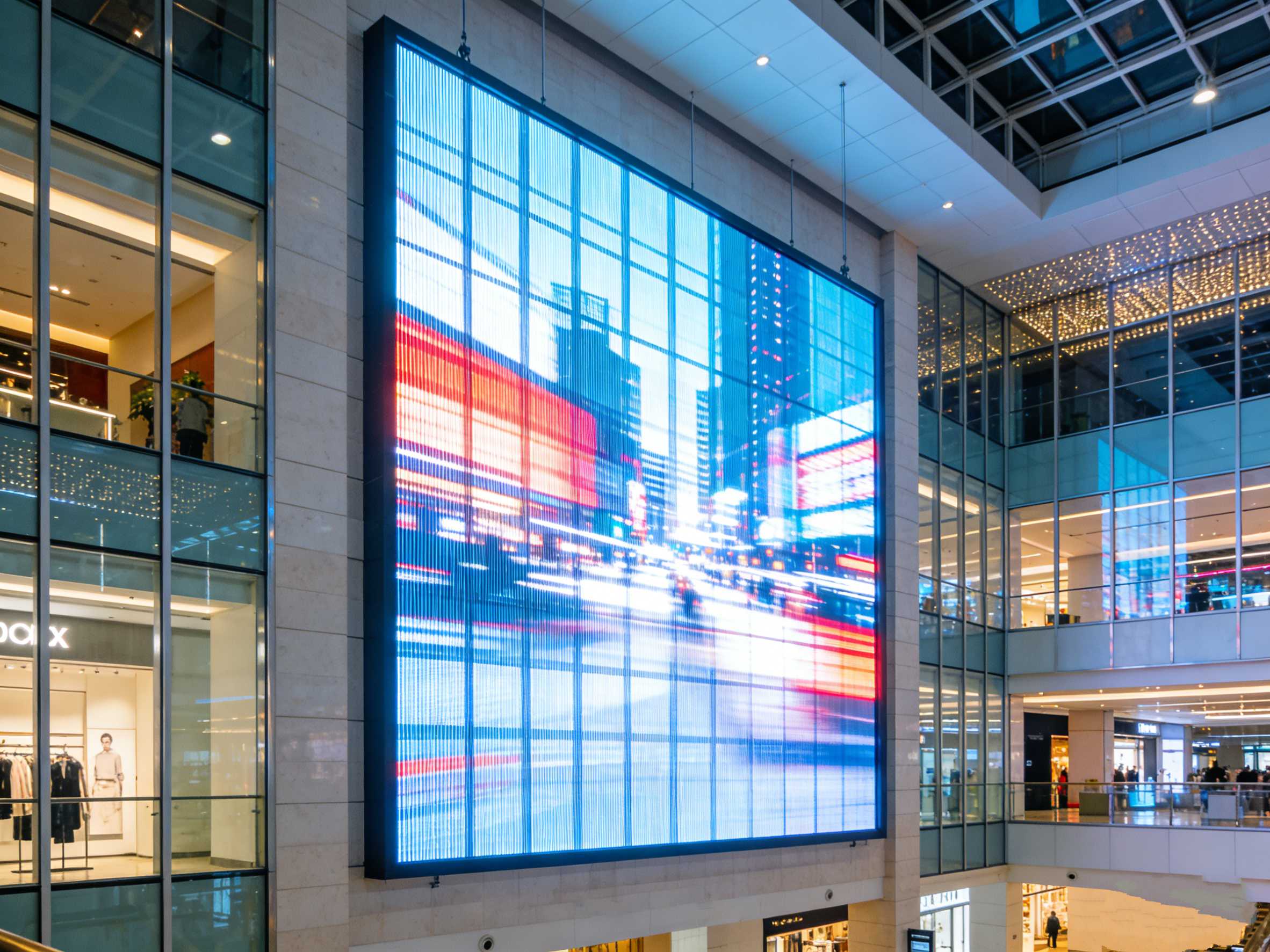
For years, commercial integrators defaulted to ultra-narrow bezel LCD video walls for indoor signage in corporate lobbies, retail storefronts, and transport hubs. Today, fine-pitch indoor LED signs have rendered tiled LCD arrays obsolete across almost every major metric.
| Feature | LCD Video Wall | Indoor LED Sign |
|---|---|---|
| Seam / Bezel | 0.88mm to 3.5mm grid | 0.00mm Seamless |
| Typical Brightness | 450 - 700 nits | 600 - 1,200 nits |
| Operating Lifespan | 30,000 - 50,000 hrs | 100,000 hrs |
| Front Serviceability | Difficult / Heavy | Fast Magnetic |
| Custom Aspect Ratios | Fixed 16:9 panels | Any Shape/Size |
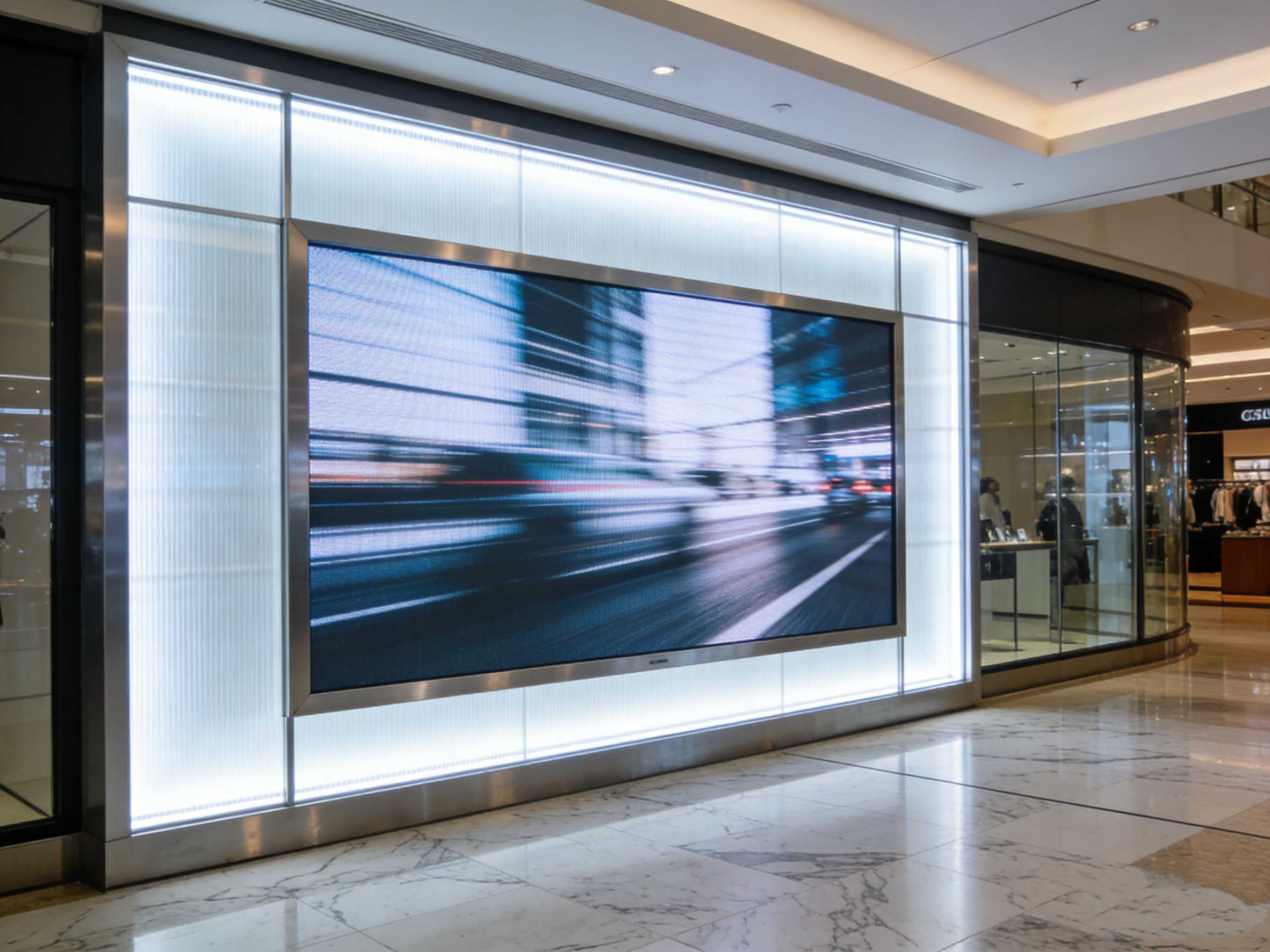
When we are using commercial displays in atriums flooded with natural sunlight, standard 500-nit LCD panels wash out completely by early afternoon. An indoor LED sign comfortably pushes 800 to 1,200 nits of calibrated luminance with high-contrast matte masks, easily cutting through ambient daylight.
Having zero bezels means custom brand graphics, corporate messaging, and high-resolution tickers render without hairline grid lines cutting through text or visual assets.
Shenzhen and neighboring Huizhou fabricate roughly 80% of the world's commercial LED displays. Walking through the industrial corridors of the Pearl River Delta, hundreds of businesses advertise optoelectronic manufacturing. These suppliers fall into three distinct operational categories.
Brands such as Absen, Leyard, Unilumin, Infiled, and Gloshine operate automated manufacturing campuses, overseas RMA depots, and multi-lingual technical support centers in Dallas, Frankfurt, and Dubai.
The Advantage: Flawless automated optical inspection (AOI), rock-solid cabinet alignment tolerances, comprehensive international compliance marks (UL 48, UL 8750, FCC Part 15 Class A/B, CE-EMC), and local warranty repair centers.
The Reality: You pay a substantial brand markup (often 40% to 65% above raw production cost), engineering change requests take months of bureaucratic back-and-forth, and sales teams rarely cater to orders smaller than 50 square meters.
These mid-sized plants operate 4 to 12 automated high-speed SMT lines running modern Panasonic, Yamaha, or Fuji surface-mount equipment. They focus strictly on contract manufacturing for international private labels, regional AV distributors, and commercial signage contractors.
The Advantage: Outstanding cost-to-performance ratio. You can dictate the exact brand of every driver IC, receiving card, power transformer, and module connector. Production turnaround is frequently two to three weeks faster than Tier-1 factories.
The Reality: Quality control consistency varies significantly between production batches. You must define your testing protocols in writing, enforce component locks in your contract, and mandate factory acceptance video inspections before authorizing final payment.
These operations typically do not own SMT surface-mount lines. They buy pre-soldered bare LED modules from low-cost wholesale clearinghouses, snap them into generic stamped aluminum chassis using manual labor, and wire them with generic low-gauge ribbon leads.
The Advantage: Extremely cheap upfront quotations ($450 to $600 per square meter).
The Reality: High dead-pixel counts out of the box, mismatched color binning between panels, generic driver ICs that overheat and produce noticeable camera flickering, and zero long-term spare module batch matching. Sourcing commercial signs from these operations is a recipe for warranty disasters.
| Critical Evaluation Metric | Tier 1 Public Manufacturers | Tier 2 Specialized Shenzhen OEMs | Tier 3 Assembly Workshops & Traders |
|---|---|---|---|
| Typical Cost Range ($/sqm) | $1,400 – $2,300+ | $750 – $1,150 | $450 – $650 |
| LED Diode Packaging | Nationstar Gold Wire / Custom Cree | Nationstar Copper/Gold or High-Bin Kinglight | Sanan / Epistar via Budget White-Label Packagers |
| Driver Silicon | Macroblock MBI5359 / Chipone ICN2069 | Macroblock MBI5153 / Chipone ICN2153 | Unbranded low-cost shift registers |
| Native Refresh Rate | 3,840 Hz – 7,680 Hz PWM | 3,840 Hz (Standard) to 7,680 Hz (Custom) | 1,920 Hz (Noticeable camera banding) |
| Cabinet Precision | CNC-machined die-cast (<0.05mm gap) | Die-cast Magnesium/Aluminum (<0.1mm gap) | Stamped aluminum chassis (0.2–0.5mm variance) |
| Low-Brightness Grayscale | 16-bit to 18-bit (Linear gradient retention) | 14-bit to 16-bit (Clean shadow rendering) | 10-bit to 12-bit (Visible banding, muddy shadows) |
| Power Supply Brand | Mean Well UHP series (Fanless, active PFC) | Mean Well LRS / Great Wall / G-Energy | Unbranded low-cost units (High ripple, coil whine) |
| Spare Parts Matching | 3%–5% exact batch matching guaranteed | 3%–5% exact batch matching upon contract lock | Random warehouse leftovers or no matching |
| Best Suited For | High-budget TV studios, flagship luxury retail | Commercial signage, corporate AV, churches | Short-term budget promotional signs (High risk) |
When buying commercial indoor signs, your quote is meaningless unless it specifies individual part numbers. If an export agent promises a "high-end indoor LED display sign" without documenting each subcomponent, you are leaving the door wide open for cheap substitutions. Here are the core hardware components that define real-world lifespan and picture quality.
+-------------------------------------------------------------------+
|               Indoor LED Display Cabinet Architecture             |
+-------------------------------------------------------------------+
| [Front Face]   SMD1515 / SMD2020 Matte Black-Body LED Diodes      |
|                Anti-Static High-Contrast Injection-Molded Mask    |
+-------------------------------------------------------------------+
| [PCB Layer]    4-Layer or 6-Layer FR4 TG170 Substrate (2.0oz Cu)  |
|                Constant-Current PWM Drivers (MBI5153 / ICN2153)   |
+-------------------------------------------------------------------+
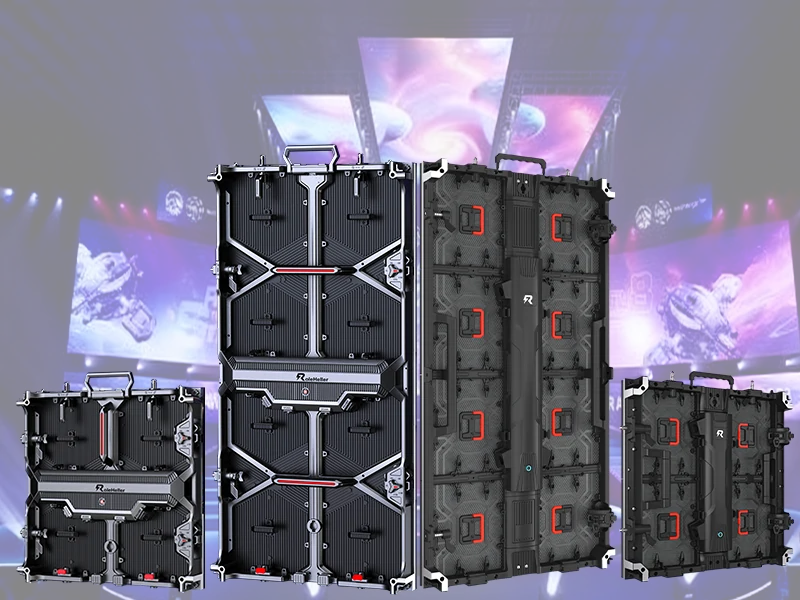
| [Chassis]      CNC Precision Die-Cast Magnesium-Aluminum Frame    |
|                Magnetic Front-Service Studs & Eccentric Guide Pins|
+-------------------------------------------------------------------+
| [Internal Bay] NovaStar A5s Plus / A8s Processing Card            |
|                Mean Well Fanless Slim Power Supply (Dual DC Feed) |
+-------------------------------------------------------------------+
The LED lamp beads make up roughly 35% to 45% of the total display build cost. For indoor commercial signage ranging from P1.8 to P2.6, the industry standard package is SMD1515 (1.5mm x 1.5mm).
Nationstar (National Star Optoelectronics): The gold standard of Chinese packaging. Their Gold Wire (REESTAR or RS series) provides exceptional bonding reliability, zero lead-frame oxidation over years of thermal cycling, and tight color wavelength grouping (within ±1.5 nm). Their Copper Wire (High-Light series) costs less while delivering dependable performance for indoor commercial environments with climate control.
Kinglight: A dependable Tier-2 packaging brand widely deployed in European commercial sign projects. It delivers roughly 90% of Nationstar's operational lifespan at a 12% to 15% discount.
The Substitution Risk: Lower-tier suppliers use copper-clad aluminum wire or unbranded repackaged diodes. Over six to twelve months of heating and cooling cycles, these delicate bond wires fracture internally. The result? Dead pixels and stuck colors popping up across your video wall. Always specify Nationstar Copper Wire as your baseline, or upgrade to Nationstar Gold Wire for high-profile executive spaces.
A video sign can feature 4K resolution and still look washed out if the driver chips cannot manage low-end dimming. Indoor displays typically operate at only 20% to 35% of their maximum brightness (around 150 to 300 nits) to keep from overwhelming room occupants.
Budget driver ICs degrade pulse-width modulation (PWM) cycles as brightness drops. Gradients collapse into harsh posterized bands, and subtle shadow details turn green or purple.
Demand dedicated PWM driver ICs such as Macroblock (MBI5153 or MBI5252) or Chipone (ICN2153 or ICN2053). These provide:
3,840 Hz refresh rate minimum (eliminating rolling shutter bands under cameras).
14-bit to 16-bit grayscale depth even at low brightness settings.
Active ghost-canceling circuits that stop faint visual streaks from bleeding into dark backgrounds.
Heat is the primary cause of premature diode failure. A standard P2.5 indoor module packs 16,384 individual diodes into a compact 320mm x 160mm circuit board.
Budget modules use 2-layer or thin 4-layer PCBs with 1.0 oz copper traces. They warp over time, causing module corners to pop out, and they trap heat against the ICs.
Insist on a 4-layer or 6-layer FR4 PCB with a high glass-transition temperature (TG170 substrate) and 1.6mm to 2.0mm overall thickness with 2.0 oz copper traces. Heavy copper pulls heat away from diodes passively, keeping operating temperatures 8°C to 12°C cooler without requiring cabinet fans.
For fixed architectural signage, cabinet alignment dictates whether your wall looks like a single seamless canvas or an ugly grid of individual tiles.
Sheet Metal / Iron Cabinets: Heavy, prone to welding distortion, and impossible to align with sub-millimeter precision. Only suitable for basic outdoor billboards.
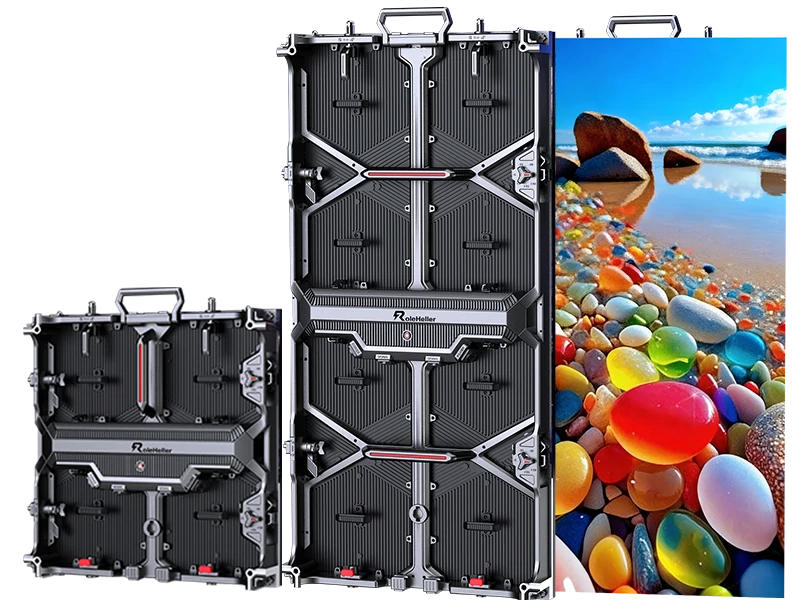
Die-Cast Magnesium / Aluminum Alloy: Manufactured using high-tonnage automated casting and finished on CNC milling machines. A high-quality 500x500mm or 640x480mm die-cast cabinet holds dimensional tolerances to within ±0.03 mm, guaranteeing seamless joints.
NovaStar: The global commercial standard. Specify NovaStar A5s Plus, A8s, or A10s Pro receiving cards. The A8s series provides 18-bit+ grayscale processing, low-latency transmission, and full pixel-to-pixel calibration backup.
Colorlight: A solid, cost-effective alternative often found in fixed retail advertising networks. It gets the job done, though third-party AV techs are far more comfortable navigating NovaStar's NovaLCT platform.
Asynchronous Controllers (NovaStar Taurus Series): If you are installing standalone retail signs that do not connect to an external media player PC, use an onboard media player card like the NovaStar TB50 or TB60. These allow cloud-managed content scheduling over Wi-Fi and 4G without requiring dedicated rack computers.
Selecting the right hardware configuration prevents both overspending and field failures. Use this breakdown to match your project requirements to the right component specifications.
| Venue / Application | Ideal Pixel Pitch | Brightness Requirement | Protection Spec | Recommended Architecture |
|---|---|---|---|---|
| Executive Boardroom / Telepresence | P1.25 – P1.56 | 400 – 600 nits (Calibrated) | COB (Chip-on-Board) or GOB | 16:9 Aspect Ratio Cabinets, NovaStar A10s, Fanless |
| Corporate Lobby / Reception Sign | P1.86 – P2.0 | 600 – 800 nits | SMD with GOB Surface Coating | Die-cast Aluminum, Front-Service Magnetic, MBI5153 |
| Retail Storefront / Digital Window | P2.5 – P2.97 | 1,000 – 1,500 nits | Standard SMD with Matte Mask | High-Brightness LEDs, Mean Well UHP Power, TB60 Player |
| House of Worship / Stage Backdrop | P2.6 – P3.07 | 800 – 1,000 nits | SMD with Corner Bumpers | 500x500mm Die-Cast Chassis, 3,840Hz Refresh, Dual Link |
| Sports Bar / Hospitality Entertainment | P2.0 – P2.5 | 700 – 900 nits | GOB (Impact & Spill Protection) | Front Maintenance, Conformal-Coated PCBs, NovaStar A8s |
Wiring thousands of dollars overseas requires an ironclad verification process. If you cannot personally visit industrial plants in Guangdong, this five-step workflow provides effective risk protection.
+--------------------------------------------------------------------------+
|                  Step-by-Step Factory Audit & QC Flow                    |
+--------------------------------------------------------------------------+
|  1. BOM Specification  --> Define exact silicon, diodes, and power units |
|  2. Video Walkthrough  --> Verify SMT lines and physical aging warehouse |
|  3. Sample Teardown    --> Disassemble module, inspect PCB layers & mask |
|  4. 72-Hour Burn-In    --> Demand dated full-white and RGB video records |
|  5. Batch Bin Lock     --> Secure 5% matched-bin modules with silk prints|
+--------------------------------------------------------------------------+
Never send a vague inquiry like "Please quote P2.5 indoor display." Instead, provide a rigid specification sheet that leaves no room for ambiguous component swaps:
Pixel Pitch: 2.5mm indoor magnetic module.
Diode Spec: Nationstar SMD2020 Copper Wire, Pure Black body.
Driver Silicon: Chipone ICN2153 or Macroblock MBI5153 (3,840 Hz minimum refresh).
Power Unit: Mean Well LRS-300-5 or UHP-350-5 (CE/UL listed).
Receiving Card: NovaStar A5s Plus.
Spare Allocation: 5% spare modules from the exact same diode batch.
Trading brokers will claim to own massive manufacturing campuses. Cut through this fiction by scheduling a live video call via WeChat or Teams during standard China business hours (GMT+8). Ask the sales rep to stand up, walk out of their office, and show you the active SMT pick-and-place lines and aging testing floor. If they stall, make excuses about off-site manufacturing facilities, or refuse, you are dealing with a sales middleman.
Before authorizing a deposit for a full video wall, pay $150 to $250 for a complete, functional cabinet sample. When it arrives, take it apart:
Use a heat gun to carefully remove a driver IC and verify the stamped part numbers against your quotation sheet.
Check the PCB thickness with a digital caliper (it should measure between 1.6 mm and 2.0 mm).
Examine the mask alignment: if the louvers flex loosely or cast uneven shadows across the diodes, contrast ratios will suffer under overhead lighting.
Never accept early shipments where burn-in testing was cut short to meet freight forwarding windows.
Full White Balance (24 Hours): Running modules at 100% white output pushes power supplies and thermal traces to their physical limit. Cold solder joints and weak bond wires will fail during this phase.
Color Switching (24 Hours): Cycling through solid red, green, and blue screens exposes stuck pixels, dead diodes, and subtle wavelength variations between panel rows.
Dynamic High-Framerate Video (24 Hours): High-motion testing identifies receiving card signal drops and controller clock errors.
Demand an uncut, dated factory video showing your complete order set up as an active array on the aging floor, displaying your company name and the current date on a NovaStar test pattern.
LEDs are manufactured in silicon batches. Even within the same cleanroom, batch "A-24" will exhibit subtle color temperature and dominant wavelength variations compared to batch "B-12".
If a module fails on your screen two years from now and you replace it with an off-the-shelf module from a different batch, that module will look like an odd colored square in the middle of your wall.
Your Contract Clause: Mandate that 5% to 8% spare modules, spare driver ICs, power supplies, and data cables must be pulled from the exact same diode bin and production batch as the main screen. Make sure the factory stamps the batch code directly onto the rear PCB silk-screen of every spare module.
"We are setting up our display and noticing distinct vertical lines between columns of cabinets. Can this be fixed in software?"
No amount of software calibration in NovaLCT can completely fix poor mechanical alignment. When cabinets show dark seams, the physical distance between edge diodes across the gap exceeds the designated pixel pitch (for instance, measuring 2.75mm on a P2.5 screen). If they show bright seams, the cabinets are pinched together too tightly, crowding the edge diodes below 2.5mm.
This issue stems from inexpensive cast frames lacking CNC precision milling. You can loosen the rear frame fasteners, insert brass shims behind the cabinet mounting brackets, and adjust the eccentric locking cams. However, the real fix happens on the factory floor: always demand CNC-machined die-cast frames with hardened steel alignment pins.
"What should you do when a supplier claims their panels have 'zero color difference' across batches?"
Treat that statement as a clear red flag. Physics dictates that every silicon wafer run produces slight wavelength shifts (typically ±1.5 nm to ±3.0 nm). Premium manufacturers handle this by utilizing automated spectral binning machines to sort diodes into tight tolerance bins.
If a factory claims different batches will match seamlessly without calibration, they are misleading you. If you must mix production lots, you will need a professional colorimeter (such as an X-Rite or Klein optical probe) paired with NovaStar's camera-based seam and chroma calibration software to balance color coordinates across the wall.
For indoor commercial signs installed in high-traffic corridors, diode durability is a critical operational consideration. Passing pedestrians, cleaning equipment, and maintenance carts can easily shear unprotected diodes off the circuit board.
| Technology | Impact Resistance | Repairability | Cost Add |
|---|---|---|---|
| Standard SMD | Low (Fragile) | Easy (Field) | Baseline |
| GOB Epoxy | High (Tough) | Difficult | +15% - 20% |
| COB Silicon | Extreme (Solid) | Factory Only | +35% - 50% |
The traditional method where individual SMD1515 or SMD2020 packages sit exposed on the PCB surface, shielded only by the plastic front mask.
Pros: Inexpensive, simple to repair in the field using a handheld hot-air rework pencil.
Cons: Susceptible to impact damage; moisture and dust can corrode exposed solder pads over time.
A clear optical epoxy resin is cast across the entire face of a standard SMD module, curing into a hardened, transparent protective shield.
Pros: Exceptional impact resistance. You can strike the module face without knocking off diodes. It provides front IP54 moisture, dust, and anti-static defense.
Cons: Adds 15% to 20% to panel cost; field replacement of single defective driver chips under the resin requires specialized thermal de-bonding equipment.
Bare LED flip-chips are bonded directly to the PCB substrate without individual packaging, then encapsulated under a protective optical resin layer.
Pros: Flawless wide viewing angles (up to 170 degrees), superior black levels, exceptional thermal dissipation, and near-zero failure rates under physical contact.
Cons: Substantially higher price point; requires specialized factory equipment for module-level repairs. Recommended primarily for ultra-fine pitches below P1.5.
Transporting precision electronic hardware across the Pacific requires strict packaging standards. Never allow a factory to ship commercial panels in thin cardboard boxes with generic foam inserts.
Flight Cases vs. Plywood Crates: For permanent architectural installations, mandate heavy-duty wooden shipping crates built from fumigated 15 mm plywood, lined with sealed polyethylene bags and moisture-absorbing desiccant packs. For rental and staging workflows, specify custom 8-in-1 or 6-in-1 road flight cases built with 9 mm birch ply, heavy-duty butterfly latches, and internal high-density EVA foam cutouts tailored to the cabinet shape.
Customs Harmonized Tariff Classification: When importing LED displays into the United States or European Union, accurate customs tariff coding prevents costly shipment holds. Commercial LED video displays typically clear under HS Code 8528.59 (Other monitors) or HS Code 8529.90 (Parts suitable for use solely or principally with the apparatus of headings 8525 to 8528). Verify current regional tariff structures and anti-dumping duties with a licensed customs broker prior to vessel departure.
Payment Structures and Escrow: Standard commercial payment terms for custom manufacturing are 30% T/T deposit to begin production, with the remaining 70% balance payment due after customer inspection sign-off, but prior to bill of lading release (FOB terms). For first-time vendor relationships exceeding $50,000, consider using an irrevocable Letter of Credit (L/C at sight) or hiring a third-party testing agency like SGS or QIMA to sign off on quality before wiring the final balance.
Sourcing LED displays directly from Chinese builders does not have to be an exercise in anxiety, but you have to check retail assumptions at the door. You are not buying consumer electronics off an Amazon shelf; you are commissioning a semi-custom industrial hardware build.
My frank recommendation after inspecting dozens of facilities throughout Shenzhen: never purchase based solely on the lowest quote in your inbox. That cut-rate quote will inevitably become the most expensive screen you ever own once you account for failed modules, air-freight replacement parts, and frustrated clients during a live event.
Draft your own Request for Quotation (RFQ) that states exact hardware requirements:
Nationstar Copper or Gold wire diodes.
MBI5153 or ICN2153 high-refresh driver ICs.
NovaStar A8s receiving cards.
Mean Well power supplies.
72-hour burn-in with video proof.
5% matched-bin spare modules.
When a factory sales engineer sees an RFQ structured with exact component specs, they immediately know they are dealing with an experienced buyer. They will not offer you stripped-down scrap builds, and they will price their quotation realistically. Protect your margins, build relationships with two reliable mid-sized OEM partners in Shenzhen, and verify your bill of materials before wiring a single dollar.
1. What is the current market price per square meter for commercial indoor LED signs from China?
For a dependable commercial-grade build featuring Nationstar LEDs, a 3,840 Hz refresh driver, and NovaStar processing, expect to pay between $750 and $1,150 per square meter (FOB Shenzhen). High-end broadcast variants with GOB surface protection and premium gold-wire diodes range from $1,200 to $1,500/sqm, while Tier-1 brand names (Absen, Unilumin) sit between $1,500 and $2,400/sqm.
2. How many pixels are contained in a standard indoor LED display cabinet?
Cabinet pixel totals depend on the dimensions and pitch:
P2.5 in a 640mm x 480mm die-cast cabinet: Contains 256 × 192 pixels (49,152 pixels total).
P2.6 in a 500mm x 500mm rental cabinet: Contains 192 × 192 pixels (36,864 pixels total).
P1.86 in a 640mm x 480mm die-cast cabinet: Contains 344 × 258 pixels (88,752 pixels total).
To build a native Full HD 1080p video wall (1920 × 1080) using P2.5 panels, you need a screen roughly 16 feet wide by 9 feet high (4.8 m × 2.7 m).
3. How can I confirm whether a Shenzhen supplier is an actual manufacturer or a trading company?
Ask for an unannounced live video call during normal China business hours (GMT+8) and ask them to walk from their sales desk directly into the SMT pick-and-place cleanroom and aging floor. Trading companies will make excuses, claim the factory is located in another city, or refuse the call. Furthermore, check their business registration documents: trading firms will list wholesale distribution of electronic goods, whereas actual builders will explicitly list manufacturing and assembly of optoelectronic LED displays.
4. What is the difference between Nationstar Gold Wire and Copper Wire diodes?
The core difference lies in the microscopic bond wire connecting the LED chip die to the lead frame:
Gold Wire: Completely inert to oxidation, withstands higher thermal expansion stress, and offers an operational lifespan exceeding 80,000 to 100,000 hours with near-zero diode loss.
Copper Wire: Highly conductive and reliable, but slightly more prone to oxidation if exposed to severe humidity during assembly. It provides roughly 50,000 to 70,000 hours of service life at a 15% to 20% lower component cost. For controlled indoor commercial installations, Copper Wire is perfectly adequate.
5. Why do lines appear across indoor LED video walls when photographed on smartphones?
This issue is caused by low refresh rates and mismatched camera shutter speeds. Displays with budget driver ICs operate at a 1,920 Hz refresh rate or lower. When a camera's digital sensor scans the display, it captures the LED diode banks in their off-cycle, creating rolling dark horizontal bars. Insist on driver ICs (like MBI5153 or ICN2153) that deliver a 3,840 Hz refresh rate or higher to ensure flicker-free filming at standard 24fps, 30fps, 60fps, and 120fps camera capture rates.
6. Which controller platform is best: NovaStar, Colorlight, or Brompton?
NovaStar: The industry standard for 90% of commercial sign projects and rental staging. Widely supported with abundant technicians, spare parts, and straightforward software.
Colorlight: A dependable, cost-effective alternative for large-scale retail advertising networks where basic scheduled playback is required.
Brompton Technology: The premium choice for broadcast television studios and XR virtual production volumes where sub-frame latency and fine camera colorimetry are mandatory.
7. How much electrical power does an indoor LED display sign draw?
A standard indoor commercial display consumes:
Peak Power: Approximately 500 to 650 Watts per square meter (when running a 100% full-white test pattern at maximum brightness).
Average Operational Power: Around 160 to 220 Watts per square meter (during typical video playback featuring mixed colors, graphics, and dark backgrounds).
Always calculate your electrical circuits and breaker sizing based on maximum potential draw to prevent nuisance breaker tripping during high-brightness scenes.
8. What spare parts should always be included in the original shipment?
When importing indoor LED display signs, mandate the following spare parts allocation packed in your crates:
Spare Modules: 5% to 8% of the total order quantity (pulled from the exact same diode production bin).
Spare Receiving Cards: 2% to 3% of the total cabinet count.
Spare Power Supplies: 3% to 5% of the total cabinet count.
Spare Driver ICs and Masks: A bag of 50+ driver ICs, shift registers, and front face louvers.
Cables: 5% spare internal data ribbon cables and DC power jumper leads.
9. What are standard, safe payment terms when dealing with Chinese factories?
Standard commercial trade terms are 30% T/T deposit upon contract signing to initiate raw material purchasing and SMT production, with the remaining 70% balance payment due after production is completed and verified via factory aging inspection, but prior to cargo departure (FOB terms). Never work with a supplier demanding 100% upfront payment, and consider using a third-party inspection service like SGS or QIMA before authorizing final balance release.
10. Should I choose air freight or ocean freight for importing LED displays?
Die-cast aluminum cabinets, internal transformers, and wooden crates make LED displays heavy. A 10-square-meter indoor screen easily weighs 300 to 450 kilograms (660 to 1,000 lbs) in shipping crates.
Air Freight: Takes 5 to 8 days, but costs roughly $6 to $10 per kilogram, adding thousands of dollars in freight expenses. Reserve air shipping strictly for emergency service parts or tight event deadlines.
Ocean Freight (FCL or LCL): Takes 18 to 35 days depending on destination port. Ocean shipping costs a fraction of air transport and represents the standard, cost-effective logistics choice for commercial LED video wall imports.