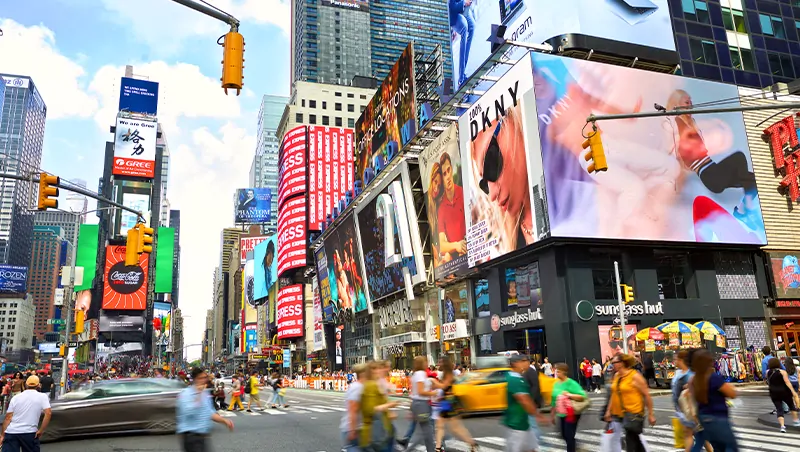
There are several common scenarios for wall-mounted LED display screens, including wall-mounted, embedded, and suspended installations. The installation method should be chosen based on the specific site conditions and factors such as the outdoor LED display panel price, the desired visual effect like that of an LED display screen TV, and the project budget concerning the general LED screen panel price. Consulting a professional LED display manufacturer is recommended for optimal method selection.
Wall-Mounted Installation
This method is suitable for sites with solid load-bearing walls (such as brick walls or reinforced concrete walls). It is commonly used for
LED display sign installations on conference room walls, shop facades, and office area background walls. If the site has non-load-bearing walls such as light steel frame partitions, a 3mm thick steel backplate must be added beforehand for full-width reinforcement to ensure load-bearing stability before mounting the led board or display panel.
Custom brackets are fixed with M10 expansion bolts. After the led panel display or TV screen is mounted, the horizontal level must be checked. The installation height should preferably match the human eye level. If high-altitude installation is required, protective railings must be added.
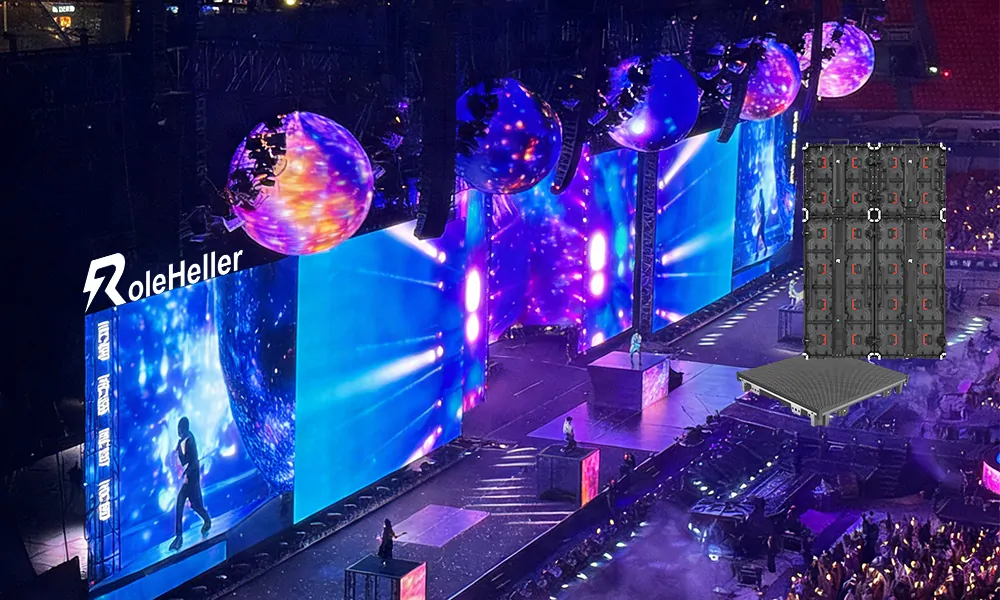
Embedded Installation
This method is suitable for sites with high aesthetic requirements, achieving a flush effect between the screen and the wall, such as exhibition halls and high-end office building lobbies. P≤2.5mm small-pitch
LED panel displays are especially recommended for these scenarios, maximizing the integrated visual effect, though the led screen panel price for such fine-pitch products is typically higher.
Core requirements: Excavate a wall opening according to the screen size + 10mm tolerance, reserving space for maintenance. Front maintenance design is preferred, with modules often equipped with a magnetic quick-release structure for easy access, a feature often highlighted in a led display screen app for maintenance management.
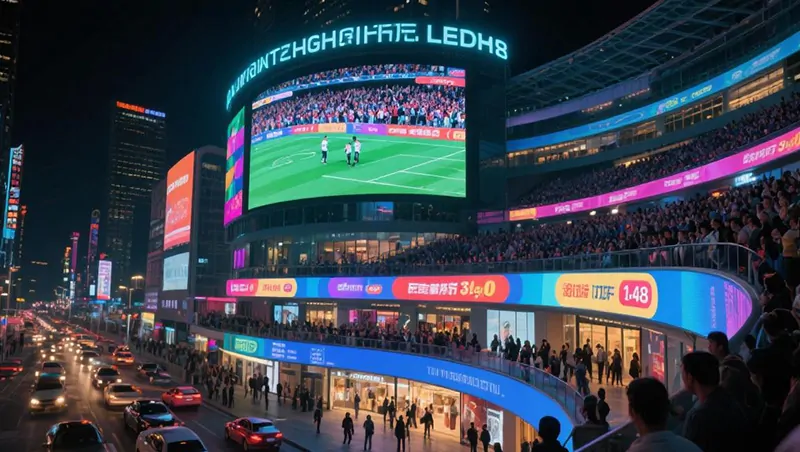
Suspended Installation
This method is suitable for open spaces without solid wall support, such as shopping malls, airport terminals, and large venues. This method is suitable for P≥3mm LED display screens, effectively saving ground and wall space. For outdoor applications, ensuring the
outdoor led display panel price includes proper protection is key.
Core requirements: Utilize the ceiling load-bearing structure to erect a T-shaped steel frame. The load-bearing capacity must be ≥ 1.5 times the total weight of the screen. The suspension height must be greater than the personnel passage height (≥ 2.5m) to avoid collision risks, a critical safety standard enforced by reputable
led display manufacturers.
General Installation Notes:
A steel angle ruler should be used to verify all welding angles are 90° perpendicular. Rubber pads can be added to contact points for shock absorption. When the installation height exceeds 2m, operators must wear full safety gear. It is important to note that the final visual quality and durability, central to the led display meaning of a reliable installation, depend on strict adherence to these professional protocols from initial mounting of the led board to final testing.
 English
.jpg "Which China Indoor Outdoor LED Video Wall Manufacturers Can You Actually Trust for Quality and Delivery?")