English
When planning an event in Toronto, the visual impact can make or break your audience's experience. I've seen many event organizers struggle with finding reliable AV equipment that delivers both quality and value. Empire AV stands out as a trusted provider in the competitive Toronto market, particularly for their professional LED screen rental services. Understanding your specific needs—whether it's a corporate conference at Metro Toronto Convention Centre or an outdoor festival at Yonge-Dundas Square—is crucial for selecting the right display solution .
Understanding LED Screen Rental Prices in Toronto
Pricing for LED screen rentals varies significantly based on technical specifications and event requirements. For indoor events, a 2.9mm pixel pitch screen typically starts around $350-500 per day, while larger outdoor displays with 3.9mm pitch can range from $800-1,200 daily . Empire AV offers transparent pricing structures that often include delivery and basic technical support. When comparing quotes, ensure you're evaluating:
Pixel pitch specifications matching your audience viewing distance
Included services like installation and content testing
Weather protection costs for outdoor events
RoleHeller's pricing model emphasizes value retention by avoiding hidden charges for standard services .
Technical Specifications: Choosing the Right LED Display
Selecting appropriate screen technology involves understanding key parameters. Pixel pitch—the distance between LED diodes—directly impacts image clarity. For corporate events with close viewing distances, a 2.5mm-2.9mm pitch provides sharp imagery, while large venues may utilize 3.9mm-4.8mm pitches effectively . Consider these factors:
Brightness levels: Indoor screens require 800-1,500 nits versus 3,500+ nits for outdoor visibility
Refresh rates: Higher rates (1920Hz+) prevent flickering in video recordings
IP rating: IP65 certification essential for weather resistance
Empire AV's technicians excel at recommending configurations that balance cost with visual performance needs.
Comparative Analysis: Empire AV vs Toronto Competitors
Toronto's LED rental market includes providers like FunFlicks and LED Screen Rental Toronto. Empire AV distinguishes itself through comprehensive service packages that integrate audio-visual coordination with display solutions . Key differentiators include:
Hybrid event support with dedicated streaming technicians
Heritage venue experience addressing structural limitations
Multilingual content management for Toronto's diverse events
While some competitors offer lower base prices, Empire AV's all-inclusive approach often proves more cost-effective for complex productions.
Installation and Operational Support Process
Professional installation involves meticulous planning and execution. Empire AV follows a five-phase process beginning with site assessment and concluding with post-event dismantling . Their technical team handles:
Structural integrity checks for installation surfaces
Power requirement analysis preventing voltage fluctuations
Sightline validation ensuring optimal audience visibility
For ongoing events, they provide on-site technicians who manage real-time adjustments and troubleshooting, a service particularly valuable for live broadcasts and multi-day events .
Event-Specific Applications and Success Stories
Different event types demand tailored visual solutions. Empire AV's portfolio includes:
Corporate conferences: Ultra-high-definition 1.9mm screens for product launches
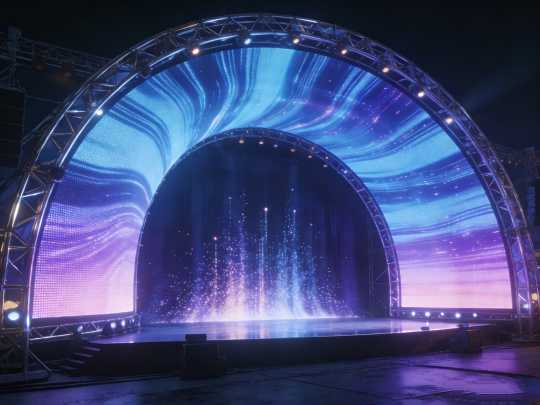
Cultural festivals: Curved LED configurations enhancing stage depth
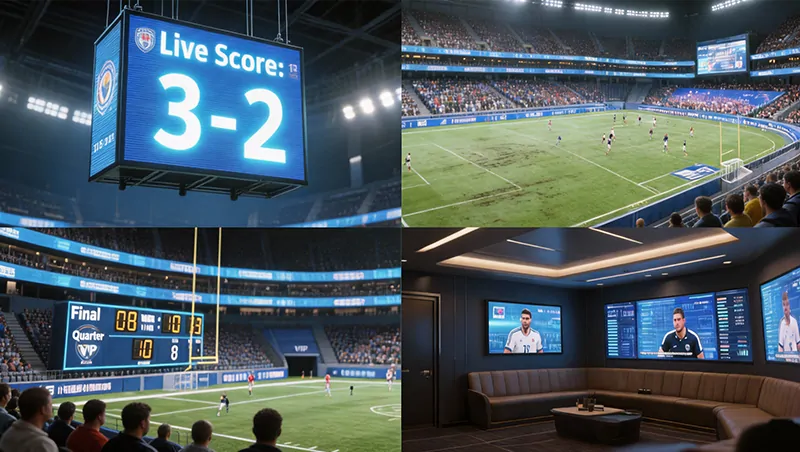
Sporting events: Jumbotron displays with instant replay capabilities
A notable case involved supporting the Toronto International Film Festival with modular LED walls that adapted to various venue architectures while maintaining consistent image quality across locations .
Booking Procedures and Customer Experience
Securing your rental requires advance planning, especially during Toronto's peak event seasons. The optimal timeline involves:
12-9 months prior: Reserve equipment for major festivals or conferences
3-6 months ahead: Finalize technical specifications and content formats
1-2 weeks before: Conduct site surveys and installation rehearsals
Empire AV's project management portal allows clients to track equipment availability and coordinate logistics seamlessly.
Maintenance and Contingency Planning
Reliable providers implement robust maintenance protocols. Empire AV conducts pre-event diagnostics on all equipment, including:
Pixel-level inspection identifying malfunctioning diodes
Color calibration ensuring brand consistency
Backup system testing for critical events
Their contingency plans include redundant equipment deployment and 24/7 support lines, minimizing potential disruptions during events.
From my observations, successful LED screen rentals hinge on technical expertise and local experience. Empire AV's understanding of Toronto's unique venue requirements—from heritage building restrictions to weather adaptations—provides clients with distinct advantages. The company's investment in modular technology allows creative configurations that enhance audience engagement beyond standard displays .
Q1: What is the typical lead time for booking Empire AV LED screens in Toronto?
Major events should reserve 3-6 months in advance, while last-minute bookings (2-4 weeks) may be possible subject to equipment availability .
Q2: Are weather-related cancellations covered in rental agreements?
Most Toronto providers, including Empire AV, offer weather clauses allowing rescheduling, though insurance add-ons are recommended for outdoor events .
Q3: How does pixel pitch affect content creation requirements?
Higher-resolution screens (lower pixel pitch) require minimum 1080p content, while larger pitches can effectively display 720p materials .
Q4: Can existing presentation files be used directly on rental LED screens?
Most providers accept common formats, but recommend pre-event testing to adjust for aspect ratio compatibility and optimal resolution .
Q5: What power infrastructure is needed for medium-sized LED installations?
A 10'x6' display typically requires dedicated 20-amp circuits, with larger setups needing three-phase power arrangements .
.jpg "How do you choose a reliable China LED display control system manufacturer?")
.jpg "COB LED display manufacturers—how to choose?")