English
You've probably found yourself deep in a rabbit hole of supplier websites, each one claiming to be the best wholesale stage LED video wall manufacturer on the planet, and you're starting to wonder if any of them actually know what they're talking about. The pricing varies wildly, the specs look identical on paper, and nobody seems to explain why one factory quotes you $500 per square meter while another wants $1,400 for what appears to be the same P3.91 rental cabinet. We've been sourcing stage LED displays for over a decade, working with rental companies, AV integrators, and event production houses across North America and Europe, and the number one thing we've learned is that the manufacturer you choose directly impacts your profit margins, your reputation, and whether your client's stage display survives the first load-in without a single dead pixel. So let's cut through the noise and talk about what actually matters.
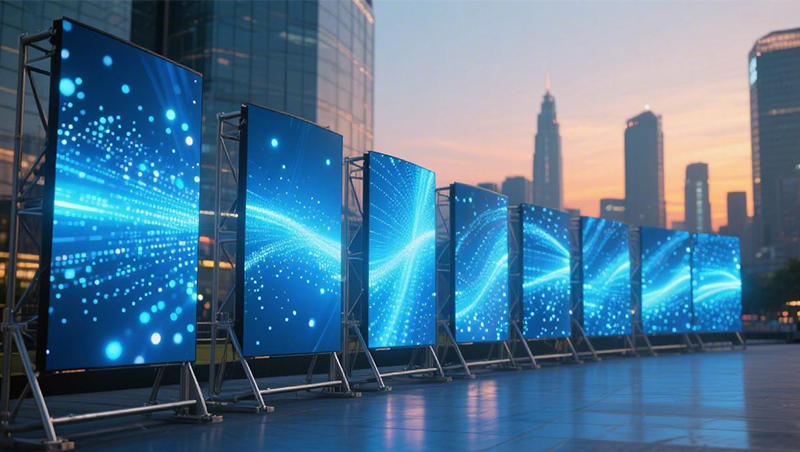
The stage LED video wall market is a specific segment within the broader LED display industry, and it has its own set of requirements that separate it from fixed installation or advertising displays. Stage screens need to be lightweight enough for frequent transport, durable enough to withstand hundreds of assembly and disassembly cycles, and capable of delivering broadcast-quality images under demanding lighting conditions. The wholesale channel for these products is dominated by manufacturers in Shenzhen, China, which produces roughly 85% of the world's LED display panels, but the quality spectrum within that market is enormous.
When we talk about wholesale purchasing, we're generally referring to orders of 20 square meters or more, which is enough to fill a mid-size stage backdrop or build a respectable rental inventory. At that volume, legitimate manufacturers offer meaningful discounts, customization options, and priority production scheduling. But here's the thing that catches a lot of buyers off guard: the term "wholesale" is used loosely by many suppliers who are really just trading companies adding a markup to factory-direct prices. A genuine wholesale stage LED video wall manufacturer owns their production line, controls their component sourcing, and can provide full traceability on every part that goes into your cabinets.
Let's get into the technical details, because this is where the difference between a screen that performs flawlessly under stage lights and one that looks terrible on camera becomes painfully obvious.
Pixel pitch is your starting point. For indoor stage applications, P2.6 to P3.91 covers the vast majority of use cases. P2.6 delivers sharper images at closer viewing distances, which matters when you've got VIP tables 3 meters from the screen. P3.91 is more cost-effective and still looks great at typical concert and event viewing distances of 5 meters and beyond. For outdoor stages, P3.91 to P4.81 is standard, with P2.97 available for situations where you need higher resolution at a moderate outdoor distance.
Refresh rate is arguably the most critical spec for stage applications, and it's the one that budget manufacturers cut corners on most often. You need a minimum of 3840Hz for any stage where cameras will be present, which is basically every professional event, broadcast, and live stream. At 3840Hz, the screen appears flicker-free to camera sensors. Some premium manufacturers offer 7680Hz refresh rates, which eliminates any possibility of scan lines or flicker even with high-speed cameras running at 120fps or higher. If a supplier is quoting you a stage screen with 1920Hz refresh rate, walk away, that's a screen designed for static advertising, not live performance.
Brightness requirements depend heavily on your venue. Indoor stages with controlled lighting typically need 800 to 1500 nits. But if you're putting a screen near windows, in a convention hall with ambient light, or on an outdoor stage, you need 4500 to 6500 nits to maintain visibility. Some budget manufacturers use lower-grade LEDs that can't achieve full brightness without accelerating degradation, which means the screen will dim noticeably within a year of heavy use.
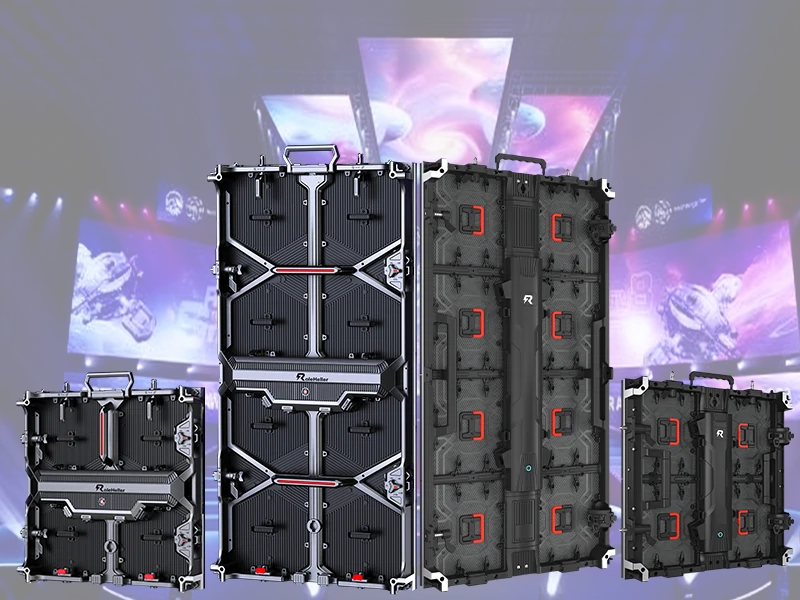
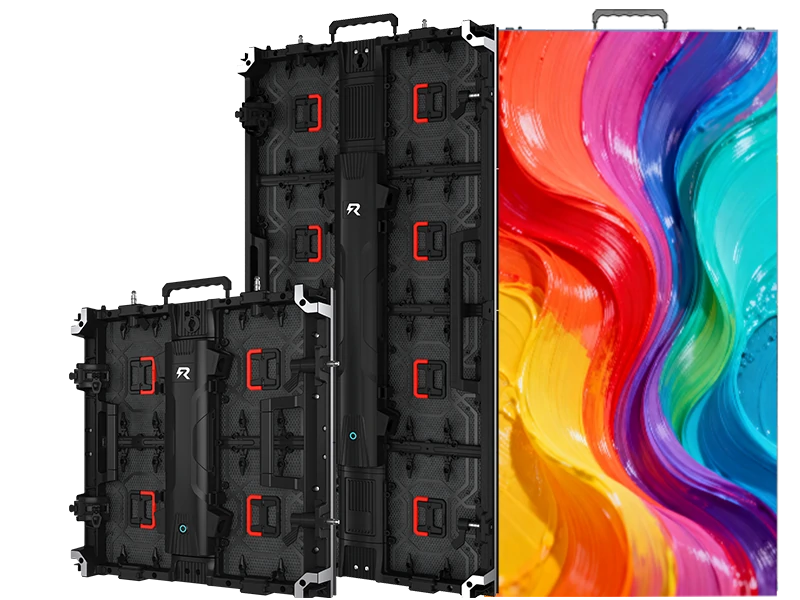
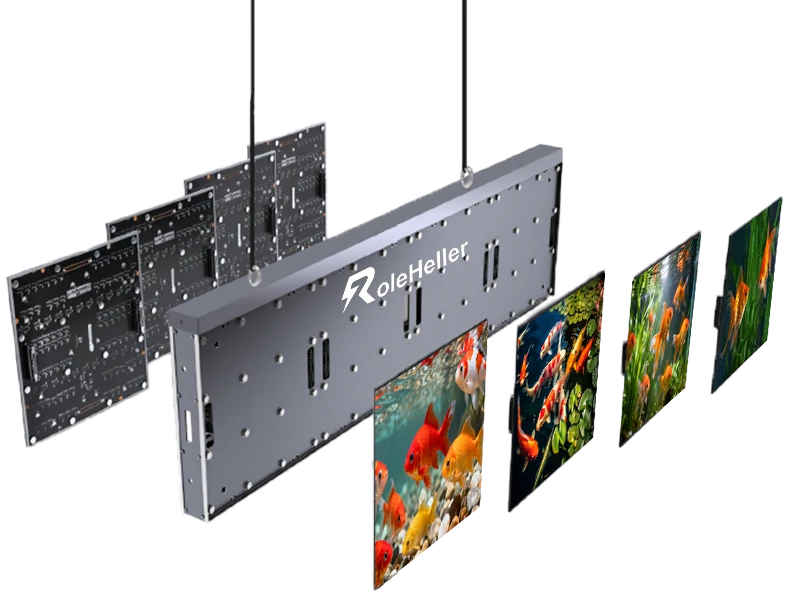
Cabinet construction is where you really start to see the gap between a $500 panel and a $1,000 panel. Premium stage rental cabinets use die-cast aluminum with CNC-machined edges, giving you flat, seamless connections between panels and the structural integrity to withstand frequent transport. Budget cabinets often use stamped aluminum or even plastic frames, which warp over time and create visible seams as the screen ages. A quality 500mm x 500mm die-cast cabinet weighs about 7 to 9 kg, while a cheap stamped version might be lighter but won't hold up to the rigors of touring.
| Specification | Budget Wholesale | Mid-Range Wholesale | Premium Wholesale |
|---|---|---|---|
| LED Chip Brand | Generic / unbranded | NationStar / Kinglight | Nichia / Cree |
| Driver IC | Unknown / low-grade | Macroblock MBI5124 | Macroblock MBI5252 |
| Power Supply | No-brand | G-Energy / Chuanglian | Mean Well |
| Cabinet Material | Stamped aluminum | Die-cast aluminum (standard) | Die-cast aluminum (CNC) |
| Refresh Rate | 1920Hz | 3840Hz | 3840Hz - 7680Hz |
| Color Uniformity | Delta u,Delta v <= 0.01 | Delta u,Delta v <= 0.005 | Delta u,Delta v <= 0.003 |
| Weight per 500x500 cabinet | 5-6 kg | 7-9 kg | 7-8 kg (magnesium alloy) |
| Warranty | 6 months - 1 year | 2 years | 2-3 years |
| Price per sqm (P3.91 indoor) | $350 - $600 | $650 - $950 | $1,000 - $1,500 |
So you've got a shortlist of potential suppliers. How do you figure out which ones are legitimate manufacturers and which ones are just middlemen with a website? Here's the vetting process we've refined over hundreds of sourcing projects.
Verify they're actually a manufacturer. This sounds obvious, but you'd be surprised how many "manufacturers" on Alibaba and Made-in-China are actually trading companies. Check their business license: if the registered scope includes "production" or "manufacturing," they're likely a real factory. If it only says "sales" or "trading," they're a middleman. Ask for a live video call where they walk you through their production floor. A real factory will happily show you their SMT lines, aging test rooms, and quality inspection stations. A trading company will make excuses.
Check component traceability. Ask them specifically which brands of LED chips, driver ICs, and power supplies they use. A quality manufacturer will tell you immediately: "We use NationStar SMD2020 chips, Macroblock MBI5124 driver ICs, and Mean Well power supplies." If they give you vague answers like "high-quality components" without naming brands, they're probably using the cheapest options available. The component brands directly affect your display's brightness, color accuracy, refresh rate, and long-term reliability.
Request samples before committing. Never place a wholesale order without testing at least one or two cabinets first. When the sample arrives, check the build quality: are the cabinet edges smooth and precise? Do the locking mechanisms engage cleanly? Is the color uniform across the entire panel? Run the panel for 48 hours straight to check for early failures. Use a colorimeter to measure the actual brightness and color temperature against the stated specs. This is money well spent, because catching a problem with one sample cabinet costs a fraction of what you'd lose rejecting an entire production run.
Verify certifications for your market. For North America, FCC certification is mandatory, and UL or ETL listing is strongly preferred. For Europe, CE marking covering LVD, EMC, and RoHS is required. Ask to see the actual certificate documents, not just a logo on their website. Check the certificate number against the issuing body's database to make sure it's valid and current. We've seen suppliers use expired certificates, certificates belonging to a different company, or even forged documents.
Let's talk numbers, because this is where most buyers get confused and where the biggest mistakes happen. When you get a quote from a wholesale stage LED video wall manufacturer, the price per square meter typically covers the LED cabinets with modules, power supplies, and receiving cards installed, plus basic data and power cables between cabinets. But there are several cost components that may or may not be included, and you need to understand the difference.
For indoor stage rental screens at P3.91, you're looking at $500 to $950 per square meter from a reputable wholesale manufacturer for orders of 20+ sqm. At P2.6, expect to pay $800 to $1,400 per square meter. For outdoor stage screens at P3.91, prices range from $700 to $1,200 per square meter, and at P4.81, you can find quality options between $500 and $900 per square meter.
These prices typically do not include flight cases ($80 to $150 per case for rental screens), video processors and sending cards ($500 to $3,000 depending on the system), spare parts kits ($200 to $500 per order), or shipping costs. Factor in sea freight from Shenzhen to major US or European ports ($80 to $150 per cubic meter), customs duties (generally 0-5% for LED displays in the US), and inland transportation, and you need to budget an additional 15-25% on top of the FOB price for total landed costs.
If you're seeing prices significantly below these ranges, be very careful. A P3.91 indoor cabinet quoted at $300 per square meter is almost certainly using generic LED chips, no-name driver ICs, and cheap power supplies that will fail within a year. The total cost of ownership on a cheap panel is often higher than a quality panel because of replacement costs, downtime, and reputation damage from equipment failures during live events.
We've seen this pattern repeat so many times it's almost predictable. A buyer finds a supplier online, gets a great quote, places a large order without testing samples, and then discovers problems that could have been caught with a little due diligence.
Buying based on price alone. The LED display market has a saying: "you get what you pay for," and it's never more true than with wholesale stage LED video walls. A $200 per square meter savings on the front end can cost you thousands in replacements, repairs, and lost clients on the back end. We've watched rental companies lose contracts because their budget screens failed mid-show, and that kind of reputation damage takes years to recover from.
Not specifying component brands in the purchase agreement. If your contract just says "P3.91 stage LED video wall, 50 square meters" without specifying the LED chip brand, driver IC model, power supply brand, and cabinet material, you have no recourse if the manufacturer substitutes cheaper components. Always include a detailed bill of materials in your purchase order and have both parties sign it.
Overlooking the processing ecosystem. LED panels don't work on their own; you need sending cards, receiving cards, and a video processor. Make sure the manufacturer's receiving cards are compatible with the processing system you're already using, whether that's Novastar, Colorlight, Brompton, or something else. Mismatched components are one of the most common causes of post-installation headaches.
Forgetting about spare parts. For every 100 square meters of LED wall you purchase, you should have spare modules equivalent to at least 3-5% of your total, plus spare power supplies and receiving cards. When a module fails during a live event, you need to swap it out in minutes, not wait two weeks for a replacement to ship from China. Most quality manufacturers include a basic spare parts kit, but you should verify what's included and order additional spares if needed.
Q: Can I negotiate pricing on wholesale stage LED video wall orders?
A: Absolutely. Most manufacturers build in a 10-15% margin for negotiation on wholesale orders. The key is to demonstrate that you're a serious, repeat buyer. If you can show a purchase history or a projected annual volume, you'll get significantly better pricing than a one-time buyer. We've seen buyers negotiate 20% off the initial quote by committing to a quarterly ordering schedule.
Q: What's the typical lead time from order to delivery?
A: For standard products in the manufacturer's regular production schedule, expect 15 to 25 days from order confirmation to ex-works. Custom configurations or very large orders may take 30 to 45 days. Ocean freight to North America adds 25 to 35 days, and to Europe adds 30 to 40 days. During peak season (August through November, ahead of the holiday event season), lead times can extend by an additional week or two. Always place your orders well ahead of your project timeline.
Q: How do I handle quality issues after the goods arrive?
A: This is where your purchase agreement becomes critical. A good contract will specify the acceptable defect rate (typically less than 0.1% dead pixels per module), the inspection procedure upon arrival, and the remedy for non-conforming goods. Most reputable manufacturers will replace defective modules at no charge within the warranty period, and they'll ship replacements by air express to minimize your downtime.
Q: Is it better to buy from one manufacturer or split orders across multiple suppliers?
A: For consistency and compatibility, it's generally better to stick with one manufacturer, especially if you're building a rental inventory that needs to mix and match cabinets from different orders. Different manufacturers use different LED chips, driver ICs, and cabinet designs, and mixing them can lead to color uniformity issues and mechanical incompatibility at the seams.
Q: What's the difference between a manufacturer and a trading company?
A: A manufacturer owns the production equipment, employs the production workers, and controls the quality process from incoming materials to finished goods. A trading company buys from manufacturers and resells to buyers, adding a markup of 15-40%. Trading companies can sometimes offer better service and communication, but you'll always pay more than factory-direct pricing. The best approach is to find a manufacturer that also has strong export capabilities and English-speaking sales staff.
I've been working in the LED display sourcing space for over ten years now, and the wholesale stage LED video wall market has gotten both better and more confusing over that time. Better because the technology has improved dramatically: today's mid-range panels would have been considered premium five years ago, with higher refresh rates, better color uniformity, and lighter cabinets. More confusing because there are simply more suppliers than ever, and the line between a legitimate factory and a fly-by-night operation can be hard to see from a website. My advice to anyone entering this market is to invest the time upfront in proper vetting: visit the factory if you can, order samples, check references, and build a relationship with a manufacturer who treats you as a long-term partner rather than a one-time transaction. The suppliers who invest in their international customers, with dedicated account managers, proactive production updates, and responsive after-sales support across time zones, are the ones who will still be in business five years from now when you need warranty support or a repeat order.
Q1: What pixel pitch is best for stage LED video walls?
For indoor stages with viewing distances under 5 meters, P2.6 to P3.91 is ideal. For larger venues with audiences 5 to 15 meters away, P3.91 offers the best balance of cost and image quality. For outdoor stages, P3.91 to P4.81 is standard, with P2.97 available for situations requiring higher resolution at moderate outdoor distances.
Q2: What is the minimum order quantity for wholesale stage LED video walls?
Most legitimate wholesale manufacturers set their minimum at 10 to 20 square meters for standard products. Some will accommodate smaller trial orders of 5 to 10 square meters at a slightly higher per-unit price, especially for first-time buyers who want to test quality before committing to a larger order.
Q3: How long does it take to manufacture and deliver a wholesale order?
Production typically takes 15 to 30 days depending on the complexity and volume of the order. Sea freight to North America adds 25 to 35 days, and to Europe adds 30 to 40 days. Air freight is available at significantly higher cost and reduces transit time to 5 to 7 days. Plan for a total lead time of 6 to 10 weeks from order confirmation to delivery.
Q4: What certifications should I require from a wholesale stage LED video wall manufacturer?
For the North American market, require FCC certification and ideally UL or ETL listing. For the European market, require CE marking covering LVD, EMC, and RoHS directives. Additionally, ISO 9001 certification indicates a formal quality management system. Always verify certificates are current and match the specific products being ordered.
Q5: Can wholesale manufacturers provide custom cabinet sizes or shapes for stage designs?
Yes, most mid-sized and large manufacturers offer customization for orders above 20 to 30 square meters. Custom options include non-standard cabinet dimensions, curved configurations with adjustable angles, custom cabinet colors, logo printing, and special brightness or pixel pitch configurations. Custom orders typically carry a 10-20% price premium and longer lead times of 30 to 45 days.
Q6: What payment terms do wholesale stage LED video wall manufacturers typically offer?
For first-time orders, the standard terms are 30% deposit via T/T (bank transfer) with the remaining 70% due before shipment. For established relationships, manufacturers may offer more flexible terms such as 30% deposit with 70% against copy of bill of lading, or even net 30 to 60 day terms for high-volume repeat buyers. Alibaba Trade Assurance is also widely accepted and provides additional payment protection.
Q7: Do wholesale manufacturers provide installation support and technical training?
Many manufacturers offer remote technical support via video call during installation, and some include detailed installation manuals and video guides with every shipment. For large projects, manufacturers can provide on-site technical engineers at a daily rate of $200 to $400 plus travel expenses. This service is particularly valuable for first-time installations or complex curved and custom configurations.
Q8: What warranty coverage should I expect from a wholesale stage LED video wall manufacturer?
Standard warranty coverage is 2 to 3 years for LED modules and 1 to 2 years for other components including power supplies, receiving cards, and cabinet structures. Some premium manufacturers offer extended warranties of up to 5 years for an additional fee. Warranty terms should be clearly specified in the purchase agreement, including coverage for dead pixels, color shift, and component failure.
Q9: How do I ensure color consistency across a large wholesale order of stage LED panels?
Reputable manufacturers perform factory-level calibration on every module using professional colorimeters, storing correction data in each receiving card. This ensures color uniformity within Delta u,Delta v <= 0.003 across the entire production batch. When ordering, specify that you require batch-matched modules with calibration data, and avoid mixing modules from different production batches in the same installation.
Q10: What spare parts should I order alongside my wholesale stage LED video wall purchase?
For every 100 square meters of LED wall, order spare modules equivalent to at least 3-5% of your total module count, plus spare power supplies (one per 10 cabinets), spare receiving cards (one per processing chain), and spare cables and connectors. Most manufacturers include a basic spare parts kit with wholesale orders, but you should verify what's included and order additional spares based on your specific inventory size and criticality of uptime.