 English
You're planning a concert tour — maybe a mid-size arena run, maybe a festival circuit, maybe a string of corporate events with live music acts. The production designer just dropped the render: a massive LED video wall as the main stage backdrop, 12 metres wide, P3.9 outdoor-rated, with enough brightness to cut through stage wash and daylight. Your job now is to source it. Not rent it — buy it. Wholesale. Direct from a manufacturer who can supply the full package at a price that actually makes financial sense for a touring operation.
If you've been typing wholesale concert LED video wall manufacturers into search engines and sifting through page after page of lookalike supplier listings, you already know the problem. Every factory claims "factory-direct pricing," "premium quality," and "global shipping." But when you start asking the real questions — what's the actual per-square-metre cost at 80 sqm volume, what's the warranty structure for touring use, can they match my existing cabinet dimensions — the responses get vague fast. Let's cut through that and get into what actually matters when you're buying wholesale concert LED walls from a manufacturer.
This question comes up a lot, and the answer depends on your situation. Here's when wholesale purchasing makes more sense than renting:
You run 15+ shows per year — at that frequency, rental costs accumulate fast. A single 80-sqm P3.9 outdoor rental might run $3,000–$5,000 per show day. Do the math over 20 shows and you're spending $60,000–$100,000 on rentals alone. That same wall purchased wholesale might cost $160,000–$280,000 — and after two or three tours, you've paid it off.
You want consistent inventory — rental houses rotate their stock. The cabinets you used last tour might not be available next season, or they might be replaced with a different model. Owning your fleet means consistency in colour, brightness, and mechanical fit show after show.
You need custom configurations — wholesale orders can be spec'd to your exact requirements: custom cabinet sizes, specific pixel pitches, branded flight cases, proprietary rigging systems. Rental inventory is what it is.
You're building a rental business yourself — if you're starting or expanding a rental company, buying wholesale from manufacturers is how you build your fleet at a cost basis that lets you compete on price.
But here's the thing — wholesale doesn't mean "cheap." It means buying in volume directly from the source, which gives you better per-unit pricing than going through distributors. The quality spectrum at the wholesale level is wide, and that's exactly where the risk sits.
Not every LED panel is built for the concert environment. The conditions are brutal:
Outdoor exposure — rain, wind, UV, temperature swings from 5°C to 45°C
High brightness demands — 5,000–7,500 nits minimum for daylight visibility on outdoor stages
Rapid setup and teardown — tour schedules are unforgiving. Your crew might have 4 hours to build a 100-sqm wall and 2 hours to strike it
Vibration and transport stress — cabinets get loaded, unloaded, driven hundreds of kilometres, and set up on uneven ground. The mechanical structure needs to handle this repeatedly
High refresh rates — 3840Hz minimum for camera work. Concert footage gets broadcast, streamed, and captured on phones. Low refresh rates create flicker lines on camera
A wholesale concert LED video wall manufacturer should be building to these specs as standard, not as a premium upgrade.
| Specification | Concert-Grade Minimum | Standard Commercial Grade |
|---|---|---|
| Brightness | 5,000–7,500 nits | 800–1,500 nits |
| Refresh Rate | ≥3840Hz | 1920Hz |
| IP Rating | IP65 (front and rear) | IP43–IP54 |
| Cabinet Weight | 7–12 kg (die-cast aluminium) | 15–30 kg (steel) |
| Operating Temp | -20°C to +60°C | 0°C to +45°C |
| Setup Speed | Tool-free, single-person cabinet lock | Tool-required, multi-person |
| Wind Load Rating | 80–120 km/h with proper rigging | Not typically rated |
| Pixel Pitch (typical) | P3.9 / P4.8 outdoor | P2.5–P4 indoor |
Here's the framework I'd use when vetting a manufacturer for a wholesale concert LED wall purchase. This isn't a wishlist — it's a filter.
You want a factory that actually manufactures, not a trading company that sources from factories and adds a margin. The difference matters because:
Direct manufacturers control their own production quality, lead times, and component sourcing
Trading companies add 15–30% to the price and have limited ability to resolve technical issues
A real manufacturer can customise specs, accommodate engineering changes, and provide consistent spare parts from the same production batches
How to tell the difference? Ask for a video call tour of their production line. Ask how many SMT lines they operate. Ask what their monthly production capacity is in square metres. A trading company will stumble on these questions. A real manufacturer will walk you through the factory floor.
The LED chip brand matters enormously for concert applications. Here's what I look for:
LED chips: Nationstar, Kinglight, or Silan for standard outdoor P3.9/P4.8. For premium builds, Cree or Nichia. The chip determines colour consistency, longevity, and brightness uniformity across your fleet.
Driver ICs: Macroblock, Chipone, or FM6124 series. These control refresh rate, grey scale, and low-brightness colour accuracy. For concert use where cameras are constantly rolling, driver IC quality directly affects how your wall looks on broadcast.
Power supplies: Mean Well or G-energ is the industry standard for touring. They handle voltage fluctuations at outdoor venues, resist moisture, and have proven reliability in temperature extremes.
PCB material: FR-4 grade minimum, with conformal coating for moisture protection in outdoor environments.
When a manufacturer quotes you a price, ask exactly which brands of LED chips, driver ICs, and power supplies are included. If they can't answer immediately or say "our own brand," that's a yellow flag.
Concert LED walls get abused. They travel constantly, get set up and torn down in all weather conditions, and run at full brightness for hours. Your warranty needs to reflect this reality:
Standard warranty: 2–3 years on cabinets and electronics
LED chip warranty: 3–5 years (chips degrade slowly; reputable manufacturers guarantee less than 3% brightness depreciation over 50,000 hours)
Spare parts availability: the manufacturer should guarantee spare parts supply for a minimum of 5 years after your order
Turnaround time: if a cabinet fails mid-tour, how fast can they ship a replacement? For major manufacturers with overseas warehouses, 48–72 hours is achievable. For smaller factories shipping direct from China, it's 7–14 days by air.
Here's a comparison of manufacturers that have established credibility in the wholesale concert LED wall segment. These are companies with proven track records supplying touring and festival productions.
| Manufacturer | HQ Location | Concert Product Lines | Pixel Pitches | MOQ (Wholesale) | Price Range (per sqm) | Notable Strengths |
|---|---|---|---|---|---|---|
| Unilumin | Shenzhen, China | UFlex, Upanel, Upad | P2.6–P4.8 | 30+ sqm | $2,800–$5,500 | Largest LED display exporter; strong touring product line; global service centres |
| Absen | Shenzhen, China | AX Pro, N series, A series | P2.5–P4.8 | 30+ sqm | $2,500–$5,000 | 72-hour replacement guarantee; extensive global certification portfolio |
| LianTronics | Shenzhen, China | R series, V series | P2.9–P4.8 | 25+ sqm | $2,600–$5,200 | Strong in European market; good customisation flexibility |
| LEDvision (AOTO) | Xiamen, China | Panther, TF series | P3.9–P4.8 | 40+ sqm | $2,400–$4,800 | Competitive pricing; growing presence in North American touring |
| Gloshine | Shenzhen, China | S series, F series | P3.9–P9.5 | 20+ sqm | $2,200–$4,500 | Budget-friendly; good for high-volume fleet builds |
| Prima | Shenzhen, China | Outdoor rental series | P3.9–P10 | 20+ sqm | $2,000–$4,200 | Cost-focused; large production capacity; fast turnaround |
| Colorlight ecosystem OEMs | Various, China | Various white-label lines | P2.6–P4.8 | 15+ sqm | $1,800–$3,800 | Lowest entry price; quality varies significantly between factories |
A few things to keep in mind about this table. The prices listed are for wholesale quantities (30+ sqm orders) of outdoor-rated P3.9 concert cabinets with die-cast aluminium housing, IP65 protection, and standard component packages. Prices shift based on order volume, component upgrades, and current raw material costs. The Colorlight ecosystem manufacturers represent the budget end — they can deliver functional product at attractive prices, but quality consistency between batches is less predictable than with the tier-one brands.
If you haven't purchased wholesale LED walls directly from a manufacturer before, here's how the process typically unfolds.
You send your specifications to 3–5 manufacturers. A proper inquiry should include:
Total square metres needed
Pixel pitch preference (or ask for recommendations based on your viewing distances)
Indoor or outdoor use
Target brightness level
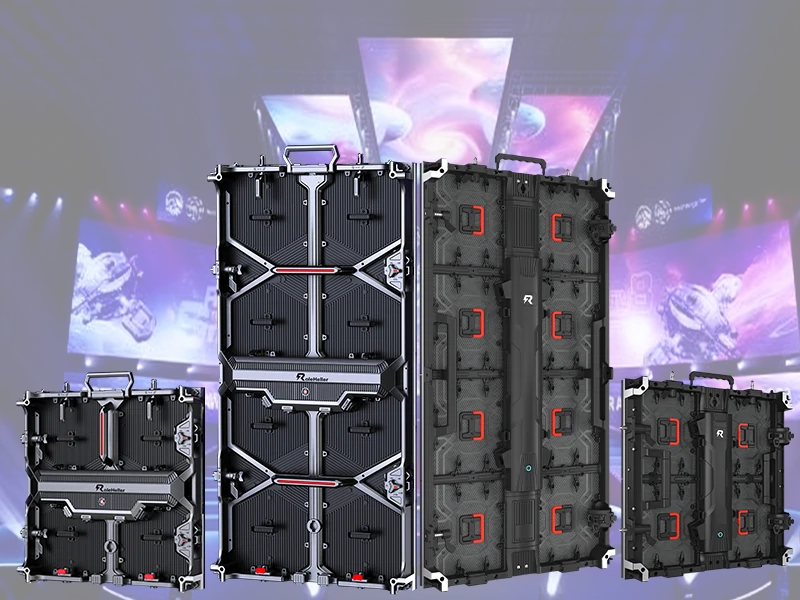
Cabinet size preference (500x500mm or 500x1000mm are standard for concert rental)
Quantity of spare modules needed
Flight case requirements
Shipping destination
Expect quotations within 3–5 business days. The quotes should break down per-square-metre pricing, flight case costs, spare parts pricing, and shipping estimates. If a manufacturer gives you a single lump-sum number without breakdown, push for detail.
Before committing to a full wholesale order, request 2–4 sample cabinets. This is non-negotiable for orders above $50,000. The samples let you evaluate:
Build quality and mechanical precision
Colour temperature and brightness uniformity
Connector quality and cable fit
Cabinet weight and handling ergonomics
Software interface and control system compatibility
Ship the samples to your warehouse and run them through real conditions — outdoor exposure, full-brightness extended operation, camera tests at various shutter speeds.
Once you approve the samples and place the order, production typically takes 30–50 days for orders of 50–150 sqm. During production:
Request weekly progress photos from the factory floor
Ask for in-process QC reports at key milestones (SMT completion, cabinet assembly, aging test results)
Consider hiring a third-party inspector (SGS, Bureau Veritas, or QIMA) for a mid-production and pre-shipment inspection
Ocean freight from Shenzhen to US West Coast ports takes 18–25 days. To Europe, 28–35 days. Air freight is 5–7 days but costs 4–6x more. For concert tour timelines where you need gear by a specific date, factor in at least 2 weeks of buffer beyond the estimated delivery.
These are the errors I've seen cost touring companies real money:
Choosing on price alone. The cheapest quote often reflects cheaper LED chips, lower-grade driver ICs, thinner cabinet aluminium, or skipped aging tests. In a concert environment, these shortcuts show up as colour inconsistency between cabinets, dead pixels after a few months of touring, or cabinets that warp slightly after repeated load-in/load-out cycles.
Not specifying refresh rate requirements. Some manufacturers default to 1920Hz refresh rate panels because they're cheaper to produce. For concert use where cameras are constantly capturing the stage, you need 3840Hz minimum. Anything less creates visible scan lines on video.
Forgetting about control system compatibility. Your new wholesale cabinets need to work with your existing video processors and control systems — NovaStar, Brompton, Colorlight, or whatever you're running. Confirm compatibility before ordering. Some budget panels use receiving cards that aren't compatible with mainstream control ecosystems.
Underestimating spare parts needs. Concert LED walls experience higher failure rates than fixed installations because of the constant movement, setup, and teardown. Order 8–10% spare modules from the same production batch. Mixing modules from different production batches creates visible colour differences on stage.
Skipping the factory visit. For orders above $100,000, visiting the factory in person is worth the trip. You'll see the production line, meet the team, inspect their QC facilities, and get a feel for whether this is a partner you can trust for the long term.
The purchase price is just the starting point. Here's what a realistic total cost picture looks like for a wholesale concert LED wall purchase:
| Cost Item | Estimated Range | Frequency |
|---|---|---|
| Cabinets (per sqm) | $2,000–$5,500 | One-time |
| Flight cases | $300–$600 per case | One-time |
| Spare modules (8–10%) | $200–$500 per sqm | One-time |
| Video processors | $5,000–$25,000 | One-time |
| Shipping and logistics | $5,000–$20,000 | One-time |
| Customs and import duties | 0–25% of product value | One-time |
| Annual maintenance and repairs | 3–5% of purchase price | Per year |
| Module replacement (years 3–5) | 5–10% of original module count | As needed |
For a typical 80-sqm P3.9 outdoor concert wall purchased wholesale, the all-in landed cost (including shipping, duties, flight cases, spares, and processors) lands in the range of $220,000–$480,000 depending on the manufacturer tier and component specifications. That's a significant investment, but when you compare it to 3–4 years of rental costs for the same coverage, the break-even point typically comes within 18–30 months of active touring.
A few strategies that actually work when negotiating with LED wall manufacturers:
Commit to volume. Manufacturers offer their best pricing at higher quantities. If you can commit to 100+ sqm across your initial and follow-on orders, you'll unlock pricing tiers that aren't available for smaller orders.
Pay the deposit promptly. Chinese manufacturers prioritise orders from buyers who pay the 30% deposit quickly and reliably. Being a fast, dependable payer gives you leverage in price negotiations on future orders.
Bundle your orders. If you need both indoor and outdoor cabinets, or multiple pixel pitches, bundle everything into a single purchase order. This simplifies the manufacturer's production planning and gives you negotiating room.
Time your order strategically. LED manufacturing has seasonal cycles. Orders placed during Chinese New Year (January–February) or Golden Week (October) periods often get better pricing because factories are eager to fill production slots around holiday shutdowns.
Build a relationship. Repeat buyers get better pricing, priority production scheduling, and more flexible payment terms. The first order is always the most expensive. The second and third orders are where the real wholesale pricing kicks in.
Having worked with both tier-one manufacturers and budget-tier factories, here's my honest read on the current landscape.
The wholesale concert LED wall market has matured significantly over the past few years. The gap between top-tier and mid-tier manufacturers has narrowed in terms of basic image quality — a well-made P3.9 from a solid mid-tier factory looks very close to the same spec from a premium brand on a dark stage at night. Where the differences emerge is in consistency, durability, and support. Premium brands deliver tighter binning (less colour variation between cabinets), more robust mechanical designs that survive years of touring, and faster after-sales response when something goes wrong mid-tour.
For a company running 10–20 shows a year, I'd recommend going with a manufacturer in the Unilumin or Absen tier. The price premium over budget options is real — maybe 30–50% more — but the reliability difference is worth it when you're standing in front of 20,000 people and a $50,000 broadcast deal depends on your wall performing flawlessly.
For companies just starting out or building a secondary fleet for smaller venues, the mid-tier options like LEDvision, Gloshine, or select Colorlight ecosystem partners can deliver solid performance at a more accessible price point. Just be disciplined about sample evaluation and QC inspection. The risk at this tier isn't that the product is terrible — it's that quality varies between batches and you need to catch inconsistencies before they ship.
If you're entering the wholesale concert LED wall market for the first time, my strongest suggestion is to visit at least two or three factories before making your decision. The websites all look professional. The sales teams all sound confident. But seeing the production line, the QC processes, and the warehouse inventory in person tells you things that no brochure ever will. And when you find a manufacturer that checks all the boxes — real production capability, quality components, proven concert products, responsive support — commit to building that relationship for the long term. The best deals and the best service go to buyers who stay loyal.
What is the typical lead time for a wholesale concert LED video wall order?
For standard specifications (P3.9 or P4.8 outdoor, die-cast aluminium cabinets, standard component packages), production lead time is typically 30–45 days from deposit receipt to ex-factory readiness. For larger orders above 100 sqm or orders requiring custom specifications (non-standard cabinet sizes, special branding, custom colour matching), expect 45–60 days. Add 18–35 days for ocean freight depending on your destination. If you need the product urgently, air freight cuts shipping to 5–7 days but adds $15–$25 per kilogram to your logistics cost.
What pixel pitch is best for concert LED walls?
For outdoor concerts where the closest audience members are 5–15 metres from the stage, P3.91 is the industry standard. It provides a good balance of resolution and cost, and it's the most widely available pixel pitch in the wholesale market. For larger venues where the audience is 15–40 metres back, P4.81 saves money while still delivering clear imagery at distance. For indoor arena concerts with closer viewing distances (3–8 metres), P2.6 or P2.97 is preferred. If your wall will be frequently captured by broadcast cameras, prioritise higher resolution (lower pixel pitch) because cameras reveal pixel structure more than the naked eye does.
What is the minimum order quantity for wholesale pricing?
Most established manufacturers define wholesale pricing starting at 20–30 square metres. Below that threshold, you're typically quoted at a higher per-unit rate closer to retail or small-lot pricing. For the deepest wholesale discounts, orders of 80–100+ sqm unlock the best per-square-metre pricing. Some manufacturers offer tiered pricing: one rate for 20–50 sqm, a lower rate for 50–100 sqm, and the best rate for 100+ sqm.
Do wholesale concert LED walls come with flight cases?
Flight cases are typically quoted separately from the cabinet price. Most manufacturers offer custom foam-cut flight cases designed to fit their specific cabinet dimensions. A standard flight case holds 6–8 cabinets (depending on cabinet size) and costs between $300–$600 per case. For a 80-sqm order of P3.9 500x500mm cabinets, you'd need approximately 40 flight cases. Always confirm whether the quoted price includes flight cases — some manufacturers bundle them, others don't.
What certifications are needed for concert LED walls in the US and Europe?
For the US market, you need ETL or UL listing (electrical safety), FCC Part 15 (electromagnetic compatibility), and ideally Energy Star or DLC certification. For the European market, CE marking is mandatory, covering the Low Voltage Directive (LVD), Electromagnetic Compatibility (EMC) Directive, and RoHS (Restriction of Hazardous Substances). For international touring, having both CE and ETL/UL covers most global markets. Always verify that the certifications are issued by recognised third-party testing laboratories — not self-declared by the manufacturer.
How do I ensure colour consistency across a large wholesale order?
Colour consistency starts at the LED chip level. Request that all modules in your order come from the same LED chip bin — manufacturers sort chips into bins based on wavelength and brightness, and mixing bins creates visible colour variation. Ask the factory to provide a binning report with your order. Additionally, request that all cabinets undergo a 72-hour aging test at full white before shipping — this allows early failures to surface at the factory rather than at your venue. For orders above 50 sqm, ask for a colour uniformity map showing measurements across all cabinets.
What is the expected lifespan of a wholesale concert LED wall?
With proper maintenance and normal touring use, a quality concert LED wall has an expected operational lifespan of 80,000–100,000 hours (roughly 8–12 years of heavy touring use) before brightness drops to 50% of original output. LED chips themselves can last 100,000+ hours, but other components — power supplies, driver ICs, connectors — typically need replacement sooner. Budget for 3–5% annual component replacement costs. The mechanical structure (cabinets, locking mechanisms, rigging points) should last the full lifespan if treated properly.
Can I mix cabinets from different manufacturers in the same wall?
Technically yes, but it's strongly discouraged. Different manufacturers use different LED chip brands, driver ICs, and colour calibration profiles. Even if the pixel pitch and cabinet dimensions match, the colour temperature, brightness uniformity, and grey scale response will differ visibly between brands. For a concert wall where the entire surface needs to display unified content, consistency is critical. If you must mix cabinets (for example, adding to an existing fleet), order the new cabinets from the same manufacturer and request they match the colour calibration of your existing inventory.
What payment terms do wholesale LED wall manufacturers typically offer?
The standard payment structure is 30% deposit upon order confirmation, 70% balance before shipment (after final inspection passes). For larger orders above $100,000, some manufacturers accept Letters of Credit (L/C) at sight. For repeat customers with established relationships, some factories offer 30/40/30 splits (30% deposit, 40% at mid-production milestone, 30% before shipment) or even net-30 terms on follow-on orders. Avoid any manufacturer that demands 100% payment upfront — this is a red flag for both financial risk and potential quality issues.
How do I handle warranty claims when buying wholesale from overseas?
A solid wholesale contract should clearly define the warranty process: what's covered (manufacturing defects, premature LED failure, driver IC malfunction), what's not covered (physical damage, water ingress from improper setup, power surge damage), and how claims are processed. Most manufacturers handle warranty claims by shipping replacement components (modules, power supplies, receiving cards) via air freight at their cost. For major failures, some manufacturers will send a technician to your location — though this is more common with tier-one brands that have regional service offices. Keep all shipping documents, inspection reports, and correspondence as evidence for any warranty disputes.
.jpg "Top LED Video Wall Manufacturers | Best Brands Compared")