 English
If you need the direct answer immediately, the most dependable china electric led display board manufacturers are clustered in Guangdong province, divided between Shenzhen (specifically Bao'an, Shiyan, and Guangming districts) for high-end digital communication, micro-controller integration, and custom commercial displays, and Dongguan for industrial metal fabrication and specialized electrical signage. For commercial buyers purchasing electric LED message boards, factory production scoreboards, or programmable commercial signs, working directly with established Tier-2 specialized export original equipment manufacturers (OEMs) gives you the best balance: factory prices ranging from $250 to $650 per square meter, dependable Mean Well or Great Wall power supplies, and defect rates below 1.5%. Bypassing trading intermediaries and high-overhead domestic conglomerates saves your project roughly 40% while keeping component quality high.
Have you ever tried sourcing an outdoor programmable electric message sign or an industrial workshop telemetry board, only to receive a crate where the internal power converters start buzzing loudly after two hours, or where the wireless communication card drops offline every time ambient temperatures rise? If you work in facility management, commercial sign installation, or industrial automation, you know how frustrating it is when a manufacturer sends hardware built with stripped-down electrical components that cannot survive continuous duty cycles. Let us walk through how the Chinese electric LED display board manufacturing sector actually functions, where factories shave expenses, and how you can pick a partner that delivers real industrial reliability.
In the international market, people use the term "electric LED display board" to describe several totally different product lines. When we are using these systems on job sites, clarifying your exact category prevents weeks of miscommunication with overseas sales managers:
Text and Graphic Scrolling Message Boards: Often deployed in bank teller lines, pharmacy storefronts, transit hubs, and church entrances. These use single-color, dual-color, or basic full-color SMD or DIP modules driven by asynchronous controllers (such as Huidu or TF micro-controllers) with USB, Wi-Fi, or RS485 communication.
Industrial Production and Safety Telemetry Boards: Factory-floor monitoring systems designed to display live output numbers, target metrics, machine uptime, countdown timers, and sensor readouts (temperature, humidity, air quality). These require Modbus, TCP/IP, or custom PLC serial connectivity.
Fuel and Gas Station Electronic Price Displays: Ultra-bright seven-segment or specialized dot-matrix electric signs engineered with RF remote or wireless POS integration, featuring sunlight-readable diodes hitting 5,000 to 7,500 nits.
Full-Color Synchronous Video Display Boards: Architectural advertising video walls, stadium perimeter banners, and dynamic retail storefronts capable of rendering 4K broadcast video and animated commercials in real time.
Sorting through online supplier listings gives the impression that every company is a premier factory. The manufacturing base across Shenzhen, Dongguan, and Huizhou actually divides into three very different tiers.
These are large corporations like Unilumin, Absen, and Leyard.
The Strengths: Massive automated surface-mount technology (SMT) workshops, cleanroom facilities, and verified international safety marks (UL, ETL, CE, FCC, RoHS).
The Sourcing Reality: High minimum purchase volumes, strict non-negotiable payment terms, and substantial brand markups. Unless you are ordering hundreds of square meters for a transportation terminal or municipal highway network, your account will be handled by third-party distributors or junior export staff.
These are established, engineering-driven mid-sized factories located throughout Bao'an, Shiyan, and Dongguan. Many of them manufacture white-label equipment for Western commercial display brands.
The Strengths: They source identical tier-one raw materials—genuine Nationstar or Kinglight LEDs, Macroblock or Chipone driver ICs, and certified Mean Well power supplies. They maintain lean corporate overheads, which keeps pricing competitive.
Engineering Agility: When we need custom metal enclosure dimensions, front-hinged maintenance doors, unusual RS485 protocol mapping, or specific mounting lugs to match architectural plans, their engineering teams turn out custom CAD drawings quickly.
These operations rent space in older industrial buildings, purchasing bare circuit boards and second-hand stamped iron cabinets from domestic wholesale markets.
The Risks: They undercut bids by substituting copper-wire diodes for gold wire, installing unbranded power converters running near 95% capacity, and omitting the mandatory 72-hour dynamic burn-in test. When a power unit fails or rows of diodes burn out after four months, getting warranty replacements is nearly impossible.
To help you judge whether a quote is realistic or suspicious, here is a detailed hardware breakdown comparing standard commercial electric LED display board configurations.
| Board Category | Pixel Pitch & Technology | Target Brightness (Nits) | Controller & Communication | Ingress Protection | Realistic Factory EXW Price | Typical Commercial Application |
|---|---|---|---|---|---|---|
| Scrolling Text & Graphic Sign | P10 Single/Tri-Color (DIP or SMD) | 2,500 – 6,000 | Asynchronous USB / Wi-Fi / LAN (Huidu / TF) | IP65 Front, IP54 Rear | $180 – $280 / m² | Retail storefront windows, church schedules, school messages |
| Industrial Telemetry Board | P4 to P7.62 SMD / 7-Segment | 800 – 1,500 | Modbus RTU / TCP-IP / RS485 Industrial Bus | IP40 / IP54 (NEMA 12) | $320 – $520 / m² | Factory production lines, warehouse dock status, lean metrics |
| Gas Station Price Changer | 8" to 24" 7-Segment Digit Modules | 6,500 – 8,000 | 433MHz RF Remote / POS Protocol Link | IP67 Modular Seal | $45 – $95 / digit | Retail fuel station price pylons, car wash pricing signs |
| Commercial Outdoor Video Board | P4 / P5 Full Color SMD2727 | 5,500 – 7,000 | Synchronous/Async NovaStar Cloud Controller | IP65 Front, IP65 Rear | $480 – $680 / m² | Roadside advertising, shopping mall exterior plazas |
| Indoor Commercial Display | P1.86 / P2.5 Full Color SMD1515 | 600 – 900 | NovaStar / Colorlight Video Processor | IP30 (Front Service) | $520 – $850 / m² | Corporate lobbies, conference rooms, dealership showrooms |
An electric LED display board is fundamentally a heavy-duty electrical device operating alongside digital communication logic. When prices vary wildly between suppliers, look at the physical components mounted onto the circuit board and bolted inside the cabinet frame.
+----------------------------------------------------------------------------------------------------+
|                                    INTERNAL COMPONENT ARCHITECTURE                                 |
+----------------------------------------------------------------------------------------------------+
|  [Main AC Mains 110V/230V]                                                                         |
|            |                                                                                       |
|            v                                                                                       |
|  [Industrial Power Supply Unit] ---> Sized for 65% Continuous Load (Mean Well / G-Energy)          |
|            |                                                                                       |
|            +-----------------------+-----------------------+                                       |
|            | (Clean 5V DC Power)   | (Isolated 5V DC Power)|                                       |
|            v                       v                       v                                       |
|  [Driver ICs & LED Modules]   [Logic Controller]     [Communication Module]                        |
|  (Chipone / Macroblock PWM)   (NovaStar / TF / HD)   (Modbus / 4G / Wi-Fi / RS485)                 |
+----------------------------------------------------------------------------------------------------+
Electric LED boards draw substantial continuous current. When displaying bright white text or active animations, current draw peaks sharply.
Commercial Grade Practice: Reputable manufacturers install industrial power units (such as Mean Well LRS or RSP series) with built-in Active Power Factor Correction (PFC). They size the power grid so that normal operational current draws no more than 60% to 70% of the unit's rated capacity.
Budget Assembly Practice: Cheap builders install unbranded power supplies and run them at 90% to 95% capacity to save money. These converters run hot, exhibit high voltage ripple, trigger circuit breakers, and burn out during hot summer afternoons.
Inside every LED diode, tiny microscopic wires connect the silicon light-emitting dies to the metal frame pins.
Pure Gold Bond Wires (99.99%): Gold does not oxidize, handles repeated thermal expansion cycles without fracturing, and provides stable conductivity over years of outdoor weather. High-grade Nationstar or Kinglight Gold Wire lines are what I frequently use on commercial outdoor projects.
Copper Alloy Wires: Substituted by low-cost workshops to cut module expenses by 20%. When outdoor humidity inevitably migrates through plastic module packaging, copper oxidizes rapidly. Within 12 to 18 months, you end up with random dead pixels, flickering text segments, and stuck color lines.
When picking a display, understanding how content feeds into the board is critical:
Asynchronous Control: The board has an onboard microprocessor with internal flash storage. You push content via Wi-Fi, Ethernet, USB drive, or 4G cloud connection, and the board plays the message autonomously without needing a computer running 24/7. This is the setup for storefront tickers, gas price signs, and factory scoreboards.
Synchronous Control: The display acts like a massive computer monitor via HDMI or DVI, requiring a continuous real-time video feed from an active PC or external video processor. This is essential for live video walls, stadium screens, and real-time broadcast displays.
Before approving your equipment purchase order, you must know how your field technicians will physically reach internal components during maintenance.
+----------------------------------------------------------------------------------------------------+
|                                  MAINTENANCE ACCESS SELECTION                                      |
+----------------------------------------------------------------------------------------------------+
|  [Installation Site Evaluation]                                                                    |
|            |                                                                                       |
|            +---> Flush against concrete wall / storefront?  ---> Specify FRONT-SERVICE             |
|            |     (Uses front vacuum cups or hex-cam locks; zero rear clearance needed)             |
|            |                                                                                       |
|            +---> Freestanding pylon / rooftop steel frame? ---> Specify REAR-SERVICE              |
|                  (Uses rear waterproof doors; requires 600mm to 800mm catwalk space)               |
+----------------------------------------------------------------------------------------------------+
Front-Service Architecture: Essential when mounting an electric display board directly against an existing building wall, inside an architectural alcove, or on a low storefront canopy. Technicians remove individual modules straight from the front face using vacuum suction tools or a front-facing hex-wrench. From there, you can swap out power units, receiving cards, and wiring harnesses in minutes without taking down the outer frame.
Rear-Service Architecture: Standard for large outdoor highway signs and freestanding pylons where an iron or aluminum cabinet features rear-opening waterproof access doors. This requires building an OSHA-compliant service catwalk (at least 600mm to 800mm wide) so maintenance personnel can work safely inside or at the back of the sign.
To show how hardware selection directly influences long-term reliability, here is an actual commercial project from my procurement logs.
A manufacturing facility needed eighteen dual-sided electric LED display boards mounted above production lines to show live shift outputs, scrap rates, and automated safety alerts. The plant environment included airborne machine oil mist, continuous electrical noise from nearby CNC equipment, and temperatures fluctuating between 15°C and 42°C (59°F to 108°F).
Project Specifications:
- Unit Dimensions: 1,920mm wide x 640mm high (Dual-sided display)
- Pixel Configuration: P4 Indoor SMD (Full Color, 480 x 160 resolution per side)
- Control Protocol: Modbus TCP/IP over industrial Ethernet with custom PLC register polling
- Power Supply: Dual Mean Well UHP-200-5 (Fanless, low-profile, running at ~58% load)
- Cabinet Metallurgy: Cold-rolled steel housing with black anti-corrosion powder coating, IP54 sealed
During the supplier bidding phase, a low-cost vendor quoted $6,200 total for all eighteen units using generic domestic power units and basic RS485 communication cards. A vetted Tier-2 manufacturer in Shenzhen quoted $10,400 using isolated industrial power converters, optocoupler-isolated Ethernet interfaces, and genuine Kinglight LEDs.
The plant manager approved the higher quote.
The Field Outcome: The boards were installed and linked directly into the factory's automated PLCs. Over three full years of continuous 24/7 operation, not a single display board experienced communication dropouts or power failure. The isolated power lines and clean ground traces prevented high-voltage spikes from nearby stamping presses from corrupting the display memory. Paying a fair price for industrial-grade hardware saved hundreds of hours of factory downtime.
Most overseas buyers cannot fly to Shenzhen or Dongguan every time they place an order. Fortunately, you can effectively separate true manufacturers from trading companies right from your desk by following this process.
+----------------------------------------------------------------------------------------------------+
|                                    REMOTE FACTORY AUDIT STEPS                                      |
+----------------------------------------------------------------------------------------------------+
|  Step 1: Check the Official Business License for "Manufacturing and Processing"                    |
|            |                                                                                       |
|            v                                                                                       |
|  Step 2: Request an unscheduled live video walkthrough of active SMT and testing rooms              |
|            |                                                                                       |
|            v                                                                                       |
|  Step 3: Inspect the 72-hour burn-in bay cycling solid color and full-load test patterns           |
|            |                                                                                       |
|            v                                                                                       |
|  Step 4: Lock down an explicit Bill of Materials (BOM) with matching-bin spare parts              |
+----------------------------------------------------------------------------------------------------+
Ask the supplier for a copy of their national business registration certificate. Look up their unified social credit code on the official national enterprise credit system.
Check the registered business scope: does it explicitly say "manufacturing, assembly, and processing of LED displays"?
If the license only mentions "wholesale, retail, import, and export of electronic merchandise," you are dealing with a trading broker who does not own an assembly floor.
Skip scheduled sales presentations with pre-recorded marketing videos. Call the sales representative via WeChat or Microsoft Teams during standard Chinese operational hours (10:00 AM to 5:00 PM China Standard Time).
Ask them to walk the phone onto the production floor. A real manufacturer will walk straight into the workshop. A trading agent will make excuses about needing management approval or claim the factory is located in another province.
Check the brand of the automated SMT pick-and-place equipment. Quality builders run machines from Yamaha, Panasonic, ASM, or Fuji.
Solid-state electronics follow a classic failure curve: weak components usually burn out within the first 48 to 72 hours of continuous operation.
Ensure the factory maintains a dedicated, temperature-controlled burn-in room.
Look at the screens on the test racks. If they are only playing commercial video clips or promotional cartoon loops, that is a warning flag. Proper aging requires cycling through solid red, solid green, solid blue, and solid white screens at maximum brightness to reveal solder bridges, color shifts, and weak driver channels.
Never sign a proforma invoice that simply says "Standard Electric LED Display." Your contract should explicitly state:
Diode manufacturer, package type, and bond wire metallurgy (e.g., Nationstar SMD2727 Gold Wire)
Driver IC brand and part number (e.g., Chipone ICN2153 or Macroblock MBI5124)
Power supply brand and model code (e.g., Mean Well LRS-350-5)
Control system card and firmware revision (e.g., NovaStar TB50 or HD-C16C)
Cabinet metallurgy and verified IP rating (e.g., 1.5mm cold-rolled steel, IP65 Front / IP54 Rear)
When electric display boards are installed near heavy industrial machinery, electromagnetic interference (EMI) and transient voltage spikes can disrupt communication data or freeze controller memory.
What should we do? Insist that the manufacturer uses optocoupler-isolated communication ports on RS485 or Ethernet cards.
Ensure all DC power lines feature ferrite cores, and run shielded CAT6 STP cabling inside dedicated metal conduit.
Connect the outer metal chassis directly to a verified low-resistance earth ground, keeping power wiring separate from signal lines.
Many buyers want to push real-time data from an internal ERP, warehouse management system (WMS), or web server directly to an electric message sign without manual typing.
This way you can easily handle it: request controllers that support open HTTP APIs, TCP socket connections, or standard Modbus RTU/TCP protocols.
Manufacturers working with controllers like NovaStar or Huidu can provide complete Software Development Kits (SDKs) and protocol documentation. This allows your internal IT staff to send simple JSON or hex strings across local networks to update display fields automatically.
Standard commercial outdoor display boards operate reliably down to -20°C (-4°F). But some friends want to install boards in northern climates like Canada, Scandinavia, or the northern United States, where temperatures plunge to -40°C.
In these environments, standard power converters and electrolytic capacitors can fail to start up from a cold power cycle.
Specify low-temperature power supplies (such as Mean Well units rated down to -40°C), cold-resistant silicone wiring that will not crack when bent, and an internal thermostatic heating strip inside the cabinet frame to prevent internal frost accumulation.
Shipping defective display boards back to China for warranty repair is financially impractical because of international freight expenses and customs paperwork. A smart procurement strategy builds protection into the initial shipment.
The Mandatory 5% Matching-Bin Spare Package: Optoelectronic diodes naturally vary in chromatic wavelength and lumen intensity between wafer production batches. Always require the manufacturer to include 5% spare display modules, 3% to 5% spare power supply units, and 2 extra logic controller boards in your shipment.
The Single-Batch Rule: Contractually require that all spare modules come from the exact same SMT production run and diode binning reel as the main display. If you purchase replacement modules eighteen months later, the new diodes will show an obvious color and brightness difference against your aged screen.
Export Packaging Standards: Standard cardboard boxes are inadequate for ocean freight. Specify marine-grade reinforced plywood crates lined with high-density EVA shock-absorbing foam. Each module or assembled sign must be sealed inside a moisture-barrier bag packed with fresh desiccant.
Sourcing electric display boards directly from overseas manufacturers is a proven way to protect your profit margins and build a scalable sign business, provided you approach negotiations with clear engineering standards. The manufacturing ecosystem in Guangdong is technically mature and capable of building equipment that runs trouble-free for seven to ten years.
For high-profile architectural displays or municipal public works where downtime cannot be tolerated, spending extra for a Tier-1 manufacturer like Absen or Unilumin makes sense. You are paying for institutional stability, established compliance paperwork, and lower corporate risk.
However, for commercial sign businesses, AV integrators, school districts, and industrial automation firms looking for maximum return on investment without sacrificing quality, the smartest move is partnering with an established Tier-2 specialized export OEM in Shenzhen or Dongguan. Target manufacturers who demonstrate complete transparency with their bill of materials, who welcome remote video audits of their aging rooms, and who standardize on genuine Nationstar or Kinglight LEDs, Macroblock or Chipone driver ICs, and certified Mean Well power supplies.
Lock in a 5% matching-bin spare parts package, structure your purchase around milestone payments (30% deposit, 70% balance released upon third-party pre-shipment inspection sign-off), and you will secure reliable, industrial-grade electric LED display boards at a fraction of domestic distributor costs. Hope this helps you navigate your next procurement round with complete clarity!
When built with genuine gold-wire LEDs, reputable driver ICs, and certified industrial power supplies running below 70% load capacity, an electric LED display board offers an operational lifespan of approximately 100,000 hours to 50% brightness. Under standard commercial use (running 14 to 18 hours per day with automatic light-sensor dimming), this equals 8 to 10 years of reliable operation.
An outdoor full-color electric display board pulls a maximum peak power of roughly 650 to 800 watts per square meter (displaying a 100% full-white test screen at maximum brightness) and an average operational draw of 200 to 280 watts per square meter during normal commercial messaging and video loops. Single-color text boards draw significantly less, averaging roughly 50 to 90 watts per square meter.
Standard factory production lead time for custom-engineered electric display boards typically ranges from 15 to 22 business days. This timeline includes printed circuit board surface mounting (SMT), waterproof silicone potting, structural cabinet fabrication, and the mandatory 72-hour dynamic burn-in test. Be cautious of suppliers offering to ship custom signs in under five days; this almost always indicates they are offloading old, dead warehouse stock from mixed batches or skipping the burn-in cycle.
Yes. Modern electric display boards utilize asynchronous 4G/5G cellular controllers or Wi-Fi/Ethernet cloud media players (such as NovaStar Taurus or Huidu cloud systems). Through secure web portals or mobile apps, you can schedule text alerts, change fuel prices, push production numbers, adjust brightness, and monitor system health from any computer or smartphone without maintaining an on-site computer.
For the United States and Canada, electrical safety compliance requires UL 48 / UL 8750 or ETL equivalent certifications, along with FCC Part 15 Class A or Class B for electromagnetic compatibility. For the European Union, the screen must carry valid CE certification (covering both the Low Voltage Directive 2014/35/EU and EMC Directive 2014/30/EU) and RoHS compliance. Ensure these certificates cover the entire finished electrical sign assembly, not just the isolated internal power supply brick.
Dual In-Line Package (DIP) uses three separate through-hole diodes (Red, Green, Blue) with external epoxy lenses, providing high brightness (7,500+ nits) and durability for long-distance outdoor signs like highway billboards (P10 to P16). Surface Mount Device (SMD) combines the red, green, and blue dies into a single miniature surface-mount housing, providing wider viewing angles (140° horizontal and vertical), superior color consistency, and tighter pixel spacing (P2.5 to P6) suitable for close and medium viewing distances. Modern high-brightness SMD has largely replaced DIP for most commercial installations.
An optical light sensor mounts onto the exterior cabinet frame, connecting directly into the multi-function interface of the LED controller. The sensor reads ambient sunlight levels continuously. The control software automatically raises screen brightness to 100% during sunny afternoons to combat glare, and smoothly dims output down to 15% to 25% after sunset. This prevents blinding nearby drivers, complies with municipal light-pollution bylaws, and reduces monthly electrical consumption by up to 30%.
Always contractually require the manufacturer to include a dedicated spare parts kit manufactured from the exact same production lot:
5% extra LED display modules (vacuum-sealed in moisture-barrier bags with desiccant)
3% to 5% extra power supply units
2 extra logic/receiving controller cards
A complete package of spare flat ribbon data cables, 5V DC power harnesses, and replacement waterproof module rubber gaskets.
The standard commercial payment structure across the Guangdong electronics manufacturing sector is 30% deposit via Telegraphic Transfer (T/T) upon signing the sales agreement to start raw material procurement and SMT assembly, and 70% balance payment due after the completed order passes pre-shipment quality inspection on the factory's burn-in floor but before container loading. For larger commercial orders exceeding $100,000, reputable Tier-1 and Tier-2 factories will also accept an irrevocable, confirmed Letter of Credit (L/C at sight).
If the display is mounted flat against an architectural wall without rear clearance, you must ensure the manufacturer builds it using front-service mechanics. Front-service displays allow technicians to extract individual display modules directly from the front face using magnetic suction tools or quick-turn hex cam locks. Once the front modules are removed, power supplies, receiving cards, and wiring harnesses are completely accessible and can be swapped out from the front without unbolting the outer cabinet frame from the wall.





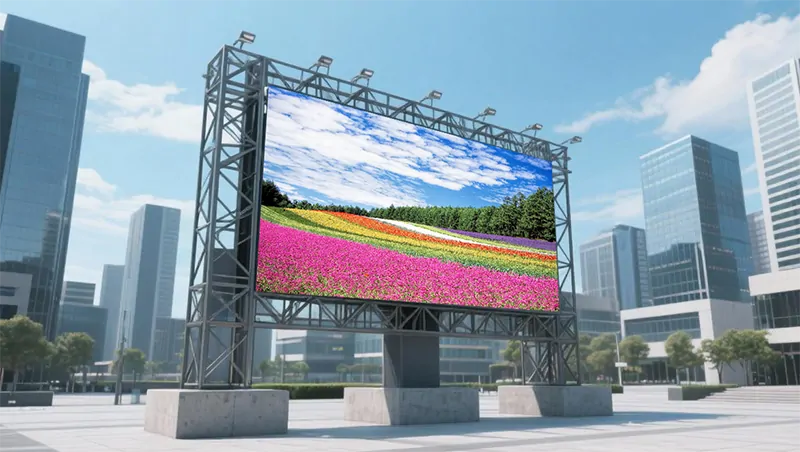
.jpg "Wholesale Backstage LED Video Wall Manufacturers | Price & Specs")
.jpg "How to buy waterproof LED displays?")