English
You've probably spent hours scrolling through supplier directories, comparing glossy brochures from dozens of direct view LED video wall manufacturers, and still feeling like you're no closer to making a confident decision. Maybe you've been burned before — ordered panels from a supplier who promised "premium quality" and ended up with color inconsistencies across modules, dead pixels showing up after three months, or an outdoor installation that started failing the moment humidity hit 80 percent. Or perhaps this is your very first time looking into direct view LED technology, and the sheer volume of options is overwhelming. Either way, you're not alone. The direct view LED video wall market has grown explosively over the past few years, and with that growth comes a flood of manufacturers ranging from world-class engineering firms to small assembly workshops that bolt together bought-in components and slap a logo on the box.
I've been sourcing and specifying LED displays for commercial installations across North America and Europe for close to eight years now, and I've watched the landscape shift dramatically. Back when I started, there were maybe a dozen serious players. Today, you can find hundreds of companies claiming to manufacture direct view LED video walls, but the gap between the top tier and the bottom tier is wider than most buyers realize. Let me walk you through everything I've learned — from how to evaluate a manufacturer's real capabilities to what you should actually expect to pay, and which companies have consistently delivered for my clients.
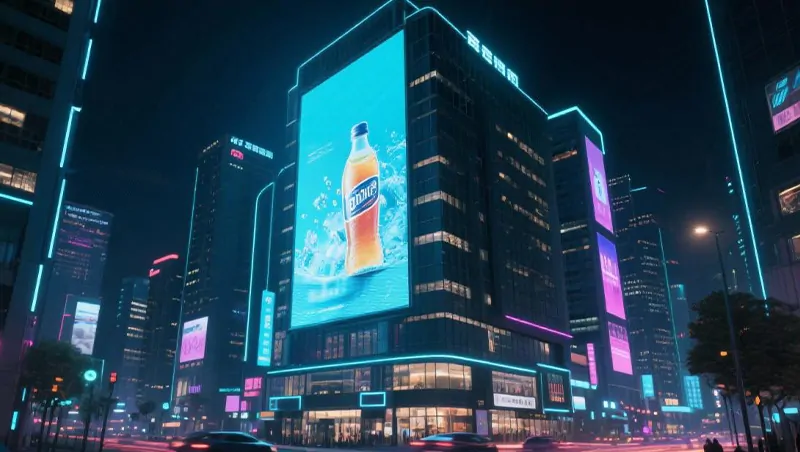
Before we get into who makes them, let's make sure we're on the same page about what we're talking about. A direct view LED video wall is a display system where you look directly at the LED emitters — there's no projection, no LCD panel in between, no backlight diffuser. Each pixel on the screen is literally a tiny red, green, and blue LED that produces its own light. This is fundamentally different from projection-based systems or LCD video walls where the image is generated indirectly.
The practical advantages are significant:
Extreme brightness — direct view LED walls routinely hit 5,000 to 10,000 nits for outdoor applications, making them visible even in direct sunlight where any LCD or projection system would wash out completely
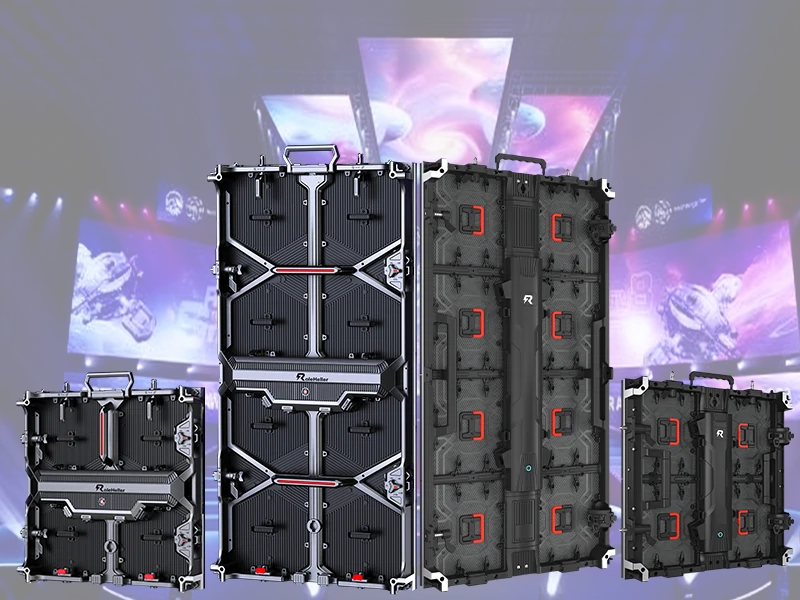
Modular scalability — you can build a wall of literally any size by tiling panels together, from a compact 2-meter display in a retail store to a 200-meter perimeter board at a sports stadium
Seamless image — unlike LCD video walls with visible bezels between panels, direct view LED walls have no gaps or borders between modules, creating one continuous image surface
Long lifespan — quality LED panels are rated for 80,000 to 100,000 hours of operation, which translates to roughly 9 to 11 years of continuous 24/7 use
But here's the thing that catches a lot of buyers off guard: not all direct view LED walls are built the same way. The difference between a wall that looks stunning for a decade and one that starts showing visible degradation after 18 months comes down to manufacturing quality, component selection, and calibration discipline. This is exactly why choosing the right direct view LED video wall manufacturers matters so much.
When I'm evaluating a manufacturer for a client project, I look at several specific technical capabilities that tell me whether they're a real production facility or just an assembly operation.
The LED chip is the single most important component in any direct view display. In China, the major chip suppliers are Nationstar (Guoxing), Kinglight (Jingtai), and Silan. Nationstar is widely regarded as the industry benchmark — their chips offer superior wavelength consistency, better long-term lumen maintenance, and tighter color uniformity across production batches. Kinglight has made serious strides and now offers a compelling cost-effective alternative that performs well in mid-range applications.
The critical detail that most buyers miss is binning consistency. LED chips are sorted into bins based on their exact wavelength, luminance, and forward voltage. A serious manufacturer orders chips from a single bin for each production run, ensuring every panel in your order has matching color characteristics. Some less reputable factories mix chips from multiple bins to cut costs, which creates visible color banding when panels are mounted side by side. I've seen installations where you could literally see the seam between panels manufactured in different months because the chip bins didn't match.
Always ask your manufacturer to specify in writing which LED chip brand and bin grade will be used for your order. Request a certificate of origin for the LEDs. If they hesitate or give you vague answers about chip sourcing, that's a red flag you should not ignore.
Pixel pitch — the distance in millimeters between the center of one LED pixel and the next — determines the minimum viewing distance for your display. Smaller pixel pitches like P0.9 or P1.2 are designed for close viewing in boardrooms and control rooms, while larger pitches like P4.8 or P6.25 work for outdoor stages and billboards where viewers stand further away.
The packaging technology matters just as much as the pixel pitch itself. SMD (Surface Mount Device) packaging is the traditional approach where individual red, green, and blue LED chips are mounted on the PCB surface. SMD is mature, cost-effective, and works well for most applications with pixel pitches of P1.5 and above.
COB (Chip on Board) technology represents a newer approach where the LED chips are directly bonded to the PCB and encapsulated under a protective epoxy layer. COB offers several advantages:
Better protection against physical damage (the epoxy layer shields the fragile wire bonds)
Wider viewing angles with more uniform color at extreme angles
Smoother surface that's easier to clean and less prone to dust accumulation
Better contrast ratios due to reduced light scatter
COB technology is particularly valuable for pixel pitches below P1.5 where the tiny LED chips in SMD packages become vulnerable to damage during handling and installation. Several leading direct view LED video wall manufacturers have invested heavily in COB production lines, and this technology is rapidly becoming the standard for fine-pitch indoor applications.
The driver integrated circuit controls how each LED pixel is addressed and dimmed. Higher-quality driver ICs deliver faster refresh rates (3840Hz and above), which eliminates visible flicker on camera — critical for broadcast environments, live events, and any application where the display will be filmed. Lower-end driver ICs running at 1920Hz or below produce visible scan lines and flicker artifacts when viewed through camera viewfinders, which is unacceptable for professional production environments.
When evaluating manufacturers, ask specifically about the driver IC model used in their panels. Reputable manufacturers will specify the exact IC part number and can provide datasheets. If they can't tell you what driver IC they use, they probably don't have control over that component in their supply chain.
Here's where things get practical. Anyone can put together a nice website with renders and spec sheets. The real question is whether the manufacturer actually controls the production process or just assembles bought-in components.
Surface Mount Technology lines are where LED chips get soldered onto the circuit boards. A factory that owns and operates its own SMT equipment controls the entire process from solder paste deposition through component placement to reflow soldering. This matters because the reflow temperature profile directly affects solder joint reliability — poorly tuned profiles create weak joints that crack under thermal cycling, leading to dead pixels and module failures months after installation.
For outdoor direct view LED walls, this is especially critical. The solder joints experience daily thermal cycling as temperatures swing between hot afternoons and cool nights. Weak joints from a poorly controlled reflow process will fail prematurely. You need to verify that the factory controls the SMT process end to end.
Every LED panel should undergo a minimum 48-hour aging test at elevated temperature before shipping. This burn-in period accelerates early-life failures — dead pixels, color shifts, driver IC malfunctions, power supply issues — so they get caught at the factory rather than after installation. Serious manufacturers operate dedicated aging rooms with hundreds of racks running panels at 45-55°C continuously. Ask to see photos or video of the aging facility. If they can't provide evidence of a proper burn-in process, panels are probably being shipped straight off the line without reliability screening.
Factory calibration is what ensures your panels look uniform when assembled into a large wall. There are two levels to understand:
Per-batch calibration — all panels from a production batch are calibrated to a common brightness and color target. This is the minimum acceptable standard.
Per-module calibration — each individual module is calibrated using a camera-based system to correct for pixel-level brightness and color variations. This delivers the highest uniformity and is essential for large-scale installations where even subtle differences become visible.
Top-tier direct view LED video wall manufacturers invest in camera-based per-module calibration systems that measure and correct each module individually. This is a significant cost driver, but it's what separates a wall that looks seamless from one where you can spot panel-to-panel variations.
This is an area where buyers frequently get tripped up. Different markets require different certifications, and a certificate valid in one region means nothing in another.
| Destination Market | Required Certifications | Key Considerations |
|---|---|---|
| United States | FCC Part 15, UL/ETL listing | Section 301 tariffs may apply to Chinese-origin goods |
| European Union | CE (LVD + EMC + RoHS) | Must be validated by a recognized notified body |
| United Kingdom | UKCA marking | Replaced CE marking post-Brexit |
| Australia/New Zealand | RCM marking | Covers both EMC and electrical safety |
| Middle East (UAE/Saudi) | ESMA/SASO certification | Country-specific type approval required |
For the US market, FCC Part 15 electromagnetic compatibility is the legal minimum, but most commercial venues and event insurance policies require UL or ETL safety listing. Without proper safety certification, you may not be permitted to install the panels in certain venues, and your insurance could be voided in the event of an electrical incident.
For the EU market, CE marking must cover three separate directives: the Low Voltage Directive (LVD), the Electromagnetic Compatibility (EMC) Directive, and the Restriction of Hazardous Substances (RoHS) Directive. Here's something that catches people: a self-declared CE certificate from the factory carries very little weight. You need to verify that the CE marking was issued or validated by a recognized notified body, and you can check this through the EU's NANDO database.
The information below reflects data and market positioning observed through 2026, including product specifications and industry standing as of that period.
Based in Shenzhen with production facilities exceeding 100,000 square meters, Absen is one of the largest LED display manufacturers globally. Their product range spans from ultra-fine-pitch indoor panels (P0.9 to P2.5) for boardrooms and control rooms to high-brightness outdoor panels (P3.91 to P10) for stadiums, highways, and large-scale events. Their single-brand display product export volume has consistently ranked at the top of the industry for over a decade, and they operate regional service offices across North America, Europe, the Middle East, and Asia-Pacific. Absen's pricing sits at the premium end, but their consistency across large production runs, factory calibration quality, and global after-sales support infrastructure justify the premium for buyers who need absolute reliability on mission-critical installations.
Also headquartered in Shenzhen, Unilumin has built a strong reputation for production consistency at volume — which matters enormously when you're ordering 200 or more panels for a large-scale installation or building out a rental inventory. Their indoor Uslim series and outdoor Upad series are widely specified by system integrators who need tight color and brightness uniformity across panels from different production batches. Unilumin's strength lies in their ability to maintain consistent LED bin selection and calibration parameters across high-volume runs, so panels manufactured in March sit seamlessly next to panels manufactured in July on the same wall. Their pricing typically runs 10-15% below Absen for comparable specifications, making them a strong choice for mid-to-large scale projects where budget matters but quality can't be compromised.
LianTronics has carved out a strong position in both the rental and fixed-install segments. Their indoor rental panels feature die-cast magnesium alloy cabinets that are notably lighter than standard aluminum — a meaningful advantage for rental companies whose crews are loading and unloading panels constantly. Their outdoor panels use sealed die-cast aluminum with full IP65 protection. They use Nationstar LEDs with tight binning across their product lines, and their factory calibration includes both brightness and color uniformity adjustment per module. LianTronics offers extensive OEM customization for larger orders, including custom cabinet colors, branded flight cases, and private labeling.
RYSE LED targets the mid-market with a strong value proposition for both indoor and outdoor direct view LED installations. Their indoor panels feature quick-lock systems for fast deployment, while their outdoor panels are built with sealed cabinets and high-brightness LED configurations rated for direct sunlight visibility. RYSE offers OEM branding, custom firmware, and private labeling with relatively low MOQs starting around 10 panels, making them attractive for small to mid-size companies that want to build their own branded inventory without committing to massive initial orders.
Visualeader takes an engineering-driven approach that resonates well with technical buyers and project managers who need detailed documentation. They provide comprehensive CAD files, structural load calculations for different mounting configurations, and thermal modeling data for both indoor and outdoor panels. Their outdoor panels feature reinforced cabinet frames with integrated ventilation systems designed for hot climates, and their indoor panels offer tool-free front-service module access for quick maintenance. This level of technical documentation saves integrators significant engineering time during the design and approval phases of a project.
CKGLED has built a reputation for flexibility and accessibility, particularly for smaller orders and first-time buyers. They accept orders as small as a single panel for sample purposes, and their product range covers standard indoor and outdoor configurations across multiple pixel pitches. While they may not match the scale of Absen or Unilumin, their responsiveness and willingness to accommodate custom requests make them a practical choice for buyers who need small quantities or specialized configurations.
Let's talk numbers. Pricing transparency is one of the biggest pain points in this industry, and the following ranges are based on market data from 2025 to 2026 — actual quotes may shift with changes in component costs and trade conditions.
| Pixel Pitch | Price Range | Best Applications |
|---|---|---|
| P0.9–P1.2 (COB) | $700–$1,200 | Boardrooms, control rooms, broadcast studios |
| P1.25–P1.5 | $500–$800 | Retail displays, conference rooms, museums |
| P1.86–P2.0 | $350–$550 | Stages, churches, mid-size events |
| P2.5–P3.91 | $200–$400 | Large events, exhibitions, rental inventory |
| Pixel Pitch | Price Range | Best Applications |
|---|---|---|
| P2.9–P3.91 | $350–$600 | Close-viewing outdoor events, building facades |
| P4.81 | $280–$480 | Mid-size outdoor stages, festivals |
| P5.95–P6.25 | $220–$380 | Large outdoor stages, concerts |
| P8–P10 | $150–$300 | Billboards, highway displays, stadiums |
Several factors push pricing up or down within these ranges:
LED chip brand: Nationstar premium bin adds $15-30 per panel over standard bin; Kinglight chips are typically $10-20 cheaper than Nationstar equivalent
Driver IC specification: Higher refresh rate driver ICs (3840Hz+) cost $8-15 more per panel but deliver better camera performance
Cabinet material: Die-cast magnesium alloy costs $20-40 more per panel than standard aluminum but weighs 20-30% less
Calibration level: Per-module camera calibration adds $15-30 per panel compared to per-batch calibration
Order volume: Orders above 100 panels typically qualify for 5-10% volume discounts; orders above 500 panels can negotiate 12-18% discounts
If a manufacturer is quoting significantly below these ranges, be cautious. The cost savings almost always come from compromises in LED chip quality, driver ICs, PCB layer count, or cabinet material thickness.
I get asked the same questions over and over by clients evaluating direct view LED video wall manufacturers, so let me address the most frequent ones right here.
"Should I go with SMD or COB technology for my project?"
It depends on your pixel pitch and application. If you need P1.5 or smaller for close viewing distances, COB is the better choice — the epoxy encapsulation protects the tiny LED chips from damage and delivers smoother color at wide viewing angles. For P2.0 and above, SMD is perfectly adequate and more cost-effective. COB becomes the clear winner when pixel pitch drops below P1.5 because the exposed wire bonds in SMD packages become too fragile at that scale.
"How do I know if a manufacturer's outdoor panels will actually survive weather exposure?"
Look for three things: IP65 or higher protection rating, UV-treated front masks (ask for the specific treatment process — some manufacturers just use standard plastic that yellows within a year), and sealed cabinets with silicone gaskets on all seams. Ask the manufacturer for test reports from independent labs showing IP rating verification and UV resistance testing. If they can't provide third-party test reports, their IP claims are just marketing.
"What's the real difference between a $250 panel and a $450 panel at the same pixel pitch?"
The difference shows up in three areas. Component quality — the $450 panel likely uses Nationstar or equivalent premium LEDs with tight binning, while the $250 panel probably uses no-name chips with mixed bins. Build quality — the $450 panel has a thicker PCB with more copper layers for better heat dissipation, higher-grade driver ICs, and a heavier-gauge cabinet. Calibration — the $450 panel has been individually calibrated per module, while the $250 panel was probably only calibrated per batch or not calibrated at all. Over a 5-year installation lifespan, the cheaper panel will cost you more in maintenance, replacements, and reputation damage than the upfront savings.
"Can I mix panels from different manufacturers on the same wall?"
Technically yes, but practically it's a terrible idea. Even at the same pixel pitch, different manufacturers use different LED chips, driver ICs, and calibration targets. The color and brightness mismatch between panels from different factories will be visible, especially on large walls. Always source all panels for a single installation from the same manufacturer and ideally the same production batch.
Here's the process I recommend for anyone sourcing direct view LED video walls from overseas manufacturers, especially if it's your first time.
Step 1: Request product samples. Order 3-5 panels via air freight before committing to a large order. Build a small test wall, run it continuously for 48-72 hours, check for thermal issues, color uniformity, and dead pixels. This single step prevents more sourcing disasters than anything else.
Step 2: Verify certifications independently. Look up certificate numbers on the issuing body's database. For UL/ETL, check the UL Product iQ database. For CE, verify with the notified body listed on the certificate. This takes ten minutes and can save you from customs seizures.
Step 3: Request a factory audit or third-party inspection. Services like SGS, Bureau Veritas, and Intertek offer pre-shipment inspection for $300-$500 per visit. For LED orders above $50,000, this investment is non-negotiable.
Step 4: Check references. Ask the manufacturer for contact information of 2-3 recent buyers in your region. A reputable manufacturer will have no problem providing references.
Step 5: Review warranty terms carefully. Standard warranty is 2-3 years. Pay attention to what's covered and what's excluded. Most warranties cover LED chip failure and driver IC defects but exclude damage from improper installation or power surges.
Shipping LED panels internationally involves several decisions that directly impact your total cost and delivery timeline.
Air freight gets panels to your door in 7-12 days but costs 3-4 times more than sea freight. For a 100-panel order, air freight might add $3,000-$5,000 to your total cost. My recommendation is to air freight a sample batch for quality verification, then sea freight the full production order.
Sea freight takes 25-40 days depending on the destination port, but costs $800-$1,500 for a 100-panel order. The panels need to be packed in reinforced flight cases with custom EPE foam inserts to prevent damage during ocean transit, where containers can experience significant movement and temperature swings.
Packaging quality matters enormously, especially for small-pitch indoor panels where even minor cosmetic damage to the LED surface becomes visible at normal viewing distances. Look for manufacturers who use custom-molded EPE foam with individual panel compartments, corner protectors, and anti-static bags for the electronic modules.
Customs and duty costs vary significantly by destination. LED display panels imported into the US typically fall under HTS code 8528.52, and Section 301 tariffs may apply depending on current trade policy. For the EU, duty rates are typically 0-1.4% plus VAT. Always work with a licensed customs broker to calculate your total landed cost before placing an order.
I've watched these mistakes play out dozens of times, and they're almost always preventable.
Buying based on price alone. The cheapest quote is rarely the best value. When you factor in on-site calibration time, dead pixel replacements, color mismatch complaints, and the reputation damage from a failed event, a $50-per-panel savings evaporates quickly. I've seen buyers spend $15,000 in additional troubleshooting costs to save $8,000 on the initial panel purchase.
Ignoring processor compatibility. LED panels need to pair with compatible receiving cards and video processors. Some manufacturers ship panels with receiving cards that aren't fully compatible with the NovaStar or Colorlight processing systems you're already using. Confirm processor compatibility before you order.
Not ordering spare panels. The industry standard is to order 3-5% of your total panel count as spare parts. This ensures you can quickly swap out any faulty panels on-site without delaying the event.
Skipping the aging test. If the manufacturer doesn't perform a minimum 48-hour aging test before shipping, early-life failures will show up after installation, when replacement is slow and expensive.
After years of working with various manufacturers across different project scales, here's where I've landed on practical advice.
For high-end commercial installations and large-scale outdoor projects where image quality and long-term reliability are non-negotiable, Absen and Unilumin remain my go-to recommendations. Their factory calibration processes are mature, their color consistency across production batches is industry-leading, and their global service networks mean you're not stranded if something goes wrong years into your installation's lifespan. When a client is paying top dollar and can't afford any technical issues, these are the manufacturers I point people toward.
For mid-budget projects and rental companies building out inventory, LianTronics and RYSE LED offer excellent value. Their panels won't match Absen's out-of-box color consistency, but with proper on-site calibration, you can get remarkably close. For event production companies, wedding planners, and mid-size rental operations where every dollar counts, these manufacturers deliver the best balance of quality and affordability.
For first-time buyers or small projects, CKGLED and similar flexible manufacturers offer low MOQs and responsive service that makes the sourcing process less intimidating. The key is to order samples, verify quality independently, and build a relationship with the manufacturer's technical team before committing to larger orders.
One more thing worth mentioning: build a relationship with the manufacturer's sales engineer, not just the sales representative. The sales engineer is the person who understands the technical details, can troubleshoot issues, and will advocate for you internally when something goes wrong. A good sales engineer is worth their weight in gold, especially when you're placing large orders and need consistent quality across multiple production batches.
Q1: What's the average production lead time for direct view LED video walls from Chinese manufacturers?
A: For standard configurations, most established manufacturers can produce and ship within 15-25 working days after receiving the deposit. Custom configurations such as non-standard sizes, curved panels, or special brightness requirements can extend this to 25-35 working days. Factor in shipping time on top of production time when planning your project timeline.
Q2: Can the same manufacturer supply both indoor and outdoor direct view LED panels for a mixed project?
A: Yes, most major manufacturers like Absen, Unilumin, and LianTronics produce both indoor and outdoor panels in-house. This is actually advantageous because you get consistent color calibration standards across both product types, and you only need to manage one supplier relationship for quality control and warranty purposes.
Q3: How do I verify that a manufacturer uses genuine branded LED chips?
A: Ask the manufacturer to provide purchase invoices from the LED chip supplier (Nationstar, Kinglight, etc.) for the batch you're ordering. You can also request a sample panel and measure the wavelength consistency with a spectrometer: genuine branded chips will have a wavelength deviation of ±1nm or less, while no-name chips can vary by 3-5nm.
Q4: What's the minimum order quantity for most direct view LED video wall manufacturers?
A: Major manufacturers typically require 30-50 panels as MOQ for standard models. Smaller or more flexible manufacturers like RYSE LED and CKGLED accept orders as small as 10 panels, and some even accept single-panel orders for sample purposes. Always negotiate MOQ terms directly.
Q5: How long do outdoor direct view LED video walls last in harsh weather conditions?
A: Quality outdoor LED panels from reputable manufacturers are rated for 80,000-100,000 hours of operation (roughly 9-11 years of continuous use). With proper maintenance and IP65+ protection, they can withstand rain, dust, UV exposure, and temperature extremes from -20°C to 60°C. Regular cleaning and annual inspection of seals and gaskets will extend their lifespan significantly.
Q6: What video processors are compatible with Chinese-manufactured direct view LED panels?
A: Chinese-manufactured LED panels work with all major video processor brands including NovaStar (MX4K, VX600, VX1000 series), Colorlight (Z6, Z8 series), Brompton (SX40, Tessera M4K), and Megapixel (MP-4G). The key compatibility factor is the receiving card inside the panel cabinet. Confirm which receiving card model is installed and verify it's compatible with your processor system.
Q7: What's the standard warranty for direct view LED video walls from Chinese manufacturers?
A: Most established manufacturers offer 2-3 year standard warranties, with some premium brands providing 5-year coverage. International warranty support typically includes remote troubleshooting via video call, replacement parts shipped via express courier, and in some cases on-site service through regional partners. Make sure the warranty covers the specific use case (indoor vs. outdoor, rental vs. fixed install).
Q8: How do I calculate the total landed cost for importing LED panels?
A: Beyond the panel cost itself, budget for shipping (air freight $3,000-$5,000 for 100 panels, sea freight $800-$1,500), customs duties (US: Section 301 tariffs may apply, EU: 0-1.4% duty plus VAT, UK: UKCA compliance costs), customs broker fees ($200-$500 per shipment), and insurance (1-2% of shipment value). Always work with a licensed customs broker to calculate your total landed cost before placing an order.
Q9: What packaging should I require for LED panel shipments?
A: Panels should be packed in custom EPE foam inserts with individual compartments for each panel, then placed in reinforced flight cases that can withstand rough handling. For sea freight, flight cases should be secured on pallets and wrapped in stretch film. For air freight, lighter packaging materials can be used to reduce shipping weight and cost. Poor packaging is the number one cause of damage during shipping.
Q10: Can I visit the factory before placing a large order?
A: Absolutely, and I strongly recommend it for orders above $50,000. Most established manufacturers welcome factory visits and will arrange tours of their SMT lines, aging rooms, and quality control stations. A factory visit lets you verify production capabilities firsthand, meet the technical team, and build a personal relationship that makes future communication and problem-solving much smoother. If a manufacturer discourages factory visits, consider that a red flag.