 English
So you've been tasked with putting up a massive LED screen for an outdoor festival, a sports event, or maybe a product launch under the open sky, and the first thing you typed into Google was probably "China rental outdoor LED video wall manufacturers." You're not alone. Every year, thousands of event companies, AV integrators, and production houses across Europe, North America, and the Asia-Pacific region turn to Chinese manufacturers for their outdoor rental LED screens. And honestly, it makes sense. The companies coming out of Shenzhen and the broader Pearl River Delta have spent the last fifteen years perfecting panels that can survive rain, wind, dust, and the kind of rough handling that rental gear goes through on a weekly basis. But here's the thing, and this is where it gets tricky, not every factory that slaps "outdoor" on a spec sheet actually delivers a product that'll hold up when a monsoon hits your event in Bangkok or a sandstorm rolls through your desert festival site. So how do you separate the genuinely reliable manufacturers from the ones that just look good on Alibaba? Let's dig into that together.
Before we get into specific manufacturers, we need to talk about what makes outdoor rental LED screens so fundamentally different from indoor ones. Because if you're sourcing these panels and you don't understand the engineering challenges, you're going to make expensive mistakes.
Outdoor panels need to fight against sunlight. We're talking about 5,000 to 7,000 nits of brightness, sometimes even higher for panels that'll be facing direct equatorial sun. Compare that to an indoor panel running at maybe 800 to 1,500 nits, and you start to understand why outdoor panels consume more power, generate more heat, and need more robust cooling systems. The LEDs themselves are different too. Outdoor panels typically use SMD3535 or larger LED packages that can push more luminous flux per pixel.
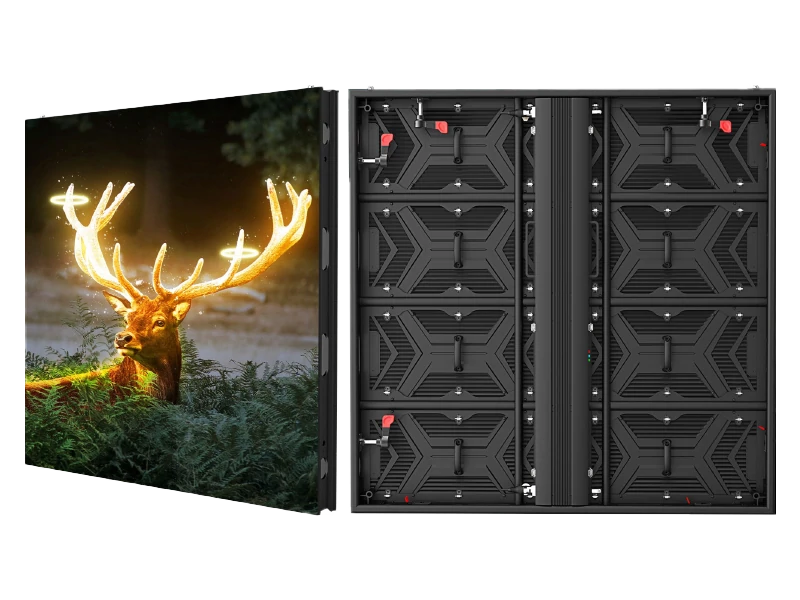
Then there's the weatherproofing situation. A proper outdoor rental panel needs an IP rating of at least IP65 on the front face, meaning it's completely dust-tight and can handle water jets from any direction. Some premium models push IP65 on both front and rear, which matters a lot when you're dealing with sideways rain or high humidity environments. The sealing isn't just about the cabinet either. Every cable entry point, every connector, every ventilation opening needs to be properly gasketed. This is where a lot of cheaper manufacturers cut corners, and it's exactly where you'll see failures in the field.
Wind loading is another factor that doesn't get enough attention. When you're stacking a 10-meter-tall LED wall at an outdoor concert, wind pressure can be enormous. The cabinet structure needs to handle not just its own weight but significant lateral forces. Die-cast aluminum cabinets with proper structural ribbing are non-negotiable here. Some of the budget manufacturers use thinner gauge aluminum or even plastic-composite cabinets that might pass a visual inspection but will flex and warp under real wind loads.
Alright, let's get to the names. These are the companies that have built genuine reputations in the outdoor rental space, not just the ones with the biggest marketing budgets.
Absen is probably the first name that comes to mind for most people in the industry. Their outdoor rental portfolio includes the T-series and the newer E-series panels, which have been deployed at everything from music festivals in Europe to political rallies in the Middle East. What sets Absen apart is their consistency. When you order 200 square meters of their P3.91 outdoor rental panels, every single cabinet arrives with matching color temperature and brightness levels. That kind of uniformity is hard to achieve and it saves you hours of calibration time on site.
Unilumin has been making serious moves in the outdoor rental segment. Their Upad and Upanel outdoor series are engineered with a focus on both brightness and energy efficiency. Unilumin was one of the first major manufacturers to introduce common-cathode LED driver technology into their outdoor rental panels, which reduces power consumption by roughly 20-30% compared to traditional common-anode designs. For a rental company running a three-day outdoor festival, that power savings translates into real money on generator fuel costs.
Leyard brings a different strength to the table: sheer manufacturing scale and reliability data. They're the kind of company that can show you MTBF (Mean Time Between Failures) statistics backed by millions of hours of field data. Their outdoor rental panels are built like tanks, with over-engineered power distribution and redundant signal paths. If absolute reliability is your top priority and budget is secondary, Leyard is a strong contender.
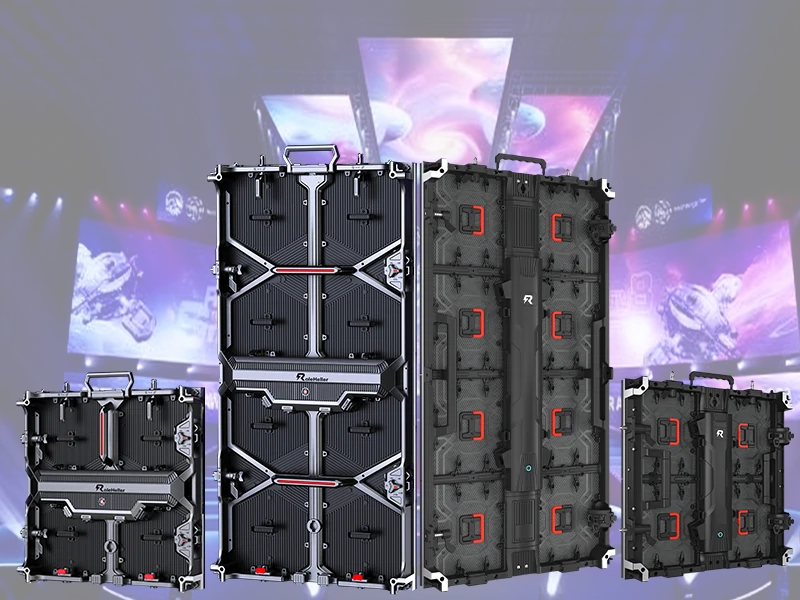
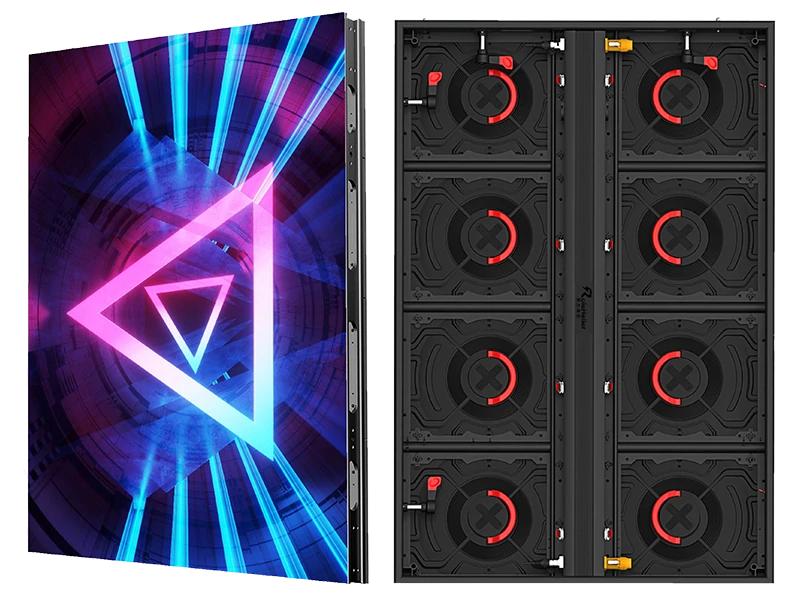
RYSE (formerly known as ReadyLED in some markets) has carved out a niche specifically in the outdoor rental space. Their panels are designed from the ground up for rental applications, with features like tool-free assembly, built-in tilt indicators, and integrated rigging points that make hanging large outdoor walls significantly faster. They might not have the brand recognition of Absen or Unilumin, but among experienced rental operators, RYSE has a loyal following.
DXG (Daksha) is another player worth watching. They've been aggressive on pricing while maintaining decent quality control, making them a popular choice for rental companies that need to maximize their fleet size on a limited budget. Their outdoor P4.81 panels are workhorses, not the prettiest spec sheet you'll see, but they get the job done at a price point that's hard to argue with.
| Manufacturer | Top Outdoor Rental Model | Pixel Pitch | Brightness (nits) | IP Rating | Cabinet Weight | Approx. Price/sqm |
|---|---|---|---|---|---|---|
| Absen | T-series / E-series | P2.6–P4.8 | 5,000–7,000 | IP65 front/rear | ~28–35 kg | $900–$1,400 |
| Unilumin | Upad / Upanel Outdoor | P2.9–P4.8 | 5,500–7,500 | IP65 front/rear | ~26–32 kg | $950–$1,450 |
| Leyard | Outdoor Rental Series | P3.9–P6.25 | 5,000–6,500 | IP65 | ~30–38 kg | $850–$1,300 |
| RYSE | Outdoor Rental Series | P3.91–P4.81 | 5,000–6,000 | IP65 | ~25–30 kg | $750–$1,100 |
| DXG (Daksha) | Standard Outdoor Rental | P4.81–P6.25 | 5,000–5,500 | IP65 front | ~30–36 kg | $600–$900 |
Price ranges are approximate for 2026 and depend on order volume, configuration, and shipping terms.
Here's where the rubber meets the road. You've narrowed down your list of potential China rental outdoor LED video wall manufacturers, but how do you actually evaluate them? Let me walk you through the checklist that experienced buyers use.
Brightness uniformity across the panel. This sounds basic but you'd be surprised how many panels look great in the factory but develop hot spots or dim zones after a few months of outdoor use. Ask the manufacturer for chromaticity coordinate data and brightness uniformity test reports. A good outdoor rental panel should maintain at least 97% brightness uniformity across the entire display surface. If a manufacturer can't provide this data, that's a red flag.
Thermal management design. Outdoor panels running at 5,000+ nits generate serious heat. The question is how that heat gets managed. Some manufacturers rely purely on passive cooling through the aluminum cabinet, which works fine in moderate climates but can lead to thermal throttling or premature LED degradation in hot environments like the Middle East or Southeast Asia. Others use active cooling with internal fans, which is more effective but introduces another potential failure point. The best designs use a combination of efficient LED driver ICs that generate less heat in the first place, plus smart fan placement that creates proper airflow without sucking in dust or rain.
Power consumption per square meter. This matters more than you might think. An outdoor LED wall running at full brightness can pull anywhere from 400W to 800W per square meter. Multiply that by a 100-square-meter installation and you're talking about 40 to 80 kilowatts of power draw. That's a significant cost factor when you're paying for generator power at a remote event site. The newer common-cathode driver technology from manufacturers like Unilumin can cut this by 20-30%, which over a multi-day event adds up to substantial savings.
Assembly and disassembly speed. For rental applications, time is money. Every minute your crew spends on site assembling the screen is a minute you're paying them for. Look for panels with quick-lock mechanisms between cabinets, tool-free module replacement, and integrated power and signal connectors that mate automatically when cabinets are joined. The top manufacturers have gotten this down to where a crew of four can assemble a 50-square-meter wall in under two hours.
This is the question that comes up in every sourcing conversation. You'll find factories on Made-in-China.com or Global Sources offering outdoor rental panels at $400-$500 per square meter, which is roughly half the price of the established brands. So what's the catch?
Well, it depends on what you mean by "catch." If you're running a one-off event where the screen needs to look decent for a single weekend and you don't particularly care if it survives the next gig, then sure, the budget panels might work. They'll probably look fine on day one. But here's what tends to happen with the cheaper stuff.
The LED chips themselves are often sourced from lower-tier suppliers. They might have the same initial brightness specs on paper, but their lumen depreciation curve is steeper. After six months of outdoor use, you might notice that some cabinets are visibly dimmer or have shifted in color temperature compared to others. When you're trying to build a seamless wall, even a 5-10% brightness difference between adjacent cabinets is visible to the audience.
The cabinet sealing is another common weak point. Cheaper manufacturers might use basic foam gaskets instead of proper silicone compression seals. These work fine initially, but after repeated assembly and disassembly cycles, the gaskets compress permanently and lose their sealing ability. Then suddenly your "IP65" panel is letting in moisture, and you've got condensation forming on the inside of the cabinet, which leads to corrosion on the PCBs and eventually short circuits.
And then there's the after-sales situation. When a panel from a top-tier manufacturer fails, you can typically get a replacement module shipped from an overseas warehouse within 24-48 hours. When a budget panel fails, you might be waiting two to three weeks for a replacement to ship from Shenzhen, assuming the factory even still exists or remembers your order.
So is it worth the risk? My honest take is that it depends on your business model. If you're a high-volume rental company where your equipment is your livelihood, the answer is almost certainly no. The downtime costs and reputation damage from a failed screen at a client event far outweigh the initial savings. But if you're a small operator doing occasional gigs and you've got a tight budget, buying a batch of budget panels as a secondary inventory while you save up for premium gear is a strategy that some people make work.
It's worth addressing this head-on because there's still a perception in some circles that Chinese LED panels are inherently lower quality than their Western counterparts. That perception was maybe somewhat justified ten or fifteen years ago, but in 2026, the reality is quite different.
European brands like ROE Visual (Netherlands) and Minus Technology (Italy) make exceptional outdoor rental panels. Their engineering is top-notch, their build quality is outstanding, and their panels are often the choice for the most demanding applications like broadcast environments and high-end corporate events. But they come at a significant price premium, typically 40-80% more than comparable Chinese panels.
American brands like PRG and Daktronics also produce quality outdoor rental gear, though they tend to focus more on permanent installations and very large-scale applications rather than the modular rental market.
The honest truth is that for the vast majority of outdoor rental applications, the top Chinese manufacturers are delivering panels that perform identically to their Western competitors in real-world conditions. The LED chips themselves are often the same, the driver ICs are frequently the same, and the control systems (NovaStar, Colorlight) are universal across brands. Where the Western brands justify their premium is in areas like ultra-precise color calibration out of the factory, more sophisticated cabinet mechanics, and in some cases, more extensive local service networks in Western markets.
But for a rental company that needs to deploy 200 square meters of P3.91 outdoor panels at a music festival, the difference in image quality between a premium Absen panel and a premium ROE panel is going to be imperceptible to the audience standing 50 meters away. The difference in price, however, will be very perceptible to your accounting department.
The outdoor rental LED market isn't standing still. Several technology shifts are happening right now that are worth understanding if you're in the sourcing game.
Common cathode LED driver technology is probably the biggest one. Traditional LED drivers use a common anode design where all the red, green, and blue LEDs in a pixel share a single positive power rail. Common cathode design gives each color channel its own dedicated power path, which reduces electrical noise, improves color accuracy, and most importantly, cuts power consumption by 20-30%. For outdoor rental applications where you're often running on generator power, this is a meaningful advantage. Unilumin and Absen have both rolled out common cathode options across their outdoor rental lines, and by 2027 it'll likely become the default rather than the exception.
GOB (Glue-on-Board) protection is another trend gaining momentum. GOB involves applying a layer of transparent epoxy resin over the LED module surface after the LEDs are mounted. This creates a smooth, sealed surface that protects the LEDs from physical impact, moisture, and dust. For rental panels that get handled roughly, GOB protection significantly reduces field failures caused by damaged LEDs. The trade-off is a slight reduction in viewing angle and a small increase in module thickness, but for most outdoor applications where the audience is at a distance, these trade-offs are negligible.
Lighter cabinet designs continue to evolve. The latest generation of outdoor rental cabinets from top manufacturers are using advanced aluminum alloys and topology-optimized structural designs to reduce weight by 15-20% compared to panels from just three years ago, without sacrificing rigidity or weatherproofing. A typical P3.91 outdoor rental cabinet that weighed 35kg in 2023 might now weigh 28-30kg. This reduction matters when your crew is manually handling hundreds of cabinets during load-in.
Higher refresh rates are becoming standard. Early outdoor rental panels typically ran at 1,920Hz or 3,840Hz refresh rates. The newer generation pushes 3,840Hz as a baseline, with many models offering 7,680Hz or even higher. This matters for camera capture, especially if your outdoor screen will be filmed or broadcast. Higher refresh rates eliminate the flickering and scanning lines that appear when LED screens are captured by cameras at lower refresh rates.
This is the part that catches a lot of first-time importers off guard. The price per square meter you see on a quotation is just the starting point. Let's talk about what it actually costs to get these panels from a factory in Shenzhen to your warehouse in Europe, North America, or anywhere else.
Sea freight is the standard option for LED panels. A 20-foot container can typically hold about 60-80 square meters of outdoor rental panels (depending on cabinet size and how they're packed). Shipping from Shenzhen to major European ports like Rotterdam or Hamburg takes about 25-35 days. To US West Coast ports like Los Angeles, it's roughly 15-25 days. To the East Coast, add another 10-15 days via Panama Canal. Freight rates fluctuate, but as a rough guide, you're looking at $2,000-$5,000 per container depending on the season and route.
Import duties vary significantly by destination. In the United States, LED display panels fall under HTS code 8528.59 and the base duty rate is relatively low (around 3.9%), but additional Section 301 tariffs may apply depending on current trade policy. In the European Union, the standard duty rate for LED displays is around 1.4-3.9% plus VAT at your country's rate. In Hong Kong, there are no import duties on electronic goods, which is one reason many regional distributors and rental companies source directly from Shenzhen.
DDP (Delivered Duty Paid) shipping is available from most major manufacturers and is strongly recommended for first-time buyers. With DDP, the manufacturer or their logistics partner handles everything from factory pickup to customs clearance to final delivery at your door. You pay one all-in price and don't need to worry about customs brokers, duty payments, or port handling charges. It typically costs 10-15% more than FOB pricing but saves you a tremendous amount of hassle.
Let's be real for a second. No matter how good the panels are, things will go wrong. An LED module will fail mid-event. A power supply will die. A locking pin will break during load-out. The question isn't if it'll happen, it's how quickly and painlessly you can fix it when it does.
The standard warranty from top-tier China rental outdoor LED video wall manufacturers is 2-3 years covering manufacturing defects in LED modules, cabinets, power supplies, and receiving cards. Some manufacturers offer extended warranty packages for an additional fee. The warranty typically covers dead pixels beyond a specified threshold (usually 3 per 10,000 or similar), color uniformity drift beyond acceptable limits, and component failures under normal operating conditions.
But warranty coverage is only half the equation. What really matters is spare parts availability and response time. The top manufacturers maintain overseas warehouses in key markets. Absen, for example, has warehouse facilities in the Netherlands, the United States, and Dubai. Unilumin has similar facilities in multiple regions. This means if a module fails during an event in Frankfurt, you can typically get a replacement from the local warehouse within 24-48 hours, not wait three weeks for something to ship from China.
Most manufacturers also include 3-5% spare modules with every order at no extra cost. For a 100-square-meter order, that's 3-5 square meters of spare modules, which is more than enough to handle the vast majority of field failures. Smart rental companies keep these spares in their flight cases so they're always on site during events.
For those of you based in Hong Kong, the geographic proximity to Shenzhen is a genuine competitive advantage that you should leverage fully. You can visit factory showrooms same-day, inspect production runs in person, and arrange small-parcel courier delivery for urgent orders in a matter of hours, not days.
Many of the top manufacturers have dedicated Hong Kong sales offices or appointed local distributors who understand the specific requirements of the Hong Kong and Greater Bay Area market. This includes familiarity with local event venues, common rigging configurations in Hong Kong convention centers, and the specific certifications that may be required for events in Hong Kong, Macau, or mainland China.
If you're running a rental business in this region, consider building relationships with two or three manufacturers rather than putting all your eggs in one basket. This gives you negotiating leverage, ensures supply continuity if one manufacturer has production issues, and lets you offer clients a wider range of options at different price points.
After years of watching this industry evolve, here's where I land. The China rental outdoor LED video wall manufacturers have reached a level of maturity where the gap between the top Chinese brands and their Western competitors is genuinely minimal in terms of actual performance. The days when "made in China" meant cutting corners on outdoor LED displays are well behind us.
That said, the market is still stratified. You've got the publicly listed companies with global service networks, rigorous quality control, and proven track records at major international events. And then you've got the smaller workshops that can offer tempting prices but carry real risks in terms of long-term reliability and after-sales support. The key is knowing which tier you're buying from and making sure your expectations match the price you're paying.
For rental companies, my advice is to invest in quality from established manufacturers for your primary fleet, the panels that'll be out on every gig generating revenue. If you need additional inventory for overflow or backup, there's nothing wrong with supplementing with value-oriented brands, just go in with your eyes open about the trade-offs. And whatever you do, don't let a $200-per-square-meter price difference convince you to bet your reputation on an unproven manufacturer. One failed screen at a client event can cost you far more than you saved on the purchase.
Q1: Who are the most reliable China rental outdoor LED video wall manufacturers in 2026?
A: The most established and trusted names include Absen, Unilumin, Leyard, RYSE, and DXG (Daksha). These manufacturers have proven track records at major outdoor events worldwide, maintain overseas service networks, and offer consistent product quality backed by publicly verifiable financial performance.
Q2: What is the typical price range for outdoor rental LED panels from China?
A: For standard P3.91 outdoor rental panels, expect to pay between $700 and $1,400 per square meter depending on the manufacturer, order volume, and specifications. Premium brands like Absen and Unilumin sit at the higher end, while value-oriented brands like DXG offer competitive pricing at the lower end. COB-protected or common-cathode models carry a 15-30% premium.
Q3: What IP rating should I look for in outdoor rental LED panels?
A: IP65 on the front face is the minimum acceptable rating for outdoor use, meaning the panel is dust-tight and protected against water jets from any direction. For demanding environments with heavy rain or high humidity, look for IP65 on both front and rear. Some premium models offer IP68-rated cabinets for extreme conditions.
Q4: How bright do outdoor rental LED panels need to be?
A: For most outdoor applications, 5,000-5,500 nits is sufficient for shaded areas or evening events. For full sunlight visibility, you'll need 6,000-7,500 nits. Panels used in equatorial regions or desert environments should target the higher end of this range to maintain readability during peak daylight hours.
Q5: How long does it take to receive an order from a Chinese LED manufacturer?
A: Production lead time for standard models is typically 15-25 working days. Sea freight adds 15-40 days depending on destination. For buyers in Hong Kong or Southeast Asia, total delivery time from order to arrival can be as short as 20-30 days. Rush orders may be possible for an additional fee.
Q6: Can outdoor rental LED panels from China handle extreme weather conditions?
A: Yes, panels from reputable manufacturers are designed to operate in temperatures ranging from -20°C to +60°C, withstanding rain, dust, and UV exposure. However, performance in extreme conditions depends on proper installation, adequate ventilation, and choosing panels with appropriate IP ratings and thermal management systems for your specific climate.
Q7: What is the expected lifespan of outdoor rental LED panels?
A: High-quality outdoor rental panels from top manufacturers typically have an LED lifespan of 50,000-100,000 hours to half-brightness. In practical rental terms, with proper maintenance and handling, a well-built panel should remain in good working condition for 5-8 years of active rental use before significant degradation becomes noticeable.
Q8: Do Chinese manufacturers offer customization for outdoor rental panels?
A: Yes, most established manufacturers offer customization options including non-standard cabinet sizes, custom colors, branded cabinet exteriors, special rigging configurations, and modified pixel pitches. Minimum order quantities for custom configurations typically range from 20-50 square meters depending on the manufacturer and the extent of customization required.
Q9: What certifications are required for importing outdoor LED panels?
A: For the European market, CE marking is required. For the United States, FCC certification is necessary. Most top Chinese manufacturers already hold these certifications for their standard outdoor rental models. Additional certifications like RoHS (environmental compliance) and UL listing may be required depending on your specific market and application.
Q10: Is it better to buy or rent outdoor LED panels from Chinese manufacturers?
A: This depends on your usage frequency. If you're running 15 or more events per year, purchasing your own fleet from a Chinese manufacturer is almost always more cost-effective than renting, even when factoring in maintenance and storage costs. For occasional use (fewer than 5-8 events per year), renting from a local rental house that sources from Chinese manufacturers may be more practical and eliminates storage and maintenance responsibilities.
.jpg "How to Choose China Outdoor Stage LED Video Wall Manufacturers?")
.jpg "Where to Find Reliable Wholesale P2.6 LED Video Wall Manufacturers?")