 English
So you have been scrolling through supplier directories for hours, comparing china portable led video wall manufacturers, and every single one claims to be "the best in the industry" with "unbeatable prices." We get it. The market is flooded with options, and picking the wrong one could cost you thousands in shipping headaches, dead pixels showing up mid-event, or a panel that falls apart after two uses. Whether you are an event rental company in Hong Kong looking to expand your fleet, or a corporate AV team sourcing your first portable display, this guide is going to save you from the mistakes we have seen way too many buyers make. Let us walk through the real landscape of portable LED video wall manufacturers in China, what actually separates a reliable partner from a risky gamble, and how to match the right factory to your specific project needs.
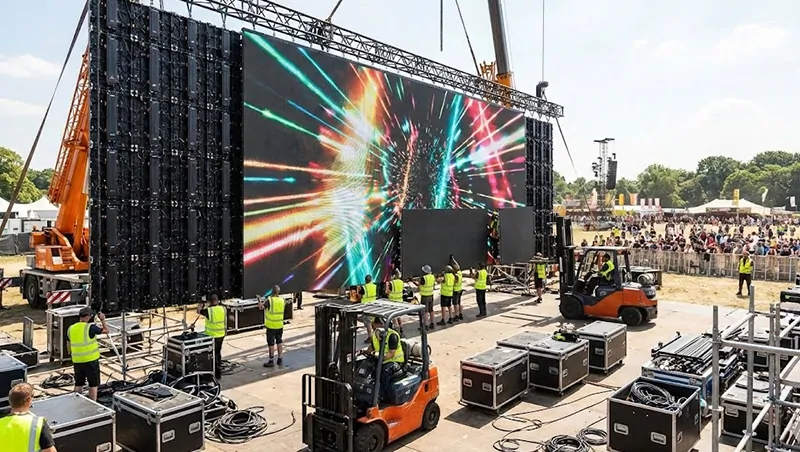
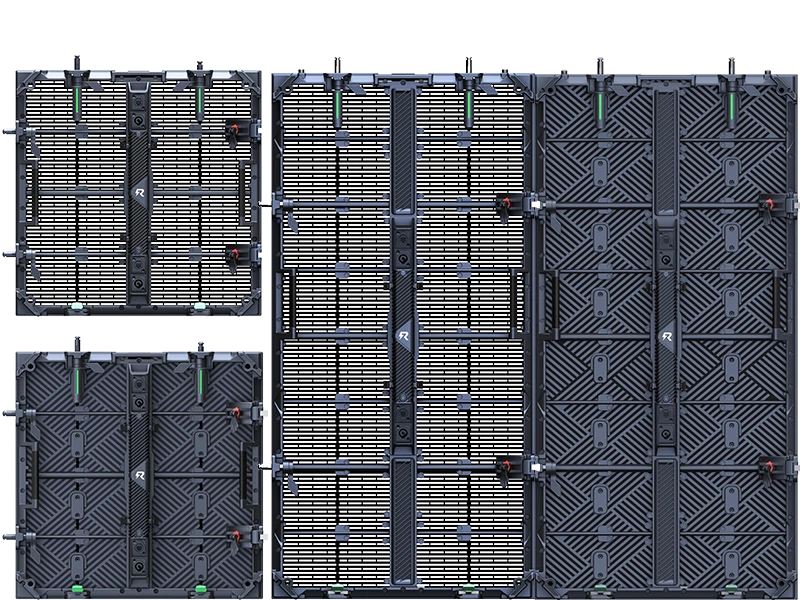
Before we dig into manufacturers, let us make sure we are talking about the same thing. A portable LED video wall is designed to be assembled, disassembled, transported, and reassembled repeatedly—often weekly or even daily for rental companies. That means the build quality requirements are fundamentally different from a wall that gets mounted once and stays there for five years.
The key differences you need to care about:
Cabinet locking mechanisms must withstand thousands of connect/disconnect cycles without loosening
Weight per cabinet needs to stay under 8-12kg so a two-person crew can handle setup
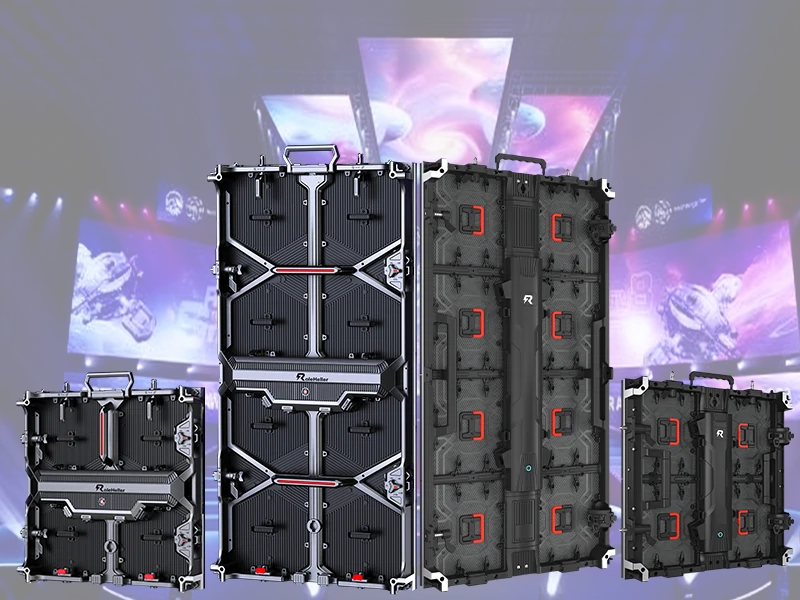
Integrated handles and stacking feet are not optional—they are load-bearing design elements
Connector durability (both power and signal) is tested to 5,000+ mating cycles minimum
Flight case compatibility matters more than you think—standard sizes save you custom case costs
If a manufacturer cannot clearly explain how their portable cabinets handle repeated transport stress, that is your first red flag. We have seen too many buyers get burned by factories that simply took their fixed-installation panels, slapped some handles on them, and called it "portable."
Here is where it gets practical. We have narrowed down the field to manufacturers that actually have a track record with portable and rental-grade products—not just companies that list "portable" on their Alibaba storefront but have never shipped a single rental cabinet to an international client.
| Manufacturer | Location | Cabinet Weight | Min. Pixel Pitch | Warranty | MOQ | Best Suited For |
|---|---|---|---|---|---|---|
| Unilumin | Shenzhen | 7.5kg (P2.6) | P1.5 | 3 years | 10 sqm | Large-scale rental fleets |
| Absen | Shenzhen | 8kg (P2.5) | P1.6 | 3 years | 5 sqm | Corporate events, mid-size rental |
| Leyard | Shenzhen | 7.8kg (P1.9) | P1.2 | 2 years | 20 sqm | Premium rental, broadcast |
| Infiled | Shenzhen | 6.5kg (P2.6) | P1.8 | 2 years | 5 sqm | Budget-conscious rental startups |
| Prima | Shenzhen | 7kg (P2.9) | P1.9 | 2 years | 3 sqm | Small to mid-size events |
| Ledman | Shenzhen | 8.2kg (P2.5) | P1.5 | 3 years | 10 sqm | Sports and stadium portable |
| Gloshine | Shenzhen | 6.8kg (P2.6) | P1.9 | 2 years | 5 sqm | Quick-turn rental orders |
Now, let us be real about what this table does not tell you. Unilumin and Absen are the two heavyweights—they have the largest international service networks, which matters a lot when your wall goes down at a live event in Central Asia and you need a replacement panel shipped overnight. Leyard sits at the premium end; their portable cabinets are built like tanks, but the MOQ of 20 square meters makes them impractical for smaller operators. Infiled and Gloshine are the go-to picks for rental startups that need to get gear on the road fast without dropping $50,000 on day one.
This is the part everyone wants to know but nobody talks about openly. Portable LED video wall pricing from Chinese manufacturers varies wildly depending on specs, and the gap between the cheapest and most expensive options is not always about quality—it is often about brand positioning and order volume.
Here is a rough price range per square meter for portable cabinets in 2026:
P1.5-P1.9 (premium fine pitch): $3,500 - $6,000 per sqm
P2.5-P2.6 (standard rental pitch): $1,800 - $3,200 per sqm
P2.9-P3.9 (budget outdoor/indoor): $1,200 - $2,000 per sqm
But here is what most buyers miss: the panel price is only 60-70% of your total landed cost. You also need to budget for:
Shipping and customs: $200-$400 per sqm depending on destination and method
Spare parts inventory: Plan for 3-5% extra panels for field replacements
Processor and cabling: Novastar or Brompton processors run $2,000-$8,000 depending on output channels
Flight cases: $150-$300 per case, and you need one per 6-8 cabinets
So when a manufacturer quotes you $1,500 per sqm, the real deployed cost is closer to $2,200-$2,500 per sqm. We always tell our clients to calculate their total project cost, not just the panel cost, before making a decision.
This section right here could save you from a $30,000 mistake. We have seen it happen—someone finds a great price on a factory they discovered through a trade show or online directory, places a bulk order, and then discovers that the panels have visible color banding after three months, or the quick-lock connectors start failing after 200 setups.
Here is a verification checklist we recommend running through before committing:
Factory audit essentials:
Ask for their ISO 9001 certificate and verify it on the official CNCA database—fake certificates are shockingly common
Request a factory tour via live video call, not a pre-recorded video. You want to see the production line running, not a staged showroom
Check their export history using customs data tools like ImportGenius or Panjiva—this shows you real shipment records to real buyers
Ask for references in your region—a manufacturer who has sold 500 sqm to rental companies in Southeast Asia is a very different risk profile from one who has only sold domestically
Product testing you should insist on:
72-hour aging test on a random sample from your production batch—this catches early LED failures before they ship
IP rating verification—portable cabinets should be at least IP54 for indoor/outdoor dual-use
Connector pull test—the power and data connectors should withstand 50N of force without disconnecting
Color uniformity report—ask for a chromaticity diagram showing delta u'v' values under 0.003 across the batch
One thing we learned the hard way: never skip the pre-shipment inspection. Even with trusted manufacturers, a bad batch of LED modules can slip through. Hiring a third-party inspection service like SGS or Bureau Veritas costs around $300-$500 per visit, which is nothing compared to the cost of returning a container full of defective panels.
Some buyers come to us asking for portable cabinets when what they really need is a fixed installation, and vice versa. The distinction matters because portable cabinets cost 20-35% more per square meter than their fixed counterparts due to the reinforced structure, quick-lock mechanisms, and lighter materials.
Portable makes sense when:
You are running an event rental business and need to deploy the same wall at different venues
Your installation location changes seasonally (think pop-up retail or touring exhibitions)
You need to scale your display size up or down depending on the event
Your venue has structural limitations that prevent permanent mounting
Fixed installation makes more sense when:
The display stays in one location permanently
You need the absolute thinnest profile (fixed cabinets can go as thin as 30mm)
Budget is the primary constraint and you do not need transportability
The installation is in a controlled environment with no risk of physical impact
If you are running a corporate lobby display that never moves, buying portable cabinets is literally throwing money away. But if you are in the rental business, the extra cost per square meter pays for itself within 8-12 jobs.
Let us talk about the pitfalls, because this is where real money gets lost. We are not trying to scare you off—Chinese portable LED video wall manufacturers produce some of the best rental panels in the world—but going in blind is how problems happen.
Mistake #1: Choosing the lowest price without comparing total cost of ownership
A $1,200/sqm cabinet that needs 5% module replacements per year costs more over three years than a $1,800/sqm cabinet with a 0.5% failure rate. Always calculate the 3-year TCO, including spare parts, labor for repairs, and revenue lost to downtime.
Mistake #2: Ignoring the control system ecosystem
The LED panels are only half the equation. If your manufacturer uses a proprietary control system that is not compatible with industry-standard processors like Novastar, Brompton, or Colorlight, you are locking yourself into a single-vendor ecosystem. This makes future expansion expensive and limits your options for content management software.
Mistake #3: Not specifying the right pixel pitch for your viewing distance
We have seen buyers order P1.5 portable panels for outdoor events where the closest viewer is 10 meters away. That is a massive waste of money. Here is a quick reference for minimum viewing distance:
P1.5-P1.9: 1.5-2 meters minimum (indoor close-up, retail, broadcast)
P2.5-P2.6: 2.5-3 meters minimum (indoor events, conference stages)
P2.9-P3.9: 3-4 meters minimum (large indoor venues, outdoor stages)
P4.8-P6.25: 5-6 meters minimum (outdoor events, large audiences)
Mistake #4: Forgetting about spare parts strategy
When you order 50 square meters of portable panels, you should also order 2-3 square meters of spare modules, receiving cards, and power supplies. When a panel dies at 2am before a show, you do not have time to wait for DHL. Having spares on hand is not optional—it is operational insurance.
This is the part that nobody warns you about until your first shipment arrives with two crushed cabinets and a customs hold. Portable LED video walls are heavy, fragile, and expensive—three things that make logistics a genuine challenge.
Shipping methods compared:
Sea freight (LCL): Cheapest option at $3-5 per kg, but takes 25-40 days. Best for planned inventory builds.
Sea freight (FCL): Better for orders over 15 sqm. You get a full container, less handling damage, and transit times of 18-30 days depending on destination.
Air freight: $8-12 per kg, 5-8 days door-to-door. Only use this for urgent replacements or small initial samples.
Express courier (DHL/FedEx): $15-25 per kg. Only viable for spare parts or single cabinet replacements.
Packaging matters more than you think. Insist on your manufacturer using:
Individual foam-molded packaging for each cabinet
Corner protectors on every carton
Palletized shipping with stretch wrap—never loose-loaded
"Fragile / This Side Up" markings in both English and the destination country language
We had a client who received a shipment where the factory had saved $200 on packaging and ended up with $4,000 in damaged panels. The manufacturer refused to cover the claim because the damage was attributed to "insufficient packaging." Always specify your packaging requirements in the purchase order.
Here is something that separates the serious manufacturers from the fly-by-night operations: what happens after the sale. Every company promises great quality before you pay. The question is what happens six months later when a receiving card fails and you need a replacement fast.
When evaluating warranty and support, ask these specific questions:
What is the warranty period? Industry standard is 2-3 years for portable cabinets. Anything less than 2 years is a red flag.
What does the warranty actually cover? Some warranties exclude "wear and tear" which, for portable panels, could mean almost anything. Get the exact exclusions in writing.
What is the response time for replacement parts? A 48-hour dispatch guarantee means nothing if shipping takes 3 weeks. Ask about their regional spare parts depots.
Do they offer remote technical support? The best manufacturers have English-speaking engineers available via video call to troubleshoot issues in real time.
Can they provide on-site training for your crew? Proper handling and setup training extends the life of your panels significantly.
Absen and Unilumin both have regional service centers in Hong Kong, Singapore, Dubai, and major European cities, which gives them a clear advantage for buyers in those regions. Smaller manufacturers like Infiled and Gloshine rely more on remote support and ship replacements internationally, which works fine but adds 5-10 days to your repair timeline.
Q: Can I use the same portable LED wall for both indoor and outdoor events?
A: It depends on the IP rating. Most portable cabinets rated IP54 can handle light rain and dust, making them suitable for covered outdoor stages or semi-outdoor venues. But if you are putting the wall in full, direct rainfall, you need IP65-rated outdoor portable cabinets, which are heavier and more expensive. Always check the specific IP rating—do not assume "outdoor compatible" means fully weatherproof.
Q: How often do portable LED panels need maintenance?
A: With proper handling, portable panels need minimal maintenance. We recommend a full inspection every 20-30 setup cycles, checking for loose connectors, cabinet warping, and LED module alignment. A quick clean with a soft brush and isopropyl alcohol every 50 setups keeps the surface looking sharp. The biggest maintenance issue we see is bent locking pins from crews who force the connectors instead of aligning them properly.
Q: What is the typical lifespan of a portable LED video wall?
A: A well-maintained portable LED wall from a reputable manufacturer should last 7-10 years or 50,000-80,000 hours of use. The LED modules themselves are rated for 100,000 hours, but the mechanical components—locking pins, connectors, power sockets—will wear out faster with frequent transport. Budget for component refreshes around year 5.
Q: Is it better to buy or rent portable LED walls?
A: If you are doing more than 8-10 events per year, buying almost always makes financial sense. A typical P2.6 portable wall costs around $2,500 per sqm landed. Rental rates run $150-$300 per sqm per day. After 10-15 rental days, you have already paid for the purchase. The break-even point is surprisingly fast for active rental companies.
Q: Can I expand my portable LED wall system later with panels from the same manufacturer?
A: In theory yes, but in practice you may see slight color and brightness differences between batches manufactured months apart. We always recommend ordering your full planned size upfront, plus 5-10% extra, to ensure batch consistency. If you must expand later, request panels from the same LED module batch or plan for a full recalibration.
After helping dozens of clients navigate this market, here is what we have learned. The cheapest option is rarely the most expensive mistake—the second cheapest option is. The absolute bottom-tier factories produce panels that fail so obviously you catch the problem before deployment. It is the mid-tier manufacturers who look legitimate on paper but cut corners on connector quality or skip the aging test who cause the real headaches.
If your budget allows, start with Absen or Unilumin for your first portable LED wall purchase. You pay a 15-20% premium over the budget options, but you get consistent color matching across batches, a reliable spare parts supply chain, and service teams that actually pick up the phone. Once you have built up your fleet and your technical team is experienced with maintenance, you can confidently explore smaller manufacturers for expansion orders where the risk is more manageable.
One more thing—we cannot stress this enough—visit the factory if you can. A three-day trip to Shenzhen to inspect production lines, meet the engineering team, and test panels in person will give you more confidence than six months of email exchanges. And if you cannot travel, at minimum insist on a live video factory tour and request samples before committing to a bulk order. The manufacturers who resist these requests are usually the ones you want to avoid.
1. What is the minimum order quantity for portable LED video walls from Chinese manufacturers?
Most established manufacturers require a minimum of 3-10 square meters for portable cabinets. Smaller factories may accept orders as low as 1-2 sqm, but pricing per square meter increases significantly for small orders due to production line setup costs.
2. How long does production take for a portable LED video wall order?
Standard production lead time is 15-25 working days for orders under 50 sqm, and 30-45 working days for larger orders. During peak season (August-October ahead of the fall event season), add 5-10 extra days.
3. What payment terms do Chinese LED manufacturers typically offer?
The industry standard is 30% deposit upfront, 70% balance before shipment. Some manufacturers offer letter of credit terms for orders over $50,000. Avoid any manufacturer that demands 100% upfront payment.
4. Can portable LED video wall panels from China be used with non-Chinese control systems?
Yes, as long as the panels use standard signal inputs like DVI, HDMI, or SDI through compatible receiving cards. Most major manufacturers support Novastar, Brompton, and Colorlight systems, which are the global standard.
5. What certifications should I look for when buying portable LED walls from China?
Essential certifications include CE (for European markets), FCC (for North America), RoHS (environmental compliance), and UL/ETL (safety certification for the US market). Not all manufacturers hold all of these, so verify before ordering.
6. How do I handle customs clearance for importing LED panels?
The HS code for LED display panels is typically 8528.59. Work with a licensed customs broker in your country who has experience with electronics imports. You will need a commercial invoice, packing list, bill of lading, and any required certification documents.
7. What is the difference between die-cast aluminum and sheet metal portable cabinets?
Die-cast aluminum cabinets are lighter, more precise in dimensions, and better for frequent transport. Sheet metal cabinets are heavier and cheaper but can warp over time with repeated assembly. For rental applications, die-cast aluminum is strongly recommended.
8. Can I get custom-sized portable LED cabinets from Chinese manufacturers?
Most manufacturers offer standard cabinet sizes (480x480mm, 500x500mm, 500x1000mm). Custom sizes are possible but usually require a minimum order of 50+ sqm and add 10-15 days to production time. Standard sizes are almost always the better choice.
9. Do Chinese portable LED video wall manufacturers provide installation support?
Most offer remote installation guidance via video call. Premium manufacturers like Absen and Unilumin can dispatch engineers for on-site commissioning on large orders (typically 50+ sqm), though travel costs are usually borne by the buyer.
10. What is the best pixel pitch for a portable LED wall used in Hong Kong exhibition centers?
For Hong Kong venues like the Hong Kong Convention and Exhibition Centre, where viewing distances are typically 3-8 meters, P2.5 to P2.9 is the sweet spot. It offers excellent image quality at a reasonable price point, and most major manufacturers keep these pitches in stock for fast delivery.
.jpg "Where to Source P1.875 LED Video Walls from China?")
.jpg "Curved LED Video Wall Rental Manufacturers | How to Find the Right One?")