English
You are standing backstage at a 15,000-capacity arena, the headliner goes on in forty minutes, and the main stage LED wall just threw a cascade of dead pixels across the center panel. Your production manager is screaming into a radio, the lighting director is threatening to kill the whole video look, and you are staring at a wall of panels that cost more than your house. We have all been there. Picking the right china concert stage led video wall manufacturers is not just about finding the cheapest per-panel price—it is about matching build quality to the brutal reality of touring, ensuring color consistency across massive surface areas, and having a manufacturer who understands that "downtime" at a live concert is not an option. Whether you are a touring production house building your next fleet, a festival organizer sourcing walls for multiple stages, or a venue investing in a permanent stage installation, let us break down everything you need to know to make the right call.
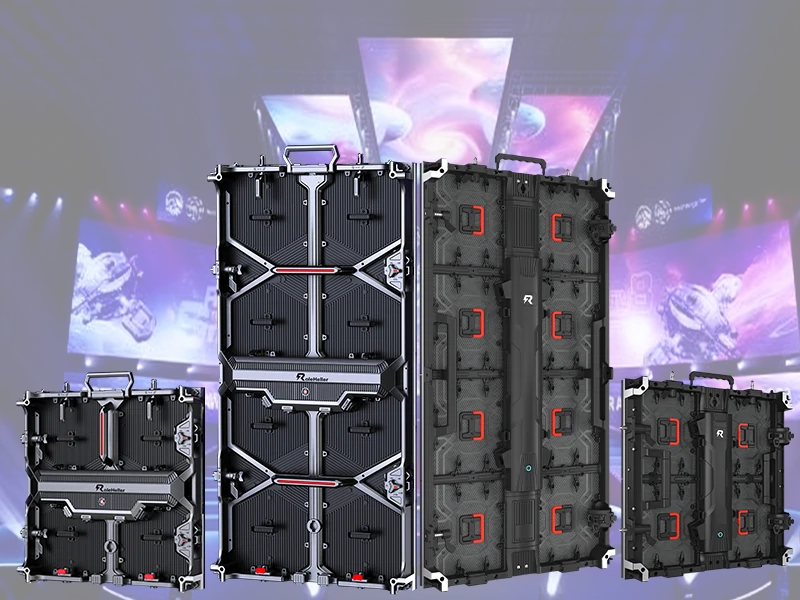
Before we start comparing manufacturers, we need to be crystal clear about what makes a concert stage LED wall a completely different beast from a corporate lobby display or a retail video wall. The operating environment is hostile—panels get loaded into trucks every night, driven hundreds of miles, slammed onto stages, hit with bass vibrations that would shake a normal display apart, and then torn down again before sunrise. This cycle repeats five, six, sometimes seven days a week for months at a time.
Here are the non-negotiable requirements for concert stage LED panels:
Cabinet locking systems must withstand 10,000+ connect/disconnect cycles without play or wobble
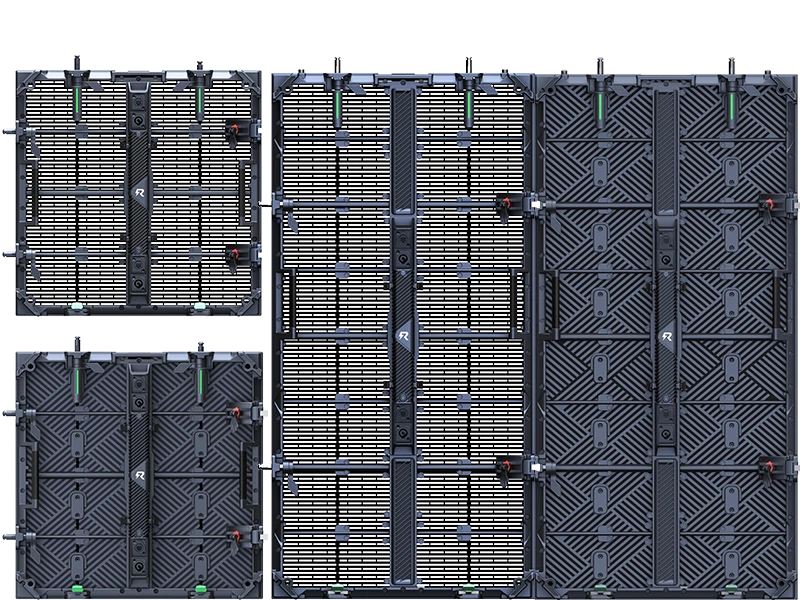
Weight per cabinet needs to stay under 12kg for 500x500mm panels so a two-person crew can handle rigging at speed
Vibration resistance—panels must maintain pixel alignment when subjected to sustained low-frequency bass from line arrays
Quick-lock connectors for both power and signal that can be mated blind in dark conditions
Wide brightness range—from dim theatrical moments at 50 nits to full concert impact at 4,500+ nits for outdoor stages
High refresh rate—minimum 3840Hz, ideally 7680Hz for camera capture without banding or flicker
If a manufacturer cannot demonstrate that their panels have been tested under touring conditions—actual load-in/load-out cycle testing, vibration testing, and thermal cycling under stage lighting rigs—you are looking at an indoor commercial panel being marketed as a concert product. There is a massive difference.
Here is where we get practical. We have narrowed down the field to manufacturers that have a genuine track record supplying panels for live concert stages, touring productions, and large-scale festival installations. These are not companies that just slapped "stage" on their product page—they have actual deployment history at major venues and tours.
| Manufacturer | Flagship Stage Series | Cabinet Weight (500x500) | Pixel Pitch Range | Refresh Rate | Notable Deployments |
|---|---|---|---|---|---|
| ROE Visual | Black Pearl / Carbon | 7.2kg (Carbon) | P1.4 - P4.8 | 7680Hz | Major festival main stages, virtual production |
| Absen | Artist / AX Pro | 8.5kg | P1.5 - P3.9 | 3840Hz | World tours, corporate mega-events |
| Unilumin | UX / Upad | 7.8kg | P1.2 - P4.8 | 3840Hz | Arena tours, TV broadcast stages |
| Infiled | Stage / Panther | 6.5kg | P2.6 - P4.8 | 3840Hz | Mid-size tours, regional festivals |
| Prisma | Stage Pro | 7.5kg | P2.5 - P3.9 | 3840Hz | Concert touring, house of worship stages |
| Leyard | QuickLink / TVF | 8.0kg | P1.2 - P4.8 | 3840Hz | Broadcast studios, arena installations |
ROE Visual is the premium pick for productions where image quality on camera is the absolute priority. Their Carbon series is ridiculously light at 7.2kg per 500x500mm cabinet, which means your rigging crew can fly a 12m x 6m wall in under two hours. The tradeoff is price—they sit at the top of the market, and for good reason. Their panels are the ones you see on the biggest festival stages and in virtual production volumes where camera capture quality cannot be compromised.
Absen is the workhorse of the touring world. Their Artist series was specifically designed for entertainment applications, with curved panel options, ultra-wide viewing angles, and the kind of build quality that survives a six-month world tour without needing major field repairs. Their global service network means that if a panel goes down in Frankfurt or Nashville, you can get a replacement within 24-48 hours.
Unilumin has been making serious moves in the concert space. Their Upad series offers excellent value for productions that need large surface areas without the ROE Visual price tag. The panels are well-built, the color uniformity across batches is impressive, and they have been showing up on more and more major tours over the past couple of years.
Infiled is the go-to for rental companies and production houses that are building their first stage LED inventory or expanding on a budget. Their panels are not going to win any beauty contests next to ROE Carbon, but they are reliable, lightweight, and priced aggressively enough that you can put up a bigger wall for the same budget.
Concert stage LED pricing varies enormously depending on pixel pitch, cabinet construction, and order volume. Here is a realistic breakdown for 2026:
| Pixel Pitch | Application | Price per sqm (10-30 sqm order) | Price per sqm (50+ sqm order) |
|---|---|---|---|
| P1.4 - P1.9 | Close-up camera stages, broadcast, VIP backdrop | $4,500 - $7,500 | $3,800 - $6,000 |
| P2.5 - P2.6 | Main stage indoor arenas, theater stages | $2,200 - $3,800 | $1,800 - $3,000 |
| P2.9 - P3.9 | Large indoor arenas, outdoor festival stages | $1,500 - $2,800 | $1,200 - $2,200 |
| P4.8 - P6.25 | Outdoor mega-stages, stadium backdrops | $900 - $1,800 | $700 - $1,400 |
Now, here is what most buyers miss when they are budgeting. The panel price is only about 55-65% of your total deployed cost. You also need to budget for:
Video processors: Brompton Tessera or Novastar H-series processors run $5,000-$15,000 depending on output channels and resolution
Power distribution: Stage LED walls draw serious power. A 60 sqm P2.6 wall at concert brightness can pull 35-45 kW. You need dedicated distro and qualified electricians
Rigging hardware: Fly bars, chain motors, shackles, and safety cables for flown installations add $3,000-$8,000 depending on configuration
Transport cases: Road-rated flight cases with custom foam runs $200-$400 per case, and you need one per 6-8 cabinets
Spare parts inventory: Plan for 3-5% extra panels plus spare receiving cards, power cables, and ribbon cables
So when a manufacturer quotes you $2,000 per sqm for P2.6 panels, the real all-in deployed cost is closer to $3,000-$3,500 per sqm once you factor in everything else. We always tell our clients to calculate the full system cost, not just the panel cost, before making a decision.
This section right here could save you from a catastrophic mid-tour failure. We have seen it happen too many times—someone finds a great price from a factory they discovered through a trade show or online directory, places a bulk order, and then discovers that the panels start showing color shift after three months of touring, or the quick-lock connectors wear out after 200 load-ins.
Here is a verification checklist we recommend running through before committing to any manufacturer:
Check their touring deployment history. Ask for specific tours, festivals, or venues where their panels have been used. A manufacturer who can name actual productions—like "we supplied 80 sqm for Artist X's 2024 world tour"—is demonstrating real credibility. If they can only show you photos from their factory showroom, keep looking.
Request vibration and shock test reports. Concert stage panels get subjected to sustained bass vibration from line arrays that can reach 110+ dB SPL at the panel surface. Ask for test data showing the panels have been tested to IEC 60068-2-6 (vibration) and IEC 60068-2-27 (shock) standards. If they have never heard of these tests, they are not a stage LED manufacturer.
Verify their connector durability claims. Stage panels get connected and disconnected thousands of times. Ask for test data on their power and signal connectors—specifically, how many mating cycles they have been tested to. The industry benchmark is 5,000+ cycles for power connectors and 3,000+ for signal connectors. Anything less than that is a touring risk.
Order samples and abuse them. Before placing a bulk order, get 2-4 sample cabinets and put them through your actual workflow. Load them in, set them up, tear them down, throw them in a truck, drive them two hours, set them up again. Do this 20-30 times. If the connectors get loose, the cabinets warp, or the image quality degrades, you just saved yourself a massive headache.
Check their spare parts availability. When a panel dies at 2pm during load-in for a 7pm show, you need a replacement fast. Ask the manufacturer about their regional spare parts depots and their typical dispatch times. Absen and ROE Visual both maintain spare parts inventory in major markets across North America and Europe. Smaller manufacturers may need to ship from Shenzhen, which adds 5-10 days.
We get this question constantly. "Can I just buy outdoor panels and use them everywhere?" The answer is technically yes, but practically it is a bad idea. Here is why:
Indoor stage panels are optimized for controlled lighting environments. They run at 800-1500 nits brightness, which is perfect for arenas, theaters, and convention centers. The lower brightness means lower power consumption, less heat output, and better color depth at the dim levels that theatrical lighting designers demand. When the stage goes dark for a dramatic moment and the LED wall needs to show a starfield at 50 nits, indoor panels handle that gracefully. Outdoor panels at 50 nits look washed out and noisy.
Outdoor stage panels are built for sunlight combat. They run at 4,500-7,000 nits, are sealed to IP65, and have enhanced UV-resistant masks. But all that brightness comes at a cost—higher power draw, more heat, reduced contrast at low brightness levels, and a higher price per square meter. If you are only doing indoor shows, outdoor panels are overkill in every way.
Dual-use panels exist—they are IP54 rated, run at 2,500-4,000 nits, and can handle light rain for outdoor shows while still performing well indoors. They are a compromise in both directions but make sense for rental companies that need one fleet to cover both environments. Absen's AX Pro series and Unilumin's Upad III are solid dual-use options.
Here is a quick decision guide:
Indoor-only venues (arenas, theaters, convention centers): Go with dedicated indoor panels. Better image quality, lower power, lower cost.
Outdoor-only (festivals, stadium shows, outdoor corporate events): Go with dedicated outdoor panels. You need the brightness and weather sealing.
Mixed indoor/outdoor touring: Dual-use panels are the practical choice. You sacrifice some image quality in both directions but gain operational flexibility.
Choosing the right pixel pitch for a concert stage is not just about resolution—it is about the relationship between your wall size, camera distance, and audience sightlines. Here is how we think about it:
P1.4 - P1.9 is for close-up camera work. If you have cameras within 3-5 meters of the wall—think broadcast stages, award show sets, or intimate theater productions—this is the pitch you need. The image looks seamless on camera even at wide apertures. For audience viewing, it is overkill beyond about 8 meters.
P2.5 - P2.6 is the sweet spot for most indoor arena concerts. At this pitch, the wall looks seamless to the audience from the front row (typically 5-8 meters from the stage), and cameras at typical concert filming distances (8-15 meters) capture clean footage without moiré. This is the most popular pitch for touring productions.
P2.9 - P3.9 works for large arenas and indoor festival stages where the audience is further back and camera distances are longer. You save 20-30% on panel cost compared to P2.6, and the image quality difference is barely noticeable beyond 10 meters.
P4.8 - P6.25 is for outdoor festival main stages and stadium backdrops where the closest audience member is 15+ meters away and the wall needs to be massive—30m wide or more. At this scale, the per-square-meter savings from a coarser pitch add up to tens of thousands of dollars.
Concert stage LED walls are almost always flown—hung from a rigging grid using chain motors and steel wire. This creates structural requirements that floor-standing installations do not have. Here are the key considerations:
Weight calculations. A 12m x 6m wall of P2.6 panels at roughly 8kg per 500x500mm cabinet means you are hanging approximately 2,300 kg of LED plus rigging hardware. Add a 5:1 safety factor and your rigging points need to be rated for 11,500 kg. Every venue has different rigging capacity—always get the venue's rigging plot and load ratings before you design your wall.
Curved configurations. Most concert stage walls are not flat—they curve to follow the proscenium or create an immersive wrap. Check that your chosen panels support the curve radius you need. Most stage panels can curve to a minimum radius of 3-5 meters horizontally. Vertical curves are less common but some manufacturers offer flexible connector systems that allow slight vertical curvature.
Service access. When a panel fails mid-show (and it will, eventually), you need to be able to swap it fast. Front-service panels let you pop a single cabinet out from the front without disturbing the surrounding panels. This is critical for flown installations where you cannot access the rear. Make sure your chosen panels support front service—some budget panels are rear-service only.
Power distribution. A large concert stage wall can draw 30-50 kW. You need dedicated three-phase power with properly rated distro, cable runs, and emergency shutdown capability. Work with a qualified entertainment electrician—this is not something you DIY.
Let us talk about the pitfalls, because this is where real money gets lost and real shows get compromised.
Mistake #1: Buying panels rated for "stage" that were never tested in touring conditions. Some manufacturers take their standard indoor commercial panels, add some handles and quick-locks, and market them as "stage" or "rental" products. These panels might look fine in the factory, but after 50 load-ins they develop connector play, cabinet warping, and pixel alignment issues. Always ask for touring cycle test data.
Mistake #2: Ignoring the control system ecosystem. The LED panels are only half the equation. If your manufacturer uses a proprietary control system that is not compatible with industry-standard processors like Brompton Tessera or Novastar H-series, you are locking yourself into a single-vendor ecosystem. This makes future expansion expensive and limits your options for content management and real-time processing. Insist on panels that work with open-standard receiving cards.
Mistake #3: Underestimating spare parts needs. When you order 60 square meters of stage panels, you should also order 3-5 square meters of spare modules plus extra receiving cards, power cables, and signal cables. When a panel dies during load-in at 3pm for a 7pm show, you do not have time to wait for international shipping. Having spares on the truck is not optional—it is operational insurance.
Mistake #4: Not testing with your actual content pipeline. We have seen buyers receive panels that look great with test patterns but produce visible banding or color artifacts when fed with the specific content processing chain they use—say, a Resolume server through a Brompton processor into Novastar receiving cards. Always test the full signal chain with your actual content before accepting delivery.
Mistake #5: Choosing the wrong pixel pitch for the camera distance. We have seen buyers order P3.9 panels for a stage where the broadcast cameras operate at 5-6 meters from the wall. The result is visible moiré patterns on camera that no amount of post-production can fix. Always match your pixel pitch to your closest camera operating distance, not just the audience viewing distance.
Every manufacturer promises great quality before you pay. The question is what happens when a batch of modules starts showing color shift during week three of a world tour and you need support across an ocean.
When evaluating warranty and support for stage LED panels, focus on these specifics:
Duration: Industry standard is 2-3 years. For touring panels that get used 200+ days per year, a 3-year warranty is the minimum you should accept.
Coverage scope: Does the warranty cover "wear from normal touring use" or does it exclude anything that looks like wear? For touring panels, connectors, locking pins, and cable sockets are wear items—make sure they are covered.
Regional spare parts depots: Absen, ROE Visual, and Unilumin all maintain spare parts inventory in major markets across North America and Europe. This means 24-48 hour replacement dispatch. Smaller manufacturers ship from China, which adds 7-14 days.
Remote technical support: Can you get an English-speaking engineer on a video call within hours? During a tour, this is the difference between a 2-hour fix and a cancelled show.
On-site commissioning: For large orders (50+ sqm), some manufacturers will send a technician for first-time setup, calibration, and crew training. This is extremely valuable—proper calibration at installation sets the baseline for the entire life of the panels.
Q: Can I use the same LED panels for both concert stages and corporate events?
A: Yes, absolutely. Most concert stage panels work perfectly for corporate events, trade shows, and house of worship installations. The key is choosing a pixel pitch that works for both environments. P2.6 is the most versatile—it looks great for concert visuals and is sharp enough for corporate presentations with text and data at typical viewing distances.
Q: How many load-in/load-out cycles can stage LED panels handle?
A: Quality touring panels from reputable manufacturers are tested to 10,000+ connect/disconnect cycles on their locking mechanisms and connectors. In real-world touring, a well-maintained panel fleet should last 5-7 years of heavy touring (200+ show days per year) before needing major component refreshes. The LED modules themselves are rated for 80,000-100,000 hours, so the pixels will outlast the mechanical components by a wide margin.
Q: Do I need a Brompton processor or is Novastar sufficient for concert stages?
A: Both work, but they serve different needs. Novastar is the volume standard—it is reliable, widely supported, and handles most concert applications perfectly. Brompton Tessera offers superior color depth processing, better HDR handling, and more precise dimming curves, which matters when you are feeding the wall from high-end media servers like disguise or Watchout for complex visual content. For broadcast-heavy productions where camera capture quality is paramount, Brompton is worth the premium. For most touring productions, Novastar is more than adequate.
Q: What is the typical lifespan of concert stage LED panels?
A: The LED chips themselves are rated for 80,000-100,000 hours—that is 10+ years of continuous use. In practice, with touring use patterns (setup, show, teardown, transport), the mechanical components—locking pins, connectors, power sockets—will need refreshing around year 5-7. The panels themselves rarely fail catastrophically; it is the connectors and mechanical parts that wear out first.
Q: Can I fly LED panels in rain?
A: If your panels are rated IP65, yes—they are sealed against water ingress from any direction. IP54 panels can handle light drizzle but not sustained rain. IP-rated panels are not the same as waterproof; they are weather-resistant. If you are doing outdoor shows in climates with unpredictable rain, always go with IP65 and have rain covers ready as a backup.
After years of helping production companies and rental houses navigate this market, here is what we have learned. The cheapest option is rarely the most expensive mistake—the second cheapest is. The absolute bottom-tier factories produce panels that fail so obviously during testing that you catch the problem before they ever hit the road. It is the mid-tier manufacturers who look legitimate on paper, offer tempting prices, but cut corners on connector quality and skip vibration testing who cause the real headaches during week four of a tour.
If your budget allows, start with ROE Visual or Absen for your first major stage LED purchase. You pay a 15-25% premium over the budget options, but you get panels that have been proven on the biggest stages in the world, consistent color matching across production batches, a reliable spare parts supply chain, and service teams that respond within hours rather than days. Once your crew has built experience with installation, maintenance, and field repair, you can confidently explore smaller manufacturers like Infiled or Prisma for expansion orders where the risk is more manageable and your team knows exactly what to inspect on arrival.
One more thing—we cannot stress this enough—visit the factory if you can. A three-day trip to Shenzhen to walk the production floor, see the aging racks running, test panels in their demo rooms with your actual content, and meet the engineering team will give you more confidence than six months of email exchanges. And if travel is not possible, at minimum insist on a live video factory tour and order physical samples that you can abuse in your own warehouse before committing to any bulk purchase. The manufacturers who resist these requests are usually the ones you want to avoid.
1. What is the minimum order quantity for concert stage LED video wall panels from Chinese manufacturers?
Most established manufacturers set their MOQ at 10-20 square meters for standard stage configurations. Some offer lower MOQs of 3-5 sqm for sample or first-time orders, but per-square-meter pricing increases significantly for smaller quantities. True project pricing typically kicks in at 30+ sqm.
2. How long does production take for a concert stage LED video wall order?
Standard lead time is 20-30 working days for orders under 50 sqm. Orders above 50 sqm typically require 30-45 working days. During peak season from July to October ahead of the fall touring and festival season, add 7-10 extra days to these estimates.
3. What payment terms do Chinese stage LED manufacturers typically offer?
The industry standard is 30% deposit upon order confirmation with the remaining 70% due before shipment. For orders exceeding $50,000, many manufacturers accept irrevocable letters of credit. Avoid any manufacturer that demands 100% payment upfront.
4. What certifications should I require from concert stage LED video wall manufacturers?
Essential certifications include CE marking for European markets, FCC Part 15 for North America, RoHS for environmental compliance, and ETL or UL listing for US safety standards. For touring panels, also ask for vibration test reports per IEC 60068-2-6 and IP rating certification for outdoor-rated panels.
5. Can I get custom-sized stage LED cabinets from Chinese manufacturers?
Most manufacturers offer standard cabinet sizes including 500x500mm, 500x1000mm, and 480x480mm. Custom sizes are possible but typically require a minimum order of 50+ sqm and add 10-15 working days to production. Standard sizes are almost always the better choice for touring because they are compatible with off-the-shelf flight cases and rigging hardware.
6. How do I handle customs clearance when importing stage LED video walls?
The standard HS code for LED display panels is 8528.59. Work with a licensed customs broker experienced in electronics imports. You will need a commercial invoice, packing list, bill of lading, certificate of origin, and copies of all relevant product certifications including CE, FCC, and any applicable safety listings.
7. What is the difference between die-cast aluminum and magnesium alloy stage cabinets?
Die-cast aluminum cabinets are the industry standard—they are durable, dimensionally precise, and cost-effective. Magnesium alloy cabinets are 15-20% lighter than aluminum, which matters for large flown installations where every kilogram counts on the rigging load. However, magnesium alloy is more expensive and more susceptible to corrosion if the protective coating is damaged. For most touring applications, die-cast aluminum is the better choice.
8. Do concert stage LED manufacturers provide content processing recommendations?
Most manufacturers recommend or bundle compatible control systems from Novastar, Brompton, or Colorlight. They can configure the receiving cards and provide processor settings optimized for their specific panels. For complex concert visual setups, they can also advise on compatible media servers and content management workflows. Always confirm processor compatibility before placing your order.
9. What is the typical warranty period for concert stage LED video walls?
The industry standard is 2-3 years covering defects in materials and workmanship. Premium manufacturers like ROE Visual and Absen offer 3-year standard warranties with optional extensions to 5 years. Always read the exclusions carefully—some warranties do not cover damage from power surges, improper rigging, or unauthorized modifications to the cabinet structure.
10. Can I expand my concert stage LED video wall system in the future with additional panels?
Yes, but with an important caveat. Panels manufactured in different production batches—even from the same manufacturer—may show slight color and brightness differences that become visible when placed side by side on stage under camera. We strongly recommend ordering your full planned size upfront plus 5-10% extra panels for future expansion and spare parts. This ensures batch-to-batch color consistency across your entire installation, which is critical when panels are visible on broadcast cameras.
.jpg "COB LED Video Wall Wholesale | Factory Direct")