 English
Short answer, because you probably want it before the long version: buying wholesale scrolling LED displays works when you stop treating them as a commodity and start treating the purchase as a relationship with three checkpoints — sample verification at your own voltage and in your own sunlight, a written spec sheet that names the power supply and module brand and gets signed back, and matched spares plus a named support contact who will still be at the company in year two. The manufacturer matters less than whether they keep batch records and will pick up the phone on a Saturday. For most buyers in the US or Europe, the right path is a mid-size Guangdong maker that will do small OEM runs, or a domestic distributor who takes a markup but handles UL listings, freight, and the phone call when a sign goes dark.
Now the long version, which is where the money actually gets saved or lost.
You run a sign shop, or a school district, or a church, or maybe a small chain of convenience stores and petrol stations. Someone said we need a scrolling message board out front. Then someone else said we need six of them. Or forty. And suddenly you are not shopping for one sign anymore, you are doing procurement, and typing wholesale scrolling led display manufacturers into a search bar at ten at night because the quotes you have seen so far range from $380 to $3,800 for what looks like the exact same cabinet and nobody can explain why.
Here is why: they are not the same cabinet. Two P10 outdoor scrolling signs can sit side by side in a showroom and look identical, then one of them goes pink in the corners after a summer of rain and the other one is still running clean three years later. The difference lives in places a photo cannot show — the power supply brand, whether the modules were aged properly, whether the sealant was applied by a person or by a machine, whether the LEDs came from the same bin. Wholesale is where these differences become expensive, because whatever mistake you make, you make it at volume.
Most of what gets sold under this name is built from P10 (10mm pitch) single- or dual-colour modules, sometimes P7.62 or P6 for closer viewing, assembled into a cabinet that is either fully sealed or semi-sealed, driven by an asynchronous controller that takes content from a USB stick or a Wi-Fi app, and mounted to a wall or a pole. That is the standard product. Everything else — custom sizes, full colour video, cloud software, your logo on the bezel — is an add-on and it changes both price and lead time.
The first decision you should make, before you email a single supplier, is which of these you actually need:
| Type | Best for | Typical pitfalls |
|---|---|---|
| Single colour (red or amber), P10 | Petrol stations, pharmacies, schools, churches, basic announcements | Cheapest, highest reliability. Amber reads better in direct sun than red. |
| Dual/tri-colour (red/green/amber), P10 | Retail where you want some emphasis, menus, promos | Slightly higher failure rate on the green channel; colour balance drifts over time. |
| Full colour video, P6–P10 | Where you want logos, images, animations, or to repurpose the sign for events | Needs better controllers, more power, more heat, more things that can break. Often overkill. |
| Cloud-managed, multi-site | Chains, campuses, municipalities with many locations | Software subscription and platform lock-in are the real cost, not the hardware. |
And one thing people get wrong constantly: full colour is not automatically better. A scrolling text sign exists to be read from a moving car at forty miles an hour. Red or amber single colour does that job better than a cheap full-colour panel that washes out in sunlight and costs twice as much. I have watched buyers pay extra for capability they never use, then complain about brightness. Do not be that buyer.
Pixel pitch and reading distance. P10 means ten millimetres between LEDs. Rule of thumb: comfortable reading distance in feet is roughly pitch in mm times three. So P10 reads comfortably from about thirty feet and beyond. If your sign is going up right above a doorway where people stand six feet away, P10 will look like a dot-matrix printer had a bad day and you want P6 or P7.62. Measure from the sign face to where the reader actually stands or drives, not from wherever feels intuitive.
Brightness. Outdoor signs need roughly 5,000–8,000 nits in direct sun. Indoor or covered signs want 800–1,500. But the number on the datasheet is measured in ideal conditions with a fresh module and a lab power supply. What you actually care about is legibility at 3pm in July with the sign facing west. Ask for an auto-dimming sensor. A sign that stays at full brightness all night becomes a neighbourhood nuisance and eventually a code-enforcement problem, and nobody wants that phone call.
IP rating and water management. IP65 is the standard claim. Treat it as a starting point, not a guarantee. The failure mode is almost never the front face — it is water getting in through the rear access panel, the cable glands, or the seam where the door meets the frame, then sitting on the power supply until something gives. Ask how the cabinet drains, whether there is a breather valve, and whether the door gasket is glued or clamped. Glued gaskets fail faster.
Power supply brand. Mean Well is the name you want to see. If the reply says "high quality branded PSU" without a model number, you have your answer. Power supplies are the number one field failure on these signs, full stop. Specifying Mean Well or equivalent by model costs a little more and saves a lot of headaches.
Controller and software. This is where a lot of wholesale deals quietly fall apart. USB-only controllers are simple and reliable but require someone to walk out to the sign with a thumb drive. Wi-Fi/app controllers are convenient but depend on an app that may or may not still exist in two years, and on a server that may or may not still be running. Cloud platforms add subscription fees and vendor lock-in. Before you commit to a hundred units on one platform, ask what happens to your signs if the company stops supporting the app. It is not a paranoid question. Companies in this space disappear regularly.
Voltage and frequency. 110V/60Hz for North America, 220–240V/50Hz for Europe. This sounds obvious and yet I have seen containers arrive with the wrong voltage specified across the whole order because nobody wrote it on the spec sheet. Write it on the spec sheet. Also specify plug type, and whether the sign comes with a cable at all.
Font and character support. If you need accented characters, Cyrillic, Arabic, Thai, or emoji, confirm the controller firmware supports it before production. Getting this wrong means a hundred signs that cannot display half your messages, and there is no field fix for that.
Q: Should we go with a domestic distributor or import direct from China?
A: Depends on volume and on how much you value having someone to call. Direct import gives better unit cost and full control over spec, but you own certification, freight, duties, customs clearance, and every warranty claim. A domestic distributor or wholesaler adds margin — often twenty to forty percent — but usually brings UL or ETL listing, stock availability, next-day spares, and a local technician. For orders under twenty units, the distributor usually wins on total cost of ownership. For fifty units and up, direct starts to make sense if you can handle the logistics.
Q: What is a realistic MOQ?
A: For standard P10 cabinets, many factories will do as few as five to ten pieces, especially if you accept their standard size and controller. Custom sizes, custom colours, private label, or custom firmware push MOQ up to fifty or a hundred and add weeks to the lead time. If a supplier tells you the MOQ is one piece and the price barely moves, you are probably looking at a trader pulling from stock, which is fine, but know what you are looking at.
Q: How long does production take?
A: Standard items from stock: one to two weeks. Made-to-order standard specs: three to five weeks. Custom sizes, private label, special certifications: six to ten weeks, then add ocean freight and customs. Air freight is possible for urgent jobs but it can cost more than the signs themselves. Plan backwards from your install date and then add two weeks, because something always slips.
Q: Do we need UL or ETL listing?
A: In the US, many jurisdictions and most commercial insurers expect it, and some electrical inspectors will refuse a permit without it. In Europe you need CE and RoHS at minimum. Confirm the listing covers the actual model and voltage you are ordering, not a similar model in their catalogue. Retroactive certification costs far more than getting it right upfront.
Q: Can we put our own brand on them?
A: Yes, this is the normal OEM arrangement. Expect MOQ requirements, tooling or setup fees for custom bezels, and longer lead times on the first run. Make sure the agreement covers who owns the mould if you later move production elsewhere. Small point, big consequences.
Which LED lamp brand and bin will my order use, and will you retain batch records? Bin is the colour and brightness grouping. Mix bins and you get patches. When you need ten replacement modules in year three, matching is everything. Most suppliers will not offer to keep batch records unless you ask.
Can I see a per-module aging and test report? Legitimate makers run modules through burn-in and record it. No report means no aging, which means early-life failures happen at your site instead of at theirs.
What power supply, exactly? Brand and model. If they cannot name it, assume the cheapest option.
What is the controller brand and model, and is the app/platform still actively supported? Ask for the name of the software, how long it has existed, and whether there is a roadmap. Silence here is an answer.
Is the cabinet IP65 front and rear, and how does it drain? Ask about breather valves and gasket method.
Do you offer auto-dimming with a light sensor, and is it included or optional?
Who do I call after year two, and will you hold spares from my batch? Sales reps change companies constantly in this industry. I usually ask for three to five percent spare modules plus a couple of spare power supplies, same batch, shipped with the order. It is the cheapest insurance you will buy.
Can I see an install you did three years ago, with photos? A showroom unit lies. An aged unit tells the truth.
I am not going to say traders are bad. Some of the smoothest wholesale transactions I have been part of were with trading companies that understood the spec, held inventory, and shipped in ten days while the factories were booked solid. What matters is knowing which one you are dealing with, because warranty claims, batch matching, and technical escalation all flow through that relationship.
| Signal | Actual factory | Trading company / assembler |
|---|---|---|
| Product photos | Same machines and floor angles across years; close-ups of SMT placement, aging racks, waterproof testing | Stock renderings, showroom shots, images that appear on three other companies' sites |
| Datasheet | Owns the numbers: module dimensions, scan mode, IC model, brightness curve, power draw | Rebranded PDF, occasionally with another company's logo still in the footer |
| BOM detail | Names lamp brand, driver IC, power supply by model | "Premium components" / "high-quality imported LEDs" |
| MOQ | Higher, but will do custom sizes and pitches | Very low, fast, mostly standard SKUs |
| Lead time | Honest and longer on made-to-order | Suspiciously short unless pulling stock |
| Live video call | Walks you past the aging room on the spot | Camera broken, person away, factory under renovation — always something |
The test is not factory good and trader bad. The test is whether they can show you the line and name the parts. Also worth saying plainly: most of the world's scrolling LED modules come out of Guangdong regardless of whose sticker is on the cabinet. Your exposure is in calibration discipline, bin control, batch records, and whether the person answering your message knows the difference between a sending card and a receiving card. That last one is not a joke, I have had that conversation twice.
Numbers move with LED package markets and exchange rates, so treat these as ballpark. What matters is confirming what sits inside the number.
Typical wholesale per-unit ranges for outdoor P10 scrolling message boards, FOB, excluding freight and duties:
Small single-colour (roughly 1–2 sq ft display area): $180–$450
Medium single/dual colour (roughly 3–6 sq ft): $450–$1,200
Large dual/full colour with Wi-Fi controller and cabinet (roughly 8–20 sq ft): $1,200–$3,500
Full colour video-grade P6–P10, large format: $3,000–$8,000+
Add for the usual extras: crating and foam flight cases, controller upgrades, cloud software licenses, mounting brackets or poles, light sensors, spare parts kits, and on-site commissioning if you want it.
Costs buyers routinely forget: ocean freight and port handling, customs duties and broker fees, inland trucking to site, electrical permits and an electrician, pole or wall structure and engineering stamps, content setup and staff training, and replacement lead time after warranty since air freighting a cabinet can cost more than the cabinet itself.
A quote that arrives thirty-five percent below the others almost always excludes the controller, the cabinet, crating, and commissioning. It is not a discount. It is a different product. Confirm in writing exactly what is included, line by line, before you compare anything.
And electricity. A large outdoor sign running eighteen hours a day, year round, carries real demand charges. Auto-dimming and scheduled on/off timers cut consumption noticeably. Ask for an annual kWh estimate, not just peak wattage. Over seven years that number is real money, and it is often the figure that gets a capital request approved.
Step 1 — Write your own spec. Do not accept the supplier's template. Pixel pitch, display area, cabinet dimensions and material, LED brand and bin, driver IC, power supply brand and model, controller brand and model, software name and version, brightness target, dimming method, IP rating and drainage method, operating temperature range, voltage and frequency, plug type, certifications required, noise limit, service direction, spare parts commitment. Have them sign it back as the basis of the quote. When the goods arrive you check against this document. Without it you have nothing.
Step 2 — Order a sample, and test it properly. Not a photo. Not a demo video. A physical unit, at your voltage, running for at least a week. Put it outside in direct sun at noon and see if you can read it. Run it through a rain event. Leave it on overnight and check for hot spots. Cycle the power twenty times. Try every font and character you plan to use. Update the app. Uninstall the app and reinstall it. A sample that survives this is worth more than ten factory tours.
Step 3 — Audit if you cannot travel. Hire a third-party inspector in Guangdong for a day. A few hundred dollars, pays for itself immediately. Verify SMT line count, aging room capacity, waterproof testing process, and whether the company name on the business license matches the name on the quote. Mismatches happen more often than you would think.
Step 4 — Payment terms that protect you. Standard is thirty percent deposit, seventy percent before shipment or against copy of bill of lading. Never pay everything upfront. On larger orders use a letter of credit. Tie final payment to passing a pre-shipment inspection you arrange, not one they arrange.
Step 5 — Pre-shipment inspection. Unit count, serial numbers, burn-in records, random photometric spot checks, cabinet fit and seal, packaging. Anything that moves should travel in custom-fit foam. Cardboard boxes for ocean freight is how cabinets arrive cracked.
Step 6 — Test everything on arrival, before install. Power up every unit in the warehouse. Finding a dead cabinet on the dock is a paperwork issue. Finding it after it is mounted twenty feet up a pole is a whole different day.
Step 7 — Commission and document. Set brightness schedules, configure dimming, load templates, and photograph the serial numbers next to each install location. Keep a spreadsheet with location, serial, install date, batch number, and the name of the person who handled your order. A direct line to someone who remembers your project two years later is worth more than a slightly better price.
Ordering by size alone. Two signs with the same display area can differ enormously in lamp brand, power supply, controller, and sealing. Size is a starting point, not a specification.
Buying for the showroom. Suppliers keep their best, newest-batch units in the showroom. Your production run comes from whatever batch is running that week. That is why sample evaluation and batch record retention matter.
Skipping spares. Cabinets fail, always. Skipping spares to save two percent is false economy, and when a sign is down in front of your main entrance, nobody cares about the savings.
Assuming the wall or pole can take it. A large cabinet with structure and wind load is not light. Get the load calc, get it signed, and make sure whoever mounts it signs off too. Wind loading kills more signs than electrical faults.
Underestimating the software. The cabinet makes light; the software makes it usable. Confirm it supports your fonts, your languages, your workflow, and confirm someone on your team actually knows how to operate it. A sign nobody can update becomes a very expensive poster, and in most organisations that means it shows the same message for eight months.
Forgetting heat and sun. Cabinets facing west in summer cook their own power supplies. Ask for max operating temperature and whether the system reduces brightness automatically when it overheats. Good designs protect themselves. Bad designs fail during the hottest week of the year, which is exactly when you need them most.
Ignoring local sign regulations. Height, brightness, flashing content, and placement are all regulated in most jurisdictions, and rules for electronic message centres can be surprisingly specific. Check before you order, not after you install. A sign that violates code is a sign that gets turned off.
Treat the cabinet as a commodity and treat the relationship as the actual purchase. Any competent factory in Guangdong can make a P10 scrolling sign that looks fine on day one. What separates them is whether they keep your batch records, whether they answer the phone on a Saturday morning when a sign goes dark before a big weekend, and whether they still exist in year four when you need ten matching modules.
Write your own spec and make them sign it. This industry runs on vague PDFs, and vagueness always resolves against the buyer. A one-page spec sheet with power supply model, controller model, lamp brand and bin, IP drainage method, and spare parts commitment removes most of the unpleasant surprises.
Do not chase the lowest per-unit price. Chase the lowest total cost over seven years, including electricity, spares, freight, downtime, and the person you call when something breaks. Price it that way and the cheapest quote rarely wins.
Pilot before you commit to the full order. Buy three units, run them for a season, learn what your people can and cannot manage, then place the big order. You will discover things in three months of real use that no factory tour reveals, mostly about who actually updates the messages and what happens when that person leaves.
And one thing harder to quantify: buy enough brightness, but not too much resolution. The most common regret I hear is not we overspent, it is we went one pitch coarser to save money and now nobody can read it from the road. Saving fifteen percent to lose half your audience is not a saving.
Have you been through this already, either the version that went well or the version that did not? The details of what surprised you help other buyers more than any list of brand names.
What is the best pixel pitch for a scrolling LED sign? For outdoor roadside reading, P10 is the standard and works well beyond about thirty feet. Use P7.62 or P6 if viewers are closer than twenty feet, such as above a doorway or in a drive-through lane.
How bright does an outdoor scrolling LED display need to be? Aim for 5,000–8,000 nits with an auto-dimming light sensor. Without dimming, the sign becomes a nuisance at night and can trigger code complaints.
What is a realistic MOQ for wholesale scrolling LED displays? Standard P10 cabinets often start at five to ten pieces. Custom sizes, private label, or custom firmware typically require fifty to a hundred units.
How long does a wholesale order take? Stock items one to two weeks. Made-to-order three to five weeks. Custom specs or special certifications six to ten weeks, plus ocean freight and customs clearance.
Do I need UL or ETL listing? In the US many jurisdictions and insurers expect it, and inspectors may refuse a permit without it. Europe requires CE and RoHS. Confirm the listing covers your exact model and voltage.
Should I buy direct from China or use a domestic wholesaler? Under twenty units, a domestic distributor usually wins on total cost of ownership thanks to listing, stock, and local support. At fifty units and up, direct import starts to make sense if you can manage logistics and certification.
What should a wholesale quote include? Confirm modules, cabinet, controller, power supply, cables, crating, shipping terms, installation drawings, spare parts, software licenses, and commissioning. Per-unit pricing means nothing without this list.
How many spare parts should I order? Plan three to five percent spare modules plus at least one spare power supply per site, all from the same production batch, and keep the batch records.
Are Chinese scrolling LED display manufacturers reliable? Yes at the production level, most of the world's LED modules come from Guangdong regardless of brand. Risk lies in verification, bin control, batch records, and after-sales support, not in geography.
Can the sign display multiple languages and special characters? Usually yes, but confirm firmware support for your specific characters before production. This is the one error with no field fix, so test it on the sample unit.
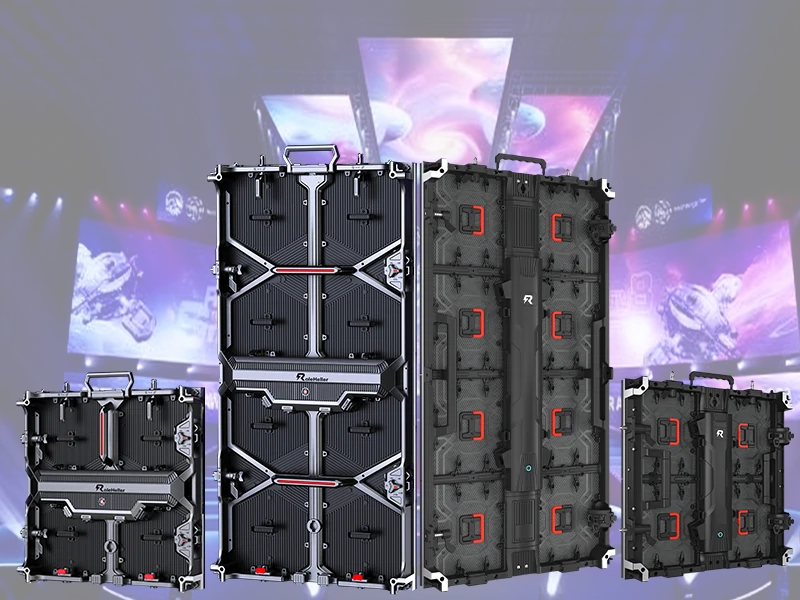
.jpg "How to Choose Among the Top LED Display Manufacturers?<")
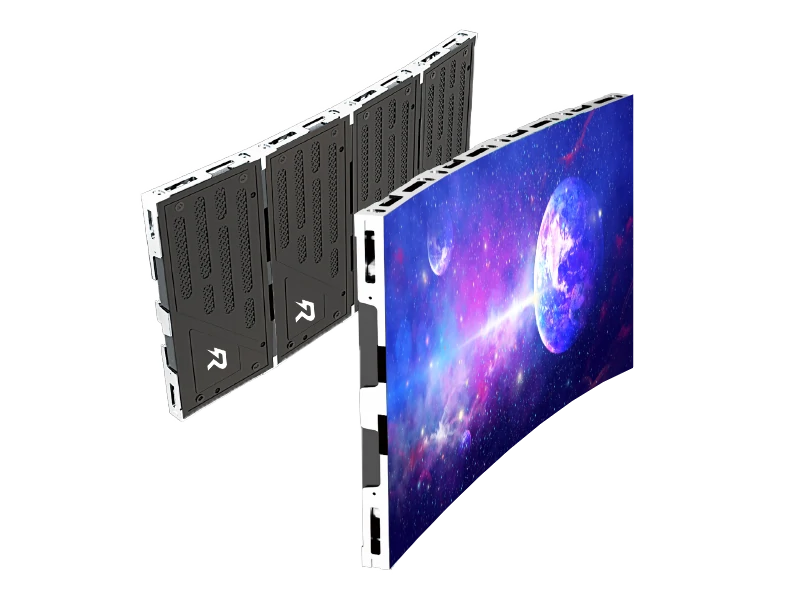
.jpg "How do you choose a transparent LED display manufacturer that won't let you down?")
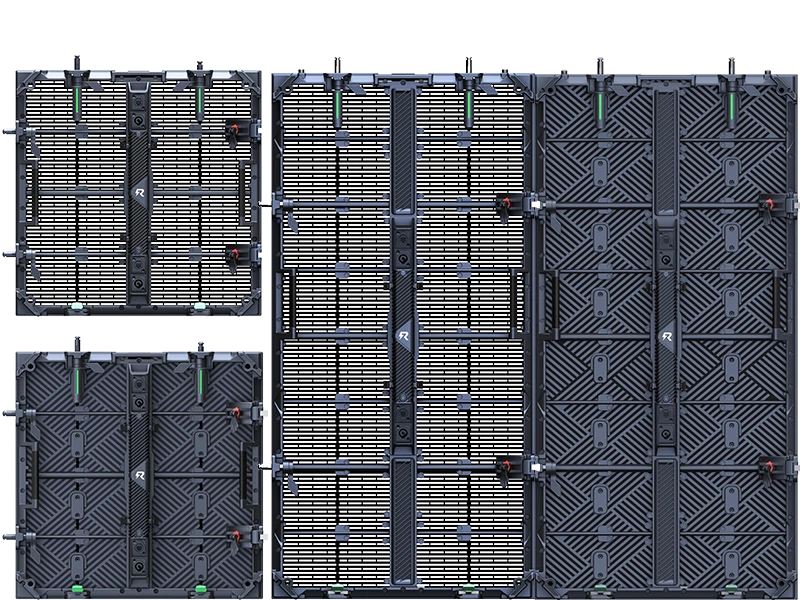
.jpg "Where do you actually buy outdoor rental LED displays from China?")