English
To choose the right LED video wall manufacturer, you need to look beyond marketing claims and evaluate four core technical factors: LED lamp encapsulation (Nationstar vs. Kinglight), driver IC refresh rates (at least 3840Hz for camera-safe viewing), power supply reliability (such as Mean Well), and cabinet engineering (die-cast aluminum with precise tolerance). Sourcing directly from verified Tier-1 or qualified OEM factories ensures you get true batch color consistency, reliable warranties, and spare module support over a 5-to-10-year lifespan.
Look, buying a commercial LED video wall isn't like grabbing a few smart TVs off the shelf at a local electronics store. It’s a multi-thousand-dollar commitment where a single bad batch of diode chips or a cheap power supply can ruin an entire installation within months.
Honestly, when you start searching for led video wall manufacturers, the sheer number of options can feel overwhelming. Everyone claims to have the brightest panels, the highest refresh rates, and the lowest direct-factory prices. But if you've been in the AV integration or commercial display industry for a while, you know that what happens on the factory floor matters infinitely more than what’s printed on a shiny PDF brochure.
So, how do you sort out the top-tier manufacturers from white-label assemblers who build cabinets in small workshops? Let's break down how the manufacturing ecosystem actually works, what technical specs you need to verify, and how to source the right display for your specific setup without overpaying.
Before sending out quotes to every supplier you find online, it helps to understand how LED screens are actually made. Not all companies listed as led video wall manufacturers build their screens from scratch. In fact, display manufacturing operates across three distinct tiers.
These are the massive brands with household names. They offer polished client support, extensive local service centers across North America and Europe, and slick software ecosystems. However, you pay a steep brand premium, and behind the scenes, many of their mid-tier product lines are actually outsourced to specialized OEM factories in Asia.
This is the sweet spot for many AV integrators, corporate buyers, houses of worship, and rental companies. These manufacturers focus heavily on engineering, own massive automated Surface Mount Technology (SMT) assembly lines, and produce screens both under their own brand and as white-label setups for major global distributors. Sourcing here gives you enterprise-grade hardware at direct factory pricing.
These suppliers buy cheap LED modules, plastic cabinets, and generic power units from various sub-vendors and screw them together. They often lack strict optical calibration tools, cleanroom environments, or long-term batch tracking. While their quotes look ridiculously cheap at first glance, you often pay double later in replacement modules and color mismatch issues.
Here is a quick snapshot comparing how these manufacturer tiers stack up:
| Manufacturer Category | Build Quality & Component Control | Pricing Tier | Customization Flexibility | Best Suited For |
| Tier 1 Global Brands | Extremely High | Premium (+40% to 80% markup) | Low to Medium | Fortune 500 HQ, High-security command centers |
| Direct OEM Factories | High (Industry Standard) | Competitive (Direct Factory) | High (Custom pitch, cabinets) | AV Integrators, Churches, Retail Chains, Venues |
| Small Assemblers | Inconsistent / Low | Bargain / Cut-rate | Very Low | Short-term temporary signs, strict low-budget runs |
When you talk to a manufacturer, don't just ask for their overall price per square meter. Ask them directly about the individual internal components inside their cabinets. The overall quality of an LED video wall comes down to four critical building blocks.
The diodes themselves determine color accuracy, lifespan, and brightness retention.
Nationstar: The gold standard for reliable OEM builds. Their Gold Wire encapsulation offers superior conductivity, lower heat generation, and minimal color shift over years of operation. Copper wire options are also widely used for budget-conscious projects.
Kinglight: A popular budget-friendly alternative. Great for outdoor billboard setups or standard rental screens where extreme color precision isn't paramount.
COB (Chip-on-Board) vs. SMD (Surface Mount Device): For fine-pitch displays under P1.2, ask if the factory produces COB flip-chip panels. COB encapsulates the bare LED chips directly on the PCB board, making the panel dustproof, splashproof, collision-resistant, and significantly smoother to view up close.
Have you ever pointed a smartphone camera at an LED wall and seen dark rolling scan lines across the video feed? That's caused by cheap driver ICs with low refresh rates.
Standard Refresh (1920Hz): Acceptable for simple outdoor advertising signs viewed from afar.
High Refresh (3840Hz to 7680Hz): Essential for indoor conference rooms, broadcasting studios, churches, and virtual production stages where cameras or phones will record the display. Look for driver ICs from trusted chipmakers like MBI (Macroblock) or ICN (Icnopto).
Power units generate the most heat inside an LED cabinet and are the single primary point of electrical failure.
Always request brand-name power supplies such as Mean Well or high-grade G-Energy units. Cheap, unbranded power supplies run hot, flicker, and can shorten the lifespan of adjacent LED diodes.
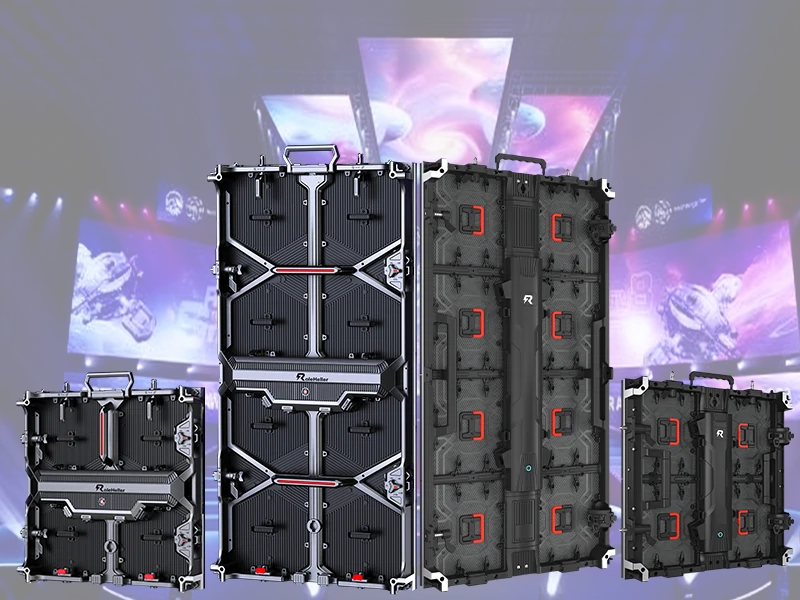
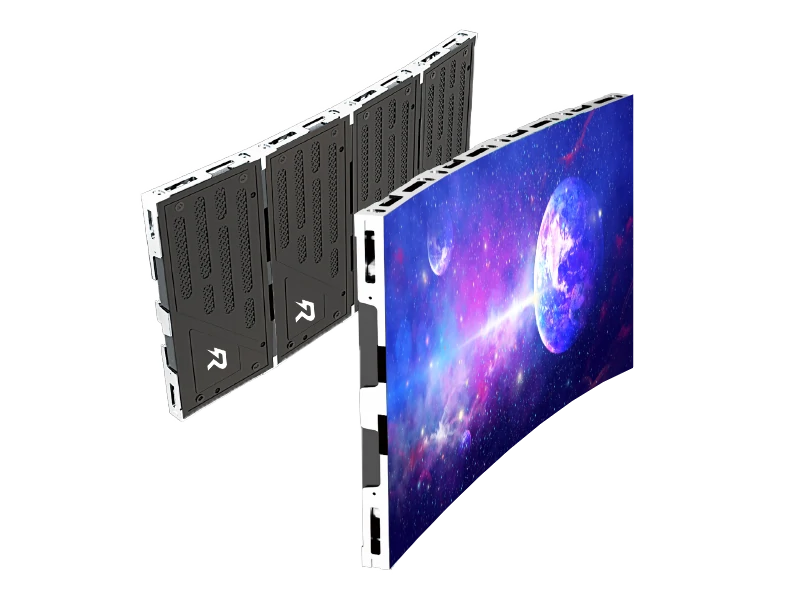
Die-Cast Aluminum: Lightweight, exceptionally rigid, and offers high structural precision with cabinet-to-cabinet tolerance under 0.1mm. This ensures seamless wall assembly without visible dark or bright seam lines between panels.
Iron/Steel Cabinets: Heavy and susceptible to thermal expansion. Avoid these for fine-pitch indoor walls, though they remain standard for large, fixed outdoor structural billboards.
So, how do you verify if a factory can actually deliver what they promise on paper? What I usually use is a straight-forward four-step vetting routine before committing to a commercial PO.
[ Step 1: Request Module Samples ]
              │
              ▼
[ Step 2: Verify Testing Reports & Certifications ]
              │
              ▼
[ Step 3: Require Batch Calibration & Spare Parts Ratio ]
              │
              ▼
[ Step 4: Video Audit of SMT Line & Aging Test Room ]
Never purchase an entire video wall based purely on photo renders. Request a working single cabinet sample. When it arrives:
Turn down the brightness to 10% and check for color uniformity across the dark gray spectrum.
Inspect the soldering points on the back of the PCB board—they should look clean, uniform, and free of excess flux.
Run a solid white screen test at 100% brightness for an hour and check if heat builds up evenly across the backplate.
If you are installing screens in North America or Europe, electrical safety and electromagnetic compatibility compliance are strict legal requirements. Ensure the manufacturer holds genuine certificates for:
UL / ETL: Essential for electrical safety inspections in North America.
CE / FCC / RoHS: Standard required marks for European and American commercial deployments.
EMC Class A / Class B: Critical for broadcast environments or office buildings to prevent the screen from interfering with nearby wireless communication systems.
LED diodes produced in different factory runs will always have slight voltage and chromatic variance.
Always require that your entire display order comes from a single bin batch of LEDs.
Request a 3% to 5% spare parts buffer (spare modules, receiving cards, driver ICs, and power supplies) from that exact same production batch. That way you can hot-swap a damaged module three years down the road without noticing a color mismatch block on your screen.
If you can’t fly out to inspect the manufacturing facility in person, schedule a live video walk-through. Ask them to show you:
Their high-speed SMT (Surface Mount Technology) placement machinery.
The Aging Room, where fully assembled cabinets undergo at least 72 hours of continuous burn-in testing (including red, green, blue, and white flashing cycles) to catch early component failures before shipping.
Different installation environments demand completely different manufacturer specializations. You wouldn't install a heavy outdoor stage rental display inside a corporate boardroom, nor should you put an unprotected fine-pitch panel outdoors.
Here is how key specifications line up across common deployment scenarios:
| Application Scenario | Recommended Pixel Pitch | Brightness Level (Nits) | Protective Tech / Cabinet Type | Key Sourcing Focus |
| Corporate Boardroom / Control Room | P0.9 to P1.5 | 600 - 800 Nits | Fine-pitch COB or Mini-LED | 16:10 / 16:9 aspect ratio, ultra-quiet fanless design, gray-scale depth |
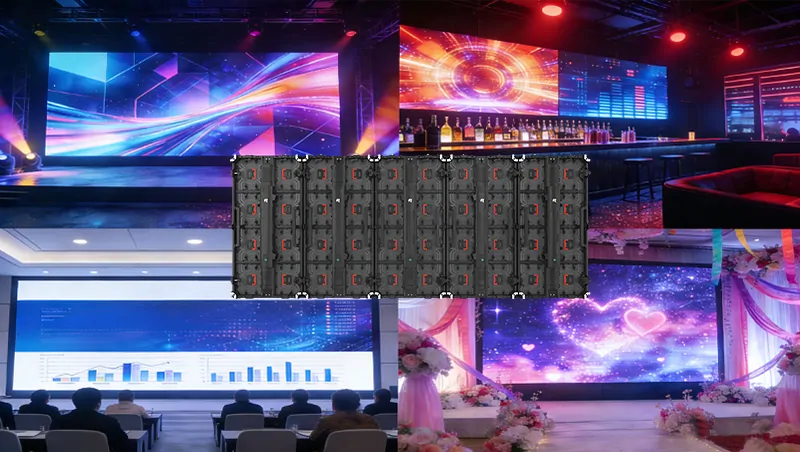
| Houses of Worship / Auditoriums | P1.8 to P2.5 | 800 - 1,200 Nits | Front-service SMD Aluminum Cabinet | Camera-friendly high refresh rate (≥3840Hz), wide viewing angle |
| Retail Store Front / Window Display | P2.5 to P3.9 | 2,500 - 4,500 Nits | High-brightness SMD / Transparent LED | Sunlight readability, thermal dissipation, low power consumption |
| Outdoor Commercial Billboard | P3.9 to P10.0 | 5,500 - 8,000 Nits | IP65/IP66 Fully Waterproof Enclosure | UV resistance, weatherproofing, vandal resistance, remote monitoring |
Over the years, I've seen plenty of buyers fall into trapdoors that end up costing thousands in repairs. You know how it goes—a quote comes in that looks 30% cheaper than everyone else's, and it feels too good to pass up. Here are the warning signs that indicate a manufacturer might be cutting corners behind your back.
Cheap manufacturers often push their LED chips past safe voltage thresholds to achieve higher advertised brightness numbers on paper. This causes extreme heat accumulation behind the cabinet. Excess heat leads to rapid pixel decay, yellowing mask panels, and premature LED death within 18 months.
If a factory uses worn-out die-casting molds or cheap stamping machinery, the cabinets won't interlock seamlessly. When you assemble a 130-inch screen, you’ll end up with glaring vertical grid lines across your image. Always ask for cabinet tolerance specs guaranteed under ±0.05mm.
A common industry trick is to send a flawless sample module featuring Nationstar LEDs and Mean Well power, only to swap out the mass production run with unbranded alternative components. To avoid this, include detailed component itemization directly inside your purchasing contract terms.
In my opinion, the absolute best LED video wall manufacturer isn't necessarily the largest brand in the world, nor is it the cheapest supplier on Alibaba. It’s the factory that demonstrates complete transparency about what's inside their cabinets, maintains strict quality control over their SMT lines, and offers reliable long-term technical support.
If you are an AV integrator or tech director, build a long-term relationship with two reliable OEM manufacturers—one specializing in fine-pitch indoor setups (P0.9–P1.8) and another focused on outdoor IP65/IP66 structural displays. That way, you have proven hardware suppliers ready for whatever project lands on your desk, backed by factory engineering teams who actually pick up the phone when you need help during installation.
I hope this breakdown gives you a solid framework for evaluating display suppliers. Have you ran into any weird component issues or color-matching nightmares with your own LED wall installations? Let me know in the comments below, let's talk shop~
Most established direct factories require 12 to 20 business days for standard cabinet manufacturing, followed by a mandatory 48 to 72-hour aging test. Customized cabinet frames or specialized fine-pitch COB orders may extend lead times to 4 to 6 weeks depending on SMT production schedules.
A simple rule of thumb for optimal viewing distance is 1 millimeter of pixel pitch per 1 meter (approx. 3.2 feet) of viewing distance. For example, if your audience sits 2 meters away from the screen, a P1.5 to P2.0 display will deliver a crisp, seamless image without visible pixelation.
SMD (Surface Mount Device) packages individual RGB diode chips inside tiny plastic cups soldered onto the PCB. COB (Chip-on-Board) attaches raw LED chips directly to the circuit board and coats the entire module surface with a protective resin. COB offers higher durability, better contrast, superior dust/moisture resistance, and lower failure rates for fine-pitch displays under P1.2.
Choose front-service cabinets if the display is mounted flat against a wall, inside a recessed cavity, or in a room with zero rear access space. Choose rear-service cabinets for outdoor elevated billboards, large auditoriums with dedicated maintenance catwalks, or temporary rental staging environments where quick rear access is available.
The driver IC controls how fast the LED pixels update per second. A low refresh rate (like 1920Hz) looks fine to the naked eye but produces distracting flicker, dark scan lines, and color banding when photographed by smartphones or television cameras. A high refresh rate (3840Hz to 7680Hz) ensures clean, flicker-free video capture for broadcasts and live events.
You should always request 3% to 5% extra LED modules, along with matching spare power supply units, receiving cards, ribbon cables, and IC components from the exact same manufacturing batch. This guarantees seamless color matching during future module repairs over the 5-to-10-year lifespan of the wall.
Low-cost assemblers often use recycled or lower-grade LED lamps, uncalibrated batches, and cheap power supplies. This results in high dead-pixel rates, poor color uniformity across modules, thermal overheating, severe camera flicker, and difficulty finding replacement parts when modules fail a year later.
Quality LED video walls from reputable manufacturers have a rated operational lifespan of 100,000 hours (roughly 10 years of continuous use) under normal indoor conditions. Proper power management, brightness setting (keeping brightness around 70-80%), and adequate thermal ventilation significantly extend display longevity.
Yes, most manufacturers integrate industry-standard video processing and control systems such as NovaStar, Colorlight, or Linsn. These systems come with dedicated software for screen configuration, brightness scheduling, color calibration, and remote diagnostic monitoring.
For installations in North America and Europe, ensure the manufacturer provides valid UL or ETL safety certifications, FCC or CE electromagnetic compatibility testing reports, and RoHS environmental compliance documentation to pass local building code and electrical safety inspections.