English
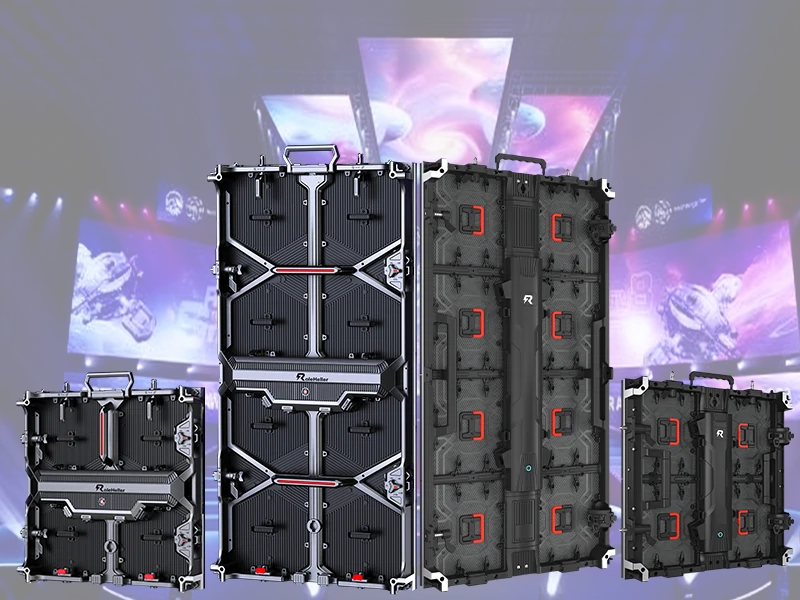
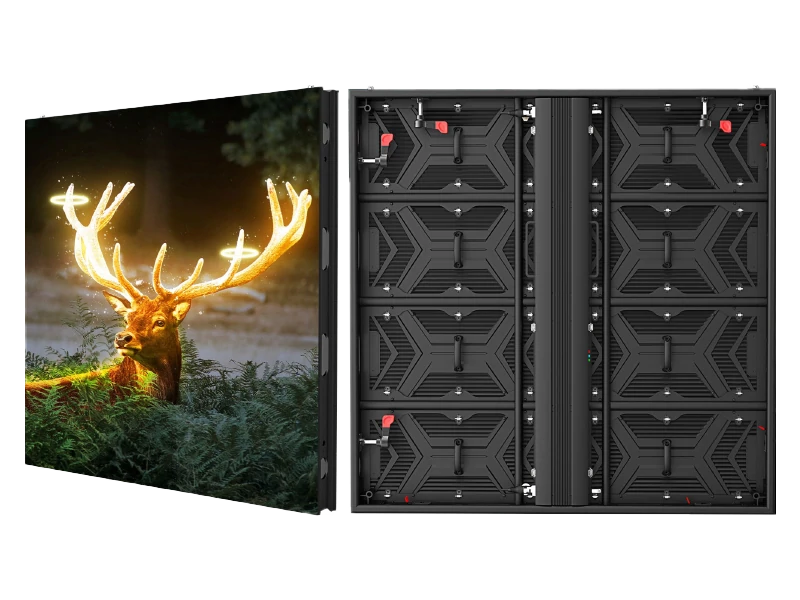
If you've been digging through supplier listings for china outdoor led video wall manufacturers and feeling like you're drowning in options, let me give you the quick version — the top-tier manufacturers are heavily concentrated in Shenzhen's Bao'an and Longgang districts, factory-direct pricing for standard outdoor LED cabinets ranges from roughly $200 to $900 per square meter depending on pixel pitch and component tier, production lead times typically sit at 15-25 days, and certifications like CE, ETL, and FCC are non-negotiable if you're selling into Western markets. I've spent years working with buyers across North America, Europe, Australia, and the Middle East on outdoor LED projects — everything from highway billboards to stadium perimeter screens to building façade installations — and I'm going to walk you through exactly what you need to know so you don't end up with a wall that fades out after one summer.
Indoor LED panels and outdoor LED panels might look similar on a spec sheet, but the engineering differences are enormous. When you put an LED display outside, it faces a brutal environment — direct sunlight, rain, snow, dust, temperature swings from -20°C to +60°C, humidity, salt air in coastal areas, and UV radiation that degrades plastics and coatings over time. Every single component needs to be built to survive conditions that would destroy an indoor panel in weeks.
Here's what makes outdoor LED video walls fundamentally different:
Brightness requirements — outdoor panels need 5,000 to 10,000 nits of brightness to remain visible under direct sunlight. Indoor panels typically max out at 1,000-1,500 nits. That's a 5-10x difference in LED output, which means more power, more heat, and higher-grade LED chips
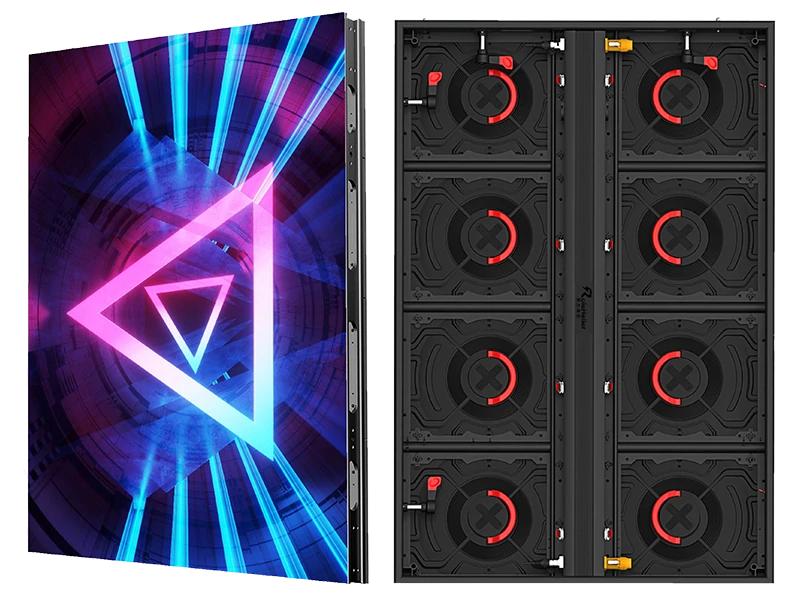
Waterproofing — outdoor cabinets need at minimum IP65 rating on the front face (protection against water jets from any direction) and IP54 on the rear. Coastal or heavy-rain environments demand IP66 or higher
Temperature management — outdoor panels generate significant heat from high-brightness LEDs. Proper thermal design — including aluminum heat sinks, ventilation channels, and sometimes active cooling — is critical to prevent premature LED degradation
UV resistance — the cabinet coating, cable insulation, and connector seals all need to resist UV degradation. Cheap materials crack and become brittle within 12-18 months of sun exposure
Structural integrity — outdoor installations face wind loads, seismic forces, and sometimes ice accumulation. The cabinet material, mounting points, and structural connections need to be engineered for these forces
The thing that really separates quality outdoor manufacturers from budget ones is how they handle waterproofing. It's not just about slapping some gaskets on a cabinet. Proper outdoor LED panels use sealed connectors (Neutrik or Amphenol grade), waterproof cable entry glands, conformal coating on all PCBs, and precision-machined cabinet seams with silicone gaskets. Some budget manufacturers skip the conformal coating entirely or use gaskets that harden and crack after one season. That's when water gets in, shorts out the driver ICs, and you're left with a dead section in the middle of your billboard.
This question comes up constantly, and honestly, it's the most important thing to get right before you spend any money. The LED display industry around Shenzhen has thousands of companies, and a significant portion of them don't manufacture anything at all. They source modules from one factory, cabinets from another, assemble them in a small workshop, and list themselves as "manufacturers" on Alibaba, Made-in-China, or Global Sources.
Here's the checklist I use when vetting suppliers — it's the same one I use for my own clients:
Surface Mount Technology lines are where LED modules get built. A single high-speed SMT line costs $300,000 to $800,000. A legitimate outdoor LED manufacturer will have multiple lines running, and they'll happily show you on a live video call. If a supplier says "our production facility is in a different city" or "let me arrange a factory visit next month," be suspicious. Real factories are proud of their production lines and will show them to you right now.
Every outdoor LED panel needs to run continuously for 48-72 hours before shipping. This catches early failures — dead pixels, color inconsistency, power supply issues — that would otherwise show up on your client's billboard three months into installation. A proper aging room has rows of panels running simultaneously under monitored conditions. If a supplier doesn't have an aging facility, they're skipping one of the most critical quality control steps in the entire process.
For outdoor panels, conformal coating on the PCB is absolutely essential. This protective layer shields the circuit board from moisture, dust, and corrosion. Proper application involves selective spraying or dipping followed by UV curing. Some budget manufacturers skip this step entirely or apply a thin spray that wears off within a year. Ask to see their coating process — a real manufacturer will have dedicated coating equipment and a controlled curing area.
When you need to discuss pixel mapping for a curved billboard, or thermal management for a high-brightness installation in the Middle East, you should be talking to an actual engineer — not a sales representative reading from a script. I always test this during the quoting phase by asking specific technical questions. If the responses are vague or take days to come back, that's a red flag for after-sales support too.
I remember working with a buyer from Australia who'd been purchasing outdoor P6 panels from a supplier for about eighteen months. Communication was smooth, prices were competitive, everything seemed great. Then they landed a project for a shopping center façade in Melbourne, and four panels out of sixty started showing color shift after just three months of outdoor exposure. The "manufacturer" turned out to be a trading company that had quietly switched to a cheaper module supplier without telling anyone. The new supplier's modules used different LED chip batches with no calibration matching, and the conformal coating was inadequate for Australian UV conditions. The buyer's reputation took a serious hit, the shopping center was not happy, and the trading company offered replacement panels four weeks after the complaint. Way too little, way too late.
Not all outdoor LED panels are built the same, even when they share the same pixel pitch. Here's a breakdown of what actually matters on a spec sheet:
| Specification | Budget Tier | Mid-Range | Premium Tier |
|---|---|---|---|
| LED Chip Brand | Generic/unbranded | Kinglight, Silan | Nationstar, Nationstar Gold, Epistar |
| Driver IC | Basic FM series | Macroblock MBI5124 | Macroblock MBI5252 / Chipone ICN2053 |
| Refresh Rate | 1920Hz | 3840Hz | 3840Hz+ with high PWM |
| Brightness | 4500-5000 nits | 5500-6500 nits | 6500-10000 nits |
| IP Rating (Front/Rear) | IP65 basic | IP65 sealed connectors | IP65 front / IP54 rear with full sealing |
| Cabinet Material | Sheet steel, heavier | Die-cast aluminum standard | Die-cast aluminum, CNC-machined |
| Power Supply | Generic brand | G-Energy or equivalent | Mean Well |
| Working Temperature | -20°C to +50°C | -25°C to +55°C | -40°C to +60°C |
| Contrast Ratio | 3000:1 | 5000:1 | 10000:1+ |
| Price per m² (P6) | $200-$350 | $350-$550 | $550-$900 |
The LED chip is the single most important component. Nationstar — especially their Gold series — is the industry benchmark for outdoor applications. Their chips offer tight wavelength consistency, high reliability under extreme temperatures, and minimal brightness degradation over time. Epistar is another strong option, particularly popular with manufacturers supplying the Middle East and Southeast Asian markets where ambient temperatures regularly exceed 45°C.
Driver ICs matter more than most buyers realize. The driver IC controls how each LED pixel is addressed and driven. A high-quality driver IC like the Macroblock MBI5252 provides precise current control, which translates to better grayscale performance, smoother color gradients, and no low-gray flicker. For outdoor advertising where content changes frequently and includes video, this is critical.
Power supply quality is another area where cutting corners has serious consequences. Mean Well power supplies are the industry standard because they handle voltage fluctuations, provide stable current to the LEDs, and have built-in protection against surges and overheating. Generic power supplies are the number one cause of premature outdoor panel failure — they overheat, their output voltage drifts, and eventually they burn out, taking LEDs and driver ICs with them.
Let me give you concrete numbers based on current market conditions for outdoor LED cabinets sourced from Chinese manufacturers. These prices are for cabinets/panels only and don't include video processors, mounting structures, or shipping:
P3.91 Outdoor Rental (500×1000mm, die-cast aluminum, IP65):
Sample/small quantity (1-10 panels): $350-$500 per panel
Medium orders (20-50 panels): $280-$400 per panel
Large orders (100+ panels): $230-$320 per panel
P4.81 Outdoor Rental (500×1000mm, die-cast aluminum, IP65):
Sample/small quantity: $280-$400 per panel
Medium orders: $220-$320 per panel
Large orders: $180-$260 per panel
P5 Outdoor Fixed (640×640mm or 960×960mm, IP65, 5500+ nits):
Sample/small quantity: $400-$600 per m²
Medium orders: $320-$480 per m²
Large orders: $260-$400 per m²
P6 Outdoor Fixed (standard cabinet, IP65, 5500+ nits):
Sample/small quantity: $300-$450 per m²
Medium orders: $240-$360 per m²
Large orders: $200-$300 per m²
P8/P10 Outdoor Fixed (large format billboard, IP65):
Sample/small quantity: $200-$350 per m²
Medium orders: $160-$280 per m²
Large orders: $120-$220 per m²
A few important notes about these prices:
These are for panels/cabinets only. Video processors, mounting structures, cabling, spare parts, and shipping are all extra.
Payment terms are typically 30% deposit via T/T, 70% balance before shipment. Never pay 100% upfront with a new supplier.
If someone quotes you a P6 outdoor fixed cabinet at $100 per m², something is seriously wrong. They're using B-grade or recycled LED chips, skipping the aging test, or using the cheapest possible power supplies.
For large-scale billboard projects (100+ m²), manufacturers often offer significant volume discounts — sometimes 20-30% below the prices listed above.
This is where a lot of buyers get tripped up, so let me break it down by market:
For the European Union:
CE marking is mandatory. This encompasses the Low Voltage Directive (LVD), Electromagnetic Compatibility (EMC) Directive, and RoHS for hazardous substances. The CE certificate should be issued by an accredited testing body — TÜV, SGS, or Intertek are the most recognized names. Don't just accept a self-declared CE certificate from the manufacturer; verify it on the notified body's website. For outdoor installations, some EU countries also require compliance with EN 12102 (noise emission) if the panels have active cooling fans.
For the United States:
ETL listing (from Intertek) or UL listing is what most electrical inspectors look for. FCC Part 15 compliance is also required for electromagnetic emissions. For outdoor installations in public spaces, the venue or municipality may require proof of ETL/UL listing before issuing an electrical permit. Some states also have specific energy efficiency requirements for outdoor signage.
For the Middle East:
Saudi Arabia requires SASO certification. The UAE has ESMA requirements. Most other Gulf countries accept CE certification, but it's always worth checking with the local importer or project specifier.
For Australia/New Zealand:
RCM marking is required, which covers both electrical safety and electromagnetic compatibility. Standards Australia references specific standards for outdoor electronic displays.
I always advise my clients to ask the manufacturer for the actual test report — not just the certificate — and verify the report number on the testing laboratory's official website. I've seen counterfeit certificates that looked completely legitimate, with fake TÜV report numbers and forged signatures. The real certificate verification takes about two minutes on the lab's website, and it could save you from a customs seizure or a failed electrical inspection.
So you've found a manufacturer that checks all the boxes. What happens next? Here's the typical workflow:
Send them your project details — screen dimensions, pixel pitch preference, total area, installation type (fixed or rental), target brightness, destination country, and timeline. A responsive manufacturer will come back within 24-48 hours with a detailed quote including specs, pricing tiers, lead time, and shipping options. If they take a week to respond to an RFQ, that's not a great sign for after-sales support either.
Always order at least one sample cabinet before committing to a full production run. Yes, samples cost more — usually 1.3x to 1.5x the bulk price — but most manufacturers refund the difference when you place the full order. With the sample, you can test brightness under actual sunlight conditions, check the waterproofing by spraying it with a hose, examine the build quality, and verify how it looks on camera if needed.
Standard production takes 15-25 days for common outdoor LED specs. During this phase, you should receive production schedule confirmation within 3 days of deposit, weekly progress photos, a pre-shipment aging test video showing panels running continuously for 48-72 hours, and a QC report with brightness uniformity data, color temperature consistency, and dead pixel count. Most reputable factories provide this proactively.
Ocean freight timelines vary significantly by destination:
US West Coast: 18-25 days
US East Coast: 28-35 days
Northern Europe: 30-38 days
Southern Europe/Mediterranean: 25-32 days
Middle East: 18-25 days
Australia: 15-22 days
Southeast Asia: 7-14 days
Air freight is an option for urgent orders — typically 5-7 days door-to-door — but costs 4-5 times more than sea freight. For a last-minute project where you need panels fast, air freight might be worth it for a partial order.
I've watched these happen so many times that I feel like I should have them printed on cards and handed out at trade shows.
The cheapest outdoor LED panel is cheap for a reason. B-grade LED chips that fade within months, no conformal coating on the PCBs leading to corrosion, generic power supplies that fail in high humidity, inflated brightness claims (that "6000 nit" panel might actually be 3500 nits when you test it). When an outdoor panel fails six months into a three-year billboard contract, the cost of that failure — replacement panels, international shipping, crane rental, labor, lost advertising revenue — far exceeds whatever was saved on the initial purchase.
Your outdoor LED wall is only as good as the signal feeding it. A quality video processor from Novastar, Colorlight, or Brompton handles content scaling, color management, brightness adjustment, and input switching. Budget at least $1,000-$3,000 for a processor depending on your resolution and input requirements. The processor is the brain of your entire system — a cheap one introduces color banding, input lag, and scaling artifacts that undermine the whole investment.
Outdoor LED panels face harsh conditions. Dead pixels happen. Power supplies fail. Receiving cards go bad. Sealing gaskets degrade. When you place your order, negotiate a spare parts package — typically 3-5% extra cabinets plus additional power supplies, receiving cards, and spare gaskets. The cost is minimal compared to the panic of needing a single replacement panel shipped internationally two days before a billboard goes live.
Outdoor LED installations need precision-engineered mounting structures that handle wind loads, thermal expansion, and the weight of the panels. For a large billboard, the steel structure can cost as much as 15-25% of the panel cost. Budget accordingly, and make sure the structure is designed by a qualified engineer who understands local wind load requirements.
Even with per-module factory calibration, an outdoor LED video wall benefits enormously from on-site calibration after installation. Environmental factors like ambient light, temperature, and slight mounting variations can affect color uniformity. Some manufacturers offer remote calibration support via their software, while others can send a technician for large installations.
This is a question I get asked constantly, and the honest answer depends heavily on component quality and operating conditions.
An outdoor LED panel built with Nationstar Gold LEDs, Macroblock driver ICs, and Mean Well power supplies has a rated lifespan of 100,000+ hours — roughly 11.4 years of continuous 24/7 operation before brightness drops to 50% of original. In typical outdoor advertising applications where panels run 16-20 hours per day, you're looking at 12-17 years of usable life.
But here's the reality — a panel built with budget components might start showing significant color degradation within 20,000-30,000 hours. The LED chips lose brightness at different rates, driver ICs develop inconsistencies, and power supplies become less stable. By year two or three, the billboard looks noticeably different from when it was new. Some sections appear dimmer, colors look washed out, and the overall image quality has clearly declined.
Operating environment matters enormously. An outdoor LED installation in a temperate climate like Northern Europe will generally outlast one in the Middle East where ambient temperatures regularly exceed 45°C and sandstorms are common. Coastal installations face salt air corrosion, which attacks cabinet finishes and connectors. I've seen outdoor LED installations in well-maintained European environments that look brand new after eight years of continuous operation, and I've seen panels in harsh Middle Eastern conditions that needed major refurbishment after three years.
Outdoor LED video walls consume significant power, and electricity costs are a major part of the total cost of ownership. Here's what to expect:
Average power consumption for outdoor LED panels typically ranges from 200-400W per square meter, with peak consumption reaching 600-750W per square meter when displaying full white content at maximum brightness. For a standard 50 m² outdoor billboard, that's 10-20 kW average and up to 30-37 kW peak.
Energy-efficient models with common cathode LED technology can reduce consumption by 20-30% compared to traditional designs. Some premium manufacturers now offer panels with intelligent brightness adjustment — the display automatically reduces brightness during nighttime or overcast conditions, cutting energy consumption by an additional 15-25%. Over a year of operation, these savings add up to thousands of dollars in reduced electricity costs.
When evaluating manufacturers, ask about their power consumption data at both average and peak levels. Some manufacturers only quote average consumption, which makes their panels look more efficient than they actually are. The peak consumption figure is what determines your electrical infrastructure requirements — transformer capacity, cable sizing, and circuit breaker ratings.
Look, I'm not going to sit here and tell you that sourcing outdoor LED panels from China is completely risk-free. It's not. But I will tell you that the risk is very manageable if you approach it correctly. The manufacturers I work with produce panels that are genuinely world-class — same quality as European brands at a fraction of the cost. The key is doing your due diligence.
My biggest piece of advice: start small. Order a sample. Test it in real conditions — put it outside, spray it with water, leave it in direct sunlight for a week, check the brightness with a lux meter. Visit the factory if you can, or at least do a thorough live video call where you ask to see the production line, the aging room, and the QC equipment. Build a relationship with one good manufacturer rather than shopping around for the cheapest option every time.
Once you find a supplier you trust, the whole process becomes smooth and predictable. They know your specs, they know your quality expectations, and they'll flag potential issues before they become problems. That kind of partnership is worth more than saving $30 per square meter from an unknown supplier.
Don't chase the absolute lowest price. The difference between a $250 per m² panel and a $400 per m² panel might seem significant when you're covering a 100 m² billboard, but over a five-year installation life, that $150 per m² difference buys you consistent brightness, zero waterproofing failures, reliable performance in extreme weather, and no emergency replacement orders flying in from China the week before a major advertising campaign launches. That peace of mind is worth every cent.
P6 and P8 are the most widely used pixel pitches for outdoor fixed installations globally. P6 offers a good balance between resolution and affordability for viewing distances of 6-30 meters, while P8 is ideal for larger billboards and highway signage where viewers are 10-50+ meters away. For outdoor rental applications, P3.91 and P4.81 are the most popular choices, offering finer resolution for closer viewing distances at events and concerts. P5 has also gained significant traction as a versatile middle ground for both fixed and rental outdoor applications.
A complete system includes LED cabinets, video processor, mounting structure, cabling, spare parts, and shipping. For a standard 50 m² P6 outdoor fixed billboard, expect to pay approximately $12,000-$20,000 for the panels, $1,500-$3,000 for the processor, $3,000-$8,000 for the steel mounting structure, and $500-$1,500 for accessories and spare parts. Total system cost before shipping typically ranges from $17,000 to $35,000 depending on specifications, brightness requirements, and order volume. Shipping costs vary significantly by destination and should be budgeted separately.
Yes, quality outdoor LED panels are designed to operate in temperatures ranging from -20°C to +50°C as a standard, with premium models rated for -40°C to +60°C. In extreme heat environments like the Middle East, where ambient temperatures regularly exceed 45°C, panels with enhanced thermal management — including high-efficiency heat sinks, thermal pads, and sometimes active cooling — are essential. In extreme cold environments like Northern Canada or Scandinavia, heaters may be needed to bring the panels up to operating temperature during startup. Always specify your local temperature range when requesting quotes.
For outdoor applications, the minimum recommended brightness is 5,000 nits for shaded or partially covered installations. For fully exposed outdoor billboards facing direct sunlight, 6,500-8,000 nits is recommended. For large-format highway billboards or installations in high-sunlight regions like the Middle East, Australia, or Southern US, 8,000-10,000 nits ensures clear visibility even at noon. The specific brightness requirement depends on the viewing distance, ambient light conditions, and the direction the screen faces relative to the sun.
Outdoor LED installations are vulnerable to lightning strikes and power surges. A proper protection system includes surge protective devices (SPDs) at the main power distribution panel and at each cabinet, a dedicated grounding system with resistance below 4 ohms, and lightning rods or air terminals if the installation is on a tall structure. Most reputable manufacturers include basic surge protection in their power supplies, but for installations in lightning-prone areas, additional external SPDs are strongly recommended. The cost of proper surge protection is minimal compared to the cost of replacing an entire LED wall after a lightning strike.
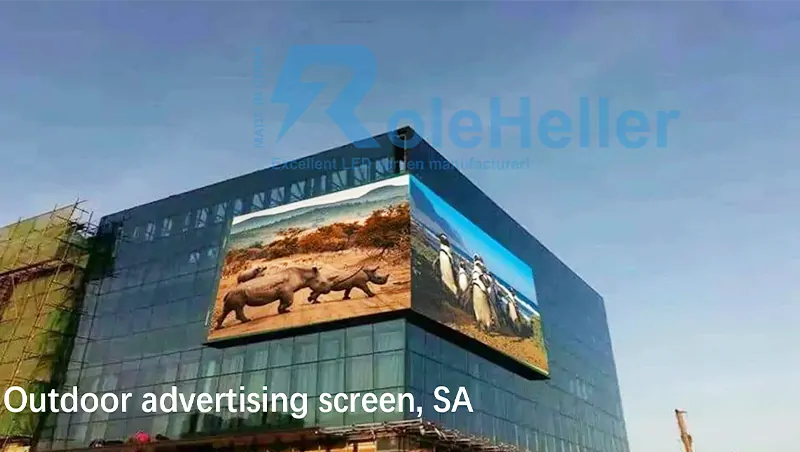
Front-service panels allow maintenance from the front side — individual modules can be removed magnetically or with simple tools without accessing the rear of the cabinet. This is ideal for wall-mounted installations where rear access is not possible, such as building façade installations. Rear-service panels require access from behind, which means you need to leave at least 600-800mm of clearance behind the screen for maintenance personnel. Rear-service designs are common for freestanding billboards and installations on poles or towers where rear access is available. Some premium outdoor panels support both front and rear maintenance for maximum flexibility.
Standard production takes 15-25 days for common outdoor LED specifications like P6 or P8 in standard cabinet sizes. Custom specifications, non-standard brightness levels, or large orders (200+ m²) may add 5-15 days. Ocean shipping varies by destination: 18-25 days to the US West Coast, 28-35 days to the US East Coast, 30-38 days to Northern Europe, 18-25 days to the Middle East, and 15-22 days to Australia. Air freight is available for urgent orders at 5-7 days but costs 4-5 times more than sea freight. Plan for a total lead time of 6-10 weeks from order confirmation to delivery for most international destinations.
Most reputable manufacturers offer 2-3 years of warranty coverage for outdoor LED panels. Warranty typically covers manufacturing defects including LED chip failure, driver IC failure, power supply failure, and dead pixels exceeding the manufacturer's specified threshold. It does not cover physical damage from accidents, improper installation, power surge damage from lightning, or normal wear of consumable parts like sealing gaskets. Some premium manufacturers offer extended warranty options (up to 5 years) for an additional cost. Replacement modules are typically shipped via express courier within 3-5 business days of a valid warranty claim being approved.
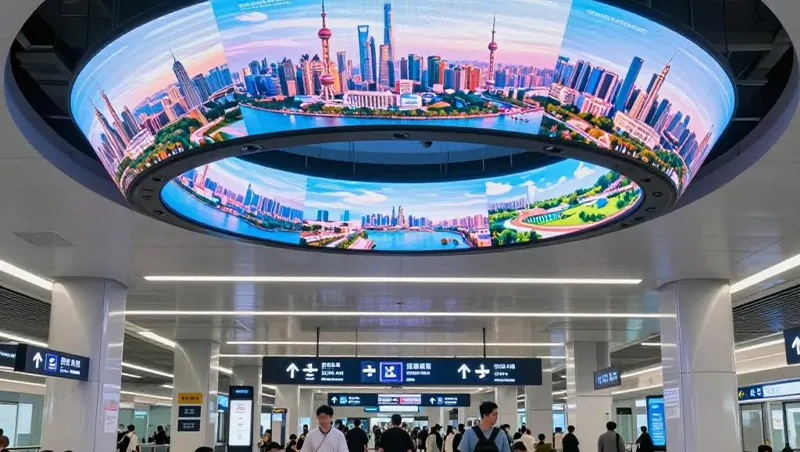
Yes, many outdoor LED cabinets support curved installations. Standard outdoor rental cabinets typically allow 0-15 degrees of curvature per panel, enabling convex or concave configurations. For permanent installations, some manufacturers offer custom-curved cabinets designed to match specific architectural curves. Flexible LED mesh displays are another option for irregular surfaces — these use a grid of LED modules mounted on a flexible mesh material that can conform to curved or angled surfaces. Custom configurations typically add 10-15 days to production time and may require higher minimum order quantities.
Regular maintenance is essential for outdoor LED installations. Key tasks include cleaning the panel surface every 3-6 months to remove dust, pollen, and pollutants that can affect brightness and color uniformity; inspecting sealing gaskets and waterproof connectors annually and replacing any that show signs of hardening or cracking; checking the cabinet interior for moisture or condensation after heavy rain events; verifying that cooling fans (if equipped) are operating properly and cleaning fan filters; running periodic brightness and color uniformity checks to identify early signs of LED degradation; and keeping spare modules, power supplies, and receiving cards on hand for quick replacements. For coastal installations, more frequent inspection for salt corrosion is recommended, and anti-corrosion coating should be reapplied every 2-3 years.