English
So you've decided to source LED video walls directly from China — smart move, honestly. Whether you're setting up a retail display, a stage backdrop, a control room, or even a church sanctuary screen, China produces the vast majority of the world's LED display panels. But here's the thing that catches most first-time buyers off guard: searching for "China LED video wall manufacturers" throws back thousands of results, and not all of them are what they claim to be. Some are proper factories with their own production lines. Others are trading companies adding a 30% markup. And a few are just… well, let's just say they exist to take your deposit and disappear.
I've been working in the LED display industry for about 8 years now, helping buyers across Hong Kong, Southeast Asia, the Middle East, and Europe navigate this exact problem. The short answer to "how do you pick the right one" is: verify their manufacturing capability, check their certifications, request samples, and understand the real pricing structure before you commit. For a standard indoor P2.5-P3.91 panel, you're looking at roughly $80-$250 per piece depending on specs and order volume. Let me walk you through the whole process in detail.
This is the question I get asked more than any other. And honestly, it's the right question to ask first, because the LED display market in China is massive — there are over 3,000 companies claiming to manufacture LED displays, but only a fraction of them actually have their own production facilities.
Here's what separates a real manufacturer from a middleman:
Own SMT production lines — Surface Mount Technology machines are expensive (we're talking hundreds of thousands of dollars per line). A real factory will have multiple SMT lines running.
In-house aging test facility — Every panel needs to run for 48-72 hours continuously before shipping. If they don't have an aging room, they're cutting corners.
Own module assembly and cabinet fabrication — Some companies buy modules from one supplier, cabinets from another, and just assemble. That's not manufacturing, that's assembly at best.
Dedicated R&D team — Real manufacturers invest in developing new products, improving pixel pitch, and refining calibration processes.
Direct access to engineering staff — When you have a technical question, you should be able to talk to the person who designed the product, not a sales rep reading from a script.
I remember a client from Hong Kong who came to me after getting burned by a supplier on Alibaba. The "manufacturer" turned out to be a trading company operating out of a small office in Bao'an. They'd marked up the price by 40%, and when my client received the panels, three out of fifty had dead pixel clusters. The "manufacturer" ghosted him after delivery. Stories like this are more common than you'd think.
Before you even start reaching out to suppliers, you need to know what you're looking for. LED video walls are not one-size-fits-all, and the specs you choose will determine everything from image quality to total cost.
Pixel pitch is the distance between each LED pixel, measured in millimeters. Smaller pitch means higher resolution but higher cost. Here's a practical breakdown:
| Pixel Pitch | Best Viewing Distance | Common Applications | Price Range (per 500×500mm panel) |
|---|---|---|---|
| P1.25 - P1.5 | 1.5m - 3m | Control rooms, boardrooms, broadcast studios | $350 - $600 |
| P1.86 - P2.0 | 2m - 4m | Corporate lobbies, retail flagship stores | $200 - $380 |
| P2.5 - P2.97 | 3m - 6m | Conference rooms, churches, mid-size events | $120 - $250 |
| P3.91 | 4m - 8m | Stage rental, large events, outdoor-indoor hybrid | $80 - $160 |
| P4.81 - P5.95 | 5m - 10m | Large venues, outdoor advertising, sports arenas | $60 - $130 |
For most indoor commercial applications in Hong Kong — where space is tight and viewers are often close to the screen — P2.5 to P2.97 tends to be the sweet spot. You get sharp images without the premium price of sub-2mm pitches.
Indoor panels typically run at 800-1,500 nits. If your installation is near a window or in a space with heavy ambient light, push for 1,500+ nits. For semi-outdoor applications (like a covered entrance or atrium), you'll need 2,500-4,500 nits. Full outdoor panels start at 5,000 nits and go up to 8,000+.
This matters a lot if your content will be captured on camera. A refresh rate of 3840Hz ensures no flickering or scan lines appear in video recordings. For static display applications where no camera is involved, 1920Hz is perfectly fine and saves you money.
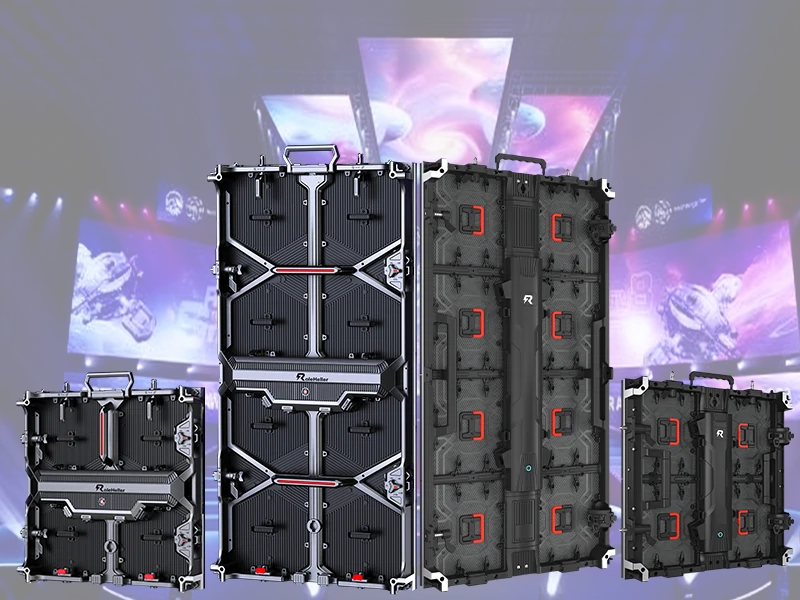
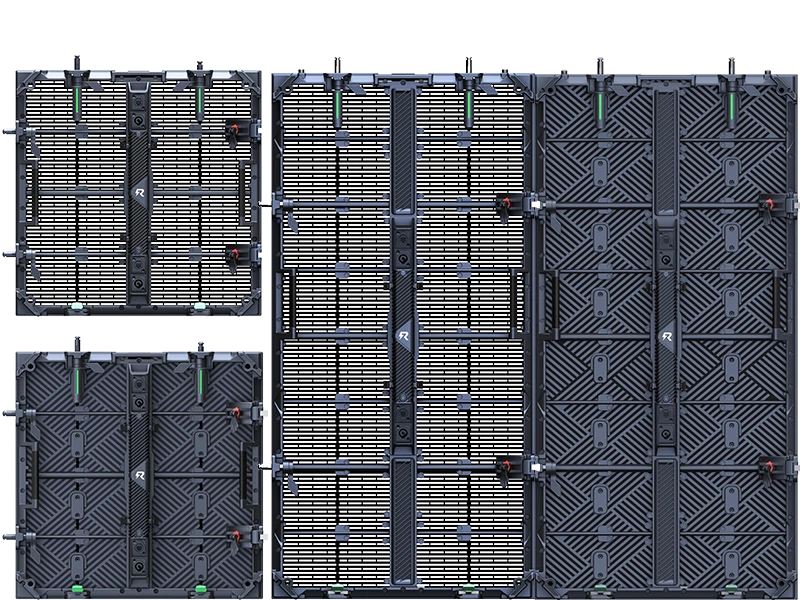
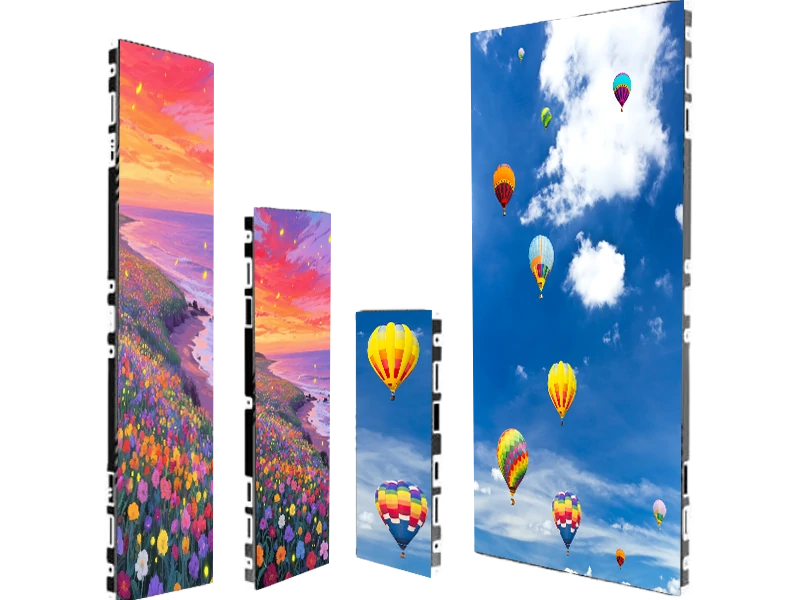
Standard cabinet sizes are 500×500mm and 500×1000mm. For rental applications where you're setting up and tearing down frequently, lighter cabinets (under 8kg for 500×500mm) make a real difference in labor costs and setup time. Die-cast aluminum cabinets are the standard for professional applications — they're lightweight, precise, and durable.
OK so you've narrowed down your requirements. Now how do you actually find and verify a reliable China LED video wall manufacturer? Here's the process I've developed over the years, and it's worked well for dozens of clients.
Start with platforms like Alibaba, Made-in-China, or industry-specific directories. But here's the trick — filter by "Manufacturer" not "Trading Company." Look at their company profile for:
Year established (anything under 5 years needs extra scrutiny)
Number of employees (real factories typically have 100+ staff)
Export percentage (if they export 80%+ of production, they understand international standards)
Certifications listed (CE, FCC, ETL, RoHS at minimum)
This is where you separate the wheat from the chaff. Request a live video call — not a pre-recorded factory tour video, but a real-time call where you can ask them to walk around. Ask to see:
The SMT production line in action
The aging test room with panels running
The QC inspection station
Raw material storage (LED chips, driver ICs, PCBs)
A legitimate manufacturer will happily do this. They're proud of their facility. If they make excuses — "our factory is in a different city," "let me send you a video later," "we're in a clean room so we can't bring phones in" — you should be suspicious.
Ask them directly: what brand of LED chips do you use? What driver ICs? What power supplies? The answers should be specific and verifiable:
LED chips: Nationstar, Kinglight, HSMC, or Silan are the reputable brands
Driver ICs: Macroblock, Chipone, Sunmoon, or GreetColor
Power supplies: Mean Well is the industry gold standard, especially for outdoor applications
If they say "we use our own brand" for everything, that's not necessarily bad — some larger manufacturers do make their own driver boards — but they should be transparent about it and able to explain their engineering decisions.
Always order at least one sample panel before committing to a bulk order. Yes, sample pricing is higher — usually 1.3 to 1.5 times the bulk price — but most manufacturers refund the difference when you place your full order. With the sample in hand, you can:
Check color uniformity across the panel
Test brightness against their claims
Examine build quality — cabinet seams, connector quality, weight
Verify the pixel pitch with a simple measurement
Run it for 24-48 hours to check for early failures
Ask for 2-3 references from clients in your region or in similar applications. A confident manufacturer will provide these without hesitation. If they can only show you projects in remote areas you can't verify, or if all their references are from the same year, dig deeper.
Let me give you some real numbers. These are based on current market pricing for standard configurations, and they'll help you spot quotes that are either too high (you're being overcharged) or too low (something is wrong with the product).
| Product Type | Specs | Unit Price (1-10 units) | Unit Price (50+ units) | Notes |
|---|---|---|---|---|
| Indoor Rental P2.97 | 500×500mm, 3840Hz, 1000 nits | $180-$250 | $140-$190 | Most popular for events |
| Indoor Rental P3.91 | 500×500mm, 3840Hz, 1000 nits | $120-$170 | $90-$130 | Budget-friendly rental |
| Indoor Fixed P2.5 | 640×640mm, 3840Hz, 800 nits | $200-$300 | $160-$240 | Permanent installations |
| Outdoor Rental P3.91 | 500×500mm, 3840Hz, 5000 nits, IP65 | $200-$300 | $160-$240 | Weather-resistant |
| Outdoor Fixed P4.81 | 960×960mm, 1920Hz, 5500 nits, IP65 | $150-$220 | $110-$170 | Billboard applications |
| Fine Pitch P1.5 | 600×337.5mm, 3840Hz, 600 nits | $400-$600 | $320-$480 | Boardrooms, control rooms |
A few things to keep in mind about pricing:
Prices above are for panels/cabinets only. Video processors, mounting structures, cabling, and flight cases are extra.
Payment terms are typically 30% deposit, 70% before shipment. Never pay 100% upfront with a new supplier.
Shipping costs vary significantly. A 20-foot container to Hong Kong might cost $800-$1,500, while air freight for a small sample order runs $5-$8 per kg.
Import duties for LED displays into most markets range from 0-5%, but check your specific country's HS code classification.
I've seen these mistakes happen so many times that I feel like I should have them printed on cards and handed out at trade shows.
If a quote comes in 30% or more below the market average, there's a reason. They might be using B-grade LED chips (which will show color inconsistency within months), skipping the conformal coating on PCBs (leading to corrosion), using non-brand power supplies (which fail prematurely), or inflating the brightness claim (that 5000-nit panel might actually be 3500 nits when you test it). The cost of replacing failed panels — including shipping, labor, and downtime — will always exceed whatever you saved on the initial purchase.
Your LED wall is only as good as the signal feeding it. Many buyers focus entirely on the panels and then pair them with a cheap processor that introduces color banding, input lag, or scaling issues. Budget at least $500-$2,000 for a quality processor from brands like Novastar, Colorlight, or Brompton. The processor handles content scaling, color management, and input switching — it's the brain of your entire system.
Every batch of LED panels has slight color variations. Reputable manufacturers calibrate each batch and provide calibration data files that ensure uniform color across all panels in your installation. If your supplier doesn't include this, you'll end up with a video wall where some panels look slightly different from their neighbors — especially noticeable in large installations with 50+ panels.
LED panels will eventually need maintenance. Dead pixels happen. Power supplies fail. Receiving cards go bad. When you place your order, negotiate a spare parts package — typically 2-3% of your total panel quantity in spare modules, plus a few extra power supplies and receiving cards. The cost is minimal compared to the hassle of ordering single replacement panels internationally later.
The panels are only part of the equation. You need a mounting structure that's precise, sturdy, and appropriate for your installation type. For rental applications, you need quick-lock systems and flight cases. For permanent installations, you need a rigid frame that can support the weight and allow for rear maintenance access. Budget 15-25% of your panel cost for the mounting system.
Let's talk about what happens after you place the order, because this is where a lot of first-time buyers get anxious.
Standard specs that the factory already produces regularly will be faster — around 15 days. Custom specifications (non-standard cabinet sizes, unusual brightness levels, custom colors) add 5-10 days. During this phase, you should receive:
Production schedule confirmation within 3 days of deposit
Weekly progress photos
Pre-shipment video of aging test results
QC report with brightness uniformity data and dead pixel count
To Hong Kong by sea: 3-7 days (it's right there)
To Southeast Asia by sea: 7-15 days
To Middle East by sea: 18-25 days
To Europe by sea: 28-38 days
To North America by sea: 18-35 days depending on coast
Air freight anywhere: 5-7 days (but 4-5x the cost)
LED display panels typically clear customs smoothly. The HS code is usually 8528.59 or 8528.72 depending on the exact classification. Have your commercial invoice, packing list, certificate of origin, and any required certification documents ready.
This is where the difference between a good manufacturer and a bad one really shows. Here's what you should expect from a reputable China LED video wall manufacturer:
Warranty period: 2-3 years is standard for indoor panels, 2 years for outdoor
What's covered: Manufacturing defects, premature LED failure, driver IC failure, power supply failure
What's not covered: Physical damage, water damage (for indoor panels), power surge damage, normal wear
How claims work: You send photos/video of the defect, they ship replacement modules via express courier (DHL/FedEx), typically within 3-5 business days of claim approval
Remote support: Most manufacturers provide technical support via WhatsApp, email, or video call for troubleshooting
One thing I always advise my clients: get the warranty terms in writing before placing your order. Not just a verbal promise, but actual warranty documentation included with your proforma invoice. I've seen too many cases where buyers assumed they had warranty coverage, only to discover the supplier had a different understanding.
Look, I'm not going to sit here and tell you that sourcing from China is risk-free. It's not. But I will tell you that the risk is manageable if you approach it correctly. The manufacturers I work with produce panels that are genuinely world-class — same quality as European or American brands, at a fraction of the cost. The key is doing your due diligence.
My biggest piece of advice: start small. Order a sample. Test it. Visit the factory if you can (or at least do a thorough video call). Build a relationship with one good manufacturer rather than shopping around for the cheapest option every time. Once you find a supplier you trust, the whole process becomes smooth and predictable.
Another thing — don't underestimate the value of communication. The manufacturers who respond quickly, answer your questions thoroughly, and proactively share information are usually the ones who also build quality products. If a supplier is slow to respond during the sales process, they'll be even slower when you need after-sales support.
I hope this helps you navigate the process with more confidence. The LED display industry in China is mature and competitive, and there are plenty of excellent manufacturers out there. You just need to know how to find them and how to verify what they're telling you.
Most manufacturers accept orders as low as 1 piece for sample testing. For bulk orders, the typical MOQ is 10-20 panels, but this varies by manufacturer. Some larger factories require minimum orders of 50+ panels for custom specifications. Standard specs usually have no minimum beyond 1 piece.
Ask the manufacturer to specify the LED chip brand (Nationstar, Kinglight, HSMC, or Silan are reputable). Request the chip specification sheet and batch test data. You can also independently test the sample panel for color uniformity, brightness consistency, and chromaticity coordinates using a colorimeter or spectroradiometer.
For the EU market, CE and RoHS certifications are required. For the US, ETL (or UL) and FCC certifications are needed. For Hong Kong and most Asian markets, CE is generally accepted. Always verify certificates on the issuing body's official website rather than accepting PDF copies at face value.
Yes, most original manufacturers offer OEM and ODM services. You can customize cabinet dimensions, cabinet color (black, white, or custom Pantone matching), logo printing on the cabinet exterior, and even adjust brightness or refresh rate specifications. Custom orders typically add 5-10 production days and may have higher MOQ requirements.
Quality panels from reputable manufacturers have a rated lifespan of 100,000 hours (approximately 11 years of continuous 24/7 operation). The actual lifespan depends on operating conditions — temperature, humidity, brightness settings, and maintenance quality all play a role. Panels using Nationstar LEDs and Mean Well power supplies consistently outperform budget alternatives.
LED display panels fall under HS code 8528.59 or 8528.72 in most countries. Import duties range from 0-5% depending on your country's trade agreements with China. You'll need a commercial invoice, packing list, bill of lading, certificate of origin, and relevant certification documents. Working with an experienced customs broker is recommended for first-time importers.
The most widely compatible brands are Novastar, Colorlight, and Brompton. Novastar is the most commonly used in China and offers the broadest compatibility. Brompton is preferred for high-end broadcast and rental applications. Most manufacturers can supply the processor as part of a complete solution, or you can source it separately.
Many established manufacturers provide remote installation guidance via video call at no extra cost. For large projects (typically over 50 square meters), some manufacturers will send engineers for on-site installation support, though this usually involves additional costs for travel, accommodation, and daily engineering fees. Clarify this before placing your order.
The industry standard is 30% deposit via T/T (bank transfer) upon order confirmation, with the remaining 70% paid before shipment after you've reviewed pre-shipment inspection photos and QC reports. For large orders, Letter of Credit (L/C) is also accepted. Avoid suppliers who demand 100% payment upfront, especially for first-time orders.
Contact the manufacturer with photos or video documentation of the defect. Reputable manufacturers will assess the issue remotely and ship replacement modules via express courier (DHL, FedEx, or UPS) within 3-5 business days of claim approval. Keep all original packaging and documentation, as some manufacturers require these for warranty claims. Always confirm warranty terms in writing before placing your order.