English
If you are searching for led video display board manufacturers and every website looks like it was copied from the same template—identical hero image of a glowing stadium screen, the same list of certifications, the same "welcome to inquiry"—you are right to be suspicious. The short answer, before we get into any of it: pick a manufacturer that names its components on the quote, can show you a screen that has actually been running for a year or more, and will let you inspect the goods before they leave the factory. Everything else is noise. I learned this after helping a friend in Manchester fit out a sports bar and then, rather against my better judgement, agreeing to advise on a much larger outdoor installation where the cheapest quote ended up costing the most. So here is what I would do differently now.
What people actually mean by "LED video display board"
Strictly speaking there is no technical category called that. It is a catch-all phrase buyers use when they want a screen that plays video—ads, live feeds, motion graphics—as opposed to a single-colour message sign. That matters because the phrase pulls in three very different product families, and suppliers know it. They will quote you whichever one is cheapest to make unless you pin them down.
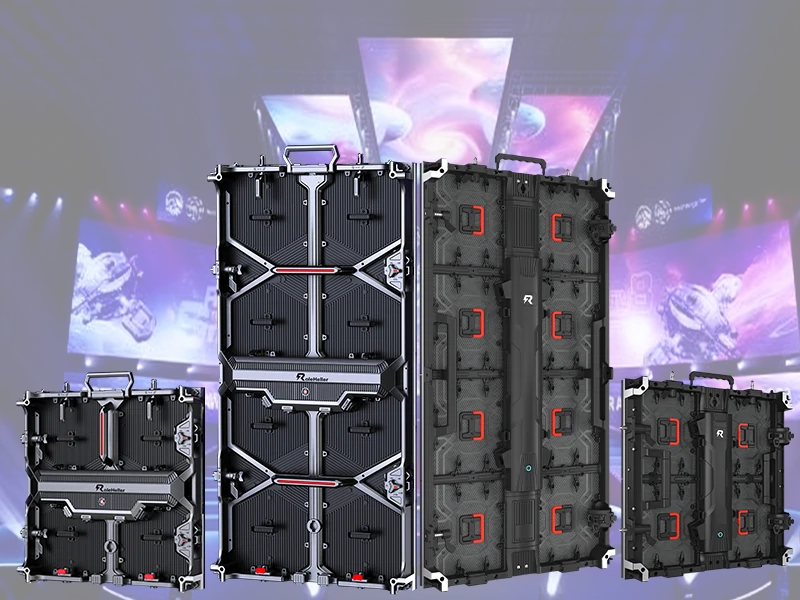
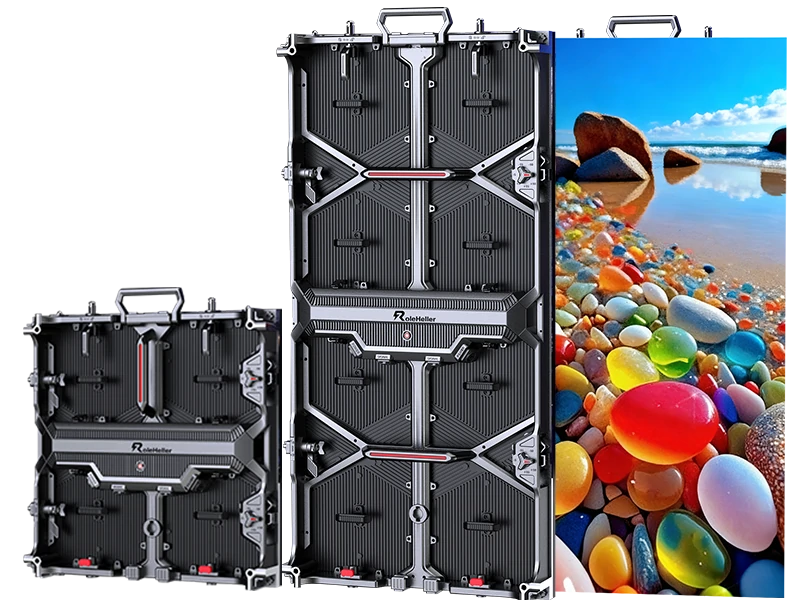
The three families are: fixed outdoor cabinets (built to stay up for years), indoor fine-pitch boards (for lobbies, retail, control rooms), and rental/touring panels (lightweight, fast to lock together, designed to be knocked down every weekend). Same keyword, completely different engineering. If you ask for a "video display board" without specifying which, you will get an outdoor-brightness spec on an indoor cabinet or a rental panel sold as permanent install. Both are mistakes, and both look fine on paper until about six months in.
Specs that actually decide whether you will be happy
Forget the headline numbers for a moment. These are the ones I check now, and the reason each one matters.
| Spec | What to aim for | Why it matters |
|---|---|---|
| Pixel pitch | Match to viewing distance, not to budget ambition | Too coarse up close looks jagged; too fine at 30 m is wasted money |
| Brightness | Outdoor 5,000–8,000 nits with auto dimming; indoor 800–1,500 nits | Overdriven brightness kills lamps and shifts colour over time |
| Refresh rate | ≥1,920 Hz standard; 3,840 Hz if cameras or broadcast are involved | Low refresh shows banding on phone cameras and live streams |
| Cabinet material | Die-cast aluminium with stated flatness tolerance | Sheet metal warps, seams become visible, and nobody fixes that |
| IP rating | IP65 front minimum outdoors; check rear rating separately | Most failures come from humidity at the back, not rain at the front |
| Driver IC / LED package | Named brands (Macroblock, ICN, Nationstar, Kinglight etc.) | Unspecified parts mean the supplier can swap them without telling you |
| Power supply | Branded, derated to run well below max load | Running near 100% is how you lose a fifth of the screen in year two |
| Ageing test | 48–72 hours white-screen before dispatch | Catches dead pixels and weak solder joints before shipping |
| Controller | Genuine Novastar / Colorlight / Linsn with updatable firmware | Clone boxes brick themselves on updates and nobody supports them |
| Warranty & spares | 2–3 years plus matched spare modules shipped with the order | Random spare modules from a different batch create visible colour patches |
One thing worth saying plainly: brightness is not a virtue by itself. A supplier who proudly claims 10,000 nits on a P6 outdoor board is usually telling you they push more current through the LEDs. That gives you a brighter screen for roughly eighteen months and then a yellower, dimmer one forever. I have taken down a screen that did exactly this. Nobody enjoys that day.
Where the real differences between manufacturers hide
Two factories can hand you spec sheets that read identically and deliver screens that behave nothing alike. The gap lives in things the spec sheet does not record: bin-matching discipline, whether the ageing test actually happened, whether the receiving cards match the firmware version they promised, whether the cabinet flatness was checked or just assumed.
Here is how I separate them now. It is less glamorous than comparing prices.
| Checkpoint | Answer that makes me keep talking | Answer that makes me stop |
|---|---|---|
| "Which LED package is on this quote?" | Names brand and series, offers batch records | "High-quality SMD" or "we use top brand" |
| "Which driver IC?" | Gives model number, confirms it on the proforma | "Imported IC, very stable" |
| "Can I see the ageing test report for my order?" | Yes, with serial numbers and photos | Silence, or "all our products are tested" |
| "What happens if a module fails in year two?" | Same batch kept in stock, matched replacement sent | "We have many models, no problem" |
| "Show me a screen running, ideally installed over a year ago" | Sends video, location, contactable reference | Only sends studio renders |
| "Is the controller genuine and can it be updated?" | Yes, provides serial and firmware path | Deflects, says firmware does not matter |
| "Will you accept a pre-shipment inspection?" | Welcomes it, gives factory address and dates | Makes excuses about "company policy" |
The pattern is fairly consistent once you see it a few times. Suppliers who know their own supply chain give you names and numbers. Suppliers who do not, give you adjectives.
Questions I ask, and the answers that tell me everything
Q: What pixel pitch do I need?
This is the only question where the honest answer begins with "how far away will people stand." Minimum comfortable viewing distance is roughly the pitch expressed in metres—so P4 around 4–5 m, P6 around 6–8 m, P10 beyond 10 m. If your audience is reading text at three metres, no manufacturer can rescue that with marketing. Better to spend on a finer pitch and a smaller screen than the other way round.
Q: Indoor or outdoor—can I use an outdoor board indoors?
Technically yes, and it is usually a mistake. An outdoor-brightness board indoors will glare, run hotter, consume more power, and shorten its own life. Conversely, putting an indoor board in a covered but unsealed arcade frontage is how you meet any humid climate's condensation problem within a year. Specify for the actual environment, not for the catalogue category.
Q: Do I need 3,840 Hz refresh?
Only if cameras care. Broadcast, livestream, corporate events, stage backdrops where phones will be pointing at it—yes, worth the premium. Static advertising, wayfinding, menu boards, warehouse information displays—no. Put that money into structure, spares, or a better install.
Q: Front service or rear service?
If the board mounts flush against a wall with no access behind, front service is mandatory, not optional. And "mandatory" here means you should watch a video of someone removing a module from the front before you pay. On one job we discovered too late that removing one module meant loosening three others. Two days of labour, one dead pixel. Not a story I like retelling.
Q: What about power and heat?
Average draw varies a lot with configuration and content, but you should size electrical capacity for peak, not average, and you should assume the heat has to go somewhere. Undersized power supplies and choked ventilation account for a large share of early failures I have seen. Ask the manufacturer for both average and peak figures per square metre and hand those to your electrician, not a rounded guess.
Price: why the lowest quote is rarely the lowest bill
I will not give you a per-square-metre price table because anyone quoting a firm number without knowing your pitch, brightness, cabinet type, control system, structure and site conditions is guessing, and guessing badly. What I can tell you is where the money hides.
Rental panels cost more per square metre than fixed-install because you are paying for light weight, locking hardware, flight cases and higher refresh rates. Fine pitch costs disproportionately more—each step down in pitch raises the LED count sharply. Front-service capability, curved cabinets, custom sizes, all add. Then there is everything that is not the board at all: steelwork or rigging, electrical work, video processor and sending cards, content management software, shipping, duties, installation labour, commissioning, and the redesign that happens when the site turns out different from the photos you sent.
The mistake I made: I compared three quotes on screen price, picked the lowest, and later found the price excluded receiving cards, the video processor and the mounting frame. Final bill came in higher than the most expensive quote, which had been inclusive. So compare landed, installed and commissioned totals, line by line. The suppliers padding their margin tend to bury it in vague lines called "accessories" or "engineering fee". Ask each one to break it out the same way. If one refuses, that refusal is information.
Payment terms: thirty percent deposit with balance against inspection is normal. A hundred percent upfront from a company you have never met deserves serious scrutiny. And the pre-shipment inspection—go yourself, or pay someone in Shenzhen or Dongguan a few hundred dollars to go. That visit has saved me more than it cost every single time.
Lead times and the thing nobody warns you about
Standard orders typically run fifteen to thirty working days after deposit, longer for custom cabinets or large projects. Rush jobs exist. Rush jobs compress the ageing test. The ageing test is precisely the step you do not want compressed, because it is the one that finds problems while they are still the factory's problem rather than yours.
Also plan for the unglamorous bits: crating, tail lift, delivery windows your building manager will not bend, and the near-certainty that at least one module arrives cracked. Photograph everything on unpacking. Keep the original cartons for a few months. Trying to return a single cabinet without its case is a special kind of misery, and I say that having done it.
Order spares at the same time as the main order, and insist they come from the same production batch. Modules from different batches sit in slightly different colour bins; mix them on a wall and you will see patches, especially on white or skin tones. This is not a defect you can fix later with calibration, not properly.
The part of the job manufacturers will not do for you
A factory in Shenzhen will build you a perfectly good board. They will not, and cannot, take responsibility for whether your wall can hold it, whether your local electrical rules are satisfied, or whether the neighbours call the council about light spill at midnight. Those are your side of the line.
Wind load and structure need local engineering sign-off. Do not accept "we used the same design next door"—next door might have been a concrete shear wall and your site might be cladding over something much older. Electrical compliance for fixed installations falls under local regulation. Light pollution complaints are nearly guaranteed in residential areas; automated brightness scheduling and a sensible curfew cost almost nothing and save a great deal of argument.
For these pieces you want a local integrator or contractor who carries local liability. Which brings me to the question people ask most often.
Let me answer the ones you are probably holding
Manufacturer direct or local integrator?
Both, and this is not fence-sitting. Buy the hardware from a manufacturer with a real factory, named components and a reference list you can actually call. Buy the installation, commissioning and first-line support from someone local who will pick up the phone at six pm on a Friday. The cheapest possible route—direct purchase, self-install, no local support—looks brilliant right up until something fails and you are waiting on flights and visas. I have watched that film. The ending does not get better on repeat viewing.
Are the big certification logos enough proof?
CE, RoHS, FCC and so on are baseline expectations, not evidence of quality. Certificates can be borrowed, copied, or genuinely held by a different company in the same group. Ask for certificates bearing the actual company name on your contract, and cross-check the number with the issuing body if it matters. It takes twenty minutes and it separates a surprising number of websites from reality.
What about buying second-hand or ex-rental?
For a temporary installation or a tight budget it can work. But LED lamps degrade and shift colour with age, ex-rental stock almost always contains mixed batches, and corners get knocked. Fine for a three-month pop-up. Risky for anything you intend to leave on a wall for five years.
How long will it last?
The "100,000 hours" printed on spec sheets is a theoretical lamp figure under ideal conditions, not a promise. In real outdoor use, a well-specified and properly maintained board giving solid service for five to eight years is a reasonable expectation; beyond that you are looking at gradual brightness loss and colour drift rather than sudden death. Sensible brightness levels, clean ventilation and a proper spare-parts kit stretch that out considerably.
Do I need a video processor?
If you are feeding it anything other than a single direct source, yes. Scaling, input switching, basic colour adjustment—these live in the processor. It is also the piece most likely to be omitted from a low quote and then discovered missing during commissioning. Ask explicitly whether sending cards and processing are included.
My own take, for what it is worth
After doing this a handful of times my priority list looks nothing like a spec sheet. First, a supplier who names components and keeps batch records. Second, front access proved with a video, not a tick box. Third, structure and electrical handled by people who carry local liability, because that is the part that can actually hurt someone. Brightness comes fourth. Price comes fifth.
I have stopped chasing the lowest number. What I do now is shortlist three manufacturers who can show me a live, aged screen and a named component list, pick the middle-priced one, and spend the difference on installation quality and a proper spare kit. It feels conservative. It has also never let me down, whereas the cheapest quote has let me down twice.
If you are sitting with three PDFs right now and they all look the same, strip out the marketing language and lay the component names side by side. The differences show up quickly. And if one supplier cannot tell you what driver IC is on the board, stop talking to them—they either do not know, or they are counting on you not knowing. Either way, that is not a partnership, it is a gamble.
Frequently asked questions
1. What does "LED video display board" mean?
It is a general buyer's term for an LED screen capable of playing video content—advertising, live feeds, motion graphics—rather than a single-colour text sign. The term covers indoor, outdoor and rental products, so you need to specify which type you want.
2. How do I choose the right pixel pitch?
Base it on viewing distance. As a rough guide, minimum comfortable viewing distance in metres is close to the pitch number. Closer audiences need finer pitch; beyond 20–30 m the gains from finer pitch largely disappear.
3. What brightness is appropriate?
Outdoor installations typically need 5,000–8,000 nits with automatic dimming; indoor spaces need 800–1,500 nits. Higher is not automatically better, since overdriven brightness reduces lamp life and shifts colour.
4. Is a high refresh rate necessary?
Only when cameras are involved. For broadcast, livestream or event backdrops, 3,840 Hz is worthwhile. For static advertising or information displays, standard refresh is adequate and the budget is better spent elsewhere.
5. What should I check about a manufacturer's credibility?
Ask for named components (LED package, driver IC, power supply, controller), a live demo or footage of an installed screen aged over a year, certificates matching the contracting company name, evidence of a 48–72 hour ageing test, and verifiable project references.
6. What warranty and spare parts should I expect?
Reputable manufacturers offer two to three years. Insist on a percentage of matched spare modules from the same production batch shipped with the order, and confirm future availability of that batch.
7. How long does production take?
Standard orders generally require fifteen to thirty working days after deposit, plus shipping and installation. Custom cabinets and large projects take longer. Rush orders typically shorten the ageing test, which is a trade-off I would avoid.
8. Should I buy direct from the factory or use a local integrator?
Ideally both. Source hardware from a verified manufacturer and buy installation, commissioning and ongoing support locally from someone who can respond quickly when something fails.
9. Can LED video display boards be curved or custom-shaped?
Yes. Flexible and curved cabinet options exist for columns, arches and stage designs, though they carry a premium and require careful structural planning.
10. What costs sit outside the screen price?
Structure or rigging, electrical work, sending cards and video processors, content management software, shipping, duties, installation labour, commissioning and spare parts. Always compare fully installed totals rather than module-only prices.
.jpg "China 3 Digit LED Display Manufacturers: How to Pick a Factory")
.jpg "Which Stage LED Video Wall Manufacturers Fit Your Live Event?")