English
You are looking at china led digital display manufacturers because someone in your company, or a client, decided the lobby needs a video wall, or the building front needs a screen, or the trade show booth needs to look less like a folding table with a banner on it. You open a dozen tabs. Every single one says factory direct, best price, OEM welcome, MOQ negotiable. Three of them use the same product photo. One site has a countdown timer for reasons nobody can explain. And nobody, not a single one of them, tells you upfront that "LED digital display" is not one product but about six different products that share a name and absolutely nothing else. Pick the wrong one and you will be staring at a wall that looks great in the brochure and terrible in your actual room, and by then the money is gone.
Here is the answer I would give if you asked me over coffee: buying direct from a Chinese manufacturer usually saves money, often quite a lot, but only if you specify pitch, brightness, cabinet type and service access before you ask for a quote, and only if you treat the first order as a trial rather than a marriage. If you need one screen for one room, a local integrator is probably still the better deal once labour, commissioning and warranty are counted. If you need more than one installation a year, or you resell to other people, going direct starts to pay. The rest of this is how I would actually do it, having done it more times than I care to count.
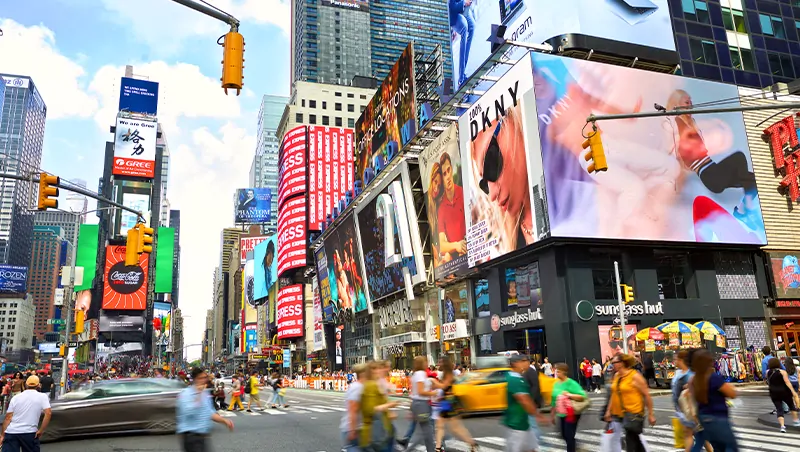
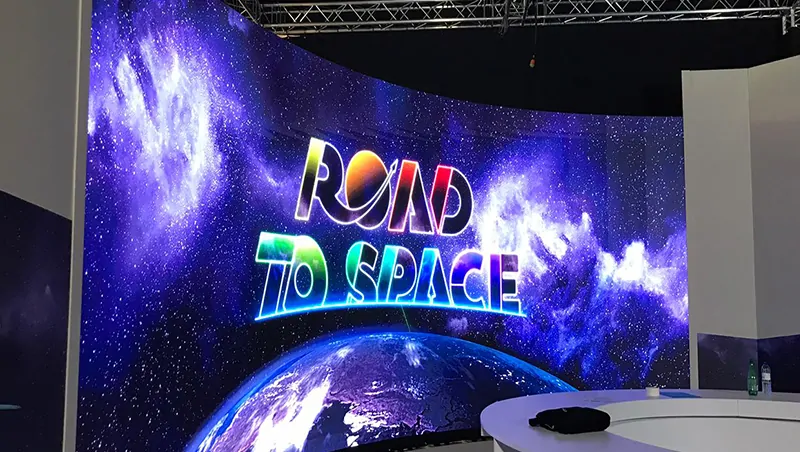
This is where most enquiries go off the rails in the first five minutes. The phrase covers indoor fixed-install video walls, outdoor billboards and façades, rental screens for events, fine-pitch LED for control rooms and lobbies, and transparent or mesh formats. Each family has its own cabinets, its own power requirements, its own service method and its own failure modes. Ask for a quote on an "LED digital display" without naming the family and you will get four incompatible numbers back, and nobody will explain why they differ until after the deposit clears. It happens every time.
The other thing people miss: pixel pitch is not a quality rating, it is a geometry. P1.2 is not "better" than P4, it is just meant for a different distance. Buying finer pitch than your viewing distance requires is the single most common way money gets burned in this category, because price rises roughly with pixel count and pixel count goes up with the square of the improvement. Halve the pitch, quadruple the LEDs, roughly quadruple the cost, and nobody in the room will be able to tell the difference from twelve metres away.
| Format | Typical pitch | Where it works | Watch out for |
|---|---|---|---|
| Indoor fixed video wall | P1.2–P2.5 | Lobbies, retail, boardrooms | Heat in enclosed walls, rear access needed |
| Fine pitch / COB | P0.9–P1.5 | Control rooms, broadcast, premium lobbies | Module replacement and calibration matching |
| Outdoor fixed | P4–P10 | Billboards, façades, stadia | Wind load, brightness, IP rating |
| Outdoor rental | P3.9–P8 | Concerts, events, tours | Weight, quick locks, flight cases |
| Transparent / mesh | P7.8–P25 | Glass façades, large buildings | Transparency vs brightness trade-off |
The old rule of thumb still holds up fine: pitch in millimetres times 1,000 gives you the minimum viewing distance in millimetres. So P2 means roughly two metres and beyond, P4 means four metres and beyond, P10 means ten metres and beyond. Design for your worst-case viewer, not your average one. If half your audience is walking past at three metres, design for three metres, not for the person standing back at fifteen.
One thing buyers routinely forget though: resolution is secondary outdoors and in large spaces. Size and brightness are what make a screen read. A bigger, slightly coarser wall almost always beats a smaller, sharper one when people are moving past it. Spend the saved money on square metres instead of pixels. That advice has never once made someone regret a purchase.
Indoor spaces generally want 800 to 1,500 nits depending on ambient light. Full-sun outdoor needs 5,000 to 6,500. But higher brightness means higher power draw, more heat, shorter LED life. A screen running flat out all day at its peak figure ages faster than one running at a sensible level with decent thermal design. What you are buying is sustained usable brightness in real conditions, not a datasheet peak measured for a few seconds in a cool room.
And automatic brightness control is not optional. Outdoors it is a nuisance issue — a screen that stays at full brightness after dark gets complaints, and complaints arrive faster than invoices. Indoors it is a comfort issue — nobody wants to sit in a meeting with a glowing rectangle burning their retinas. Make sure the sensor and the auto-dimming curve are included and actually configured, not just listed as a feature.
Ask for both average and peak power per square metre and size your circuits for peak. This catches people out constantly. The sparky on site does not care what the brochure said.
I keep coming back to this because it matters enough to repeat.
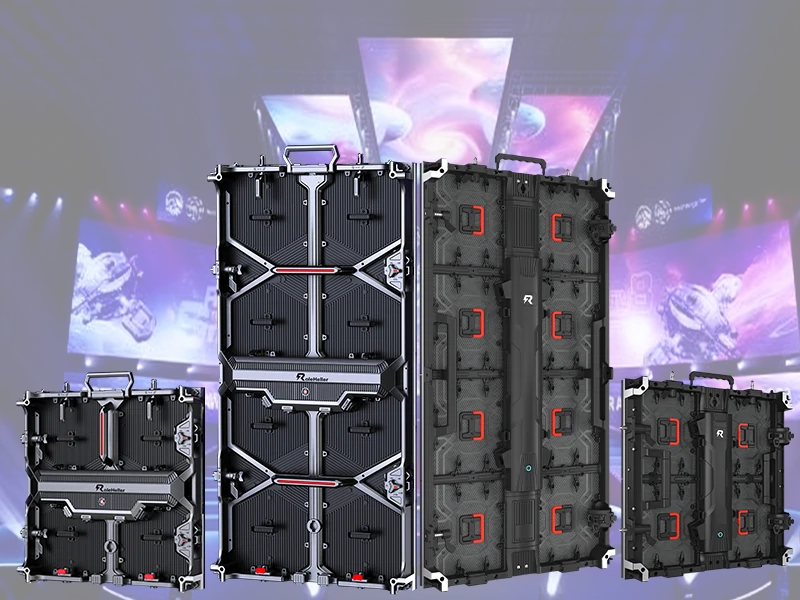
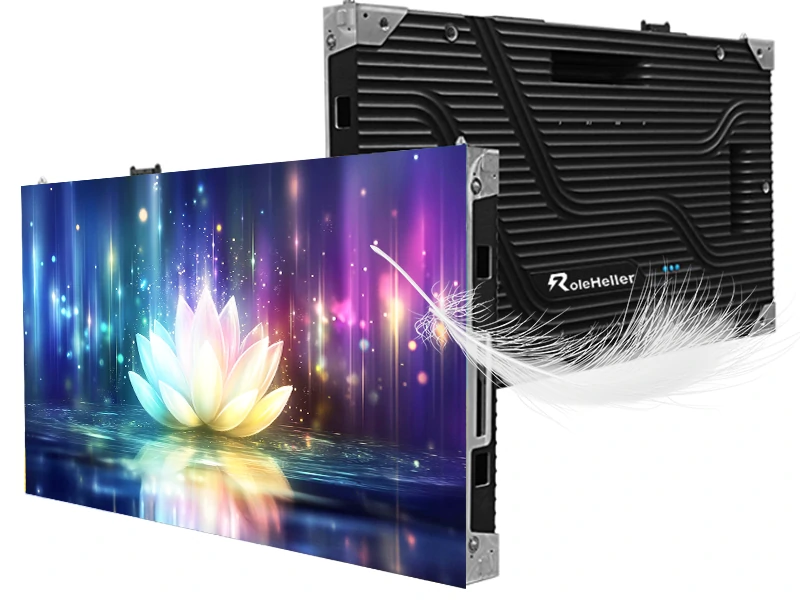
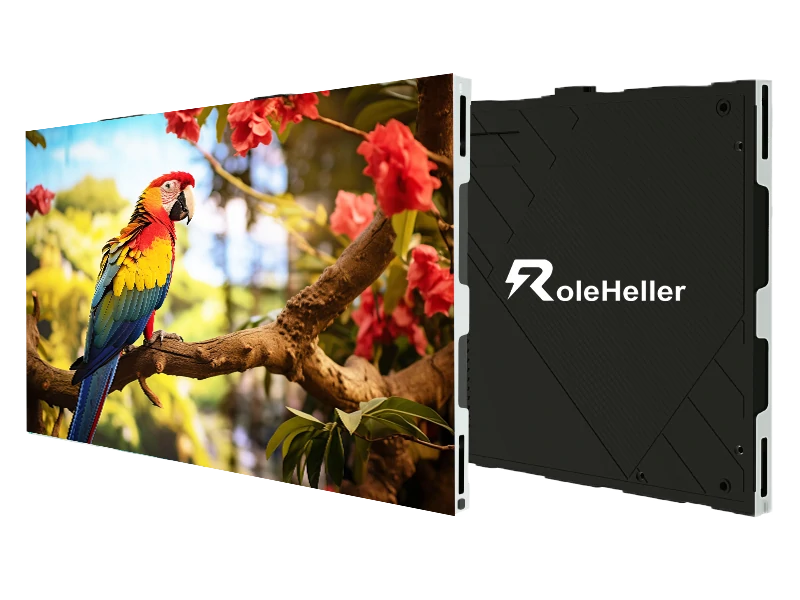
Fixed-install cabinets are built to go up once and stay there. Heavier, cheaper per square metre, usually rear-service, designed to be tiled into a permanent wall with a structure behind them. Flatness tolerance is looser because nobody rebuilds them every week.
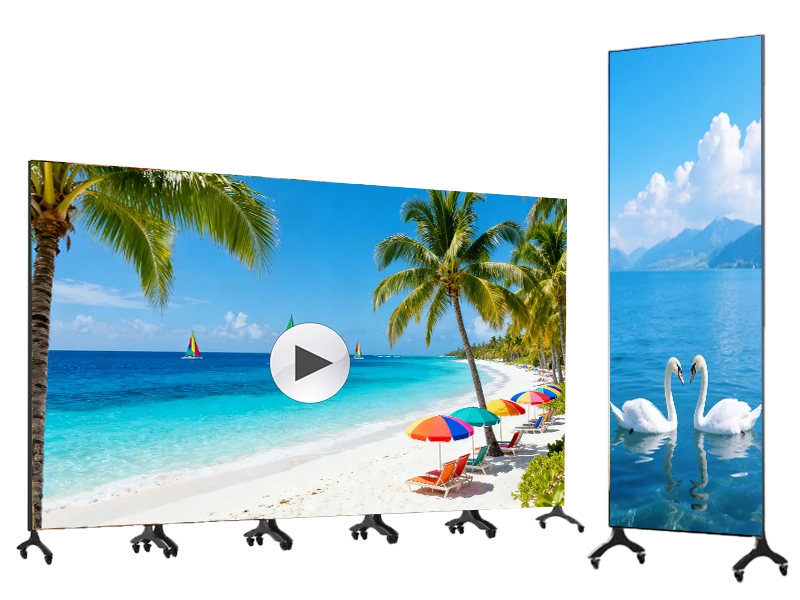
Rental cabinets are lighter, have quick-lock mechanisms, are often front-serviceable, and survive being loaded onto trucks. They cost more. Putting a fixed-install cabinet on a tour is how you end up with bowed edges and visible seams by the third gig.
There is a third option people overlook: front-service fixed cabinets. These mount against a wall and are maintained from the front, which matters when the screen is hung above an entrance with no access behind it. If your brief involves a screen somewhere awkward, say so up front. It changes the product family entirely.
| Feature | Fixed install | Rental | Front-service fixed |
|---|---|---|---|
| Weight | Heavier | Light, fast build | Moderate |
| Service access | Rear | Front, tool-free | Front |
| Locking | Bolted or screwed | Quick locks | Tool-free latches |
| Cost per m² | Lower | Higher | Mid to high |
| Best for | Permanent walls, billboards | Tours, events | Screens over entrances, tight spaces |
| Flatness tolerance | Looser | Tighter | Moderate |
Three kinds of company, all calling themselves factories.
The actual manufacturer. Runs SMT lines, owns cabinet tooling, has an aging area where cabinets burn in for hours before packing, and can change a finish or connector position if your volume justifies it. They want repeat business and pallets. Their lead times are genuine and they do not chase single-quote shoppers.
The assembler. Buys modules, cabinets, power supplies and cards from upstream, configures, calibrates and ships. Nothing dishonest by default. Decent product comes out of these shops and they are often more flexible on odd canvas sizes. But their margin sits on top of someone else's margin, and when a batch starts failing fourteen months later they are calling the same supplier you could have called yourself.
The trader with borrowed photos. Polished site, replies inside the hour, quotes fast and low. Ask something specific — say whether their P4 uses common-cathode drive and what the rear IP rating is — and the reply arrives a day later phrased slightly differently from your question.
A filter I use that takes thirty seconds: ask what pitches they keep in standard stock and whether a given cabinet is front or rear service. Then ask how many square metres they shipped last quarter. A real operation answers the first part instantly and gives a number on the second that sounds boring rather than impressive. Someone who must confirm with the engineer on basic mechanicals is probably not standing next to the line.
Even good factories buy most inputs in.
LED packages come from a handful of large suppliers. This drives colour consistency and long-term decay. Ask which brand and whether they lock the bin for your production run. Bin matching matters more than the brand name.
Driver ICs sourced separately — this controls refresh rate and gray scale.
Power supplies are third-party, Mean Well and equivalents. Cheap supplies are the single most common cause of mid-life failure, and the easiest place to save twelve dollars.
Receiving cards and processors — Novastar, Colorlight, Linsn. Bought in, sometimes rebranded.
Die-cast cabinets and masks — this is usually where the factory's own tooling actually lives. Flatness, sealing, weight, corner durability. The part that physically lives in the weather, and it ages faster than the electronics.
So the useful question is not "are you the factory." It is which steps happen under their roof, which are subcontracted, and who signs off on final inspection. A supplier who answers plainly is worth a longer conversation. One who dodges is telling you something too, just not in words.
Keep it short. Ten minutes to write, tells you more than any brochure.
Pixel pitch, cabinet dimensions, exact pixel count of your intended canvas, and whether their standard processor can drive that resolution without downscaling.
Brightness measured value, plus whether automatic brightness control and sensor are included.
IP rating front and rear separately, plus conformal coating option for outdoor.
Refresh rate and gray scale — if anyone films this, 3,840 Hz or higher. Do not accept "greater than 1920 Hz."
Average and peak power per square metre.
Cabinet weight and the fixing or rigging drawing showing where the load lands.
Calibration method — per module or per cabinet, and whether calibration data survives a field module swap.
Dead pixel acceptance standard and what triggers a replacement.
Warranty text, not the headline number.
Line-item pricing including spares.
Numbers do not lie the way adjectives do. "High brightness" means nothing. "5,800 nits measured, auto dimming included" means something you can hold someone to.
Per-square-metre pricing moves with pitch, brightness grade, cabinet type and whether the LED package is a known brand. The jump from P8 to P5 is not linear, it feels more like a cliff, because pixel count rises sharply and yield rates drop.
On top of the panel cost you must count: processor and sending cards, mounting structure or rigging hardware, flight cases if it moves, spare parts kit, freight, duties, installation labour, access equipment, and content setup. A quote that comes in well under the others has almost always left out one of three things: the processor, the structure, or the spares. Sometimes all three. Ask for a line-item breakdown and compare line by line, not total by total. Boring work, saves real money.
Payment terms matter as much as price. Thirty percent deposit with balance against a copy of the bill of lading is standard for new relationships. Anything demanding full payment upfront on a first order is a signal regardless of how professional the website looks. Insist on a pre-shipment inspection window — even a live video call showing your serial-numbered cabinets running your own test content. Factories with nothing to hide do not object.
Lead times: standard configurations typically run four to eight weeks plus shipping. Custom sizes, custom finishes, or anything involving new tooling pushes that out. Order near a major Chinese holiday period and add time — ports close, factories shut down, and your project date does not care.
MOQ varies. Standard pitches sometimes go as low as a single wall; custom specs push MOQ up. Be honest about your volume and your twelve-month forecast upfront, because the price break at higher volumes is usually meaningful and nobody volunteers it.
Screens do not support themselves. Every square metre carries weight and every linear metre of frame transfers load into whatever is holding it. You need to know the load capacity of the existing wall, roof or truss before you pick a product, not after.
Ask the supplier for cabinet weight per square metre, wind load rating for your location, and a fixing drawing. Then hand that drawing to your structural engineer or rigger and let them argue with the supplier's engineer directly. Do not be the translator in that conversation. Things get lost.
Wind load is the item that bites hardest. A screen that is fine in a sheltered atrium can be a serious problem on an exposed roof or a highway gantry. Local wind codes vary and the supplier's default assumption is almost always wrong for your specific site. Give them the site details and make them put a number to it.
Thermal expansion matters too. Steel, aluminium and the building itself move at different rates across a hot day. A fully rigid fix with no allowance for movement creates stress, and stress shows up as bowed rails, visible seams, and eventually cracked modules. Anyone proposing a completely rigid attachment to a large façade without expansion joints has either never done this or never come back to check.
And check local regulations early. Many cities treat a lit façade or billboard as advertising signage, which means planning permission, brightness limits after dark, curfews, and sometimes restrictions on content. Finding this out after installation is an expensive conversation. Better to find out before.
Remote buying is normal in this category. So is getting it wrong.
Ask for a live video call, not a recorded video. Ask them to walk to the aging area and show a running wall with today's date visible somewhere in frame. Recorded videos get recycled between companies. A live call does not. If they cannot manage a live call during their working hours, treat that as information rather than an inconvenience.
Order a sample cabinet. Yes it costs money and shipping a single cabinet is awkward. But holding it tells you about weight, seal quality, latch feel, edge alignment and service access in a way no PDF can. Put two samples side by side from two suppliers and the difference becomes obvious inside thirty seconds. You feel it in the latch before you see it on the screen.
Run a burn-in. Power it continuously for a couple of days. Watch for brightness drop, colour shift, and any module that starts to fade or develop hot spots. This catches problems a ten-minute bench test never will.
Check references that are not on their website. Anyone can list three happy clients. Ask for a customer who bought eighteen months ago and is still running the screen. Then ask what has broken. The answer to "what has broken" is far more useful than the answer to "are you happy."
Start small if you can. One elevation, one room, then scale. Suppliers who survive contact with real conditions and real tired crews are the ones worth a relationship with.
Q: Is buying direct from China really cheaper?
A: Usually yes on the hardware, often by a noticeable margin. But the saving comes with responsibility shifting onto you: quality control, spare parts strategy, warranty claims, structural sign-off, and technical support. If you only need one screen, a local integrator who handles structure, install and commissioning is frequently the better deal overall. If you need multiple screens or you resell, going direct starts to pay.
Q: Should I just pick the cheapest quote?
A: Rarely. The price spread between competent suppliers is often smaller than the cost of dealing with a bad batch or a failed power supply mid-show. What you are really paying for is sealing discipline, bin control, and someone who picks up the phone eighteen months later. That is worth a few dollars per square metre.
Q: What brightness do I actually need?
A: Indoor typical spaces 800–1,500 nits. Full sun outdoor 5,000–6,500 with auto dimming. Shaded or night-dominant outdoor 3,500–5,000. More than that buys you heat and shorter life, not a better picture.
Q: Can outdoor screens handle rain?
A: Yes, if you specify correctly. IP65 front is the baseline, and you should confirm the rear rating separately. For coastal sites add conformal coating and corrosion-treated hardware.
Q: Realistic lead time?
A: Four to eight weeks for standard configurations plus shipping. Custom specs or orders placed near major Chinese holidays take longer.
Q: Do I need permission to install an outdoor screen?
A: Often yes. Lit façades and billboards are frequently classified as signage, subject to permits, brightness limits and curfews. Check local regulations before ordering.
Q: What about spare parts?
A: Order them with the initial purchase — extra modules from the same batch, power supplies, receiving cards, cables and seals. Mixing batches later risks visible colour mismatch. Failures are routine over the life of an installation.
Q: Is fine pitch worth the extra cost?
A: Only if your viewers are genuinely close. Inside roughly three metres, yes. Beyond that, spend on size instead.
Q: How do I know if a supplier is a real manufacturer?
A: Request a live video call showing the production floor and aging area with today's date visible, ask technical questions requiring immediate answers, order a sample, run a burn-in, and speak to an existing customer.
Q: What refresh rate do I need?
A: If the screen will be filmed or photographed, 3,840 Hz or higher. For static indoor signage with no camera work, lower refresh is acceptable and saves money.
Choosing pitch based on the brochure rather than actual viewing distance.
Ignoring wind load and structural capacity until the fixing drawing arrived.
Leaving the content decision until after the screen was ordered. Design the canvas first.
Skipping the sample stage to save a week.
Assuming brightness is the only number that matters. Uniformity, gray scale and thermal design do more for perceived quality.
Forgetting auto dimming and getting complaints after dark.
Not planning spare parts. Modules, power supplies and cables fail.
Booking the hardware but not the maintenance plan or the person who knows how to fix it.
Storing outdoor cabinets somewhere damp between jobs. This one hurts quietly.
The best outcome rarely comes from finding the absolute cheapest manufacturer. It comes from finding the one who answers at inconvenient times, who ships a replacement module without arguing, and whose fixing drawings arrive with the load numbers already worked out. These screens live outside or they live in rooms where people look at them every day for years. They get rained on, baked in sun, hit by salt air, accessed by ladders, and looked at by people who expect the whole thing to just work. You are not buying a static product, you are buying a long-term arrangement with a company that needs to still exist three years from now.
I lean toward starting with a modest order, running it for a season, and then deciding. Costs a bit more upfront, prevents a lot of expensive disappointment. And if the project is big enough, go see the factory once. Not to audit the SMT line personally, but because the conversation you have standing next to a running wall is qualitatively different from the one over email. People behave differently when they know you have seen where the thing comes from.
One more thing I wish more buyers considered: great content on a mediocre wall beats perfect hardware with lazy graphics every single time. In daylight, with people moving past at speed, bold shapes and strong contrast win. Fine detail loses. Budget for the content the way you budget for the hardware, because the hardware is only as good as what you put on it.
1. What is an LED digital display?
An electronic screen built from modular LED panels that can be tiled to almost any size. Used indoors for video walls and signage, outdoors for billboards and façades, and in rental form for events.
2. How do I choose the right pixel pitch?
Match pitch to minimum viewing distance: roughly pitch in mm × 1,000 = distance in mm. Design for your closest viewer, not your average one.
3. What brightness is needed for outdoor LED displays?
Full sunlight requires 5,000–6,500 nits with automatic brightness control. Shaded or night-dominant locations need 3,500–5,000 nits. Indoor spaces typically need 800–1,500 nits.
4. What IP rating is required for outdoor use?
IP65 on the front face is the common baseline. Confirm the rear rating separately, and request conformal coating plus corrosion-treated hardware for coastal sites.
5. What is the difference between fixed install and rental LED cabinets?
Fixed cabinets are heavier, cheaper, rear-service and built to stay in place. Rental cabinets are lighter, quick-lock, front-serviceable and supplied with flight cases.
6. What should be included in a quote from a China LED display manufacturer?
Panels, processor and sending cards, mounting structure or rigging, spare parts kit, plus a line-item breakdown. Freight, duty and installation are usually quoted separately.
7. Are spare parts necessary?
Yes. Order extra modules from the original production batch along with power supplies, receiving cards, cables and seals. Mixing batches later risks visible colour mismatch.
8. How long does production take?
Standard configurations typically take four to eight weeks plus shipping. Custom specifications or orders near major Chinese holidays require additional time.
9. How do I verify a real LED display manufacturer in China?
Request a live video call showing the production floor and aging area with today's date visible, ask technical questions requiring immediate answers, order a sample cabinet, run a burn-in test, and speak to an existing customer.
10. Do I need a permit for an outdoor LED display?
Often yes. Lit façades and billboards are frequently classified as advertising signage, subject to permits, brightness limits and curfews. Check local regulations before ordering.
.jpg "How do you pick the right LED display screen manufacturers for your project?")