 English
p>Short answer: when you are looking for LED display screen manufacturers in India, the ones worth your time are the companies that can tell you which half of the product they actually build — module or cabinet — put the LED package name, driver IC and power supply brand on the proforma, keep matched spare modules from the same production batch, and will let you inspect before shipment or visit a site that has been running for more than a year. If your project is a single wall inside one building, buying through a local integrator who handles structure, power and commissioning usually costs less in total than going direct to a factory. If you need several walls, or you are a reseller stocking for repeat installs, going direct to an Indian manufacturer starts to make sense. The rest is detail, but it is the detail that decides whether the screen still looks right in year three.
You search for LED display screen manufacturers in India and you get a very familiar pile of results. IndiaMART pages, TradeIndia listings, company sites with the same golden-hour photo of a mall atrium, the same row of certification badges, the same line about "pan-India presence" and "lifetime maintenance support". You send six enquiries. Five of them come back within a day with prices per square foot that look almost identical. You pick the lowest because, well, a screen is a screen, right.
Six weeks later the wall goes up and one cabinet will not sit flat, two modules have dead pixels, and the spare kit turns out to be from a different batch so there is a visible patch of cooler white in the middle of the logo. The client is standing behind you. The handover was supposed to happen at four.
That is not bad luck. That happens when you buy a listing instead of a supply chain. And here is the thing nobody puts in the headline: a large share of what gets sold as Indian-manufactured LED display is assembled in India from imported modules, driver ICs and control electronics. That is not a criticism by itself — it is how the industry works here, and it is exactly what the PLI scheme and the newer ECMS rules are trying to change — but it does mean the question you should be asking is not "are you a manufacturer" but "which parts do you make, and who do I call when the part you did not make fails".
Two companies can give you quotes that look the same on paper and deliver screens that behave nothing alike. The difference lives in the bits the spec sheet does not record.
I am not going to give you a ranked list. Rankings in this category are mostly paid placements dressed up as research. What I will do is lay out the types of players you will meet, because knowing which type you are talking to tells you which questions matter.
Brand-led Indian integrators with their own assembly. Companies like Xtreme Media (Mumbai), Aero Digital World, Vision Display (Mumbai) and Regent Control System (Gandhinagar) have been doing this a long time, they run projects end to end and they carry local liability for structure and installation. Several of them pair Indian assembly with partnerships or components from Chinese fine-pitch specialists — Vision Display, for instance, has a long-standing association with Leyard for fine-pitch indoor product. That is a strength if you need small pixel pitches and front service; it is just something you should know, not something you should worry about.
Foreign brands manufacturing locally. AET Displays, part of China's Guangda Group, runs an assembly facility in Chennai and has been public about moving up the local-content ladder — cabinets and cables sourced here, over half the content on some products already local, aiming higher. For a buyer this is useful: you get a global product range with a local service network and someone who answers the phone in your time zone.
The upstream push. This is where things have genuinely changed in the last couple of years. Crystal Matrix in Hyderabad got government approval for India's first Mini/Micro LED module fab in Dholera, Gujarat, with upstream GaN processing rather than just assembly. LEDX Technology in Gujarat has built what it describes as a fully automated LED display manufacturing facility designed as a manufacturing operation rather than an assembly line. Calcom Vision moved into the large-investment bracket under the PLI scheme for LED drivers, modules, engines and housings. Dixon Technologies and others are moving up from assembly into modules. None of this means you should suddenly expect every Indian supplier to make its own LEDs — they do not — but it does mean the "it is all imported" assumption is getting stale, and buyers who treat every Indian quote as a re-badge of Shenzhen stock are leaving value on the table.
The trading layer. There are hundreds of small firms in Delhi, Mumbai, Pune, Ahmedabad and Surat who will quote you a price, take your money and buy the hardware from somewhere else. Some of them are perfectly decent and add real value in site work and after-sales. Some of them vanish when the warranty claim comes due. The listing alone cannot tell you which is which.
So the first filter is simple: ask which half did you build, and then ask who do I call when the locks work but the image does not. The answer I want is "both, and here is our service number." The answer that makes me walk away is a long explanation about partners and cooperation. If they only do one half, that is not automatically a deal-breaker — but I want a single point of responsibility written into the contract, not promised in a chat message. Chat messages do not hold up when a screen is dark and money is burning.
Forget the banner figures for a moment. These are the ones I actually check.
| Spec | What to aim for | Why it matters |
|---|---|---|
| Pixel pitch | Matched to closest viewing distance, not to catalogue fashion | P1.8 for a room where people stand 2 m away, P4–P6 for a highway billboard; over-specing burns budget and heat |
| LED package | Named brand and series on the proforma | Unspecified packages can be swapped between quote and delivery |
| Driver IC | Model stated (Macroblock, ICN etc.) | Drives grayscale quality, low-brightness uniformity and refresh |
| Refresh rate | ≥1,920 Hz standard; 3,840 Hz if cameras or livestream are involved | Low refresh shows banding on phones and live feeds |
| Brightness | Indoor 800–1,500 nits with auto dimming; outdoor 5,000+ with photocell | Overdriven brightness gives you eighteen good months then a yellower, dimmer screen forever |
| Cabinet | Die-cast aluminium/magnesium with stated flatness tolerance | Sheet metal warps, seams show on camera, nobody fixes that later |
| IP rating | Outdoor IP65 minimum; check the rating covers cable entries, not just the face | Water gets in at the glands and seams |
| Power supply | Branded, derated, tool-free swap | Running near 100% load is how you lose panels in year two |
| Controller | Genuine Novastar / Colorlight / Linsn with updatable firmware | Clone boxes brick on updates and nobody supports them |
| Ageing test | 48–72 hours powered before dispatch | Finds dead pixels while it is still the factory's problem |
| Warranty & spares | 2–3 years plus matched spare modules shipped with the order | Random spares from a different batch create visible colour patches |
One thing worth saying plainly because it matters more than people think: brightness is not a virtue by itself. A supplier who leads with a huge nit figure on an indoor board is often telling you they push more current through the LEDs. You do not need that. You need uniformity, and you need a crew that can swap a module in ninety seconds.
Indian listings typically quote per square foot, which is already a friction point if you are used to per-square-metre thinking. As a rough guide, indoor P2.5–P4 boards commonly sit somewhere in the ₹3,500–₹14,000 per sq ft band depending on pitch, cabinet and refresh, outdoor P5–P6 around ₹4,000–₹5,500 per sq ft, and fine-pitch P1.2–P1.8 climbs well above that. I am not going to pretend these are firm prices — they move with the rupee, with module availability, and with whoever is holding stock that week — but they do give you a sanity check. If one quote comes in at half the others, the difference is not generosity. It is hiding somewhere.
And here is the trap: the screen price is rarely the project price. Structure or rigging, electrical work and distribution, sending cards and video processor, content management software, crating, shipping, GST, installation labour and commissioning can easily add another third. I once compared three quotes on screen price alone, picked the lowest, and later found it excluded receiving cards, the processor and the mounting frame. The final bill came in higher than the most expensive quote, which had been inclusive. So ask each supplier to break it out the same way — modules, cabinets, cards, power, structure, spares, shipping, duties, commissioning — and compare the bottom line, not the headline. If one refuses to break it out, that refusal is useful information.
Payment terms: thirty percent deposit with balance against inspection is normal. One hundred percent upfront from a company you have never met deserves serious scrutiny. And MOQ is worth asking about early — off-the-shelf sizes often have low or no MOQ, anything custom carries an MOQ and sometimes a setup charge.
| Checkpoint | Answer that keeps me talking | Answer that ends it |
|---|---|---|
| "Which LED package and driver IC?" | Names brand and model, puts it on the proforma | "High-quality SMD" / "imported IC" |
| "Do you assemble modules or buy them?" | Clear answer, names the source | "We are a full manufacturer" with no detail |
| "Can I see the ageing test report?" | Yes, serial numbers and photos | "All products are tested" |
| "Show me a wall running for over a year" | Sends video, location, a reference you can call | Studio renders and stock photos only |
| "What happens if a module fails in year two?" | Same batch kept, matched replacement sent | "We have many models, no problem" |
| "Will you accept pre-shipment inspection?" | Welcomes it, gives address and dates | Excuses about policy |
| "Spare modules — same batch?" | Yes, shipped with the order | "We have plenty of stock" |
| "Are your certificates in your company's name?" | Yes, and happy to share the number | Deflects |
The pattern becomes obvious after a few rounds. Suppliers who know their own supply chain give you names and numbers. Suppliers who do not give you adjectives.
Is "Made in India" actually better than importing direct from China?
It depends what you value. Local assembly buys you shorter lead times, easier warranty work, someone in your time zone, and — increasingly — tariff advantage if you are selling into markets where India has trade agreements. It does not automatically buy you better LEDs; the lamp packages and driver ICs still largely come from the same places. So the honest framing is: India gives you a better service and compliance story, and you still need to verify the component story yourself. Both things can be true at once.
Do I need 3,840 Hz refresh?
Only if cameras care. Broadcast, livestream, stage backdrops, corporate events where phones will be pointing at the wall — yes, worth the premium. Static advertising, wayfinding, menu boards, warehouse information displays — no. Put that money into structure or spares.
Front service or rear service?
If the board mounts flush against a wall with no access behind, front service is mandatory, not optional. And mandatory here means you should watch a video of someone removing a module from the front before you pay. On one job we discovered too late that removing one module meant loosening three others. Two days of labour, one dead pixel. Not a story I enjoy retelling.
What about tariffs and the PLI angle — does that affect my quote?
Indirectly, yes. Import duties on display modules have pushed more assembly onshore, and the incentive schemes have pulled component work up the chain. For you as a buyer this shows up as more suppliers able to claim local content, somewhat steadier lead times, and a wider gap between firms that only assemble and firms that engineer. It also means you should ask specifically about local-content percentage if your tender requires it — and get the number in writing, because "Made in India" is a marketing claim until it is backed by documentation.
How long will it last?
The "100,000 hours" printed on spec sheets is a theoretical lamp figure under ideal conditions, not a promise. In real use, a well-specified and properly maintained board giving solid service for five to eight years is a reasonable expectation; beyond that you are looking at gradual brightness loss and colour drift rather than sudden death. Sensible brightness levels, clean ventilation, sealed glands and a proper spare-parts kit stretch that out considerably.
What breaks first?
In my experience, not the LEDs. It is the locks, the connectors, the power supplies, or a module cracked in transit. Which is exactly why I care more about the cabinet and the spare kit than I do about an extra thousand nits.
Should I go to InfoComm India and just meet people?
Yes, actually. It is the easiest way to see who has real product on the floor versus who has renders, and you can ask the same eight questions to five companies in one afternoon. The ones who bring a working rig and a component list tend to be the ones worth a second meeting.
After helping a few people through this, my priority list looks nothing like a quotation. First, a supplier who takes responsibility for both the module and the cabinet, in writing. Second, named components and batch records. Third, proof of a wall that has been running for over a year. Fourth, matched spares on hand from day one and a local person who will answer the phone when something breaks at 7 pm on a Friday. Brightness comes fifth. Price comes sixth.
I have stopped chasing the lowest number. What I do now is shortlist three manufacturers who can show me a live, aged screen and a named component list, pick the middle-priced one, and spend the difference on installation quality, correct cabling and a proper spare kit. It feels conservative. It has also never let me down, whereas the cheapest quote has let me down twice.
If you are sitting with three PDFs right now and they all look the same, strip out the marketing language and lay the component names side by side. The differences show up quickly. And if one supplier cannot tell you what LED package is on the board, stop talking to them — they either do not know, or they are counting on you not asking. Either way, that is not a partnership, it is a gamble.
1. What should I check first when shortlisting LED display screen manufacturers in India?
Confirm whether they assemble modules themselves or buy them in, get the LED package and driver IC model written on the proforma, and ask for a reference site that has been operating for over a year.
2. Is "Made in India" LED display fully locally made?
Mostly not yet. A large share is assembled in India from imported modules, driver ICs and control electronics, though local content is rising under the PLI scheme and newer component-manufacturing incentives. Always ask for the local-content percentage in writing if your tender requires it.
3. What pixel pitch do I actually need?
Match pitch to the closest viewing distance: roughly P1.5–P2.5 for audiences within 2–4 m, P3–P4 for 4–8 m, and P5–P6+ for outdoor billboards viewed from further away. Over-specing raises cost, heat and power with no visible gain.
4. What brightness is right for indoor versus outdoor?
Aim for 800–1,500 nits indoors with auto dimming, and 5,000+ nits outdoors with a photocell. Higher is not automatically better since overdriven current reduces LED life and shifts colour.
5. Do I need 3,840 Hz refresh rate?
Only when cameras are involved — broadcast, livestream, stage backdrops and filmed corporate events. For static advertising, wayfinding and menu boards, standard refresh is adequate.
6. What warranty and spares should I expect from an Indian manufacturer?
Two to three years is common. Insist on matched spare modules from the same production batch shipped with the order, plus spare power supplies, and confirm future availability of that batch.
7. How do Indian prices compare and how should I compare quotes?
Quotes are usually per square foot and vary widely by pitch and cabinet. Compare fully installed totals — modules, cabinets, cards, power, structure, spares, shipping, taxes and commissioning — not module-only prices.
8. What are typical payment terms and lead times?
Thirty percent deposit with balance against inspection is normal; standard orders run a few weeks after deposit, longer for custom sizes. Rush orders compress the ageing test, which is the one step you do not want compressed.
9. Should I buy direct from an Indian manufacturer or through a local integrator?
Ideally both: source hardware from a verified manufacturer and use a local partner for structure, wiring, commissioning and first-line support so someone can respond quickly when something fails.
10. Does buying from India help with tariffs and export markets?
Increasingly yes — local assembly shortens lead times and simplifies service, and India's trade agreements reduce friction into several markets. But component origin still matters for rules-of-origin claims, so verify documentation rather than assuming.
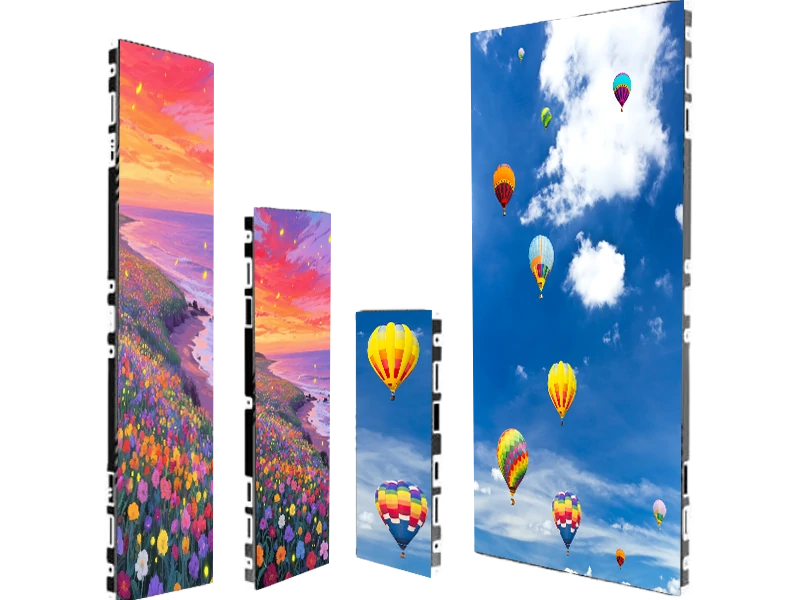
.jpg "LED Screen Display Manufacturers: How to Choose, Factory Audit & Quote Checklist")
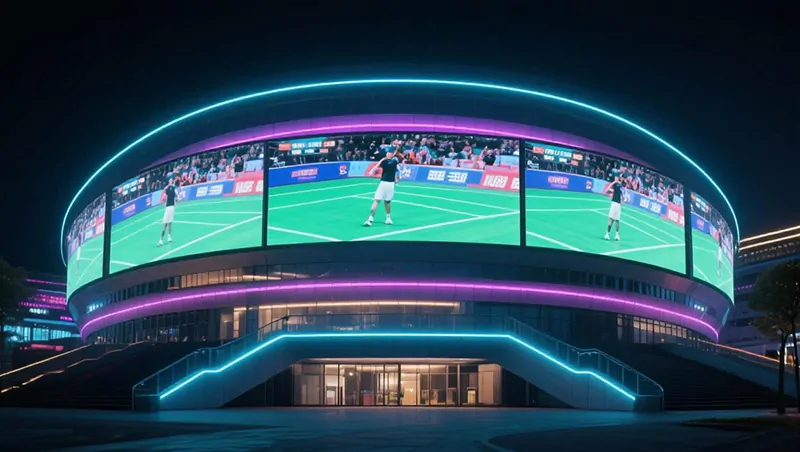
.jpg "Where to buy LED display panels?")