 English
You're planning a music festival in Barcelona, a corporate product launch in Dubai, or maybe a series of outdoor events across the US — and you need a massive LED video wall that can handle rain, wind, blazing sun, and still look incredible on camera. So you start Googling "China outdoor rental LED video wall manufacturers" and suddenly you're drowning in results. Every single one claims to be the best, the cheapest, the most reliable. How do you actually figure out who's worth your time and money?
I've been sourcing outdoor rental LED panels from Chinese factories for close to nine years now. Worked with event companies, AV integrators, and production houses across Europe, North America, and the Middle East. The honest truth? There are genuinely world-class outdoor rental LED manufacturers in China — but there are also plenty of companies that will sell you panels that fail mid-event when it starts drizzling. The difference between a successful outdoor show and a disaster often comes down to choosing the right factory. For standard P3.91 outdoor rental cabinets, you're looking at roughly $140-$280 per 500×500mm panel depending on specs and volume, with production taking 15-22 days. Let me walk you through everything you need to know.
This matters because a lot of buyers don't realize how different outdoor rental panels are from their indoor counterparts. When you're renting LED walls for outdoor events, the panels face challenges that indoor panels never encounter:
Rain and moisture — panels need IP65 rating on the front AND back, with sealed connectors and waterproof cable entries
Direct sunlight — outdoor panels need 5,000-6,500 nits of brightness just to be visible in daylight, compared to 800-1,500 nits for indoor
Wind load — the cabinet structure needs to be rigid enough to handle wind pressure without flexing or separating at the seams
Rapid temperature changes — panels might go from 10°C at night to 40°C during the day, and the components need to handle that thermal cycling
Frequent assembly and disassembly — rental panels get set up and torn down dozens of times per year, so connectors, locks, and cabinet edges need to withstand repeated handling
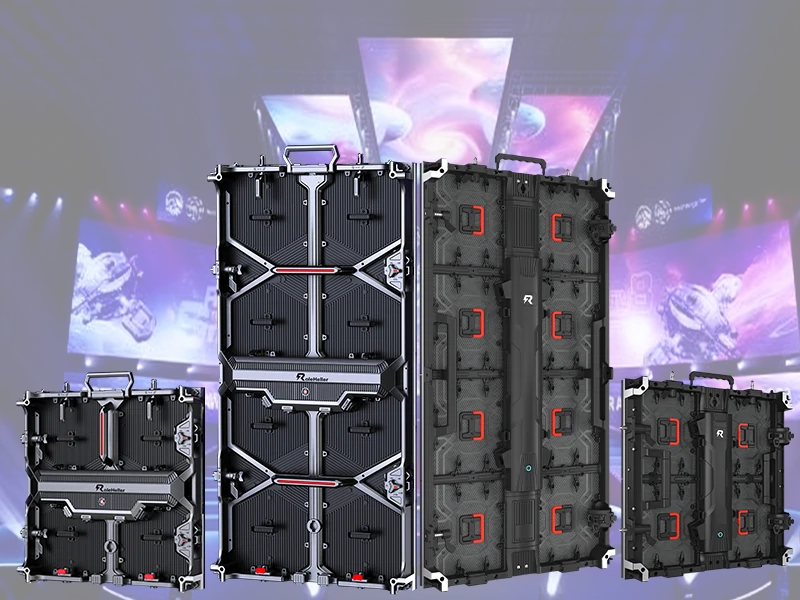
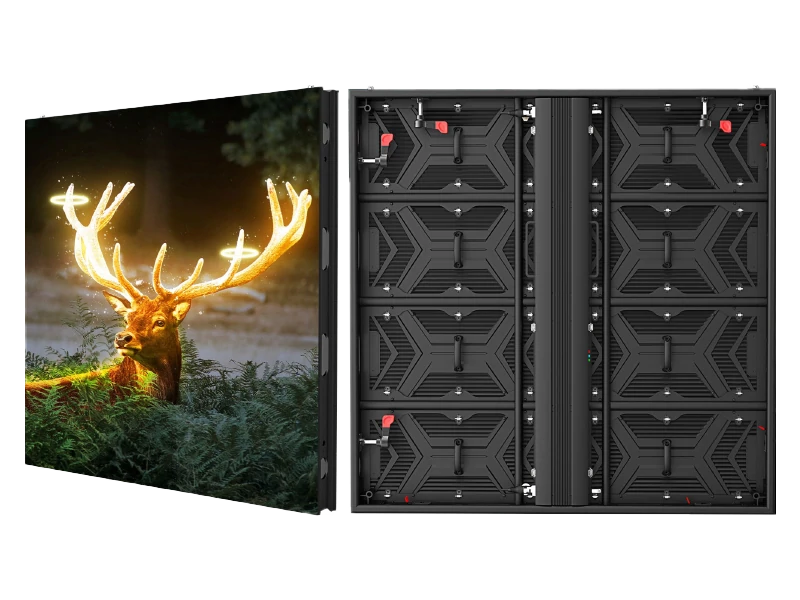
The thing about outdoor rental panels that catches people off guard is how much more robust they need to be. An indoor rental P3.91 panel might weigh 7-8 kg. The outdoor version of the same size? Usually 10-14 kg because of the additional sealing, heavier gauge aluminum, and reinforced locking mechanisms. That weight difference adds up fast when you're calculating shipping costs and rigging requirements.
This is probably the single most important question you'll face. The LED display industry around Shenzhen has grown massively, and with that growth comes a flood of companies that don't actually manufacture anything. They source modules from Factory A, cabinets from Factory B, assemble them in a small workshop, and market themselves as a "manufacturer" on Alibaba and Global Sources.
Here's my personal checklist — the same one I use when vetting suppliers for my clients:
Own SMT production lines
Surface Mount Technology machines are where LED modules get built. A high-speed SMT line costs $300,000-$800,000. A legitimate outdoor rental LED manufacturer will have multiple lines running, and they'll be more than happy to show you on a live video call. If a supplier says "our production facility is in another city" or "let me send you a factory video next week," be suspicious. Real factories are proud of their production lines and will show them to you right then and there.
In-house aging test room
Every outdoor panel needs to run for 48-72 hours continuously before shipping — this catches early failures that would otherwise show up at your event. A proper aging room has rows of panels running simultaneously, monitored for brightness, color temperature, and dead pixels. If a supplier doesn't have an aging facility, they're skipping one of the most critical quality control steps.
Waterproof testing equipment
For outdoor panels specifically, the manufacturer should have IP rating test equipment — spray test chambers that simulate rain at various angles and pressures. This isn't something a trading company would invest in. If they can show you their IP65 testing process, that's a strong signal they're a real factory.
Cabinet fabrication capability
Outdoor rental cabinets need precision die-casting or CNC machining. The locking mechanisms, corner protection, and sealing gaskets all need to be manufactured to tight tolerances. A real manufacturer either makes their own cabinets or works with a dedicated die-casting partner they've been with for years.
Direct engineering support
When you have a technical question about pixel mapping for a curved configuration, or refresh rate optimization for camera capture, you should be talking to an engineer — not a sales rep reading from a script. I always test this during the quoting phase by asking specific technical questions. If the responses are vague or take days to come back, that's a red flag for after-sales support too.
I had a client in the UK who learned this the hard way. They'd been buying P3.91 outdoor panels from a supplier for two years — smooth communication, great prices, everything seemed perfect. Then for a major New Year's Eve event in London, three panels out of forty developed water ingress during a light drizzle. The "manufacturer" turned out to be a trading company that had quietly switched to a cheaper cabinet supplier six months earlier. The new supplier's sealing gaskets were inferior. The client's reputation took a hit, the event organizer was furious, and the trading company? They offered a replacement panel three weeks after the event. Too little, too late.
Not all outdoor rental panels are built the same, even when they share the same pixel pitch. Here's a breakdown of what actually matters:
| Specification | Budget Tier | Mid-Range | Premium Tier |
|---|---|---|---|
| LED Chip Brand | Generic/unbranded | Kinglight, Silan | Nationstar, Nationstar Gold |
| Driver IC | Basic FM series | Macroblock MBI5124 | Macroblock MBI5252 / Chipone ICN2053 |
| Refresh Rate | 1920Hz | 3840Hz | 3840Hz+ high PWM |
| Brightness | 4500-5000 nits | 5000-5500 nits | 5500-6500 nits |
| Cabinet Weight (500×500) | 11-14 kg | 9-11 kg | 7.5-9 kg |
| IP Rating | IP65 front only | IP65 front and rear | IP65 front, IP54 rear sealed |
| Power Supply | Generic brand | G-Energy | Mean Well |
| Locking System | Basic twist-lock | Quick-lock standard | Precision quick-lock with self-aligning |
| Price per Panel | $100-$150 | $150-$220 | $220-$300 |
The differences between tiers might look small on paper, but they compound significantly when you're running events. A panel using Nationstar LEDs with a Macroblock driver IC and Mean Well power supply will consistently outperform — and outlast — a panel using generic components. The upfront cost difference of $50-$80 per panel translates into years of additional reliable service and zero embarrassing failures during live events.
Let me give you some concrete numbers for outdoor rental LED panels sourced from Chinese manufacturers. These are based on current market conditions:
P3.91 Outdoor Rental (500×500mm, die-cast aluminum, IP65):
Sample/small quantity (1-20 panels): $170-$250 per panel
Medium orders (30-80 panels): $140-$200 per panel
Large orders (100+ panels): $120-$170 per panel
P4.81 Outdoor Rental (500×1000mm, die-cast aluminum, IP65):
Sample/small quantity: $140-$200 per panel
Medium orders: $110-$160 per panel
Large orders: $90-$130 per panel
P2.6 Outdoor Rental (500×500mm, higher resolution for closer viewing):
Sample/small quantity: $250-$350 per panel
Medium orders: $200-$280 per panel
Large orders: $170-$240 per panel
A few things to keep in mind about these prices:
These are for panels/cabinets only. Video processors, flight cases, mounting structures, and cabling are extra.
Payment terms are typically 30% deposit via T/T, 70% balance before shipment. Never pay 100% upfront with a new supplier.
If someone quotes you a P3.91 outdoor rental panel at $70, something is seriously wrong. They're using B-grade LED chips, skipping the conformal coating, or using the cheapest possible power supplies.
Flight cases typically add $30-$60 per panel depending on the design (road cases vs. simple carton packaging).
This is where a lot of buyers get confused, so let me break it down by market:
For the European Union:
CE marking is mandatory. This encompasses the Low Voltage Directive (LVD), Electromagnetic Compatibility (EMC) Directive, and RoHS for hazardous substances. The CE certificate should be issued by an accredited testing body — TÜV, SGS, or Intertek are the most recognized. Don't just accept a self-declared CE certificate from the manufacturer; verify it on the notified body's website.
For the United States:
ETL listing (from Intertek) or UL listing is what most electrical inspectors look for. FCC Part 15 compliance is also required for electromagnetic emissions. For events in venues like stadiums or convention centers, the venue's insurance provider may require proof of ETL or UL listing before allowing your LED wall to be powered up.
For the Middle East:
Most countries accept CE certification, though Saudi Arabia requires SASO certification and the UAE has its own ESMA requirements. Check with your local importer or event organizer.
For Australia/New Zealand:
RCM marking is required, which covers both electrical safety and electromagnetic compatibility.
I always advise my clients to ask the manufacturer for the actual test report — not just the certificate — and verify the report number on the testing laboratory's official website. I've seen counterfeit certificates that looked completely legitimate at first glance, with fake TÜV report numbers and all.
So you've found a manufacturer that checks all the boxes. What happens next? Here's the typical workflow:
Send them your project details — screen dimensions, pixel pitch preference, total panel quantity, destination country, and timeline. A responsive manufacturer will come back within 24-48 hours with a detailed quote. If they take a week to respond, that's not a great sign for after-sales support either.
Always order at least one sample panel before committing to a full production run. Yes, samples cost more — usually 1.3x to 1.5x the bulk price — but most manufacturers refund the difference when you place the full order. With the sample, you can test brightness, check the waterproofing, examine the locking mechanism quality, and verify the build quality in your actual environment.
Standard production takes 15-22 days for common outdoor rental specs. During this phase, you should receive:
Production schedule confirmation within 3 days of deposit
Weekly progress photos
Pre-shipment aging test video showing panels running continuously for 48-72 hours
QC report with brightness uniformity data, color temperature consistency, and dead pixel count
IP65 spray test results for outdoor panels
Ocean freight timelines vary significantly by destination:
US West Coast: 18-25 days
US East Coast: 28-35 days
Northern Europe: 30-38 days
Southern Europe/Mediterranean: 25-32 days
Middle East: 18-25 days
Australia: 15-22 days
Southeast Asia: 7-14 days
Air freight is an option for urgent orders — typically 5-7 days door-to-door — but costs 4-5 times more than sea freight. For a last-minute event where you need panels fast, air freight might be worth it for a partial order.
I've watched these happen so many times that I feel like I should have them printed on cards and handed out at trade shows.
The cheapest outdoor rental panel is cheap for a reason. B-grade LED chips that fade within months, no conformal coating on the PCBs leading to corrosion, generic power supplies that fail in high humidity, inflated brightness claims (that "5500 nit" panel might actually be 3800 nits when you test it). When a panel fails during a live event — especially an outdoor event where you can't just swap it out in seconds — the cost of that failure far exceeds whatever you saved on the initial purchase.
Your outdoor LED wall is only as good as the signal feeding it. A quality video processor from Novastar, Colorlight, or Brompton handles content scaling, color management, brightness adjustment, and input switching. Budget at least $800-$2,500 for a processor depending on your resolution and input requirements. The processor is the brain of your entire system — a cheap one introduces color banding, input lag, and scaling artifacts that undermine the whole investment.
Outdoor rental panels get abused. They're loaded and unloaded from trucks, set up in rain and dust, stacked and unstacked hundreds of times. Dead pixels happen. Power supplies fail. Receiving cards go bad. Locking mechanisms get damaged. When you place your order, negotiate a spare parts package — typically 3-5% extra panels plus additional power supplies, receiving cards, and even a few extra locking pins and corner guards. The cost is minimal compared to the panic of needing a single replacement panel shipped internationally two days before an event.
Outdoor rental panels travel a lot. They go on trucks, planes, ships. The flight cases need to be rugged — laminated plywood with EVA foam inserts, stackable, with proper caster wheels and handles. Some manufacturers offer flimsy cardboard boxes or thin plastic cases as "packaging." Those won't survive a single tour. Budget $30-$60 per panel for proper road cases.
Outdoor LED walls need to be structurally sound. You're dealing with wind loads, and the mounting structure needs to handle them. For ground-supported installations, you need a proper truss system with adequate bracing. For flown installations, the rigging points on the cabinets need to be rated for the total weight plus dynamic loads. Budget 15-25% of your panel cost for the mounting infrastructure, and always have a structural engineer sign off on large installations.
This is the question that keeps event planners up at night. You've got a three-day festival scheduled, the forecast says 30% chance of rain, and your LED wall is the centerpiece of the main stage. Will it hold up?
The answer depends on several factors:
IP rating quality — IP65 means the panel can handle water jets from any direction. But not all IP65 ratings are created equal. The quality of the sealing gaskets between cabinets, the waterproof connectors (Neutrik or Amphenol are the gold standard), and the cable entry seals all determine whether water actually stays out. A panel with IP65 on paper but cheap gaskets in practice will leak.
Conformal coating on PCBs — This is a protective layer applied to the circuit boards that prevents moisture from reaching the electronic components. For outdoor panels, a proper conformal coating process involves selective spraying or dipping followed by UV curing. Some budget manufacturers skip this entirely or apply a thin spray that wears off after a few months of outdoor use.
Cabinet drainage design — Even with good sealing, some moisture will find its way into outdoor cabinets over time. Well-designed cabinets have drainage channels and weep holes that allow any accumulated moisture to escape rather than pooling around the electronics.
Connector quality — The power and data connectors between panels are the most vulnerable points for water ingress. Waterproof connectors with proper sealing rings — like Neutrik powerCON TRUE ONE or Amphenol AT series — make a real difference. Generic "waterproof" connectors from unknown brands often don't seal as well as claimed.
I've seen premium outdoor rental panels survive multi-day festivals in torrential rain without a single issue, and I've seen budget panels fail during a light drizzle. The difference isn't just the IP rating on paper — it's the quality of every sealing point, every gasket, every connector.
One of the advantages of rental LED panels is their flexibility. Most outdoor rental cabinets support curved installations — typically adjustable from flat to 15 degrees per panel, allowing you to create convex or concave curves. Some premium manufacturers offer cabinets with finer adjustment increments (as little as 0.5 degrees per panel), which gives you smoother curves without visible gaps between modules.
For truly custom shapes — circles, arches, irregular configurations — you'll want to work with a manufacturer that offers custom cabinet designs. This typically adds 10-15 days to production and requires a higher minimum order, but it can create stunning visual installations that standard flat panels can't achieve.
Look, I'm not going to sit here and tell you that sourcing outdoor rental LED panels from China is completely risk-free. It's not. But I will tell you that the risk is very manageable if you approach it correctly. The manufacturers I work with produce panels that are genuinely world-class — same quality as European brands at a fraction of the cost. The key is doing your due diligence.
My biggest piece of advice: start small. Order a sample. Test it in real conditions — spray it with a hose, leave it outside overnight, run it for 72 hours straight. Visit the factory if you can, or at least do a thorough live video call where you ask to see the production line, the aging room, and the IP testing equipment. Build a relationship with one good manufacturer rather than shopping around for the cheapest option every time.
Once you find a supplier you trust, the whole process becomes smooth and predictable. They know your specs, they know your quality expectations, and they'll flag potential issues before they become problems. That kind of partnership is worth more than saving $20 per panel from an unknown supplier.
Don't chase the absolute lowest price. The difference between a $150 panel and a $200 panel might seem significant when you're buying 100 units, but over three years of rental use, that $50 per panel difference buys you zero water failures, consistent brightness across all panels, reliable locking mechanisms that don't strip after twenty setups, and no emergency replacement orders flying in from China the day before your biggest event of the year. That peace of mind is worth every cent.
P3.91 is the most widely used pixel pitch for outdoor rental applications globally. It offers a good balance between resolution and affordability, with a recommended minimum viewing distance of about 4 meters. P2.6 is gaining popularity for events where audiences are closer to the screen, while P4.81 remains popular for large-scale installations where viewing distances exceed 5 meters and budget is a primary concern.
A complete system includes panels, video processor, mounting structure, cabling, and flight cases. For a standard 6m×4m P3.91 outdoor wall (96 panels), expect to pay approximately $18,000-$30,000 for the panels, $1,000-$2,500 for the processor, $3,000-$5,000 for the mounting structure, and $3,000-$5,000 for flight cases and accessories. Total system cost typically ranges from $25,000 to $45,000 depending on specifications and order volume.
Quality outdoor rental panels from reputable manufacturers are rated to operate in temperatures ranging from -20°C to 50°C (-4°F to 122°F). The key factors are the LED chip quality, power supply rating, and cabinet ventilation design. Panels using Nationstar LEDs and Mean Well power supplies handle temperature extremes significantly better than budget alternatives. In very hot climates, ensure adequate airflow behind the panels and consider panels with built-in temperature sensors that automatically reduce brightness to protect the LEDs.
Panels built with premium components — Nationstar LEDs, Macroblock driver ICs, and Mean Well power supplies — have a rated lifespan of 100,000 hours (approximately 11.4 years of continuous operation). In typical rental use where panels operate 8-12 hours per day for events, you're looking at 15-20 years of usable life. However, the physical components — locking mechanisms, connectors, sealing gaskets — may need replacement sooner due to the wear and tear of frequent assembly and disassembly. Budget panels with generic components may show significant brightness degradation within 20,000-30,000 hours.
Wind load management is critical for outdoor LED installations. For ground-supported walls, use properly engineered truss structures with adequate cross-bracing and ballast or ground anchors. Most manufacturers provide wind load calculations for their panels — a standard P3.91 outdoor panel has a wind resistance rating of approximately 60-80 km/h when properly mounted. For flown installations, ensure the rigging points and hoists are rated for the total weight plus dynamic wind loads. Always consult with a structural engineer for installations in exposed locations or areas prone to high winds.
Novastar controllers (VX600, VX1000, or A10s Pro series) are the most commonly paired with Chinese-manufactured LED panels and offer the broadest compatibility. Colorlight Z-series and Linsn controllers are also widely used. For high-end broadcast and premium rental applications, Brompton Tessera processors are preferred for their superior color accuracy and HDR capabilities. Most manufacturers can supply the processor as part of a complete solution, or you can source it separately based on your specific requirements.
Standard production takes 15-22 days for common specifications like P3.91 or P4.81 in standard cabinet sizes. Custom specifications add 5-10 days. Ocean shipping varies by destination: 18-25 days to the US West Coast, 28-35 days to the US East Coast, 30-38 days to Northern Europe, 18-25 days to the Middle East, and 15-22 days to Australia. Air freight is available for urgent orders at 5-7 days but costs 4-5 times more than sea freight. Plan for a total lead time of 6-10 weeks from order confirmation to delivery for most international destinations.
Most reputable manufacturers offer 2-3 years of warranty coverage for outdoor rental panels. Warranty typically covers manufacturing defects including LED chip failure, driver IC failure, power supply failure, and water ingress due to manufacturing defects. It does not cover physical damage from accidents, improper handling, power surge damage, or normal wear of consumable parts like sealing gaskets and locking pins. Replacement modules are typically shipped via express courier within 3-5 business days of a valid warranty claim being approved.
Technically yes, but it's not recommended. Different production batches can have slight variations in LED color temperature, brightness, and chromaticity — even from the same manufacturer. These differences become visible when panels from different batches are placed side by side, especially on camera. If you need to add panels to an existing inventory, request that the manufacturer match the new batch to your existing panels' calibration data. Some manufacturers keep batch-specific calibration records for this purpose.
Yes, regular maintenance extends panel life and ensures consistent performance. Key maintenance tasks include: cleaning the LED module surface with a soft cloth and isopropyl alcohol to remove dust and debris, inspecting and replacing worn sealing gaskets every 12-18 months, checking locking mechanisms for wear and replacing damaged pins or latches, inspecting power and data connectors for corrosion or damage, and running periodic aging tests to identify panels with early signs of LED degradation. A well-maintained set of outdoor rental panels can last significantly longer than neglected ones.
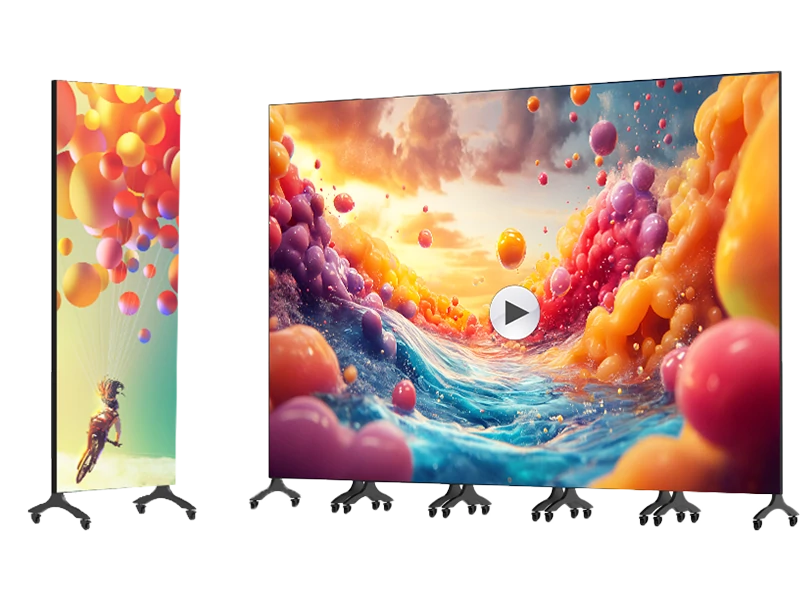
.jpg "Who Makes the Best P2.5 LED Video Walls in China?")
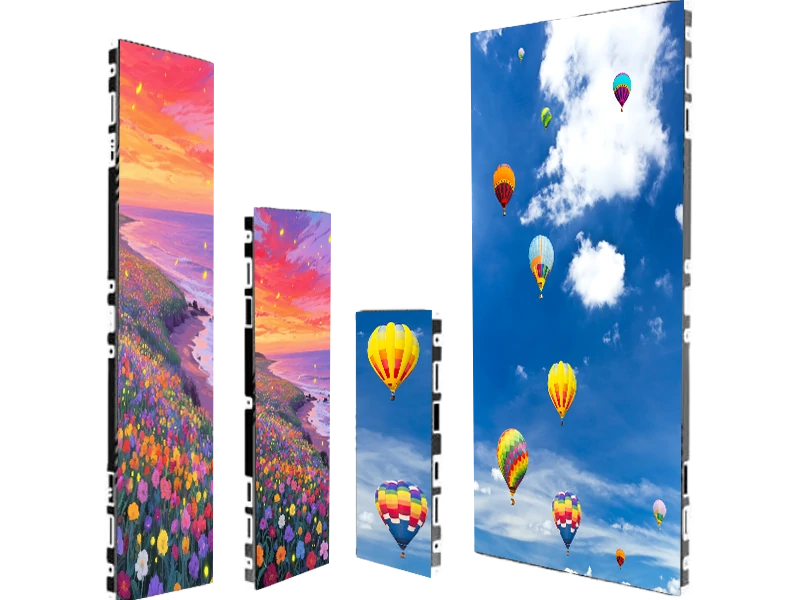
.jpg "Where to Source China Outdoor Rental LED Video Wall Manufacturers?")