English

If you need the short answer right away: the top tier of wholesale led transparent display manufacturers is led by specialized innovators like NEXNOVO (the original pioneer of architectural glass LED screens), major global conglomerates such as Unilumin and Absen, creative display giants like Leyard, and flexible adhesive film pioneers such as MUXWAVE. When sourcing wholesale, your best bet depends strictly on your installation physics: side-emitting PCB louvers (75% to 85% transparency) for storefront windows, positive-emitting modules (over 5,000 nits) for direct south-facing sunlight, or ultra-thin adhesive LED film when drilling into mullions is completely out of the question.
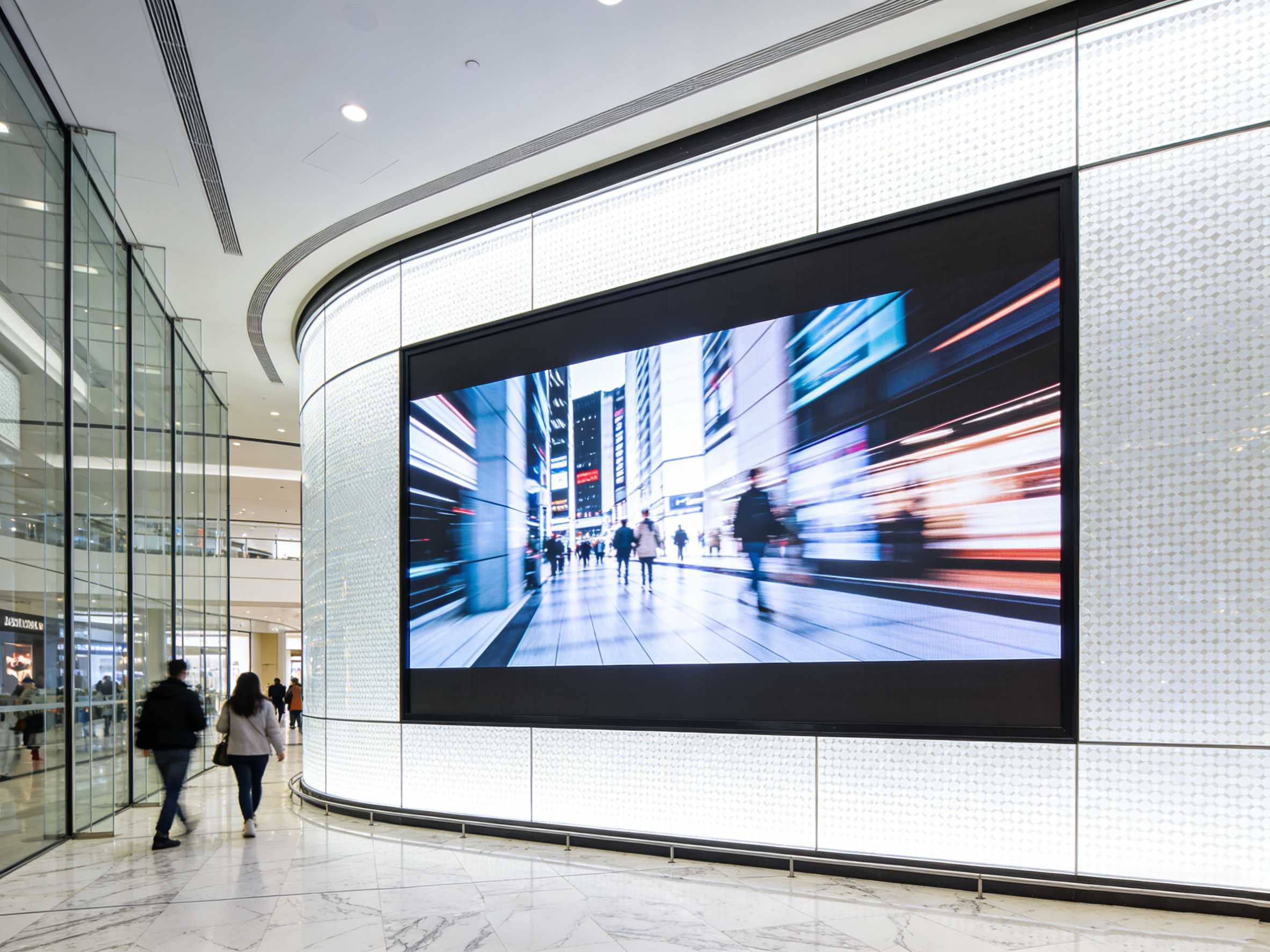
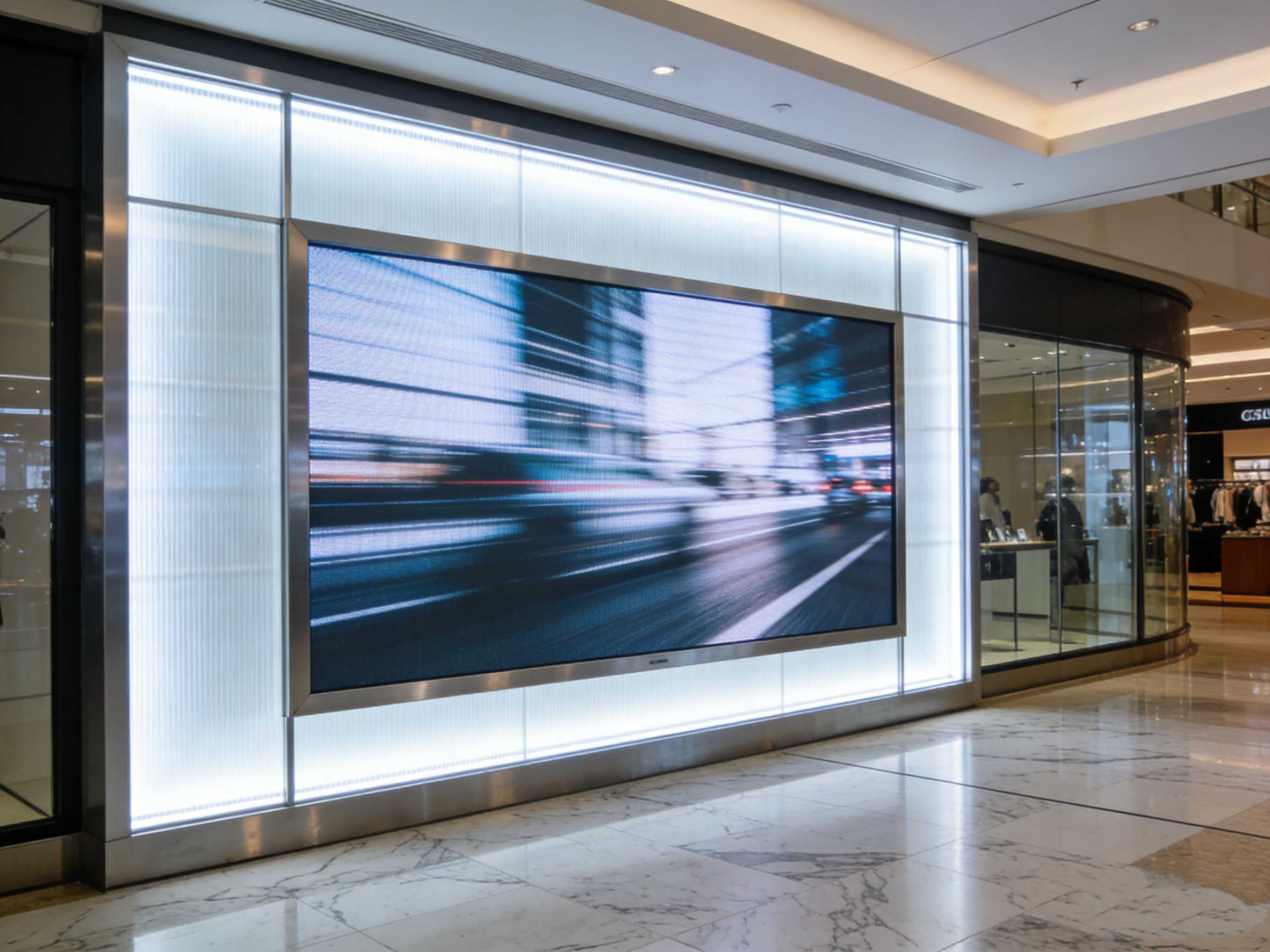
Picture this scenario. You are standing inside a high-end retail flagship along 5th Avenue or Regent Street. The architectural firm demands a massive, twelve-meter visual canvas right behind the main street-level glass curtain. Marketing wants eye-popping 4K video loops running at noon. The building management insists that indoor staff must still enjoy natural daylight, and the landlord strictly prohibits any heavy hanging steel trusses. You source what looks like a bargain shipment of transparent LED cabinets from an unverified overseas supplier. Six weeks after installation, three horizontal bars go dark, the afternoon heat turns the internal acrylic yellow, and passersby on the sidewalk see a muddy, flickering projection that looks more like window blinds than a futuristic display. What should we do then?
Finding reliable wholesale led transparent display manufacturers is notorious for being far trickier than buying standard outdoor billboards or rental staging walls. In transparent displays, every single millimeter of PCB, every tiny driver IC, and every drop of silicone glue is exposed to direct visual scrutiny from both front and back. You cannot hide sloppy wiring or cheap heat sinks inside a sealed iron box. Let's dive right in!
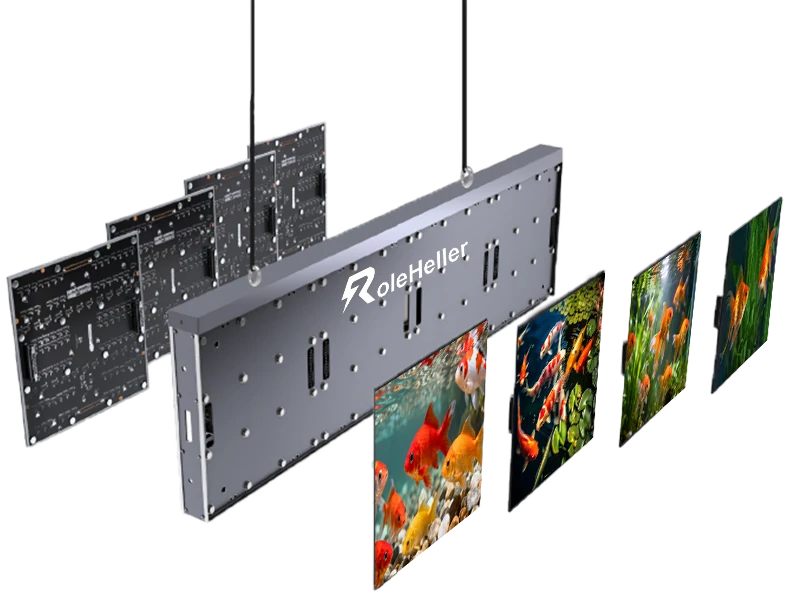
When we talk about transparent LED walls, we are essentially discussing hollowed-out electronic louvers or microscopic circuit meshes. Instead of mounting diodes onto an opaque fiberglass backing board, manufacturers lay ultra-narrow strip bars across a light metal frame, leaving vast optical gaps between each pixel row.
Standard SMD Cabinet (0% Transparency)
+------------------------------------+
| [X] [X] [X] [X] [X] [X] [X] [X]   |  <-- Solid solid PCB blocks 100%
| [X] [X] [X] [X] [X] [X] [X] [X]   |      of daylight & exterior view.
+------------------------------------+

Transparent Strip/Louver LED (70% - 85% Transparency)
+------------------------------------+
| [X] - - - [X] - - - [X] - - - [X]  |  <-- LED strip bar (~2mm - 3mm)
| ================================== |  <-- Open Air / Clear Glass Gap
| [X] - - - [X] - - - [X] - - - [X]  |  <-- Open Air / Clear Glass Gap
+------------------------------------+
The optical illusion works because human eyes focus on luminous points of light from a distance while ignoring the thin structural gaps behind them. But creating that illusion without sacrificing structural rigidity, electrical stability, and thermal dissipation requires serious engineering pedigree.
Before evaluating factories, you must know what mechanical architecture suits your project scope. Many buyers get burned simply by ordering the wrong structural design for their ambient environment.
| Architecture Type | Transparency Range | Peak Brightness (Nits) | Mechanical Structure | Typical Viewing Distance | Best Use Case |
|---|---|---|---|---|---|
| Side-Emitting Rigid Louver | 70% – 88% | 3,500 – 5,500 nits | Side-soldered SMD diodes on ultra-thin vertical aluminum strips | 3.5m – 20m | Retail storefronts, auto showrooms, shopping mall atriums |
| Positive-Emitting (Front) Bar | 55% – 72% | 5,500 – 8,000 nits | Front-facing standard SMDs mounted on horizontal PCB ribs | 5m – 30m | Direct sunlight facades, high-altitude architectural glass |
| Flexible Adhesive LED Film | 80% – 92% | 1,500 – 3,500 nits | Ultra-thin PET/polyimide substrate with embedded microscopic traces | 2m – 10m | Interior glass partitions, balustrades, retrofit architectural glass |
| Crystal / Mesh Glass Integrated | 85% – 95% | 2,000 – 4,500 nits | Bare dies embedded directly between laminated architectural glass panes | 3m – 15m | Permanent new-construction facade glazing, luxury elevators |
In our real-world testing across commercial window retrofits, side-emitting SMD technology offers the cleanest visual line. Instead of mounting the diode flat on the face of the strip, custom LEDs (typically 1515 or 1921 form factors) are soldered to the side edge of the PCB blade. Because the thickness of the blade can be shaved down to less than 1.5mm, the vertical light obstruction disappears almost completely.
The downside? Side-emitting soldering pads have smaller solder contact areas. If a wholesale factory runs sloppy SMT wave soldering or skips automated optical inspection (AOI), small physical bumps during transit will shear diodes clean off the strip. That is why cleanroom automation matters immensely here.
If you are requesting quotes, reviewing factory compliance files, or planning a verification trip to Southern China's manufacturing clusters, these are the primary formal manufacturers leading the sector.
       [ Global Market Landscape: Transparent LED Supply Chain ]
  +-------------------------------------------------------------------+
  | Tier 1: Dedicated Specialists   |  NEXNOVO, MUXWAVE               |
  | Tier 2: Integrated Conglomerates|  Unilumin, Absen, Leyard        |
  | Tier 3: High-Flexibility OEMs   |  ProDisplay, Yaham, Desay       |
  +-------------------------------------------------------------------+
NEXNOVO is broadly acknowledged as the brand that took transparent displays out of experimental labs and turned them into reliable commercial architectural hardware. They hold extensive patents covering side-emitting strip packaging and minimalist cabinet frame mechanics.
Engineering Hallmarks: Exceptionally clean industrial design. Their frames use aviation-grade aluminum profiles with integrated quick-lock pins, and power supplies are concealed inside structural mullion profiles rather than dangling in visible junction boxes. Transparency on their flagship series routinely surpasses 80%.
Wholesale Consideration: Their price point sits at the upper tier of the market. However, for flagship retail rollouts where luxury brands cannot tolerate visible cabling or uneven seam lines, their build quality is considered the gold standard.
Unilumin brings the immense muscle of its smart manufacturing campuses into the transparent space. They produce both standard louvered commercial transparent cabinets and massive architectural media-facade mesh.
Engineering Hallmarks: Rock-solid electrical design. Unilumin pairs high-transparency frames with proprietary low-power driver ICs, resulting in operating temperatures that run 8°C to 12°C cooler than generic open-market alternatives. They also maintain dedicated international technical support teams across North America and Europe.
Wholesale Consideration: Minimum order quantities (MOQs) for custom structural dimensions can be high. If your project fits standard cabinet footprints (such as 1000mm x 500mm or 1000mm x 1000mm), their economies of scale deliver aggressive volume discounts.
Absen’s global distribution network and post-sale service are famous across commercial AV channels. Their transparent product lines focus heavily on ease of installation and long-term calibration stability.
Engineering Hallmarks: Excellent optical batch consistency. When buying wholesale across separate shipping containers, getting identical color temperatures and white balances is notoriously difficult. Absen’s internal wafer-binning processes ensure that a cabinet delivered in June matches the chromatic coordinates of spare panels ordered six months later.
Wholesale Consideration: Absen protects its authorized integrator network vigorously. Wholesale pricing structures are strictly tiered, meaning ad-hoc brokers will struggle to get factory-direct concessions without formal integrator qualification.
MUXWAVE represents the next-generation shift toward frameless, flexible transparent displays. Rather than using metal cabinets, they manufacture thin, flexible film sheets embedded with micro-LEDs that adhere directly to existing glass.
Engineering Hallmarks: Unrivaled "invisibility" when turned off. With no metal crossbars or vertical support ribs, the glass retains more than 90% natural clarity. The drive electronics are remote-mounted along the frame perimeter, making the screen practically invisible when idle.
Wholesale Consideration: Installation requires cleanroom-like conditions on-site. Any dust or air bubbles trapped between the film and the architectural glass will ruin the aesthetic, meaning field technicians require specialized training.
Leyard (frequently operating alongside Planar in Western markets) commands elite enterprise corporate campuses, museums, and broadcast facilities.
Engineering Hallmarks: Extreme processing precision. Their transparent systems seamlessly integrate with broadcast-grade video processors supporting native 12-bit color pipelines, HDR formats, and ultra-high frame rates without dropped frames or stutter.
Wholesale Consideration: Very high price bracket, making them less competitive for budget-conscious retail store rollouts, but nearly unbeatable for luxury architectural landmarks.
| Manufacturer | Core Architecture Specialty | Pitch Range (mm) | Max Brightness (Nits) | Transparency (%) | Controller Ecosystem | Ideal Project Scale |
|---|---|---|---|---|---|---|
| NEXNOVO | Side-Emitting Rigid Aluminum | P2.5 – P10.4 | 4,000 – 6,000 | 75% – 86% | NovaStar / Custom | High-end retail, auto flagships, luxury atriums |
| Unilumin | Hybrid Front/Side & Mesh | P3.9 – P15.6 | 5,000 – 7,500 | 65% – 82% | NovaStar / Colorlight | Mega-malls, transit hubs, public transit glass |
| Absen | Precision Rigid Modular | P3.9 – P10.4 | 4,500 – 6,000 | 70% – 80% | NovaStar | Corporate headquarters, national retail chains |
| MUXWAVE | Invisible Adhesive Micro-Film | P3.9 – P7.8 | 2,500 – 4,000 | 85% – 92% | Proprietary Embedded | Glass elevators, museum cases, frameless balustrades |
| Leyard | Premium Architectural Glass | P2.8 – P8.0 | 3,500 – 5,500 | 70% – 85% | Planar / NovaStar | Government atriums, broadcast studios, high-finance HQs |
When wholesale led transparent display manufacturers ship you a single evaluation cabinet, you cannot just turn it on, look at a bright video, and declare it ready for purchase. Detailed setup method, let's take a look.
Set the display brightness to just 15% using your controller software. Feed a solid 0-to-255 stepped greyscale ramp image into the screen.
What to look for: Look for harsh vertical banding or sections where dark grey collapses into muddy black. Poor driver ICs fail at low current ranges, causing severe chromatic shifts and strobing in indoor nighttime environments.
Place the powered-off module horizontally under standard office fluorescent or angled LED downlights. Lean over the module and inspect it at a 45-degree angle.
What to look for: Are the solder joints along the strip edges uniform and protected by conformal coating? Or do you see bare copper traces and uneven resin blobs? Irregular conformal spray invites airborne moisture and atmospheric sulfur, which corrodes micro-traces over time.
Hold the evaluation cabinet by two diagonal corners and apply gentle twisting torque with your hands.
What to look for: High-grade cabinets utilize die-cast structural corners and rigid hollow-section aluminum profiles. If you hear creaking, or if the strip bars flex visibly when applying minimal torque, thermal cycling on the window will eventually cause solder joint fractures along the power bridging pins.
Run the cabinet at 100% full-white canvas for 45 minutes straight inside an enclosed room. Take an inexpensive handheld infrared thermal camera and scan the front and back of the cabinet.
What to look for: The temperature variation across the display surface should not exceed 6°C to 8°C. If the lower corners where the integrated switching power units sit spike to over 65°C while the center strip bars hover at 38°C, that uneven heat gradient will create severe, irreversible color drift after six months of operation.
When negotiating directly with overseas engineering teams, moving past high-level marketing claims requires probing technical questions.
Because transparent displays lack solid back covers, running thick, ugly rubber power cables between every single cabinet destroys the transparent aesthetic.
The Right Answer: The manufacturer should utilize integrated internal PCB busbars or concealed multi-pin gold-plated structural connectors built right into the cabinet side frames. This way you can link power and high-speed data down an entire column of three or four cabinets without running messy external patch cords.
Some factories cut corners by using cheap iron-alloy lead frames and low-grade bonding wires that corrode within months under the high humidity of glass curtain walls.
The Right Answer: Insist on pure gold wire bonding (Au wire) or copper-alloy flip-chip architecture paired with reputable semiconductor dies (such as Nationstar, Kinglight, or San'an). Ask for wafer-level spectral binning reports confirming that dominant wavelengths for Green are held within a narrow ±1.5nm tolerance.
Architectural glass is sensitive to localized thermal differentials. If an LED screen dumps intense radiant heat onto the interior pane of a double-glazed insulated window unit while the exterior pane is freezing in winter, the thermal expansion stress can physically crack the structural glass curtain.
The Right Answer: The supplier must demonstrate convective thermal airflow channels that keep the air gap between the LED strips and the glass pane circulating. Surface temperatures on the glass side of the LED cabinet should never exceed 45°C during maximum white-field load.
When specifying a transparent LED screen, there is an unavoidable physical law: as resolution increases (smaller pitch), transparency drops, and structural weight climbs. You cannot have a P1.9mm screen with 90% transparency—the microscopic spacing between pixels simply leaves no room for light to pass through.
Pitch vs. Transparency & Distance Trade-off Curve:

  Transparency (%)
    100% +---------------------------------------------+
         |                                 P10 (85%)   |
     80% |                       P7.8 (80%)            |
         |             P3.9 (70%)                      |
     60% |                                             |
         |   P2.5 (55%)                                |
     40% +---------------------------------------------+
         0m    2m    4m    6m    8m    10m   12m   14m
                     Viewing Distance (Meters)
Let’s look at a typical commercial storefront deployment: a 6-meter-wide by 3-meter-tall video canvas (18 m²) utilizing standard P3.9 mm side-emitting cabinets.
Mechanical Load: High-grade aluminum transparent cabinets average roughly 9 to 12 kg per square meter. For an 18 m² wall, the total dead load sits at approximately 180 to 216 kg. In most modern retail buildings, this load can be hung safely from the upper floor slab using lightweight steel drop-rods without requiring major civil engineering reinforcements.
Peak vs. Average Electrical Draw:
Maximum peak power (full white, 100% brightness at 5,000 nits): ≈ 750 W/m². Total peak = 13.5 kW.
Real-world running power (typical commercial dynamic video content with black backgrounds): ≈ 220 to 280 W/m². Real-world average = 4.5 kW.
"When designing video content for transparent screens, black background pixels consume zero power and radiate zero heat because the diodes are turned completely off. Designing visual assets with high-contrast negative space maximizes transparency and slashes monthly utility bills by more than 60%."
After dealing with dozens of transparent glass installations over the years, there are several field-proven practices that I consistently rely on.
First, never mount the LED strips closer than 50mm to the architectural glass. Installers love to push the panels right against the glass to avoid indoor reflections, but doing so completely traps hot air. Without at least a two-inch convective draft channel between the screen and the window, the trapped pocket cooks the electronics. Adding a small, silent cross-flow fan bar along the top header track solves this effortlessly.
Second, always demand front-service magnetic or clip-out strip bars. If a single pixel bar dies in a standard cabinet, cheaper designs force you to unbolt the entire structural frame, taking down half the display. High-grade systems let a technician unclip the single damaged strip bar from the front in two minutes without disturbing neighboring circuits.
Third, but some folks want to use transparent screens for direct outdoor weather exposure. If that is your intention, standard indoor cabinets will not survive. You must specify IP65 front-and-rear silicone-potted mesh displays with UV-stabilized polycarbonate lenses; otherwise, intense solar ultraviolet rays will turn clear resins brittle and cloudy in less than twelve months.
How does a transparent LED display achieve high optical transparency?
Transparent LED displays achieve 70% to 90% optical transparency by mounting microscopic SMD diodes onto extremely narrow vertical or horizontal PCB strip bars, leaving open structural voids between each row of pixels. When viewed from a few meters away, the human eye blends the bright illuminated points into a coherent picture while looking straight through the hollow gaps to see the environment behind the screen.
What is the actual difference between side-emitting and positive-emitting LEDs?
Side-emitting LEDs are soldered onto the side edges of the narrow circuit blades, allowing the PCB blade itself to be thinner, which maximizes transparency (often reaching 80% to 85%). Positive-emitting (front-facing) LEDs are soldered flat onto the front face of horizontal bars; they offer slightly lower transparency (55% to 70%) but deliver significantly higher peak brightness (up to 7,500 nits) and broader viewing angles.
Can transparent LED video walls be seen clearly in direct midday sunlight?
Yes, but only if the display is specified with sufficient luminous output. For windows facing away from direct sun or shaded by exterior awnings, a brightness of 3,500 to 4,500 nits is plenty. For direct, unshaded south-facing or west-facing glass curtain walls, you must source displays rated for at least 5,500 to 7,000 nits paired with high-efficiency common-cathode driver chips to prevent washout.
Can flexible adhesive transparent LED film be cut to custom glass dimensions on-site?
Most adhesive transparent LED film products have specific cutting grid lines (usually every 100mm to 200mm along the non-driver busbars). However, cutting film in the field requires meticulous micro-trimming and specialized edge-sealing tape to prevent moisture ingress from corroding the exposed circuitry. Whenever possible, provide exact glass CAD drawings to the wholesale manufacturer so panels are pre-cut and edge-sealed at the cleanroom factory.
How are transparent LED display cabinets mounted against existing window mullions?
They are typically mounted using lightweight vertical steel aircraft cables, floor-to-ceiling tension wire systems, or custom extruded aluminum brackets clamped directly to the window’s vertical aluminum mullions. Because the cabinets weigh only 9 to 12 kg per square meter, they generally do not require heavy structural steel subframes, making installation fast and non-destructive.
What happens when a single pixel fails on a transparent strip display?
On quality modular systems, individual pixel strip bars are swappable. A technician disconnects the single vertical or horizontal strip bar containing the bad pixel using a quick-release clip or magnetic tool and replaces it with a spare bar from the original production batch. On cheap lower-tier systems, the entire cabinet must be dismantled and returned to a depot for bench micro-soldering.
Why do some transparent screens appear flickering or rolling when recorded on smartphones?
Flickering and rolling scan lines on video camera footage are caused by low refresh rates and low PWM scan speeds in the driver ICs. When buying wholesale, always require a refresh rate of at least 3,840Hz (and ideally 7,680Hz for broadcast or high-end retail venues) driven by high-tier driver ICs (such as Macroblock or Chipone).
What are the common failure points in cheap wholesale transparent displays?
The three most common failure points are:
Cracked solder joints on side-emitting LEDs due to thermal expansion and flimsy cabinet profiles.
Burned-out low-grade power supplies squeezed into poorly ventilated cabinet edge channels.
Yellowing and delamination of optical silicone or acrylic covers caused by unshielded UV light exposure.
What controller brands work best with transparent LED walls?
NovaStar (particularly the Taurus multimedia players for standalone retail and the COEX/MX series for larger video canvases) and Colorlight are the two primary industry-standard control platforms. Sourcing displays running standard NovaStar or Colorlight receiving cards ensures that local AV integrators worldwide can easily configure, map, and service the screen without proprietary software bottlenecks.
What warranty and spare parts ratio should be demanded in a wholesale contract?
You should negotiate a minimum 3-year factory warranty. Crucially, your wholesale order must include a mandatory 5% to 8% matching-batch spare parts package—including identical-bin pixel strip bars, receiving cards, power supply units, flat ribbon cables, and internal power bridge connectors. Getting spare strip bars from a later manufacturing batch almost always results in visible color and brightness mismatches.
Having spent years untangling procurement messes on complex architectural video installations, my strongest advice is to stop treating transparent displays like standard outdoor billboard panels. The lowest quote on a wholesale spreadsheet is almost guaranteed to cost you double once you factor in field failures, fragile solder joints, and angry building managers complaining about window glare.
When selecting between wholesale led transparent display manufacturers, focus on two fundamental things: mechanical stiffness of the cabinet frame and cleanroom SMT provenance of the diodes. If the factory cannot show you automated side-mount pick-and-place lines, or if their modules rattle and bend when you twist them by hand, walk away. Spend the extra 15% to buy from established fabricators who understand optical clear-resin compounding and thermal dissipation. Your screens will look stunning, natural light will continue pouring into the building, and you will not spend your weekends climbing ladders to replace dead pixel strips behind glass.