English

If you need the direct answer right away to plan your procurement pipeline, the landscape of china led wall display screen manufacturers divides into distinct tiers based on application physics and operational risk. For mission-critical corporate headquarters, control rooms, and television broadcast studios, Unilumin, Absen, Leyard, and AOTO represent the leading foundries with automated semiconductor cleanrooms, certified global warranties, and local support hubs across North America and Europe. For concert touring, live festivals, and event staging where cabinets must survive hundreds of teardowns and bumpy freight journeys, Gloshine, INFiLED, and Dicolor are the undisputed workhorses. If your project demands ultra-durable fine-pitch Chip-on-Board (COB) technology where people can touch the screen without breaking diodes, Cedar Electronics and Ledman lead in mass-scale flip-chip production. Meanwhile, for heavy outdoor billboards and highway gantries exposed to extreme weather, Yaham and Shanghai Sansi deliver industrial-grade ceramic and aluminum heat dissipation.
Have you ever stood in an empty multi-million-dollar venue twenty-four hours before doors open, staring at a massive video wall where three vertical columns show a sickening magenta cast, while four modules in the center intermittently flicker every time the subwoofers fire? Or maybe you bought twenty square meters from a slick supplier who promised grade-A Nationstar diodes and Mean Well power units, only to open the flight cases and discover unbranded driver chips, razor-sharp cabinet seams that do not align, and a customer service rep who stopped replying once the final wire transfer cleared?
Finding reliable china led wall display screen manufacturers is notoriously difficult because Shenzhen’s Bao'an and Guangming districts house thousands of entities claiming to be original factories. In reality, roughly 85% of them are downstream screw-driver assembly shops or pure export brokers buying bare printed circuit boards off the open market, bolting them into generic metal shells, and slapping a glossy logo on the back. When you are deploying a high-resolution display across an executive boardroom, a megachurch sanctuary, or a regional stadium, sourcing directly from true original equipment manufacturers makes the difference between an asset that runs smoothly for seven years and an expensive electronic wall decoration that fails after six months.
Let's walk through the engineering realities, inspect the hardware differences, compare the top manufacturers, and review the exact steps to evaluate factory samples before transferring significant capital.
To navigate the supply chain effectively, you need to understand how the manufacturing pyramid actually works in Southern China. The market is not a flat playing field; it is organized into three distinct tiers with vastly different manufacturing capabilities.
+-------------------------------------------------------------------------+
|  Tier 1: Vertically Integrated Conglomerates & Foundry Giants           |
|  - Brands: Absen, Unilumin, Leyard, AOTO, Cedar, Sansi                  |
|  - In-house automated SMT lines, Class 100/1000 cleanrooms, optical R&D |
|  - Full regulatory compliance (ETL, UL 62368-1, CE, FCC, RoHS)          |
|  - Dedicated international service centers & regional spare depots      |
+-------------------------------------------------------------------------+
                                    |
                                    v
+-------------------------------------------------------------------------+
|  Tier 2: Specialized Sector Leaders & High-Spec Rental Fabricators      |
|  - Brands: Gloshine, INFiLED, Dicolor, Yaham, Chipshow                  |
|  - World-class mechanical design, die-cast toolings, touring frames     |
|  - Direct partnerships with tier-1 chip packaging houses (Nationstar)   |
|  - High customization flexibility for stage and architectural projects  |
+-------------------------------------------------------------------------+
                                    |
                                    v
+-------------------------------------------------------------------------+
|  Tier 3: Downstream Assemblers & Open-Market Trading Workshops          |
|  - Hundreds of small entities in Shiyan, Fuyong, and Dalingshan         |
|  - Buy pre-assembled modules from wholesale markets (e.g., Qiangli)     |
|  - Manual hand soldering, non-climate-controlled assembly workshops     |
|  - No long-term spare-part batch tracking or independent lab testing    |
+-------------------------------------------------------------------------+
When an export agent quotes a price that looks thirty percent cheaper than everyone else, they are almost certainly pulling components from Tier 3 workshops. These panels may look passable when displaying fast-moving 4K video loops in a dim factory showroom. But when you mount them into a flat wall and display a solid 20% grey background or a still corporate presentation, every flaw—patchy color casts, uneven gaps, and driver line flickering—becomes instantly visible.
When selecting a display screen, the packaging architecture of the diodes determines the physical durability, thermal dissipation, and overall reliability of the installation.
Traditional Surface Mount Device (SMD):
      [ Clear Lens ]
      [  R   G   B ]  <-- Diodes housed inside individual plastic cups
       | |     | |    <-- SMT solder pins fixed to PCB copper pads
   =================  Fragile to shear stress, thermal bottlenecks at pins.

Glue-on-Board Protective Resin (GOB):
   ~~~~~~~~~~~~~~~~~  <-- Transparent polyurethane layer poured over SMD array
      [  R   G   B ]
   =================  Impact-resistant, but traps heat inside the diode layer.

Full Flip-Chip-on-Board (COB):
   -----------------  <-- Monolithic matte polymer resin with anti-glare finish
      *    *    *     <-- Microscopic bare dies bonded upside down directly to PCB
   =================  No bonding wires, direct thermal path, IP65 wipe-clean front.
| Technology Dimension | Standard Surface Mount (SMD) | Glue-on-Board (GOB) | Flip-Chip-on-Board (COB) | True Micro LED |
|---|---|---|---|---|
| Typical Pixel Pitch | P1.5 mm - P10.0 mm | P1.2 mm - P3.9 mm | P0.4 mm - P1.5 mm | Sub-P0.4 mm |
| Physical Surface Protection | Low (exposed diodes knocked off easily) | High (impact and moisture resistant) | Extreme (IP65 front, wipe-clean) | Extreme (monolithic substrate) |
| Failure Rate (Annual PPM) | 30 - 50 PPM | 15 - 25 PPM | < 5 PPM | < 3 PPM |
| Thermal Dissipation Path | Solder pins to copper traces | Restricted by top epoxy layer | Direct substrate conduction | Direct active matrix substrate |
| Contrast Ratio | Up to 5,000:1 | Up to 8,000:1 | Up to 1,000,000:1 | > 1,000,000:1 |
| Viewing Angle | 140° H / 140° V | 150° H / 150° V | 160° - 170° ultra-wide | 170° ultra-wide |
| On-Site Field Repair | Standard hot-air micro-soldering | Scraping resin damages adjacent pixels | Requires front module swap | Specialist factory return |
| Average Cost Profile | Baseline ($) | +15% to 25% premium | +30% to 50% premium | Premium enterprise ($$$$) |
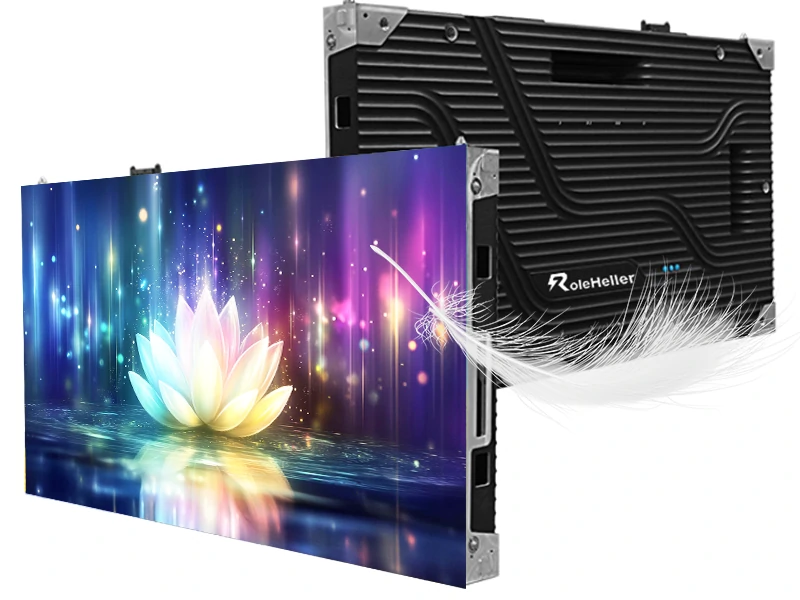
For touring rental setups where cabinets are handled constantly, standard SMD with spring-loaded corner protectors or GOB treatments is popular. But for executive boardrooms, luxury residential media rooms, or mission-critical command centers where users sit within eight feet of the screen, flip-chip COB has rapidly become the preferred modern architecture.
If you are drafting an RFP or planning an inspection visit to Guangdong province, these are the primary manufacturers you should evaluate.
Absen is one of the most recognized Chinese LED display exporters in the Western commercial AV space, operating robust technical and sales offices in Orlando, Frankfurt, and Hong Kong.
Core Strengths: Exceptional quality control and global logistics. Their outdoor and indoor rental series (such as the Polaris and Jupiter lines) feature precision die-cast frames with integrated fast-locks. For permanent corporate installs, their Absenicon all-in-one displays and Clear COB series offer consistent optical uniformity. They maintain strict wafer-binning records, so if you need replacement modules years later, the color coordinates match the original canvas.
Practical Considerations: You will pay a brand premium compared to smaller OEM factories. However, for corporate IT directors who require local RMA depots, quick-turn parts replacement, and English-speaking field engineers, that premium is usually well justified.
Unilumin operates massive smart manufacturing campuses in Huizhou and Shenzhen, producing everything from sub-millimeter broadcast displays to massive stadium perimeter systems.
Core Strengths: Advanced automated manufacturing and energy-efficient driver engineering. Unilumin has invested heavily in common-cathode driver topologies, which significantly reduce heat generation on fine-pitch indoor walls. Their panels frequently support ultra-high refresh rates (3,840 Hz to 7,680 Hz), making them a preferred choice for television studios and virtual production stages.
Practical Considerations: Unilumin's catalog is vast. When requesting quotations, make sure you connect with their high-end fixed or rental engineering divisions rather than distributors quoting older legacy lines.
Operating alongside Planar in North American and European markets, Leyard represents the high-water mark for fine-pitch engineering, command center consoles, and luxury corporate boardrooms.
Core Strengths: Industry-leading fine-pitch displays down to P0.6 mm and proprietary image-processing pipelines. Their cabinets feature whisper-quiet fanless cooling, shallow ADA-compliant wall profiles, and redundant power and data paths. If your application requires flawless low-grayscale rendering without banding across dark gradients, Leyard's electronics are benchmark-grade.
Practical Considerations: They sit at the upper end of the pricing scale. For budget-sensitive commercial projects, their standard lines may exceed cost allowances, but for enterprise environments with zero tolerance for downtime, they are difficult to beat.
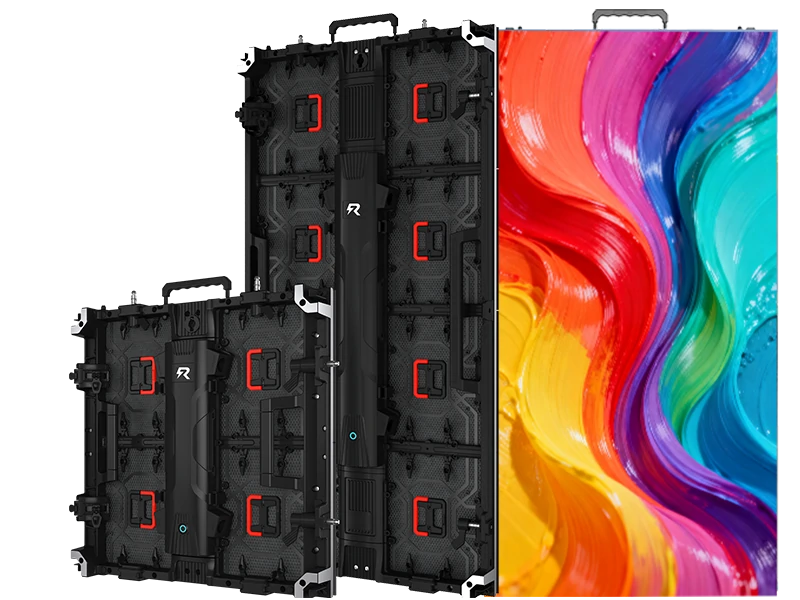
If you walk behind the mainstage of major music festivals or arena concert tours across Europe and the Americas, you will see Gloshine flight cases stacked in rows.
Core Strengths: Mechanical engineering designed specifically for touring crews. Their die-cast aluminum and carbon-fiber frames withstand rugged handling. Features like tool-free curving latches (-5° to +10°), integrated climbable ladders on cabinet rears, and spring-loaded corner protectors prevent diode damage during fast strikes.
Practical Considerations: Gloshine focuses primarily on rental and staging. While their panels can be used for fixed installations, their cabinet mechanics and power distribution boxes are optimized for modular hanging and stacking rather than ultra-slim direct wall mounting.
INFiLED has built a worldwide reputation for high-end creative installations, virtual production (XR) film studios, and premium commercial retail spaces.
Core Strengths: Precision chassis tooling and deep black masking. Their displays for virtual film production deliver high frame rates, wide color gamuts (covering DCI-P3 and Rec. 2020), and advanced genlock synchronization with camera tracking systems. Their structural engineering ensures that large curved walls lock together with seamless mechanical tolerances.
Practical Considerations: Similar to Leyard, their high-spec XR and studio panels carry premium pricing, requiring dedicated controllers like Brompton Technology to extract full performance.
Headquartered in Changchun with extensive manufacturing facilities, Cedar is a pioneer in flip-chip COB technology, working in close cooperation with the Chinese Academy of Sciences.
Core Strengths: Complete flip-chip COB mass production. Cedar focuses on ultra-fine pitches from P0.4 mm to P1.5 mm using direct die-bonding on high-density PCBs. Their displays feature deep contrast, low surface temperatures, and exceptional impact resistance, making them ideal for military command centers and high-security operations.
Practical Considerations: Their industrial design is functional and utilitarian rather than sleek, and their Western marketing footprint is quieter than Absen or Unilumin. But in terms of raw diode packaging reliability and thermal dissipation, their engineering is solid.
Yaham focuses on rugged environments: roadside billboards, freeway variable message signs (VMS), and large-scale architectural media facades.
Core Strengths: Heavy-duty weatherproofing and thermal resilience. Yaham builds cabinets with thick marine-grade aluminum profiles, multi-layer conformal coatings, and strict compliance with European EN 12966 and American UL standards. If you need a billboard to survive coastal salt spray or desert heat, Yaham is an experienced specialist.
Practical Considerations: They specialize primarily in outdoor pitches (P4 mm and above). For fine-pitch corporate meeting rooms, other manufacturers offer more tailored indoor solutions.
| Manufacturer | Core Specialty Focus | Primary Pitch Range | Target Applications | Controller Compatibility | Typical Production Lead Time |
|---|---|---|---|---|---|
| Absen | Enterprise, Commercial DOOH, Rental | P0.7 mm - P16.0 mm | Boardrooms, retail flagships, live events | NovaStar / Brompton | 4 to 6 Weeks |
| Unilumin | Broadcast, Fine-Pitch Indoor, Stadiums | P0.5 mm - P20.0 mm | TV studios, command centers, arenas | NovaStar / Colorlight | 4 to 7 Weeks |
| Leyard | Micro LED, Executive Suites, Military | P0.4 mm - P2.5 mm | Mission-critical rooms, luxury enterprise | Planar / NovaStar | 6 to 8 Weeks |
| Gloshine | Touring Rental, Stage Productions | P1.9 mm - P5.9 mm | Concerts, festivals, exhibition booths | NovaStar / Brompton | 3 to 5 Weeks |
| INFiLED | Virtual Production (XR), Creative AV | P1.2 mm - P4.8 mm | Film stages, broadcast studios, airports | Brompton / NovaStar | 5 to 7 Weeks |
| Cedar | Flip-Chip COB, Fine-Pitch Display | P0.4 mm - P1.5 mm | Security hubs, command suites, cleanrooms | NovaStar / Custom | 5 to 8 Weeks |
| Yaham | Heavy Outdoor DOOH, Highway Signage | P4.0 mm - P31.25 mm | Billboards, transit terminals, sports facades | NovaStar / Custom | 6 to 9 Weeks |
When two suppliers quote on a P1.9 mm video wall and one bid is forty percent cheaper, that price difference is not just factory profit margin. It is driven by the internal components hidden behind the magnetic modules.
       [ Anatomy of an Enterprise-Grade LED Cabinet ]
  +-------------------------------------------------------------+
  | Front Module: High-Grade Diodes (Nationstar Gold / Flip-Die)|
  +-------------------------------------------------------------+
                                |
                                v
  +-------------------------------------------------------------+
  | PCB Layer: 6-to-8 Layer TG170 Substrate (Gold Fingers)     |
  +-------------------------------------------------------------+
                                |
                                v
  +-------------------------------------------------------------+
  | Driver Layer: High-PWM Constant-Current Sinks (MBI5359)     |
  +-------------------------------------------------------------+
                                |
                                v
  +-------------------------------------------------------------+
  | Power & Control: Mean Well UHP Power / NovaStar Armor Card  |
  +-------------------------------------------------------------+
                                |
                                v
  +-------------------------------------------------------------+
  | Chassis: CNC Die-Cast Aluminum Frame (Tolerance < 0.05mm)   |
  +-------------------------------------------------------------+
The heart of any LED display is the diode die. Tier-1 manufacturers partner with reputable packaging houses like Nationstar (using their High-RS or Gold-Wire lines) or Kinglight.
Cheap assemblers cut costs by buying unbranded diodes with copper or copper-alloy bonding wires. Copper oxidizes rapidly when moisture penetrates the resin packaging, leading to dead pixels within twelve to eighteen months. Pure gold bonding wire resists oxidation and handles thermal expansion cycles far better, ensuring long-term pixel survival.
The driver IC controls how power is fed to the individual pixels. In an executive conference room or house of worship, displays are rarely operated at 100% brightness; they are usually dimmed to between 15% and 30% of maximum output to avoid overwhelming viewers.
Under low brightness, cheap driver ICs fail to provide linear current control. Dark grayscale steps clip to black, colors shift noticeably, and visible horizontal scanning lines appear when someone records the screen with a smartphone. Top-tier manufacturers specify premium driver chips (such as the Macroblock MBI5252 / MBI5359 or Chipone ICND2153), which maintain 16-bit to 22-bit grayscale depth and high PWM refresh rates even when the wall is dimmed down to 100 nits.
In legacy common-anode power architecture, a single 5V rail supplies the Red, Green, and Blue dies simultaneously. Because the Red die only requires roughly 2.2V to fire, the extra 2.8V is dissipated directly into the cabinet as wasted heat.
Modern commercial displays use common-cathode architecture, where the power rail is split—delivering ~2.8V to the Blue and Green dies and ~2.2V to the Red die. This design lowers total electricity consumption by 25% to 35%, reduces heat output, and prevents the center of the video wall from turning into a room heater.
When a Chinese supplier sends you a sample cabinet for evaluation, do not just turn it on, play a high-action movie trailer, and call it good. Detailed setup method, let's take a look at how to run a proper bench audit.
  +-------------------------------------------------------------+
  |             Bench Audit Protocol for LED Cabinets           |
  +-------------------------------------------------------------+
         |
         +--> Step 1: The 45-Degree Unpowered Reflection Audit
         |    - Power off the cabinet completely
         |    - Sweep an inspection flashlight across module joints
         |
         +--> Step 2: Mechanical Seam & Pin Alignment Check
         |    - Join two cabinets together on a flat surface
         |    - Slide a feeler gauge across the horizontal/vertical split
         |
         +--> Step 3: Low-Brightness Grayscale Linearity Sweep
         |    - Dial master brightness to 8% in a darkened room
         |    - Project a 0-255 stepped grayscale ramp
         |
         +--> Step 4: 72-Hour Full-White Continuous Thermal Soak
              - Set display to 100% solid white at maximum output
              - Scan module faces and rear chassis with thermal camera
Turn the cabinet completely off and lay it on a table under standard room lighting. Take a bright inspection torch, hold it at a 45-degree angle to the screen surface, and slowly sweep the beam across the face.
What to look for: Inspect the optical resin or plastic mask consistency across module boundaries. If one module appears velvety black while the adjacent module looks hazy grey, the supplier has poor resin curing controls. This defect—known in factory parlance as poor ink-color consistency—means that when ambient room lights hit the wall, the screen will look like a patchy checkerboard whenever it displays dark scenes.
Connect two cabinets together using their internal alignment pins and quick-locks.
What to look for: Slide an automotive feeler gauge along the joint between the two cabinets. The seam gap should nowhere exceed 0.08mm. Next, run your fingers across the seam. If your skin catches on an edge, the die-cast frame has suffered CNC machining drift. When eight or ten cabinets are stacked vertically, a 0.1mm lip will create a noticeable dark or bright line down the canvas.
Hook the cabinet up to your video processor (such as a NovaStar VX1000 or MX40 Pro). In a darkened room, dial the brightness down to between 5% and 8%, then feed a 16-step grayscale ramp pattern into the screen.
What to look for: Examine the darkest grey bars. The transition from black to dark charcoal must be clean and gradual. If the dark boxes drop out entirely, or if they take on a magenta or greenish hue, the driver ICs lack proper low-current calibration, which will wash out dark scenes and shadow detail during normal operation.
Set the cabinet to display a solid 100% white canvas at maximum brightness and let it run continuously for 72 hours.
What to look for: Scan the front face and rear power distribution box with an infrared thermal imaging camera. The temperature across the entire canvas should remain uniform within a window of ±4°C. If you detect localized hot spots spiking past 65°C directly above the driver ICs or switching power converters, that localized heat will cause early diode failure and color-shifting over time.
When negotiating contracts with prospective Chinese suppliers, drilling into operational realities will quickly reveal whether you are speaking with an engineering-driven enterprise or a speculative trading front.
LED semiconductors vary slightly in wavelength and luminous efficiency from one manufacturing run to the next.
The Right Engineering Answer: The manufacturer must confirm in the contract that all modules for your display, along with a 5% to 8% spare parts package, are produced from the exact same packaging batch and wafer bin. Furthermore, the factory should provide automated spectrometer binning logs confirming that dominant wavelengths for Green are held within ±1.5 nm and Red within ±1.5 nm. If spare modules are manufactured from a later batch, they will stand out like mismatched tiles against the wall.
A display is only as dependable as the video processor and receiving cards driving it.
The Right Engineering Answer: For commercial AV integration, the industry standard is NovaStar (specifically their modern COEX platform, such as the MX series paired with Armor A5s Plus, A8s, or A10s Pro receiving cards) or Brompton Technology (for high-end virtual production and live touring). If a factory tries to push an unbranded or obscure proprietary controller to shave a few dollars off the price, insist on NovaStar or Brompton. When a card fails in London, Chicago, or Sydney, any local AV rental company will have a replacement card on the shelf.
Recommended Control & Signal Flow:

  [ Primary Media Server (4K HDMI 2.0 / DP 1.4) ]
                        |
                        v
  [ NovaStar MX40 Pro / Brompton SX40 Video Processor ]
            |                               |
    (Main 10Gb Optical Fiber)       (Backup Redundant Loop)
            |                               |
            v                               v
  [ First Cabinet in Chain ] ------> [ Last Cabinet in Chain ]
In an executive briefing center or a live concert, a single loose cable cannot be allowed to black out the display.
The Right Engineering Answer: The cabinet architecture must support dual-loop signal redundancy. The processor sends the primary signal loop into the first cabinet, while a secondary backup line runs to the last cabinet in the chain. If a stagehand accidentally kicks an Ethernet cable midway through the run, the backup line takes over instantly within milliseconds without dropped frames. For critical installations, look for dual-power supply failover configurations as well.
Understanding realistic factory-gate pricing helps you identify whether a quote is genuinely competitive or unsustainably cheap. Here is how current wholesale pricing generally aligns across different pixel pitches for commercial-grade cabinets (excluding shipping, import tariffs, and local sub-framing):
| Pitch Category | Pixel Pitch | Average Factory-Gate Cost ($/m²) | Power Draw (Avg / Peak per m²) | Recommended Viewing Distance | Typical Use Case |
|---|---|---|---|---|---|
| Standard Commercial | P3.91 mm | $450 – $750 | 180W / 550W | 4 to 12 meters | Church sanctuaries, event stages, school halls |
| Fine Pitch Indoor | P2.6 mm | $750 – $1,200 | 200W / 600W | 2.5 to 8 meters | Corporate town halls, hotel ballrooms, retail |
| Ultra-Fine Pitch | P1.9 mm | $1,100 – $1,800 | 220W / 650W | 2.0 to 6 meters | Executive briefing centers, broadcast studios |
| Micro Pitch COB | P1.25 mm | $1,800 – $3,200 | 250W / 750W | 1.2 to 4 meters | Command centers, high-end boardrooms, simulation |
| Sub-Millimeter COB | P0.9 mm | $3,800 – $7,500 | 300W / 900W | 0.9 to 2.5 meters | Aerospace telemetry, medical imaging suites |
Beyond the panel cost, always budget for:
Video Processing: Professional 4K processors range from $3,500 to $12,000 depending on fiber outputs and scaling features.
Structural Mounts: Heavy-duty aluminum sub-frames with 3-axis mechanical z-plane micro-adjustments cost roughly $150 to $300 per square meter, but they are essential for removing physical seam steps between cabinets.
Attic Stock: Maintain a 5% to 8% reserve of identical-batch modules, receiving cards, and power supplies.
Over years of troubleshooting and installing video walls across commercial facilities and touring environments, there are several practical practices that I always stick to on real jobsites.
First, never mount an indoor LED wall flush against an unventilated drywall recess. Even high-efficiency common-cathode displays generate continuous heat when run for eight hours straight. Without a two-to-three-inch convective airflow channel behind the cabinets, heat gets trapped, baking the electrolytic capacitors inside the power supplies and drastically shortening their lifespan. Providing simple passive ventilation grilles at the bottom and top of the wall keeps air moving naturally.
Second, always demand hardware-level "Cabinet Memory" on all modules. In the NovaStar and Colorlight ecosystems, quality receiving cards can store calibration matrices and module mapping directly in the module's onboard EEPROM chip. When an on-site technician swaps out a damaged module, they do not need to pull out a service laptop or load configuration files; the receiving card automatically detects the new module, reads its unique calibration coefficients, and matches it to the wall in seconds.
Third, but some folks want to save money on electrical distribution by daisy-chaining ten cabinets on a single primary AC power cable. That is asking for trouble. In fine-pitch displays, transient inrush currents during system boot can trip circuit breakers or cause voltage sags that reset the sensitive driver ICs at the end of the line. Limiting power daisy-chains to a maximum of four cabinets per 15A circuit ensures balanced voltage delivery across the entire screen.
What is the standard viewing distance formula for LED video walls?
The general rule of thumb used by AV engineers is that 1 millimeter of pixel pitch equals roughly 1 meter (about 3.3 feet) of comfortable minimum viewing distance. For a P1.5 mm display, the minimum comfortable viewing distance is approximately 1.5 meters (5 feet). For a P3.91 mm display, comfortable viewing starts around 4 meters (13 feet).
What is the fundamental difference between an original manufacturer and a trading company?
An original manufacturer owns and operates automated SMT pick-and-place lines, cleanrooms, and testing chambers in their own facility. They maintain their own engineering staff, develop proprietary PCB layouts, and manage firmware profiles. A trading company operates out of an office, purchasing pre-assembled modules from various wholesale markets, assembling them into third-party chassis, and offering limited control over diode binning, PCB design, or long-term component-level warranties.
How do I guarantee that replacement modules match my existing video wall years later?
You must mandate single-batch wafer binning in your initial purchase contract and order a 5% to 8% spare parts package from that same production run. LEDs manufactured in different wafer batches will have slight variations in dominant wavelength and luminous efficiency, which will appear as mismatched colored patches if swapped onto the wall later.
Can an indoor LED display be safely used outdoors under a covered roof?
No. Even under a roof, ambient relative humidity, airborne condensation, dust, and temperature swings will quickly damage indoor panels that lack IP65 water-repellent conformal coatings and sealed electrical cavities. Furthermore, indoor displays generally produce only 600 to 1,000 nits of brightness, which will look washed out under ambient outdoor daylight.
What certifications are legally mandatory when importing LED displays into the US and EU?
For the United States, commercial installations require UL 62368-1 or ETL safety listing, along with FCC Class A (commercial) or Class B (residential) certification for electromagnetic interference. For the European Union, displays must carry CE marking (covering the Low Voltage Directive and EMC Directive) and RoHS compliance (proving the absence of hazardous substances like lead).
What causes horizontal dead pixel lines on LED display modules?
Horizontal or vertical dead pixel lines are almost always caused by a failed constant-current driver IC or cracked solder joints on the data shift register pins. This failure typically stems from thermal fatigue (cycles of heating and cooling) or physical stress during handling. Using displays built with die-cast aluminum frames and automated conformal coating significantly reduces these failures.
How does common-cathode technology reduce operating costs?
Common-cathode systems supply separate, dedicated voltage lines to the RGB diodes (~2.8V for Blue and Green, ~2.2V for Red), whereas legacy common-anode systems supply 5V across all channels. By eliminating the excess voltage wasted as heat by the Red diode, common-cathode displays consume 20% to 35% less electricity, generate significantly less heat, and lower the HVAC air-conditioning load required in enclosed rooms.
Can individual pixels be repaired on a Chip-on-Board (COB) display?
Individual bare dies on a COB panel are sealed under a continuous optical polymer resin, meaning they cannot be repaired in the field with a soldering iron. Instead, maintenance is handled via fast front-service magnetic module replacement: the damaged module is pulled using a vacuum tool and replaced with a factory-calibrated spare in minutes. The damaged module is shipped to the manufacturer's cleanroom facility for laser de-encapsulation and die replacement.
What is the expected operational lifespan of an enterprise LED video wall?
Under standard commercial operating conditions (running 12 to 16 hours daily with automatic brightness dimming and proper ventilation), a quality LED video wall from a reputable manufacturer will deliver an operational lifespan of 80,000 to 100,000 hours before luminance drops to 50% of its initial rating (L50 standard). That translates to eight to ten years of dependable commercial operation.
Why do some LED walls flicker when recorded by smartphone cameras?
Camera flicker and rolling dark scan lines are caused by low refresh rates and low PWM scan speeds in the driver ICs. Standard commercial displays often run at 1,920Hz, which looks fine to the human eye but causes interference with camera shutters. High-grade displays utilize advanced driver chips that achieve refresh rates of 3,840Hz to 7,680Hz, eliminating scan lines during video recording or live broadcasts.
When you cut through the trade-show gloss and high-concept marketing decks, choosing the right manufacturing partner among china led wall display screen manufacturers comes down to engineering discipline and contract clarity. The lowest quote on a wholesale spreadsheet is almost never the best value once you account for on-site troubleshooting, premature module degradation, and client frustration over visible seams.
Focus your technical specifications on verifiable component provenance: demand high-grade driver ICs from Macroblock or Chipone, insist on common-cathode power distribution, verify that die-cast aluminum frames are finished with high-precision CNC tooling, and lock in your single-batch spare parts inventory before releasing final payment milestones. When you prioritize structural stability and thermal engineering over paper-thin price cuts, your video wall will deliver clean, razor-sharp visual performance for years to come.