 English
You are sitting there with a spreadsheet that has seven columns and no actual answers, because every search for led display module manufacturers hands you the same thing: a list of names that all claim factory-direct pricing, ISO certification, two-year warranty, and free samples. The prices run from $45 to $280 for what is supposedly the same P4 module. Nobody explains the gap. Nobody tells you that "module" means different things to different people — sometimes it is a bare board with LEDs on it, sometimes it is a magnetised panel with mask and cables, sometimes it is half a cabinet and nobody bothered to say which. And almost nobody warns you that the batch you approve today might not be the batch that ships in six weeks, because the LED bin changed and the salesperson forgot, or never knew.
I will give you the direct answer first, since that is probably why you are here.
If you need modules at scale with documented specs and a company that will still exist in five years, the names that keep coming up are Leyard, Unilumin, Absen, Ledman, LianTronics, AOTO, Qiangli Jucai, plus a wide layer of Shenzhen and Dongguan specialists who live on IndiaMART-adjacent directories and Alibaba. If you need small quantities, fast turnaround, or a weird size, the Shenzhen/Dongguan specialists usually win on speed and flexibility. If you need fine-pitch COB or a broadcast-grade wall, you want one of the bigger players or a verified mid-tier factory with locked components. That is the short version. The rest of this is how you stop guessing.
This is where people get burned, and it happens before money changes hands.
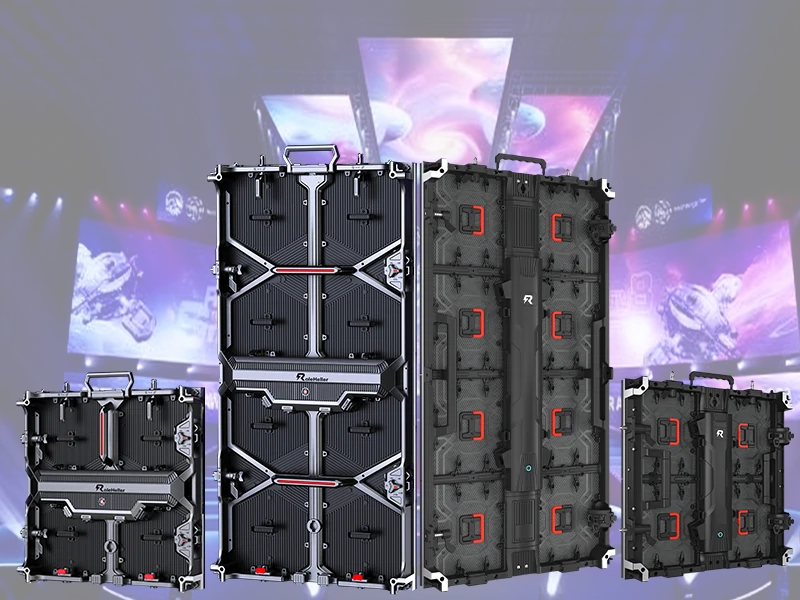
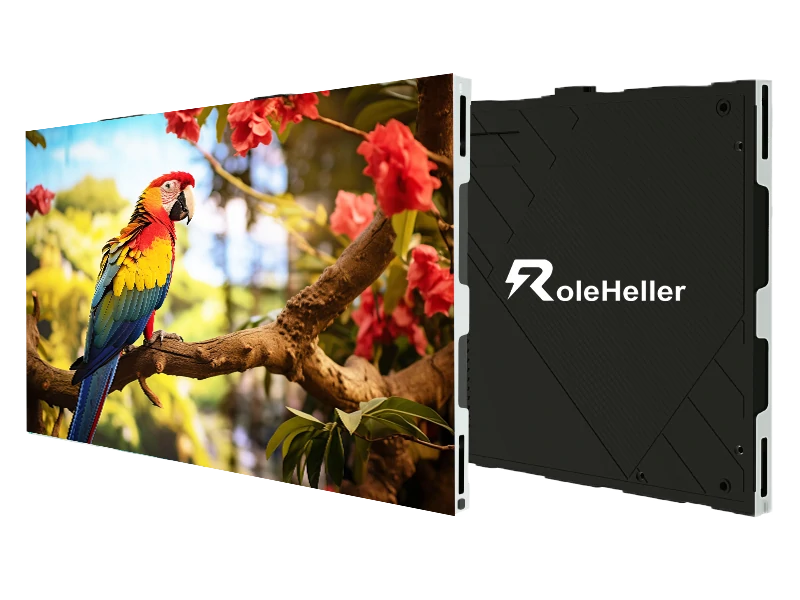
An LED display module is the smallest replaceable unit of the screen — typically something like 320×160 mm or 250×250 mm, carrying its own LEDs, driver ICs, PCB, and connectors. Modules tile together into a cabinet, cabinets bolt onto a structure, and the whole thing gets fed by a processor and power distribution. Simple enough. But suppliers use the word loosely, and if you do not pin it down, you will compare prices for different products.
Ask yourself, and then ask them:
Is the price for the bare module only, or does it include the cabinet, receiving card, power supply, and cables?
Is the mask included, and what colour and finish? Matte black reads better on camera than glossy.
Are the connectors JST-style or something proprietary? Proprietary means you are locked to one supplier forever.
Is the module front-service or rear-service? This decides your entire structure design.
What is the refresh rate measured at, and with what content?
What is the dead-pixel acceptance standard at delivery, per square metre?
If the quote does not answer these, it is not a quote, it is an invitation to renegotiate later.
| What the listing says | What it may actually be | Why it matters |
|---|---|---|
| "P4 outdoor module" | Could be SMD 1921, 2727, or 3535 LEDs — three very different packages | Package size affects viewing angle, brightness decay, and whether the LEDs survive being knocked |
| "High brightness" | Anything from 4,000 to 8,000 nits claimed, rarely measured | Unmeasured claims mean you guess after install, and by then it is too late |
| "IP65" | Front rated only, rear open, gasket quality unspecified | Cheap gaskets harden within two summers and the rating becomes a story |
| "Common cathode" | Sometimes only partially implemented on the row drivers | Partial common-cathode saves less power than advertised — ask for measured consumption |
| "Two-year warranty" | Parts covered, freight and labour not covered | A warranty without freight terms is worth considerably less than it looks |
Two PDFs can read identically and describe meaningfully different hardware. Once you learn where the gaps hide, the price spread stops looking like corruption and starts looking like arithmetic.
The biggest movers, in my experience:
LED die brand and bin grade. Top-bin Nationstar or Kinglight versus a lower bin changes colour consistency noticeably. You can put two "P4" modules side by side and see a patchwork under grey content. This is the single most common reason a wall looks wrong six months after install.
Driver IC. MBI5124, ICND2055, SM1620B — different chips, different gray scale at low brightness, different refresh behaviour on camera. If the screen will be filmed, the driver IC matters more than the pixel pitch.
PCB thickness and copper weight. Thinner boards save money and move heat worse. Heat is what kills LED output over time. A cheap module is often just a hot module wearing a disguise.
Power supply brand. Mean Well, Great Power, or an unbranded unit. The unbranded one works fine until it does not, and it tends to fail on a Friday.
Mask finish and cabinet flatness. On fine pitch, flatness is everything. Half a millimetre of warp and the seams catch the light. Glossy black shows every fingerprint and every joint.
What is excluded. Structure, rigging, processor, licenses, content, commissioning, calibration data. These arrive later as surprise invoices, and they add up faster than the module savings.
Two traps I see repeatedly. Bare-screen pricing that grows. And the sample-versus-production gap — the sample module was hand-picked, the production run was whatever came off the line that week. Lock the component list into the purchase order: LED source and bin range, driver IC model, power supply brand, PCB spec, mask type and finish, connector type. Add a clause that any substitution requires written approval, and insist production matches the approved sample. Get it signed, not agreed over dinner.
This filter does more work than anything else here. Most buyers skip it because asking feels mildly awkward. Ask anyway.
Business licence with manufacturing in scope. Sales-only registration means reselling. Simple as that.
ISO 9001 certificate number, verified on the registrar's own site. Not the PDF they emailed. The actual lookup result.
A live video walk-through, today. Ask to see the SMT line, the aging racks, the rain or dust test setup, and a module being assembled. Ask them to hold up a handwritten note with your name and today's date. Trading companies stumble here — not always because they are dishonest, sometimes just because there is no floor to show.
A component list by brand. Factories recite this instantly. Traders go vague and promise to "confirm."
Test reports issued in their own company name. If the FCC, CE, or photometric report lists a different entity, ask why. Rebranding is a legitimate reason. You want the reason in writing, not discovered at customs.
Exhibition history. ISLE Shenzhen, InfoComm, ISE Barcelona. Real manufacturers exhibit the same shows year after year and usually have an actual working wall on the booth. Booth records are harder to fake than a PDF.
One sample module. One module teaches you colour consistency, dead pixel rate, connector fit, seam flatness, and — most telling of all — how fast they actually ship.
If the order is big enough, go in person. A day in Shenzhen or Dongguan pays for itself. Bring a torch. Look at the solder joints. Look at the encapsulation for bubbles. Check the magnet alignment and the cable glands. Ask to see a module that has been sitting on the aging rack for seventy-two hours. You learn quickly what paperwork hides.
Pixel pitch. Minimum comfortable viewing distance in metres is roughly pitch × 1 to 1.5. P2.5–P4 for retail fronts and lobbies, P5–P8 for billboards and stadiums. Going finer than your viewing distance burns money and generates extra heat for no gain.
Brightness. Shaded outdoor 4,000–5,000 nits. Direct sun 6,000–8,000 nits. Indoor 600–1,500 nits. Always with auto-dimming tied to a light sensor, and always checked against local night-brightness rules. More brightness than you need just fatigues the audience and cooks the cabinet.
Refresh rate. If the wall gets filmed, ask for measured performance at your actual shutter speeds. Headline numbers mean little without a camera test at your settings.
Service direction. Flush against a wall with no access behind means front service. It costs more and limits cabinet size. Decide before designing the structure, because changing it later means rebuilding the frame.
Derating. At what ambient temperature does the screen automatically reduce brightness, and by how much. If the answer is "it does not derate," either they are overstating things or the cabinet is massively over-engineered. Neither is likely at the bottom price.
Spare parts. Will this module still be in production in three years? Will they ship five modules or insist on a minimum order? Will the replacement bin match the aged ones already on your wall, and who does the matching calibration? Projects become headaches right at this point.
Is the cheapest option always wrong? Not always. But cheap with vague specs is a different product from cheap with locked specs. Unit price alone tells you nothing; the itemised quote tells you nearly everything.
Do I need a big-name manufacturer? If the screen is permanent, highly visible, exposed to weather, and someone important looks at it daily, probably yes. If it is a secondary screen under a canopy or a temporary activation, a verified mid-tier factory usually delivers the same result for less.
Can I trust a supplier I have never visited? Yes, provided you run the checks above and order a sample. Physical visits help considerably, but a dated live walk-through plus certificate lookups catch most of the same problems.
Should I just pick the finest pitch available? No. Finer pitch costs more, draws more power, makes heat worse, and gains you nothing if people view from fifteen metres away. Spend that budget on calibration, spares, and a proper processor instead.
Module-only or full cabinet? If you are replacing an existing wall, modules only, and you must match the old bin. If it is a new build, buy cabinets — the alignment work has already been done at the factory and you will thank yourself later.
How many spares should I order? Five percent of modules is a common starting point, plus a couple of power supplies and receiving cards. For a large or hard-to-access install, push it higher. Spares cost far less when bought with the main order than when rush-shipped two years later.
Who handles installation? Your local integrator should, and they should sign off on structure and electrical. Confirm in writing before signing, because the overseas supplier will assume you did, and you will assume they did, and meanwhile the crates sit in a warehouse.
I have watched buyers chase the bottom quote on a storefront screen and spend the next two summers dealing with water ingress because the gaskets hardened and the metal warped. I have also watched buyers overpay for a famous logo on a shaded wall where a competent mid-tier factory would have done exactly the same job. The gap between those two outcomes was rarely about the brand. It was about whether someone wrote the component list into the contract, looked at the first batch with actual eyes, and asked what happens in year four before anyone signed anything.
What lasts comes down to three things: a thermal story you can verify with measured numbers, component transparency you can check yourself, and a warranty backed by an address that answers the phone and will actually send a technician. Get those right and the rest is detail.
If I had to start over with zero contacts and a real deadline, I would define the site properly — sun hours, wind load, access, local rules — shortlist three suppliers using the checklist above, demand itemised quotes with locked components and a separate line for structure, verify one certificate each myself, order one sample module, and only then negotiate. Three to four weeks, roughly. It removes most of the risk and costs almost nothing except patience.
Last thing, and I say it because I wish someone had said it to me: do not skimp on the structure, the power distribution, and the content. The finest screen in the world looks wrong on a frame nobody calculated, flickers on a circuit that was undersized, and wastes all its brightness on content designed for a phone. Get the steel right, get the electrics right, get the content designed for the actual viewing distance and the actual light conditions. The panel itself is the easy part.
1. Who are the main LED display module manufacturers? By scale and export volume: Leyard, Unilumin, Absen, Ledman, LianTronics, AOTO, Qiangli Jucai, plus a broad layer of Shenzhen and Dongguan specialists. Largest is not automatically best for your specific format.
2. What is an LED display module? It is the smallest replaceable unit of an LED screen, typically 320×160 mm or similar, carrying LEDs, driver ICs, PCB, and connectors. Modules tile into cabinets, cabinets mount to structure.
3. How do I tell a module manufacturer from a trader? Check the business licence scope, verify the ISO certificate on the registrar's site, run a dated live video walk-through including aging racks, confirm report numbers with the issuing body, and order a sample.
4. What specs should I lock in the purchase order? LED source and bin range, driver IC model, power supply brand, PCB thickness and copper, mask type and finish, connector type, plus a clause requiring written approval for any substitution.
5. What certifications should I ask for? FCC Part 15 for the US (UL/ETL often required in practice), CE covering LVD/EMC/RoHS for Europe, UKCA for Great Britain, IP rating reports from a recognised lab rather than self-declarations, and ISO 9001.
6. What pixel pitch do I need? Minimum viewing distance in metres ≈ pitch × 1 to 1.5. P2.5–P4 for close viewing at retail fronts and lobbies, P5–P8 for billboards and stadiums, P10 for very long distances.
7. How bright should the modules be? Outdoor shaded 4,000–5,000 nits, direct sun 6,000–8,000 nits, indoor 600–1,500 nits, always with auto-dimming via a light sensor and checked against local regulations.
8. Should I choose common-cathode modules? Mostly yes. They cost more upfront but cut power draw and heat substantially, which extends PSU life. Only accept it if the supplier gives measured consumption, not a theoretical figure.
9. What warranty should I expect? Two to three years on key components is the norm. What matters is who covers parts, labour, freight, and site visits, what the response window is, and whether matching modules will still be available after year three.
10. How many spare modules should I buy? Around five percent of modules plus a few power supplies and receiving cards is a common starting point. Buy them with the main order — rush-shipping spares two years later costs far more.
.jpg "How Do You Find Reliable Wholesale Outdoor LED Video Wall Manufacturers?")
.jpg "How to Source China LED Video Wall Panels Manufacturers?")