English
Thinking about renting an LED screen for your Milwaukee event but confused by the varying prices? You're not alone. Figuring out the cost isn't as simple as checking a single number—it's more like putting together a puzzle where each piece affects your final budget. Whether you're planning a corporate gathering at the Wisconsin Center, an outdoor festival at Veterans Park, or a product launch in a Brickell hotel, understanding what goes into the pricing can save you both money and headaches.
Let's break down the real factors that determine your LED screen rental cost in Milwaukee, so you can make a smart decision for your event.
When you get a quote for an LED screen, you're not just paying for the screen itself. Several key factors work together to determine your final bill. Getting a handle on these will help you understand where your money is going and maybe even where you can save a bit.
Screen Size and Resolution: The Big Two
This is the most obvious factor. A larger screen costs more, simply because it uses more materials and technology. But the resolution, often described by its pixel pitch (like P2.5 or P4.8), is just as important. A smaller pixel pitch means the LEDs are closer together, creating a sharper, more detailed image—especially crucial if your audience will be up close. However, that higher clarity comes at a premium, sometimes 25-40% more than a standard definition screen .
The trick is to match the resolution to your audience's viewing distance. There's no need to pay for a super-high-resolution screen if people will be watching from 50 feet away at an outdoor concert.
Indoor vs. Outdoor Use: A Major Price Split
This is a huge differentiator. Outdoor LED screens are built like tanks. They need to be much brighter (measured in nits) to compete with direct sunlight and require weatherproofing (like an IP65 rating) to handle rain, dust, and wind . This extra durability and brightness can increase the price by 20-50% compared to an indoor screen of the same size . For an event in Milwaukee, where weather can be unpredictable, this isn't an optional feature.
Rental Duration: The Longer, The Less Per Day
Most rental companies incentivize longer rentals. While a single-day rental has a higher daily rate, booking for several days or a week can often get you a discount of 10-20% on the daily cost . It's always worth discussing your full event timeline with the rental company to see if you qualify for a better rate.
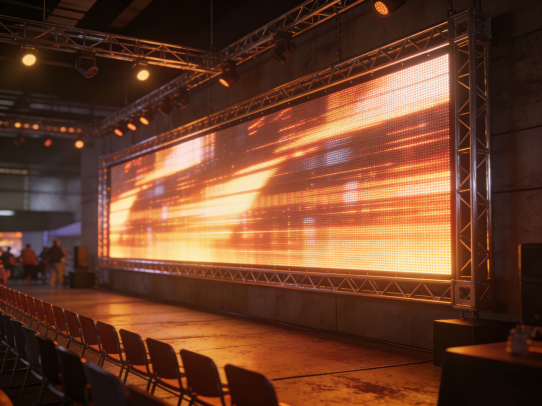
The screen's price tag is often just part of the story. To avoid surprises, you need to ask about the costs for the services that bring that screen to life at your venue.
Delivery, Setup, and Teardown: This isn't usually free. Companies charge for transporting the equipment to your venue in Milwaukee and for the professional labor to install and dismantle it. Costs can range from a few hundred dollars to over $1,000, depending on the complexity . A simple indoor screen on a stand is cheaper than a large outdoor video wall needing scaffolding.
On-Site Technical Support: Will you need a technician to stay and operate the screen? For complex events, this is highly recommended and typically adds $200-$500 per day . It's like insurance against technical glitches disrupting your big moment.
Additional Equipment: Don't forget about necessities like a dedicated video processor, special cables, or a generator if your venue lacks adequate power. These items can add hundreds to your total .
Always, and I mean always, request a detailed quote that breaks down these additional services. A transparent company will have no problem providing this .
Being a smart renter isn't just about finding the lowest price; it's about maximizing value. Here are a few practical ideas that can help.
Book Early: Planning ahead can literally pay off. Securing your rental 3-4 weeks in advance can sometimes snag you an early-bird discount and ensures you get the best equipment for your date .
Choose "Good Enough" Specs: Don't overpay for technology your audience won't benefit from. If viewers will be far away, a P4.8 or P6 screen will look great and cost significantly less than a P2.5 screen . Explain your event's layout to your rental advisor—they can recommend the most cost-effective option.
Clarify the Total Package: When comparing quotes, look beyond the bottom line. Does one price include setup and a technician while another lists them as add-ons? The cheapest initial quote can sometimes become the most expensive once all services are included .
From my perspective, the goal is a seamless event, not just a cheap rental. Partnering with a knowledgeable and transparent provider like RoleHeller, which understands the specific needs of Milwaukee venues, is crucial. Clear communication about your vision, audience, and all potential costs is the absolute key to a stress-free experience.
Frequently Asked Questions
How much does it cost to rent an LED screen for one day in Milwaukee?
Costs vary widely based on size and specs. A small to medium screen might range from $500 to $2,500 for a single day. Large, high-resolution screens for major events can cost $5,000 to $14,000 or more per day when all fees are included .
What's the most important factor affecting the rental price?
Screen size and pixel pitch are primary drivers, but whether the screen is for indoor or outdoor use causes one of the biggest price swings due to the required weatherproofing and brightness .
Are there discounts for longer rental periods in Milwaukee?
Yes, this is standard. Renting for a week can be 20-30% cheaper per day than a single-day rental. Many companies offer package deals for longer events .
What additional costs should I ask about upfront?
Always inquire about delivery fees, setup/installation charges, on-site technical support fees, and costs for any extra equipment like generators or special controllers .
Is it more expensive to rent an outdoor LED screen in Milwaukee?
Yes, outdoor screens are typically 20% to 50% more expensive than indoor screens of a similar size due to the need for higher brightness and weatherproofing to handle the elements .
.jpg "China LED Video Wall Panel Mfrs, Direct Supply")