If you work with LED screens, whether for fixed installations, outdoor LED display billboards, or LED screen rental setups, you know module durability is key. A critical factor is the encapsulation adhesive—or potting compound—used to protect LED display modules. Let’s break down the common types and the big question: soft vs. hard adhesives—what’s the difference?
What is LED Display Module Potting Compound?
It’s a liquid adhesive that encapsulates LEDs on a modular LED display panel. Once cured, it solidifies into a protective layer that’s either soft/flexible or hard/rigid. This process is vital for outdoor LED display modules and indoor screens alike, providing waterproofing, thermal conductivity, and insulation.
Common Adhesives Used in LED Screen Encapsulation
Silicone Potting Compound: Often the top choice for outdoor LED displays and harsh environments (humidity, temperature swings, UV exposure). It cures into a soft, elastic gel that’s removable, stress-resistant, and highly durable.
Epoxy Potting Compound: Cures into a hard, rigid solid. It offers strong protection but is generally not removable, making repairs difficult.
Polyurethane Potting Compound: Provides a balance of elasticity and toughness but is challenging to remove.
UV-Curing Adhesive: Ideal for fast, assembly-line production. It cures quickly under UV light, perfect for high-volume LED display screen module manufacturing.
Soft vs. Hard Potting: A Practical Comparison
Choosing between soft and hard adhesive impacts performance, repair, and suitability for different LED screen panels.
Aspect
Soft Potting (e.g., Silicone)
Hard Potting (e.g., Epoxy)
Feel & Flexibility
Elastic, rubber-like, flexible.
Rigid, solid, inflexible.
Weather Resistance
Excellent; handles expansion/contraction from temperature changes.
Good, but can be prone to cracking under thermal stress over time.
Repair & Maintenance
Much easier. Can be removed for repairing a P6 outdoor LED display sign board screen, allowing module fixes.
Very difficult. Removal often damages the LED display module.
Best For
Outdoor LED displays, flexible LED display modules, rental LED screens (where maintenance is needed).
Indoor displays where maximum hardness and surface protection are prioritized.
How to Choose the Right Potting for Your LED Screen Project
Consider your screen’s use case:
For Outdoor & Rental Screens (like a P6 outdoor display): A high-quality silicone (soft) potting is often best. It withstands weather, allows for servicing, and protects your investment.
For High-Traffic Indoor Displays: A hard epoxy may suffice, offering a tough shell.
For Cutting-Edge Designs (curved screens, flexible LED display modules): Soft, flexible potting is a must.
Pro Tip for Maintenance: Wondering how to clean an LED TV screen or display? Always use a soft, dry microfiber cloth. For smudges, lightly dampen part of the cloth with water or an approved screen cleaner. Never spray directly onto the screen, and gently wipe the LED screen in one direction to avoid pressure damage.
Don’t Compromise on Quality
Whether you’re building a modular LED display wall or need to rent an LED screen, the encapsulation quality determines its lifespan. High-quality potting has high elasticity, strong adhesion, and minimal shrinkage over time. Cheap compounds can crack, leak, or degrade, leading to screen failure.
In short: For most LED screen display applications—especially outdoors or in rentals—a soft, elastic silicone potting compound offers the best blend of protection, durability, and repairability. Choose wisely to ensure your display stays bright and reliable for years to come.
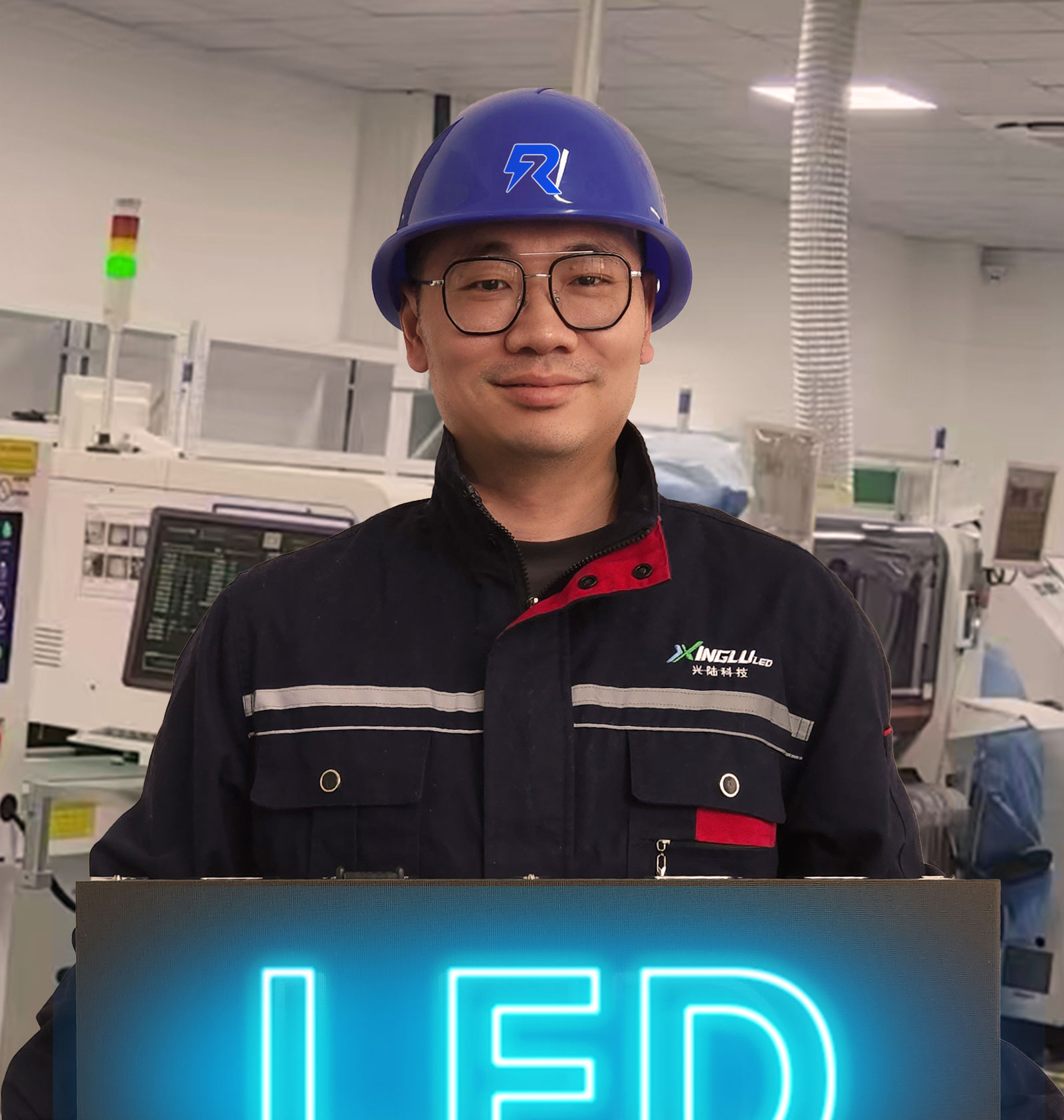
Mark Ma is an rental LED display specialist with over 12 years of industry experience, focusing on product development and system integration. He holds a Master’s degree in Electronic Engineering from Xidian University (Xi’an University of Electronic Science and Technology).
He has led several international LED projects across Europe, Southeast Asia, and the Middle East. His expertise includes pixel pitch optimization, energy efficiency, and display calibration.
As a senior advisor at RoleHeller, Mark shares practical insights to help clients better understand LED technologies and select the right solutions for their projects.
 English
.jpg "P2.976 Indoor LED Video Wall | China Factory Direct Pricing & Specs Guide")
.jpg "China Auditorium LED Video Wall Manufacturers: Which?")