 English
You typed led digital display speaker manufacturers into a search bar at probably eleven at night, because someone on your team said "we need speakers with the display built in" and nobody could agree what that actually means. You opened six tabs. Three of them were Alibaba product pages with titles like "Hot Selling Mini Speaker With LED Light," one was a B2B directory listing a company founded in 2006 that also sells piezo buzzers, and one was a Chinese blog ranking ten Shenzhen factories you have never heard of. Nothing told you the first thing you need to know: this keyword covers two completely different products, and if you pick the wrong category, your whole RFQ goes sideways before you even ask about MOQ.
So here is the short version, the answer I would give if we were standing by a loading dock: if you want portable or PA speakers with an LED/LCD digital display (showing FM frequency, track number, volume, battery), you are shopping the consumer/pro-audio OEM cluster around Shenzhen, Guangzhou and Dongguan, MOQ usually 500–1,000 pieces, and the thing to watch is battery certification and driver quality, not how pretty the light show looks. If you want an LED video screen with speakers integrated — signage, stage, church, retail — you are shopping the LED display cluster, and the thing to watch is whether the audio is actually engineered or just bolted on. Two different supply chains. Get that right first, everything else is negotiable.
"LED digital display speaker" is not a product name, it is a collision of three words that different factories interpret differently. In practice you will meet three interpretations:
Speakers with an LED/LCD digital display. Portable Bluetooth boxes, trolley karaoke speakers, mini sound boxes. The "display" is a small segment or LCD panel showing mode, FM, track, battery. This is the dominant meaning in B2B listings. HS code usually 8518.21 / 8518.22 territory.
PA / column speakers with an LED or LCD info screen. Think background-music systems, churches, airports — sometimes with a small display for source/volume, sometimes with an actual LED message panel.
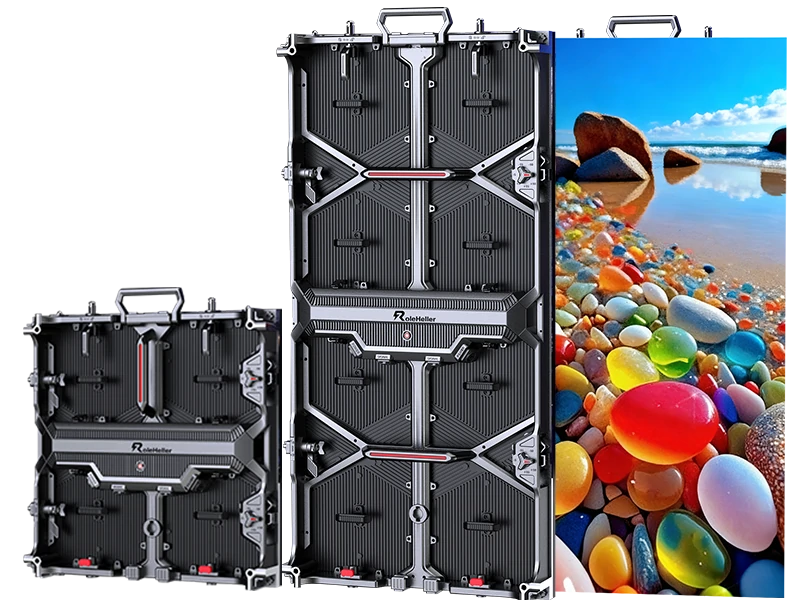
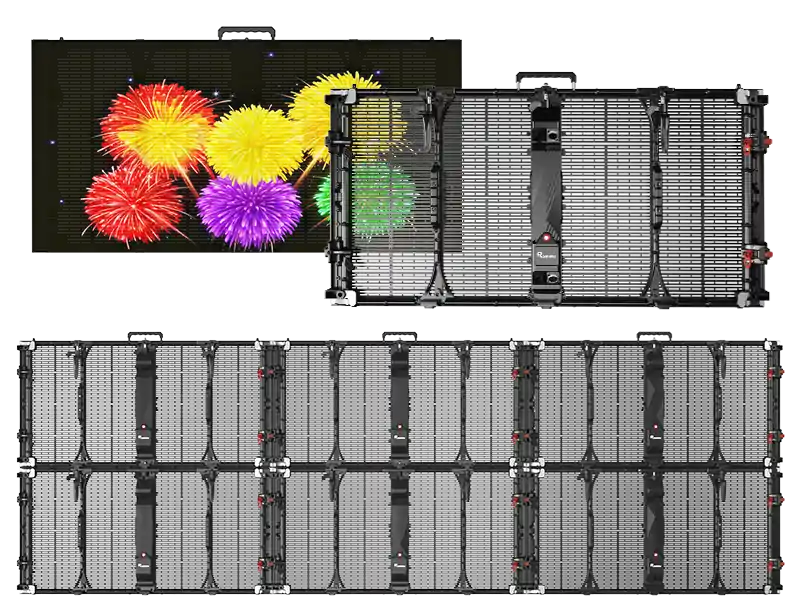
LED display screens paired with audio. Stage walls, digital signage, retail façades where sound and picture live in one system. Here the "speaker manufacturer" part is often a partner brand, not the same factory.
The fastest way to sort yourself out: write down what the display must show. If it is "FM frequency and track number," you want category one. If it is "video plus sound," you want category three. Send that sentence as the first line of every enquiry. It saves about two weeks of people sending you the wrong datasheet.
This is where most buyers land. The good news is the supply chain here is mature, competitive and used to exporting to Europe and North America. The bad news is that maturity means everyone can make something that looks right in a photo, and the differences hide in places photos do not show.
What actually matters on these units:
The display module itself. Is it a proper segment LCD or a cheap LED indicator dressed up as a display? Ask for a close-up photo of the display lit, and ask what it shows in each mode. Suppliers who hesitate here are usually working from a generic shell.
Driver size and real RMS power, not "PMPO." A 3 W driver in a plastic box tuned for bass reflex will sound fine at desk distance and fall apart at party volume. If you need it loud, say so — they will swap the driver and the enclosure tuning, and the price will move maybe a dollar.
Battery chemistry and certification. Lithium-ion cells shipped by sea or air need MSDS and usually UN38.3; for US/EU retail you are looking at CB/CE/FCC/RoHS and often a recognised cell supplier. This is where cheap quotes quietly cut corners. A non-certified cell is not a bargain, it is a liability.
Bluetooth version and codec. BT 5.0+ is standard now. If anyone quotes you 4.x as a feature, that is old stock thinking.
TWS pairing stability. Ask them to demonstrate two units pairing, and ask what happens when a third unit is nearby. This is the most common field complaint and nobody lists it in the spec table.
Firmware and button logic. Sounds trivial until customers call because they cannot exit FM mode. Lock down the control sequence before tooling.
MOQ reality: 500–1,000 pieces for a custom shell or display layout is typical; off-the-shelf models with your logo printed can go as low as 100–300. Tooling a new enclosure is where the money goes — expect four-figure costs and four to six weeks added.
If what you actually need is a screen that also plays sound — a retail window, a stage wall, a worship space — then you are buying an LED display system and adding audio. Important nuance: very few LED display factories design their own professional audio. What they do is partner with an amplifier/speaker line or subcontract it. That is fine, but it means you should treat audio as a separate line item with its own spec, its own warranty and its own person responsible.
The failure pattern I see repeatedly: a beautiful screen gets installed, the audio gets specified last, and the result is either too quiet or oddly delayed because the video processor and the audio path have different latency. If lip-sync matters — and it matters any time a person speaks on camera — ask about system latency up front and get the integrator to confirm the audio delay compensation is configurable. Not optional, not "we will sort it on site."
Also worth saying plainly: in bright daylight, a big bright screen wins attention and the audio just needs to be adequate. In a covered or indoor space, the audio carries the experience and the screen supports it. Budget accordingly instead of splitting it fifty-fifty and being mildly disappointed by both.
Keep it to one page. Ten minutes to write, and it separates people who stock things from people who forward emails.
| Item | What to ask for | Why it matters |
|---|---|---|
| Display type | Segment LCD vs LED indicator vs full panel; what each mode shows | Avoids "display" meaning a blinking light |
| Driver & power | Driver diameter, RMS watts, THD at rated power | PMPO numbers are marketing |
| Battery | Cell type, capacity mAh, certified supplier, UN38.3/MSDS | Shipping and safety compliance |
| Certifications | CE/FCC/RoHS/CB, and who holds them | Needed for customs and retail |
| Connectivity | BT version, TWS, AUX, USB/TF, FM module quality | Defines real-world usability |
| Enclosure | Material, finish, IP rating if used outdoors | Durability, not aesthetics |
| Latency / sync | Audio delay compensation, processor used | Critical if picture and speech combine |
| Warranty | Months, what triggers replacement, spare parts policy | The headline number is not the contract |
| Packaging | Gift box, carton drop-test standard, manual language | Returns get killed here |
| Commercials | MOQ, unit price tiers, tooling cost, lead time, payment terms | Compare line by line, not total by total |
Numbers behave better than adjectives. "High quality sound, fast delivery" tells you nothing. "RMS 10 W, THD <1% at 1 W/1 kHz, 2,000 mAh cell from a named supplier, 14-month warranty, 30/70 payment" is something you can hold someone to.
Three types of company sit behind these listings, and all of them call themselves manufacturers.
The actual factory owns injection moulds or cabinet tooling, runs assembly lines, does its own QC and aging, and can change a button layout or a logo position if your volume makes it worth their while. They reply slower than you would like and their prices are not the lowest. Their lead times are honest.
The assembler buys shells, drivers, boards and batteries from upstream, puts them together, calibrates and ships. There is nothing wrong with this model — a lot of decent product comes out of it, and they are usually more flexible on odd requests. But their margin sits on top of someone else's margin, and when a batch starts failing thirteen months later they are ringing the same component supplier you could have rung yourself.
The trader with borrowed photos. Polished storefront, replies inside the hour, quotes low and fast. Ask something specific — say whether their display module is common-anode or what the THD figure is at rated power — and the answer arrives a day later, phrased slightly differently from your question.
A filter I use that takes about twenty seconds: ask what they keep in stock for your exact configuration, and ask how many units of that model they shipped last month. A real operation answers the first part immediately and gives a number on the second that sounds boring rather than impressive. Someone who has to "check with the engineer" on basic mechanicals is probably not standing next to a production line.
Unit price moves with driver size, battery capacity, certification package, enclosure finish and volume. For custom tooling, expect the mould cost upfront and amortisation across the first run.
On top of the unit price you must count: tooling, samples, certification upgrades for your market, packaging, freight, duty, inspection, and spares. A quote that lands well below the others has almost always left out one of three things: the certification package, the packaging spec, or the spares allowance. Sometimes all three. Ask for a line-item breakdown and compare line by line. Boring work, saves real money.
Payment terms matter as much as price. Thirty percent deposit with balance against copy of the bill of lading is standard for new relationships. Anything demanding full payment upfront on a first order is a signal, regardless of how professional the website looks. Insist on a pre-shipment inspection window — even a video call showing your serial-numbered cartons packed and running. Factories with nothing to hide do not object.
Lead times: off-the-shelf with your branding, three to five weeks. New tooling, add four to six. Order near a major Chinese holiday period and add more time — ports close, factories shut down, and your launch date does not care.
Live video call, not a recorded video. Ask them to walk to the production floor or the aging rack and show units running with today's date visible somewhere in frame. Recorded videos travel between companies. A live call does not.
Order samples, plural. Two or three, from two different suppliers if you can manage it. Put them side by side, play the same track at the same volume, and leave them running for a couple of days. You feel the difference in the latch and the button travel before you hear it in the sound.
Run a burn-in. Power them continuously for 48 hours. Watch for battery sag, display fade, thermal issues and any unit that starts to behave differently after hour twenty. A ten-minute bench test catches almost nothing.
Check references that are not on their website. Anyone can list three happy clients. Ask for a customer who bought eighteen months ago and is still reordering. Then ask what has broken. The answer to "what has broken" is far more useful than the answer to "are you happy."
Start small. One model, one run, then scale. Suppliers who survive contact with real warehouses, real retailers and real return reasons are the ones worth a relationship with.
Q: Are these manufacturers really cheaper than buying locally?
A: On unit cost, usually yes, often noticeably. But the saving shifts responsibility onto you: certification, QC, warranty handling, spare parts and freight. If you need fifty units once, a local distributor is frequently the better deal overall. If you are moving hundreds a year or building a branded line, going direct starts to pay.
Q: Should I just pick the lowest quote?
A: Rarely. At these volumes the price spread between competent suppliers is often smaller than the cost of dealing with a bad battery batch or a display that fades after six months. What you are really paying for is cell sourcing discipline, consistent tooling, and someone who picks up the phone a year later.
Q: What MOQ should I expect?
A: Off-the-shelf with your logo: 100–300. Custom colour, display layout or shell: 500–1,000 typically. New tooling pushes both cost and MOQ up. Be honest about your twelve-month forecast upfront, because the price break at higher volumes is meaningful and nobody volunteers it.
Q: Do I really need all those certifications?
A: If the product crosses a border or sits on a retail shelf, yes. CE/FCC/RoHS are baseline; lithium cells need UN38.3 and MSDS for shipping; some retailers ask for additional audits. Skipping them saves money exactly once.
Q: Is TWS reliable enough to build a product around?
A: It works, but treat it as a feature you must validate yourself, not something you accept on a datasheet. Test multiple pairs in the same room, test re-pairing after power loss, and test with phones from different makers. This is where most field complaints come from.
Q: Can the same factory do the screen and the sound?
A: Sometimes, but usually via partners. If you need both, ask who makes the audio, who signs off on the integration, and whose warranty covers it. Write it down. Ambiguity here is expensive.
Q: Realistic lead time?
A: Three to five weeks for branded-off-the-shelf, seven to twelve with new tooling, plus shipping. Add time around major holidays.
Q: What should be in the quote?
A: Unit price by tier, tooling, sample cost, certification package, packaging spec, spares allowance, freight and duty treatment, payment terms, lead time, warranty text. Line items, not a single total.
Q: How do I know they are a real factory?
A: Live video call with today's date visible, technical questions answered immediately, physical samples, a burn-in test, and a conversation with an existing customer. Five steps, none of them optional if the order is big.
Q: What is the most common defect?
A: On portable units, battery and charging circuit issues, followed by display/module failures and Bluetooth pairing drift. Plan spares accordingly — typically 1–2% on the first run, adjusted after you see your own return data.
Not defining what the display must show, then discovering at sampling that "LED display" meant a row of blinking lights.
Comparing total quote totals instead of line items. The cheap quote is almost always missing the same three things.
Accepting PMPO or peak power figures as if they were engineering data.
Skipping battery certification to save a few dollars, then getting stuck at customs.
Ordering near a holiday without padding the schedule.
Treating audio as an afterthought on an LED display project, then living with lip-sync drift.
Skipping the burn-in. Forty-eight hours of continuous running finds problems a bench test never will.
Not locking firmware and button logic before tooling. Changing it after costs far more than deciding it properly.
Forgetting spares. Displays, batteries and charging ports fail. Having them in the same shipment saves weeks.
Storing stock somewhere hot or damp. Humidity and heat kill more electronics than bad luck does.
The best outcome rarely comes from finding the cheapest manufacturer. It comes from finding the one who answers at inconvenient times, who ships a replacement batch without arguing, and whose datasheet numbers match the sample you held in your hand. These products go into shops, onto stages, into cars and homes, and they get used by people who assume the thing will just work. You are not buying a box, you are buying an arrangement with a company that needs to still exist when the second reorder comes round.
I lean toward starting with a modest run, watching the return reasons carefully for three months, and then scaling. Costs a bit more upfront, prevents a lot of expensive disappointment. And if the volume is big enough, go see the factory once. Not to perform an audit, but because the conversation you have standing next to a running line is qualitatively different from the one over email. People behave differently when they know you have seen where the thing comes from.
One more thing I wish more buyers considered: the hardware is only as good as what you put on the display and through the speaker. Clear labelling, sensible default volume, a manual that is not machine-translated into nonsense — these tiny decisions drive your return rate more than the driver diameter does. Budget time for them the way you budget for tooling.
If you have been burned by a supplier on this, or you found one who actually delivers, share what gave it away — the detail that told you early. That is the stuff that does not show up in any brochure.
1. What does "LED digital display speaker" mean?
It usually refers to a speaker with a built-in LED or LCD digital display showing information such as FM frequency, track number, mode or battery level. It can also describe an LED video display system with integrated audio. Clarify which one you need before requesting quotes.
2. Where are these manufacturers located?
Mostly in Guangdong province — Shenzhen, Guangzhou and Dongguan — for both portable audio and LED display systems. The two categories use different supply chains even though they sit in the same region.
3. What MOQ should I expect?
Off-the-shelf models with your branding typically 100–300 units; custom display layouts, colours or enclosures usually 500–1,000. New tooling adds cost and time.
4. Which certifications are required?
CE, FCC and RoHS are common baselines. Lithium-ion batteries require UN38.3 and MSDS for shipping. Additional retailer or market-specific audits may apply.
5. What power rating should I trust?
RMS watts at a stated impedance and THD figure. Ignore PMPO or "peak" power claims, which are marketing rather than engineering data.
6. How do I verify a manufacturer remotely?
Request a live video call showing the production or aging area with today's date visible, order physical samples, run a 48-hour burn-in, and speak to an existing customer.
7. What is the realistic lead time?
Three to five weeks for branded off-the-shelf goods, seven to twelve weeks with new tooling, plus shipping. Add extra time around major Chinese holidays.
8. What are the most common defects?
Battery and charging circuit failures, display or module faults, and Bluetooth pairing instability. Plan a spares allowance of 1–2% on initial runs.
9. Should I buy the screen and the speaker from the same factory?
Only if one party clearly owns responsibility for the integration. Otherwise specify audio as a separate line item with its own warranty and sign-off.
10. What payment terms are standard?
Thirty percent deposit with the balance against a copy of the bill of lading is typical for new relationships. Be cautious of suppliers demanding full payment upfront on a first order.
.jpg "Where to find China party LED video wall manufacturers?")
.jpg "Which LED display manufacturers in China can you actually trust?")