English

If you want the direct, no-nonsense verdict on choosing china led display module manufacturers without throwing your money into a pit of dead pixels and warranty disputes, here is the baseline: do not buy from trading brokers posing as factories on wholesale e-commerce portals. You need direct assembly fabricators located in Shenzhen (specifically Bao'an and Guangming districts) or Huizhou that meet four strict engineering baselines. First, mandate genuine gold-wire bonded LEDs (Nationstar or Kinglight high-spec) instead of copper-wire alternatives. Second, require constant-current driver ICs with at least 3,840 Hz refresh rates and 16-bit grayscale (Macroblock MBI5153/MBI5359 or Chipone ICN2053/2069). Third, insist on 4-layer FR4 circuit boards with 2oz copper thickness and true automated optical inspection (AOI) records. Fourth, contractually lock in a single-bin spare parts allotment of at least 5% from the exact same wafer production run. If an overseas supplier dodges your request for unedited video walkthroughs of their automated surface-mount lines or fails to provide third-party lab test reports, walk away immediately.
Picture this situation: you are managing a major commercial installation—perhaps an indoor curved video wall for a corporate headquarters in Hong Kong's Central district, or a giant outdoor perimeter screen for a shopping plaza in California or London. You need four hundred individual P2.5 indoor or P3.9 outdoor modules. You go online to source from china led display module manufacturers, and within two hours your email and WhatsApp are flooded with sixty quotes ranging from $8 all the way to $38 per tile. Every sales rep claims their facility is the biggest in Guangdong, their LEDs are "Grade A", and their warranty lasts five years. But what happens when the shipment clears customs, your technicians start building the wall, and you discover severe batch color variations, warped plastic frames, and cold solder joints that cause entire module quadrants to drop out during the client's opening ceremony? Replacing defective modules high up on a mounting structure eats up your profit margins, and arguing across time zones about who pays for international return freight gets exhausting very quickly. Let's dive right in and walk through the engineering facts, pricing structures, and factory inspection protocols so you can protect your investment.
When we are using display components sourced from China, understanding the regional supply ecosystem is essential. Almost all global LED module manufacturing takes place in Guangdong Province, but different towns specialize in completely different quality tiers.
[Guangdong LED Manufacturing Ecosystem]
                  │
  ┌───────────────┼───────────────┐
  ▼               ▼               ▼
[Shenzhen]      [Huizhou /      [Jiangmen /
Bao'an &        Dongguan]       Zhongshan]
Guangming       Massive Scale   Entry-Level
High-End SMT,   Outdoor Signs,  Basic Signage,
Fine-Pitch &    High-Volume     Low-Cost
Rental Modules  SMD Production  Component Hubs
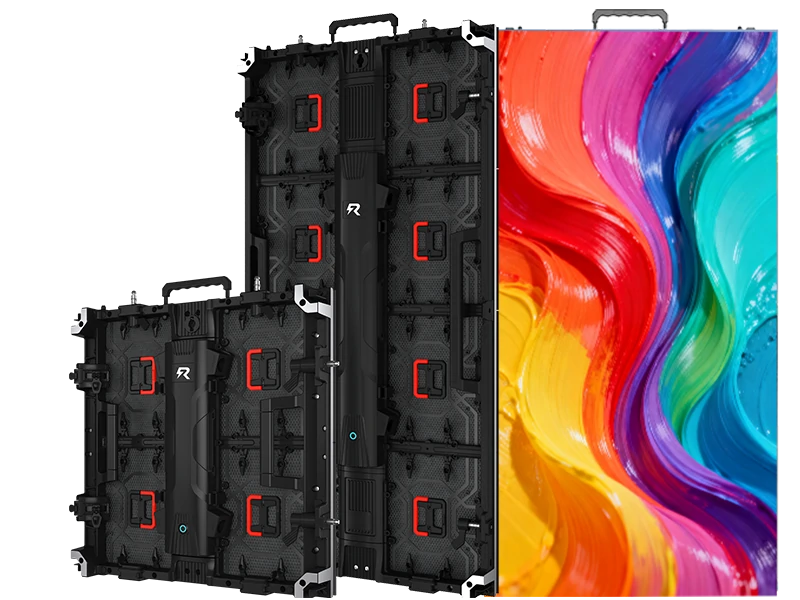
Shenzhen (Bao'an District, Shiyan, and Guangming): This is the undisputed core of high-end LED module production. The engineering talent, high-speed automated placement machinery, and high-precision tooling shops are concentrated here. If you need fine-pitch indoor modules (P0.9, P1.25, P1.5, P1.8), broadcast-quality virtual production panels, or rugged rental modules, you will find the most dependable assembly lines in these industrial corridors.
Huizhou and Dongguan: These neighboring industrial cities host massive, automated mega-factories. Companies here have expansive footprints with twenty or thirty high-speed SMT lines running twenty-four hours a day. They excel at standard outdoor commercial modules (P3.91, P4, P5, P6, P8, P10) where high volume and tight cost control are required.
Jiangmen and Zhongshan: Traditionally focused on consumer decorative lighting, these areas have expanded into basic commercial LED displays. However, many workshops here cater to budget-driven domestic projects. Unless you are looking for ultra-low-cost monochrome text boards or basic petrol station price displays, you must inspect their automated optical inspection capabilities very carefully before placing an order.
For international buyers—whether you are operating out of Hong Kong, Europe, or the United States—Shenzhen and Huizhou remain the premier sourcing destinations because their engineering teams understand international compliance standards like CE, UL, FCC, and RoHS.
When looking at a bare LED display module, it looks like a simple square piece of plastic with tiny black diodes on the front and some driver chips on the back. But the real difference between a module that runs flawlessly for seven years and one that fails in six months comes down to microscopic component choices.
Inside every surface-mount LED diode (whether it is an SMD 1010, 1515, 2121, or 3535), microscopic bonding wires connect the semiconductor die to the lead frame.
99.99% Pure Gold Wire Bonding: Gold wire does not oxidize. It flexes smoothly during rapid thermal expansion and contraction cycles, and it maintains stable electrical conductivity under continuous electrical load. Nationstar Gold-Wire series and Cree/Nichia diodes utilize this standard.
Copper or Alloy Wire Bonding: Inexpensive modules often use copper or composite alloy wire. Copper oxidizes quickly if microscopic atmospheric moisture penetrates the epoxy resin casing. During hot summer afternoons and freezing winter nights, the mismatched thermal expansion rate causes stress fractures at the weld points. That is how dead pixels start multiplying across your display after a few months. When negotiating contracts, always demand written verification of gold-wire packaging.
The driver IC determines how cleanly and steadily electrical current is delivered to each sub-pixel.
High-Refresh PWM Drivers: Chips like the Macroblock MBI5153/MBI5359 or Chipone ICN2053/ICN2069 feature built-in pulse-width modulation (PWM) logic. They deliver refresh rates of 3,840 Hz to 7,680 Hz and support 16-bit grayscale. When media is recorded on a smartphone or professional broadcast camera, you see zero rolling black scan lines, and low-light color gradients appear perfectly smooth without banding.
Basic Dual-Latch Drivers: Low-cost modules use basic driver ICs running at 960 Hz to 1,920 Hz. To the human eye from fifteen feet away, static text looks acceptable. But the moment you film the screen, ugly horizontal bands roll across the image, and dark scenes suffer severe color posterization.
The printed circuit board is the structural and electrical backbone of the module.
4-Layer High-Tg FR4: A quality module uses a 4-layer PCB with a minimum 2oz copper weight. Having dedicated internal power and ground planes ensures uniform heat distribution, prevents electromagnetic interference, and stops voltage drops across the module face. High glass-transition temperature (Tg > 150°C) FR4 material keeps the board flat under continuous heat.
2-Layer Thin Boards: Cheap suppliers cut manufacturing costs by utilizing 2-layer PCBs with 1oz or 0.5oz copper. These thin boards warp under the heat generated by the driver ICs, creating visible surface ripples across your finished video wall. Furthermore, high resistance in thin copper traces causes noticeable brightness drops from the power input terminal to the far edge of the tile.
The plastic bottom housing and front louver mask protect the electronics and define the physical contrast.
Look for housings molded from virgin polycarbonate (PC) or polyphenylene sulfide (PPS) blended with anti-UV additives. These materials retain their shape across seasonal temperature swings without shrinking or bowing.
Cheap suppliers blend high percentages of recycled regrind plastic. After six months of outdoor exposure or hot indoor spotlights, the mask louvers bow outward, catching ceiling glare and creating visible black seams between modules.
To help you benchmark quotes from china led display module manufacturers, here is a detailed breakdown of what goes into different production quality levels:
| Technical Attribute | Budget Commercial Tier | Professional Integrator Spec | Mission-Critical Broadcast / XR |
|---|---|---|---|
| Average Module Price (P2.5) | $10.00 – $14.00 | $18.00 – $26.00 | $35.00 – $55.00+ |
| LED Packaging Brand | Generic unbranded SMD | Kinglight / Nationstar Copper | Nationstar Gold Wire / Cree / Nichia |
| Bonding Wire Material | Copper or Alloy wire | Copper wire (Standard) | 99.99% Pure Gold wire |
| Driver IC Model | Generic dual-latch IC | Chipone ICN2053 / MBI5124 | Macroblock MBI5359 / MBI5264 |
| Refresh Rate (Hz) | 960 Hz – 1,920 Hz | 3,840 Hz | 7,680 Hz (Low-latency) |
| Grayscale Depth | 13-bit – 14-bit | 14-bit – 16-bit | 16-bit – 18-bit Low-Gray Clear |
| PCB Layer & Copper | 2-Layer, 1oz copper | 4-Layer, 1.5oz – 2oz copper | 4 to 6-Layer, 2oz high-Tg FR4 |
| Power Distribution | Common Anode (5V rail) | Common Anode or Cathode | Common Cathode Energy-Saving |
| Plastic Shell Material | Recycled ABS blend | Virgin Polycarbonate (PC) | PC + Glass fiber / Die-cast frame |
| Operating Temperature | 45°C – 60°C (Runs hot) | 35°C – 45°C (Warm) | 28°C – 35°C (Cool to touch) |
| First-Year Failure Rate | > 80 ppm | < 20 ppm | < 5 ppm |
A common trap for new buyers is treating indoor and outdoor modules as if they are the exact same product with different brightness settings. They are engineered for completely different environments.
[Indoor NPP Module Architecture]
Front: Matte-black SMD / GOB / COB -> Wide viewing angle, high contrast (600 - 1,000 Nits)
Core:  4-Layer PCB with Common Cathode -> Cool touch, low power draw
Rear:  Precision magnetic floating mounts -> 100% front serviceability

[Outdoor Weatherproof Module Architecture]
Front: Sealed UV Polycarbonate Louvers -> Deep black, direct sun visibility (5,500 - 8,500 Nits)
Core:  Automated two-part optical silicone injection -> 100% IP65/IP68 dry cavity
Rear:  Closed waterproof gasket groove + stainless steel screws -> Corrosion resistance
Indoor applications prioritize visual smoothness and close-range ergonomics.
Surface Protection (SMD vs. GOB vs. COB): Standard SMD 1010 or 1515 diodes work well in controlled corporate environments where screens are mounted high out of reach. But for retail stores, touch applications, or school halls, choose GOB (Glue-on-Board) or COB (Chip-on-Board). GOB applies a transparent optical epoxy layer across the front face, making the diodes resistant to accidental bumps, cleaning chemicals, and moisture. COB mounts bare micro-LED chips directly onto the board without plastic packaging, delivering deep black levels, wide 170-degree viewing angles, and superior thermal conductivity.
Common Cathode vs. Common Anode: Fine-pitch indoor displays packed with hundreds of thousands of diodes per square meter generate significant heat. Traditional common-anode circuits supply a single 4.2V or 5V rail to all three color dies (red, green, and blue). Because red LEDs require only about 1.9V to operate, the excess voltage is dissipated directly as heat. Modern common-cathode modules split the power rails: 2.8V to blue and green, and 1.8V to red. This cuts power consumption by up to 35% and keeps the screen surface comfortable to the touch.
Outdoor modules must endure torrential downpours, coastal salt spray, and scorching midday heat.
Two-Part Silicone Potting: For genuine IP65 or IP68 ingress protection, the front PCB must be fully potted with high-grade optical silicone or polyurethane compound. Low-cost workshops use cheap potting resins filled with industrial oils. When exposed to summer heat, cheap silicone shrinks, cracks, and pulls away from the plastic frame edges, allowing driving rain to seep directly into the driver IC pins.
Louver Shading Geometry: Outdoor brightness must be calibrated between 5,500 and 8,500 nits to cut through direct midday sun. But raw brightness alone is useless without contrast. The front mask louvers must feature sharp horizontal overhangs that cast micro-shadows across the diode faces, stopping direct sunlight from washing out the image.
When you are ordering a full container or several pallets of modules from china led display module manufacturers, hope is never an engineering strategy. You need a structured, step-by-step verification process before releasing your final balance payment.
[Raw Component Intake Verification]
                 │
                 ▼
[High-Speed SMT Placement & 3D SPI Check]
                 │
                 ▼
[Reflow Soldering & Automated Optical Inspection (AOI)]
                 │
                 ▼
[Silicone Potting Curing & Water Immersion (Outdoor)]
                 │
                 ▼
[72-Hour Continuous Full-Load Burn-in Marathon]
                 │
                 ▼
[Thermal Camera Scan & Single-Bin Spectrometer Calibration]
                 │
                 ▼
[Anti-Static Vacuum Sealing & Reinforced Plywood Crating]
Before assembly starts, demand proof of LED diode sorting. LEDs are sliced from semiconductor crystal wafers, and each batch varies slightly in forward voltage, peak dominant wavelength, and luminous intensity.
Require a single-bin sorting guarantee for your order. If a factory mixes diodes from multiple binning lots to fill your production run, the screen might look uniform in pure green or pure blue, but the moment you display a flat white or subtle gray background, you will see distracting color patches.
Verify the manufacturer's incoming component storage. SMT cleanrooms must store bare LED reels inside climate-controlled dehumidification dry-cabinets. If diodes absorb ambient factory humidity before passing through the reflow oven, internal moisture vaporizes into steam, causing microscopic internal delamination.
Walk the SMT floor or have your third-party inspection agent verify the machinery.
Look for modern modular placement machines (such as Yamaha, Panasonic NPM, or Fuji NXT) capable of placement accuracy within ±15 to ±25 micrometers.
Ensure every printed circuit board passes through an automated 3D Solder Paste Inspection (SPI) station before chip mounting, followed by a 10-zone or 12-zone nitrogen reflow oven that prevents pad oxidation.
Following soldering, 100% of the boards must pass 3D Automated Optical Inspection (AOI) to catch solder bridging, component misalignment, and tombstoning.
Any supplier that offers to ship your order forty-eight hours after SMT assembly is cutting critical quality-control corners. Semiconductor component failures follow the classic bathtub curve: weak solder points, defective driver ICs, and diode bond-wire faults fail within the first 48 to 72 hours of sustained electrical operation.
The factory must mount the modules into test racks and run an uninterrupted 72-hour burn-in cycle.
The test must include: 24 hours of full-raster white screen at 100% brightness (stressing power traces and thermal dissipation), 24 hours of alternating primary RGB patterns (identifying stuck pixels and cold solder joints), and 24 hours of dynamic high-contrast video playback.
During the full-white burn-in test, walk the aging line with a calibrated thermal imaging camera. If specific driver ICs or DC power traces spike above 70°C while surrounding areas sit at 40°C, the PCB layout has poor thermal dissipation.
Do not accept a generic IP65 certificate issued for a different product line three years ago.
Pull sample modules directly from the production line and submerge them in an on-site water testing chamber or spray them with high-pressure water jets for thirty minutes.
Immediately dry the exterior housing, unlatch the rear dry-cavity cover, and inspect the internal PCB traces under magnification to confirm that the perimeter rubber sealing gasket prevented any water ingress.
Because LED modules are packed with delicate surface components, shipping damage is common if packaging is poorly designed.
Modules must be individually sealed inside anti-static ESD bubble bags with fresh desiccant packs.
Cartons must feature high-density molded EPE foam trays that cradle each module edge, preventing adjacent tiles from knocking together during maritime freight transit or rough road handling.
Question: Can I buy replacement modules from the same manufacturer two years from now and have them match my existing screen perfectly?
Answer: Physically, they will fit into the cabinet frames, but optically, they will almost certainly not match without extensive camera calibration. Semiconductor crystal growth is an organic chemical process; even the same manufacturer using the same packaging machines will produce diodes with slight variations in dominant wavelength and color temperature across different wafer batches. If you plug a new module into an older screen, it will stand out like an off-color patch. That is why you must contractually require the factory to supply a 5% batch-matched spare parts kit drawn from the exact same wafer lot as your primary shipment, and store those spares in a climate-controlled, static-safe space.
Question: What is the real-world difference between Novastar, Colorlight, and Brompton control systems for modular displays?
Answer: For standard commercial retail, corporate conference rooms, and outdoor advertising boards, Novastar (such as the Taurus series for cloud screens, or the COEX / MCTRL series paired with A5s Plus or A8s receiving cards) is the dominant global standard. It offers an ideal balance of cost, stability, and widespread technician familiarity. Colorlight is a capable, budget-friendly alternative frequently deployed in commercial retail signage networks. Brompton Technology, while exceptional for high-end film production, broadcast studios, and virtual production (XR), carries a significant price premium that is difficult to justify for standard commercial sign installations unless your client explicitly mandates 12-bit native processing, low-latency genlock, and automated ShutterSync camera tracking.
Question: Why do some displays show visible seam lines between modular blocks even when the mounting frame is completely flat?
Answer: That is caused by plastic shell tolerance stacking and poor magnetic mounting engineering. When an injection-molding tool wears out, the module plastic base can be off by just 0.15 millimeters on its outer edge. When you snap eight modules together across a cabinet, that tiny variance compounds into a noticeable gap or step. When sourcing modules, insist on precision-machined molds with hardened steel locator pins, and check that the module mounting magnets are spring-loaded floating magnets. Floating magnets allow technicians to use fine hex-key adjustments from the front face to bring all adjacent tiles into sub-millimeter planar alignment.
When you review quotes from china led display module manufacturers, knowing how production capital is allocated across the bill of materials (BOM) helps you spot suspiciously cheap offers before they cause problems on site:
| Production Expense Component | Typical BOM Share | What Gets Cheated in Lowball Quotes |
|---|---|---|
| LED Diodes (R, G, B) | 35% – 45% | Swapped to copper/alloy wire, leftover mixed-bin lots |
| Driver ICs & Power Mosfets | 18% – 25% | Low-refresh generic ICs (1,920 Hz), high ghosting, heat |
| Multilayer PCB Board | 12% – 16% | Dropped from 4-layer 2oz copper to 2-layer 1oz, board warps |
| Plastic Shell & Front Louvers | 8% – 12% | Recycled regrind plastic used, louvers warp under sunlight |
| Silicone Potting (Outdoor) | 4% – 7% | Cheap industrial oil-filled potting that cracks in winter |
| SMT Assembly & QA Burn-In | 6% – 10% | Burn-in cut from 72 hours down to 12 hours or skipped entirely |
When a factory offers you a P2.5 module at $9.00 while other reputable suppliers quote $18.00, they are not taking a loss out of goodwill. They are using copper-wire diodes, cheap dual-latch driver ICs, thin 2-layer circuit boards, and skipping the continuous burn-in marathon. You end up functioning as the factory's unpaid quality control tester on your job site.
When you are ready to issue purchase orders and negotiate commercial contracts with overseas suppliers, keep these field-tested procurement guidelines in mind:
First, never buy production quantities based on a glossy catalog or digital photos. Always order a paid evaluation package containing at least four operational modules, spare ribbon cables, and power connectors. Take those sample tiles into your workshop. Put them under a digital microscope to inspect the solder fillets on the driver IC pins, check for uniform solder paste distribution without bridging, measure surface heat dissipation under a full-white video signal, and inspect the module edges with digital calipers.
Second, lock down the bill of materials (BOM) in your legally binding commercial invoice. Do not accept vague descriptions like "High-Quality Nationstar LED Display Module". The purchase contract must specify:
Exact diode package: Nationstar Gold-Wire SMD2121 (or specified Kinglight model).
Exact driver IC model: Macroblock MBI5153 or Chipone ICN2053 with minimum 3,840 Hz refresh.
PCB architecture: 4-Layer FR4, minimum 1.6 mm thickness, 2oz copper weight, TG170 material.
Packaging: Reinforced export plywood crates with individual ESD sealed moisture-barrier bags.
Third, structure your payment terms around verified factory acceptance milestones. The standard overseas trade term is 30% deposit upon order confirmation, and 70% balance before container loading. Never wire that final 70% based purely on factory-provided photos or prerecorded video clips. Hire an independent third-party inspection agency (such as QIMA, SGS, or an independent local engineer based in Shenzhen) to visit the factory floor, verify that the serial numbers match your batch, audit the live 72-hour burn-in line, and supervise the crating process. That small inspection fee is the cheapest insurance policy you will ever buy.