English
If you've ever stood behind the curtain at a live event and looked at the massive LED wall humming just metres away from performers, you'd understand why sourcing from the right china backstage led video wall manufacturers is such a big deal. These panels aren't your average display — they run inches from people's faces, operate under intense stage lighting, get packed and unpacked hundreds of times a year, and need to look absolutely flawless on camera. I've been in the live events production space for close to a decade now, and the number of times I've seen buyers get burned by choosing the wrong manufacturer is honestly staggering. Panels that flicker under camera, colour shifts that become obvious the moment you tile three cabinets together, locking mechanisms that wear out after a dozen shows — these are the kinds of headaches that cost real money and real reputation in this industry.
So how do you actually find a manufacturer that delivers panels built for the brutal reality of backstage and touring use? Let me walk you through everything I know, from the technical specs that genuinely matter to the sourcing mistakes that keep coming up year after year.
A backstage LED video wall is essentially a large-format display positioned behind or adjacent to performers on stage. It serves multiple purposes — displaying live camera feeds of the performer for the audience, showing visual content and graphics, creating immersive environments, or acting as a backdrop for broadcast and recording. The key difference between a backstage LED wall and, say, a lobby display or a retail signage panel comes down to a few critical factors:
Proximity to talent — Backstage panels often sit just 1 to 3 metres from performers, meaning pixel pitch needs to be fine enough that individual pixels aren't visible at close range
Camera capture requirements — These walls get filmed constantly, so refresh rates need to be high enough to prevent flickering and scan lines on video
Stage lighting interference — Powerful stage lights hit these panels from multiple angles, so brightness and contrast performance under mixed lighting conditions is essential
Frequent assembly and disassembly — Touring panels get loaded into trucks, flown on planes, and set up in different venues week after week. The mechanical durability of cabinets, connectors, and locking systems gets tested far beyond what a fixed installation ever experiences
Rapid deployment — Crews need to build and strike these walls quickly, often in under an hour, which means tool-free locking mechanisms and lightweight cabinets are non-negotiable
Understanding these requirements is the starting point for evaluating any manufacturer. If a supplier can't demonstrate that their panels are engineered for this specific use case, they're probably not the right fit regardless of how attractive their pricing looks.
Let me break down the specifications that actually matter when you're sourcing panels for backstage and stage applications. Not all specs carry equal weight, and some that look impressive on paper don't translate to real-world performance.
| Specification | Recommended for Backstage Use | Why It Matters |
|---|---|---|
| Pixel Pitch | P2.6 to P3.91 (indoor stage) | P2.6 for close viewing (1-3m), P3.91 for larger stages (3-8m viewing distance) |
| Refresh Rate | 3840Hz minimum | Prevents flickering and scan lines on camera during broadcast and recording |
| Brightness | 800–1200 nits (indoor) | Competes with stage lighting without washing out the displayed image |
| Contrast Ratio | 5000:1 or higher | Deep blacks make content pop against stage lighting conditions |
| Cabinet Weight | 7–9 kg per 500×500mm | Lighter cabinets reduce crew fatigue during rapid load-in/load-out |
| Locking System | Tool-free fast-lock with ±0.1mm tolerance | Ensures seamless tiling and fast assembly without visible gaps |
| Gray Scale | 14–16 bit | Smooth colour gradation, no banding in dark scenes or gradients |
| Service Access | Dual-side (front and rear) | Quick field repairs without dismantling the entire wall |
One thing I want to emphasise here — the refresh rate specification is where a lot of manufacturers play games. They'll quote "3840Hz" in their spec sheet, but that number might only apply at low gray levels or specific brightness settings. When you're evaluating a manufacturer, ask them to demonstrate the panel running at full brightness with content that includes dark scenes and fast motion. If you see any flickering or rolling bars when you look at it through your phone camera, that's a sign the real-world refresh performance doesn't match the spec.
This is probably the most important skill you'll develop as a buyer in this space. The china backstage led video wall manufacturers market is absolutely packed with trading companies that present themselves as factories. They have polished websites, professional sales teams, and factory photos that look convincing — until you dig deeper. Here's my vetting process:
Not a pre-recorded walkthrough. Not a virtual tour. A real-time video call where you can ask them to point the camera at specific equipment, show you the production line in action, and walk through the aging test facility. Real manufacturers are proud of their operations and will accommodate this without hesitation. If they stall, make excuses, or only offer marketing videos, that's a significant red flag.
The surface mount technology lines are where LED lamp beads and driver ICs get soldered onto PCB boards. For backstage-grade panels, you need high-precision placement machines — the industry standards are Fuji NXT series, Yamaha YSM series, and Panasonic NPM series. Ask how many SMT lines they operate and what placement accuracy they achieve. A genuine factory will have multiple lines running and can show you real-time production.
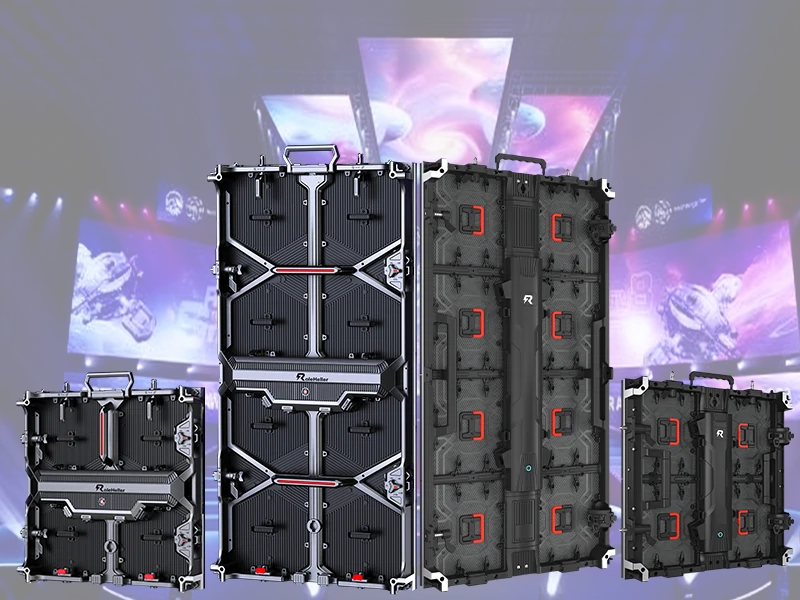
Backstage rental panels need precision-machined die-cast aluminium cabinets with tolerances of ±0.1mm. This is what ensures cabinets tile together seamlessly with no visible gaps or height differences. If the manufacturer only offers stamped steel cabinets or outsources their cabinet production, they can't guarantee the mechanical precision that touring panels demand.
Every quality panel needs 48 to 72 hours of continuous burn-in testing at elevated temperatures before shipping. This catches early-failure components that would otherwise turn into dead pixels or colour anomalies during a live show. A dedicated aging room with temperature-controlled racks holding hundreds of panels simultaneously is a sign of a serious operation. No aging facility means no real quality gate.
For manufacturers serving the international touring and events market, I'd want to see at least 2,000 to 3,000 square metres of monthly stage-grade output. Below that threshold, you're usually dealing with a small workshop that may struggle with consistency across larger orders and could have difficulty matching LED bins for repeat purchases.
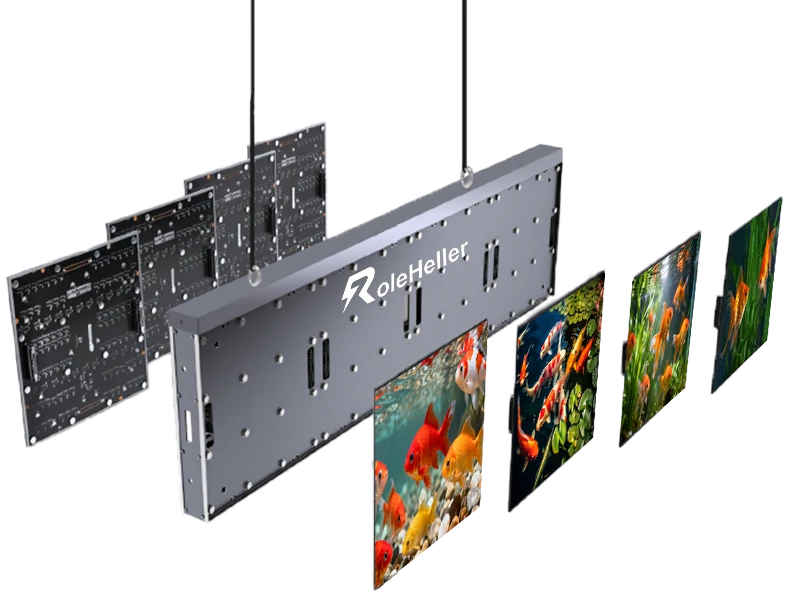
Here's where you'll see the biggest differences between manufacturers who genuinely understand backstage requirements and those who just assemble bought-in parts. The QC process for stage panels needs to account for the unique stresses these products face in the field.
| QC Stage | What Gets Inspected | What Happens If This Step Gets Skipped |
|---|---|---|
| Incoming LED Bin Sorting | Wavelength (±1nm), luminous intensity (±5%), forward voltage | Visible colour patches and brightness inconsistency across the wall |
| Post-SMT AOI Scan | Solder joint quality, component alignment, cold joints | Intermittent failures that appear weeks after deployment |
| Module-Level Aging (24hrs) | Dead pixels, colour shift, early LED failures | Latent defects sealed inside cabinets, requiring costly field repairs |
| Full Cabinet Burn-in (48-72hrs) | Power supply stability, receiver card performance under load | Failures that only appear during sustained operation at a live event |
| Mechanical Stress Test | Locking mechanism durability, connector retention force | Cabinets that develop play and visible seams after repeated assembly cycles |
| Final Calibration | Module-by-module brightness and colour correction | Visible seams, colour banding, and uneven brightness across tiled panels |
The mechanical stress test is something that most manufacturers skip entirely, and it's a big deal for backstage panels. These products get assembled and disassembled hundreds of times per year. Locking mechanisms that feel tight on day one can develop play after 50 or 100 cycles, leading to cabinets that shift slightly and create visible seams. The best manufacturers I've worked with run their locking mechanisms through 500+ engagement cycles during the qualification phase to ensure they maintain precision over the product's service life.
Another detail that matters enormously for backstage applications — the connector quality. Power and signal connectors on touring panels get plugged and unplugged constantly. Cheap connectors lose contact pressure over time, leading to intermittent signal loss or power drops that can cause individual cabinets to go dark mid-show. Look for manufacturers that use Neutrik-rated or equivalent high-cycle connectors rated for at least 5,000 mating cycles.
Let me lay out what you should actually expect to pay when sourcing backstage-grade panels from Chinese manufacturers. These are wholesale prices for orders of 10 square metres and above:
| Configuration | Price per m² (USD) | Typical Application |
|---|---|---|
| P2.6 Indoor Stage (die-cast, 3840Hz, Novastar) | $800–$1,100 | Corporate events, small concerts, theatre stages |
| P2.97 Indoor Stage (die-cast, 3840Hz, high contrast) | $700–$950 | Mid-size concerts, award shows, live broadcast |
| P3.91 Indoor/Outdoor Stage (IP65 option, 3840Hz) | $500–$800 | Large concerts, festivals, houses of worship |
| P1.86 Premium (broadcast-grade, Brompton-ready) | $1,200–$1,800 | Virtual production, broadcast studios, close camera work |
A critical note on what these prices include: The figures above typically cover LED display cabinets with modules, receiving cards, and power supplies pre-installed. They do NOT include video processors, sending boxes, flight cases, mounting structures, signal cabling, spare parts packages, or shipping. When you're budgeting a complete deployed system, plan to add roughly 35% to 55% on top of the panel-only cost for a fully functional installation.
I've watched buyers get excited about a quote that looks 30% cheaper than competitors, only to discover later that the lower price covered bare modules without cabinets or power supplies. Sometimes the "price per square metre" is calculated based on module area rather than cabinet area, which can be misleading when cabinets include bezels and framing. Always confirm in writing exactly what's included in any quoted price and whether the per-square-metre figure is based on module area or cabinet footprint.
This is probably the single most common complaint from buyers who've been burned. You order 15 square metres of P2.97 panels and they look fantastic. Eight months later you expand the display by 5 square metres, and the new batch has a visible colour temperature difference when placed next to the original panels. Here's what happens at the manufacturing level: LED lamp beads from different production batches can have slight variations in dominant wavelength and luminous intensity. Even a 1 to 2 nanometre shift in wavelength becomes noticeable when panels are tiled side by side.
Reputable manufacturers address this by bin-sorting LED beads into tight wavelength groups (typically ±1nm), maintaining detailed batch records so repeat orders pull from the same LED bin, and aging all panels from the same batch together to ensure uniform brightness decay before shipment. When you place an order, specifically request that all panels come from the same LED production batch and put that requirement in your written purchase agreement.
For backstage and touring applications, the locking mechanism between cabinets is arguably the most critical mechanical component. It determines how seamlessly panels tile together, how quickly crews can build and strike the wall, and how long the panels maintain their visual quality over hundreds of setup cycles. The best locking systems use a wedge-type or cam-lock mechanism that pulls cabinets together with consistent force, compensating for minor manufacturing tolerances. Cheaper systems rely on simple pin-and-hole alignment that develops play over time, leading to visible seams and uneven surfaces.
Most stage panels ship with receiving cards pre-installed. The major ecosystems you'll encounter include Novastar (most widely adopted globally), Colorlight (strong value proposition), and Brompton Tessera (premium broadcast and virtual production choice). Make sure the receiving card model in your quote matches your preferred control system. Mixing ecosystems can work but adds unnecessary complexity and potential compatibility headaches. I've seen situations where a buyer received panels with Novastar cards when they'd specified Colorlight, and the manufacturer's response was essentially "just change your order next time." Not the kind of surprise you want when you're on a production timeline.
When you're purchasing from china backstage led video wall manufacturers, the panel price is only one piece of your total project cost. Let me cover the logistics side.
Freight options: Sea freight (FCL) is the most cost-effective method for orders exceeding 10 square metres. A standard 20-foot container holds roughly 30 to 40 square metres of stage LED panels in flight cases, with transit times of 15 to 25 days to the US West Coast and 25 to 35 days to European ports. Air freight gets your panels there in 5 to 7 days but costs 4 to 6 times more than sea freight — generally only justified for urgent small orders or emergency replacement panels needed before a show.
Import duties: LED display panels typically fall under HS code 8528.59. In the United States, standard duty sits around 0% to 5%, but Section 301 tariffs on Chinese-origin LED products can add an additional 25%. In the European Union, standard duty is approximately 1.4% plus VAT (20%+ depending on the member state). In Hong Kong, there's no import duty on LED displays, which gives local buyers a cost advantage. These rates shift periodically, so always verify current rates with a licensed customs broker before finalising your budget.
Spare parts strategy: Here's a recommendation I share with every buyer — order a spare parts package equal to 5% to 8% of your total panel quantity. This should include extra LED modules from the same production batch as your main order, spare power supplies matching your cabinet specifications, additional receiving cards pre-configured for your control system, spare ribbon cables and power cables, and a few extra cabinet rear covers and locking hardware. Having these components on hand means a single failed module doesn't turn into weeks of downtime while you wait for an international replacement shipment. For touring companies, I'd actually push this to 8% to 10% because you can't afford to have a wall short a cabinet during a show.
One thing I've learned from years in this industry: the best wholesale deals don't come from one-off purchases. They come from building genuine, transparent relationships with manufacturers who understand your business and your standards. When you become a repeat buyer, several advantages start working in your favour:
Priority production scheduling — your orders jump ahead of one-time buyers during peak season (typically Q3 through Q4 when event and holiday retail demand surges)
Consistent LED batch allocation — the manufacturer reserves matching LED bins for your repeat orders, solving the colour consistency problem entirely
Custom engineering support — once a factory knows your standard cabinet sizes and configurations, they can pre-engineer solutions that speed up your project timelines
Better payment terms — moving from 100% upfront payment to 30% deposit with 70% before shipment, or even net-30 terms for well-established relationships
Dedicated account management — instead of rotating through different sales representatives, you get someone who knows your history, preferences, and technical requirements
I usually suggest starting with a trial order of 5 to 10 square metres to evaluate quality, communication responsiveness, and logistics reliability before committing to larger wholesale volumes. This approach lets you test the manufacturer's capabilities without taking on excessive risk, and it gives both sides a chance to see if the working relationship is a good fit.
From where I sit, the china backstage led video wall manufacturers landscape is in a genuinely interesting position right now. Production costs have dropped meaningfully over the past few years as volumes have scaled and manufacturing processes have matured, but quality variation between manufacturers has actually widened. You've got top-tier factories producing panels that rival any premium Western brand at a fraction of the cost, and you've got low-end workshops churning out panels that look perfectly fine on a spec sheet but fall apart under real-world touring conditions.
The buyers who consistently do well in this market are the ones who invest real time in due diligence before placing orders. Visit the factory or at minimum do a live video tour. Request physical samples and test them in your actual installation environment under your typical lighting conditions. Build relationships based on transparency and mutual accountability rather than chasing the lowest price per square metre.
If you're just starting to explore options, my honest advice is to shortlist 3 to 5 manufacturers, get samples from each, and do a direct side-by-side comparison. Run the same content on all of them. Look at the seams between cabinets. Check the colour uniformity across a large white field. View the display through a camera at different shutter speeds to test refresh performance. The quality differences become obvious pretty quickly once you have actual panels in front of you running the same content. The extra time you invest upfront in evaluation will pay for itself many times over in reduced maintenance costs, longer panel lifespan, and fewer project headaches.
Hope this guide helps you navigate the sourcing process with more confidence. The live events industry moves fast, and having a reliable manufacturing partner makes all the difference between a production that runs smoothly and one that becomes a cautionary tale.
For most backstage applications, P2.6 to P3.91 is the recommended range. P2.6 is ideal when panels sit close to performers (1-3 metres) or when close camera work is involved. P3.91 works well for larger stages where the viewing distance is 3 to 8 metres. For virtual production and broadcast stages where cameras work extremely close to the wall, P1.86 or finer may be necessary.
A minimum of 3840Hz is essential for any backstage panel that will be captured on camera. Lower refresh rates cause visible flickering and scan lines on video, which ruins broadcast quality and recording footage. For panels that will never be filmed (such as audience-facing back walls), 1920Hz may be acceptable, but 3840Hz has become the industry standard regardless.
Request a live video factory tour, verify they own their SMT production lines (Fuji, Yamaha, or Panasonic placement machines), confirm in-house die-cast cabinet fabrication capability, check for a dedicated aging test facility, and ask for verifiable certifications (CE, FCC, RoHS, ETL/UL). Real manufacturers will accommodate all of these requests without hesitation.
Quality panels typically require 20 to 30 working days for orders under 50 square metres. Larger orders (50 to 100 m²) may take 30 to 40 working days. During peak season (Q3 to Q4), lead times can extend by an additional 5 to 10 working days. Always confirm the lead time in writing and build buffer time into your production schedule.
For indoor stage displays, the standard is ≤3 dead pixels per module and ≤1 bright (stuck-on) pixel per module, with zero dead pixels in the centre 60% of any module. Bright pixels are far more objectionable than dead ones, especially on dark content commonly used in stage design. Some manufacturers offer "zero dead pixel" guarantees for a premium price.
Order a spare parts package equal to 5% to 8% of your total panel quantity for fixed installations, or 8% to 10% for touring applications. Include extra modules from the same production batch, spare power supplies, additional receiving cards, and spare cables. This prevents a single component failure from becoming extended downtime during a production.
Most manufacturers offer receiving cards compatible with Novastar (most widely adopted globally), Colorlight (strong value proposition), and Brompton Tessera (premium broadcast and virtual production). Specify your preferred control system when ordering to ensure the receiving cards are pre-configured correctly for your ecosystem.
Sea freight to the US West Coast typically takes 15 to 25 days, to European ports 25 to 35 days, and to Hong Kong approximately 3 to 5 days. Air freight delivers in 5 to 7 days but costs 4 to 6 times more. Always factor in customs clearance time (3 to 7 days) when planning your project timeline.
Industry standard warranty is 2 years covering manufacturing defects in LED chips, driver ICs, power supplies, and PCB boards. Some premium manufacturers offer 3-year warranties. Always confirm whether the warranty covers on-site replacement service or requires return-to-factory repair, and whether labour costs for field replacement are included.
Quality touring panels are specifically engineered for this. Die-cast aluminium cabinets with precision machining (±0.1mm tolerance), high-cycle locking mechanisms rated for 500+ engagements, and reinforced connectors rated for 5,000+ mating cycles ensure the panels withstand hundreds of load-in/load-out cycles. The key is confirming these mechanical durability specifications with the manufacturer before ordering, as not all P2.6 or P3.91 panels are built to touring standards.