English
You're standing in a shop unit in Kwun Tong, or maybe a hotel ballroom in Tsim Sha Tsui, and someone has just told you the LED wall needs to be up in five weeks. You open your laptop, type china led screen display panel manufacturers, and suddenly you are staring at about four million results. Half of them look like the same factory photo recycled across twenty different company names. The other half quote you prices that differ by three hundred percent for what appears, on paper, to be exactly the same thing. One supplier says P3.91 indoor rental cabinet at HK$2,800 per square metre. Another says HK$6,500. Both attach PDFs that seem to have been copied from each other, right down to the typo in the refresh rate line. And both promise delivery in twenty days, which, if you have ever imported anything into Hong Kong, you already know is a promise that lives in a different universe from the one where containers actually arrive.
This is the part where most people just pick the middle price and hope. I have seen that movie. It usually ends with someone replacing power supplies every six months and explaining to a client why the left side of the screen looks slightly yellower than the right. The good news is the chaos has a pattern. Once you see it, the whole thing gets a lot less scary.
First thing — the word "panel" does a lot of heavy lifting and nobody agrees on what it means. In this industry it can mean three different things, and which one you mean changes the entire conversation.
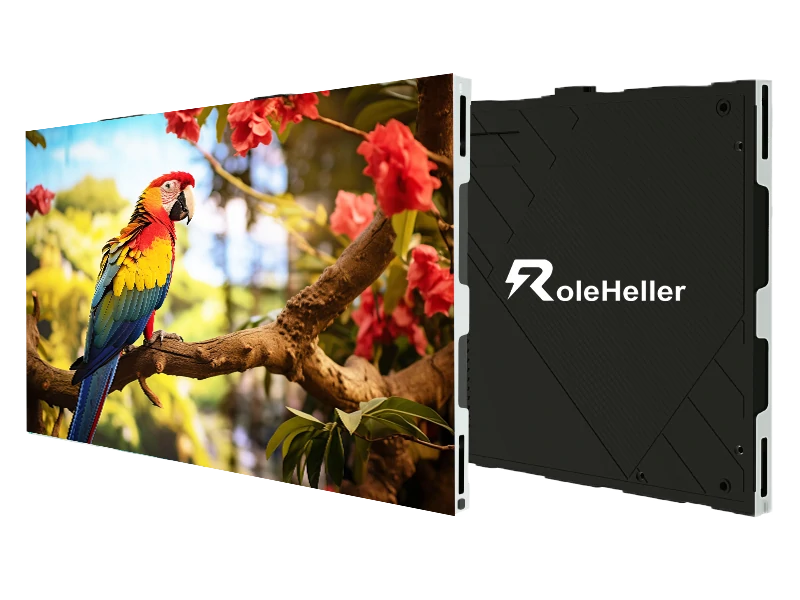
Module — the small board, maybe 250×250mm or 320×160mm, with the LEDs and driver ICs on it. This is the thing Chinese factories sell by the piece or by the square metre. It is basically a consumable.
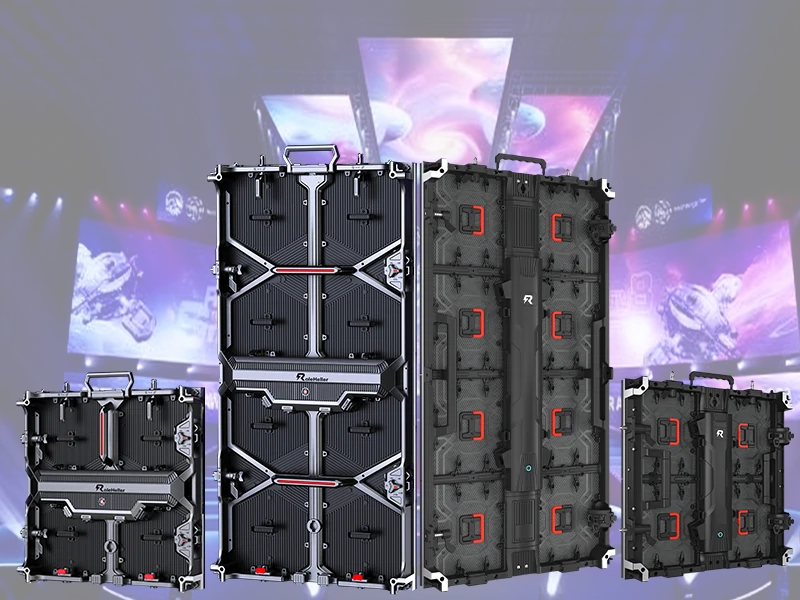
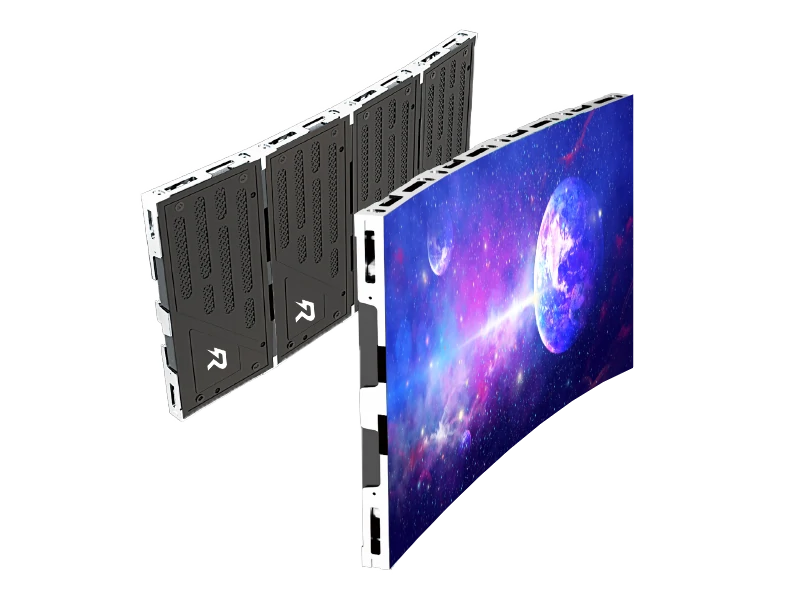
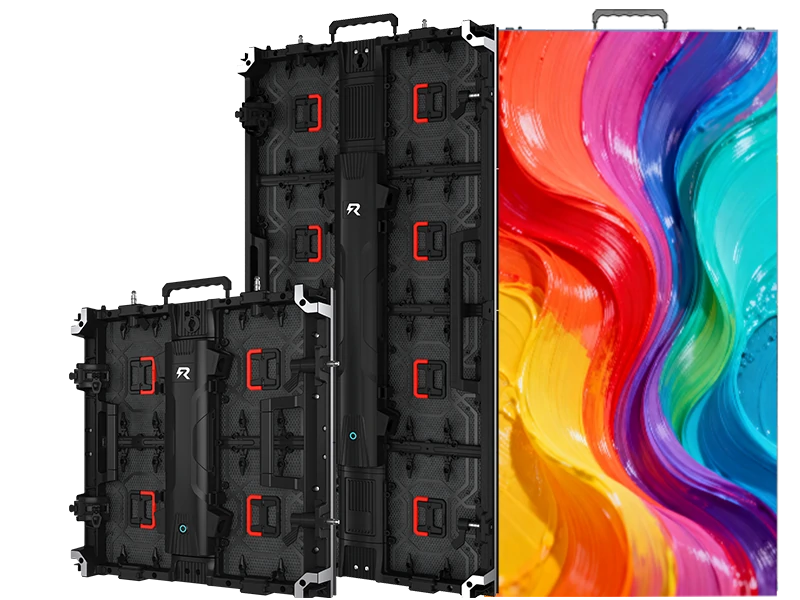
Cabinet — a metal frame, often die-cast aluminium or magnesium, that holds a bunch of modules together, plus the receiving cards and power supplies. This is what gets flown in for events or bolted to a wall.
Full system — cabinets plus sending card/controller, video processor, software, rigging hardware, flight cases, spare parts, installation drawings.
When two quotes look wildly different, nine times out of ten it is because one is modules-only and the other is a full system. Nobody put that in the subject line. So before you even compare prices, ask each supplier to write down, in plain text, exactly which of the three they are quoting. If they cannot do that cleanly, stop there. You have found your first filter.
Everyone leads with "how much per square metre." The better question, the one that actually decides everything else, is: how far away will the person be when they look at it?
Because viewing distance decides pixel pitch, and pixel pitch decides roughly sixty percent of your cost. Everything else is noise compared to that.
Rough guide, the one I actually use on site: minimum comfortable viewing distance in feet is about pixel pitch in millimetres times three. P4 read from twelve feet looks fine. P4 read from four feet looks like someone put dots on a wall. Put a P2.5 above a stage where nobody gets closer than thirty feet and you have just paid a premium for a spec that no audience will ever notice.
So before we go further:
Indoor fixed, lobby or retail, viewers at 3–8 metres → P1.8 to P2.9
Indoor event / stage backdrop, viewers at 5–15 metres → P2.9 to P3.9
Outdoor fixed in Hong Kong, viewers across a street → P4 to P6, and you need serious brightness
Large venue, stadium-style distances → P6 to P10, and honestly you could go cheaper still
Not all suppliers sit in the same place in the chain. This is useful to know because it explains why quality varies and why "factory direct" is a phrase that has been stretched until it broke.
Tier one: the big listed companies. Leyard (which owns Planar in the US), Unilumin, Absen, Ledman, Qiangli Jucai. These people run their own SMT lines, do their own calibration, supply broadcast studios and stadiums. Their datasheets are real. Their pricing assumes you are buying enough to fill a container. For a single forty-square-metre install in Causeway Bay, they might not even quote you directly — they will push you to a distributor. That is not an insult, it is just how their sales machine works.
Tier two: mid-size module makers in Shenzhen, Dongguan, Huizhou. This is where most export buyers actually land. Some of them are excellent. Some of them run three aging racks and call it a factory. The difference between good and merely okay here shows up around month fourteen, not on day one. That is the tricky bit. Colour drift between batches, a power supply that runs hot, a connector that loosens after the tenth load-in. None of that photographs well.
Tier three: assemblers and trading companies. They buy LED packages, PCBs, driver ICs and put them together. Or they buy finished modules from tier two and relabel. Listen — this is not automatically bad. A honest trader can be faster, more flexible, and easier to talk to than a giant factory. The problem comes when someone presents themselves as having twenty thousand square metres of production space they do not have. That is the lie you need to catch. Not the existence of traders generally.
Then there is the layer underneath all of it, the one that matters more than the logo on the crate: the components. NationStar versus Kinglight versus Sanan lamps. Macroblock MBI5124 or ICN2038S driver ICs. Mean Well power supplies or something with a name you cannot pronounce. Novastar, Colorlight, Linsn receiving cards. Two modules can look identical and be built from completely different guts. Ask for the bill of materials by brand and model number. If the reply says "high-quality imported LEDs," you have your answer already.
| Supplier type | Typical MOQ | Price level | Best fit | Where the risk hides |
|---|---|---|---|---|
| Listed giants (Leyard, Unilumin, Absen) | High | Premium | Large fixed installs, broadcast, stadiums | May not engage on small jobs; longer lead times |
| Mid-size Guangdong makers | Moderate | Mid | Rental houses, mid-size projects, repeat buyers | Quality varies; must verify aging and calibration capability |
| Assemblers / traders | Low | Low | Prototypes, one-off small jobs, rush deadlines | May overstate capability; warranty depends on them still existing in year three |
| Component-level spec (any tier) | — | Varies | Buyers who want control over longevity | Requires you to know what you are asking for |
One thing worth saying plainly, because I get asked this a lot: "made in China" is not the problem here. Most of the world's LED panels come out of Guangdong regardless of whose name is on the brochure. Your actual exposure is calibration discipline, whether they bin LEDs properly, whether they keep batch records, and whether the person answering your message at two in the morning Beijing time knows the difference between a receiving card and a sending card. That last one is not a joke. I have had that conversation twice.
Buying for Hong Kong means a few extra boxes get ticked, and if you skip them you find out the hard way.
Humidity and salt. This city eats electronics. An outdoor cabinet facing the harbour, or even a semi-outdoor one in a mall atrium near an opening, needs IP65 front at minimum and sealed connectors. Coastal air plus humidity is how you get corrosion on the edge of a module by year two. Tell the supplier exactly where it is going — harbour-facing, rooftop, basement car park with condensation — and ask what they would change. If the answer is "nothing, IP65 is standard," be careful.
Typhoons. Outdoor installations need proper wind-load engineering. Not a suggestion. The structure matters as much as the screen, and the structure is usually where local contractors come in. Get the wind-load calc in writing and make sure whoever bolts it up signs off on it.
Power. We run 220V/50Hz. Make sure the quoted power supplies match, and ask for the actual measured consumption at typical brightness, not the peak nameplate number. Screens with common-cathode drive and auto-dimming use noticeably less. Over seven years that is real money on your electricity bill, and for a lot of buildings it is the number that gets the project past the landlord or the sustainability committee.
Certification and compliance. CE and RoHS for Europe. UL/ETL and FCC for North America. Here in Hong Kong you are looking at electrical safety compliance, wiring regulations, and if it is outdoors and visible from the street, sometimes planning or building-related approvals depending on the site. Venues have their own insurance requirements too. Confirm what you need before you pay the deposit. Doing certification after the fact costs far more than doing it upfront. Always.
Access and rigging. Old building, narrow lift, no loading bay — I have seen a perfectly good screen become a very expensive problem because nobody measured the lift door. Measure the route from the truck to the wall. Measure it twice.
Brochures love numbers that sound impressive and do nothing for your actual use case. Let me split them up.
Matters a lot:
Pixel pitch relative to viewing distance — covered above, it is the big one
Brightness — indoor 800–1,500 nits with auto dimming. Too bright in a lobby and people complain about glare, this happens more than you think. Outdoor needs 5,000–7,000 nits with a photocell, otherwise it washes out by ten in the morning
Refresh rate ≥1920 Hz, 3840 Hz if anyone is going to film it. Security camera footage of a flickering wall looks amateur and in an incident investigation it can genuinely make things unreadable
Scan mode and driving method — constant current, higher scan division gives better uniformity
Module flatness and gap — for fine pitch indoor, gap under 0.1mm, flatness within 0.2mm, otherwise you get a visible grid that no calibration fixes. This is purely a tooling issue. Cheap tooling shows up here first
Calibration — every module individually calibrated with data stored and reproducible. Ask whether the calibration data survives a module replacement. Some systems store it on the receiving card, some in software. If a replaced module looks brighter than its neighbours, the calibration was not done properly
Service access — front-service matters enormously when the screen is flush against a wall with nothing behind it. I have seen a job where changing one module meant taking apart a timber enclosure. Not a good day
Spare parts — 3–5% of module count, matched batch, shipped with the order
Matters less than vendors claim:
Maximum brightness quoted without context (nobody runs an indoor screen at 7,000 nits)
"8K support" on a datasheet for a panel showing event graphics (that is a controller job, not a module job)
Contrast ratios measured in a dark lab instead of under actual lighting
"100,000 hour lifespan" — a theoretical LED figure, not a system figure
Number of colours — 16.7 million is standard everywhere now, it is not a differentiator
Self-check, the five questions to answer before you send any RFQ: indoor or outdoor? Fixed or rental? Viewing distance? Will anyone film it? Who installs it and who fixes it at eleven at night when it goes dark? Answer those and your shortlist cuts itself in half.
You do not need a private investigator. You need five specific asks and the willingness to read what comes back.
Ask one: send me a photo of today's production line with today's date written on paper next to the machine. Traders stall. Factories send it within an hour, sometimes with the sales rep slightly annoyed you asked. Bonus if the photo shows an aging room — rows of lit panels burning in. Aging is where bad LEDs reveal themselves.
Ask two: give me the BOM by component brand and model. Lamp maker and series, driver IC model, power supply brand, receiving card model, PCB thickness. A real factory has this in a spreadsheet. Someone who does not will send you a PDF saying "premium components."
Ask three: what is your pixel-to-pixel calibration process and can I see a sample report. Calibration reports with per-module data are routine for legitimate makers. No report means no calibration, means you will live with uneven patches forever.
Ask four: can I buy matched-batch spare modules in year four. This is the question that separates long-term partners from one-off sellers. LED bins change. If they cannot guarantee sourcing the same bin later, your replacements will never match. Ask them to commit in writing to holding batch records for your project.
Ask five: video call, ten minutes, walk me past the aging room. Anyone who manufactures will do this. Anyone who does not will find a reason the camera is broken that day.
And one more thing people forget — check the business license name against the name on the quote. Mismatches happen more often than you would think.
Numbers move with LED package markets and exchange rates, but ranges keep you from being surprised. Think of these as ballpark, and always confirm what is included.
Indoor full colour, installed system cost per square metre:
P1.2–P1.8 fine pitch: roughly HK$20,000–HK$48,000+, heavily dependent on COB/mini-LED and whether cabinets are included
P2–P2.9: roughly HK$10,000–HK$24,000
P3–P4 indoor: roughly HK$6,000–HK$15,000
Outdoor full colour:
P4–P6: roughly HK$12,000–HK$28,000
P8–P10: roughly HK$7,000–HK$18,000
Modules alone — no cabinets, no controllers, no structure — run materially lower. Which is exactly why comparing "per square metre" quotes across suppliers is meaningless unless you confirm what is inside that number.
Always confirm in writing: modules only, or modules plus cabinets plus receiving cards plus power supplies plus controller plus cables plus flight cases plus crating plus shipping terms plus installation drawings plus spare parts. A quote that is thirty-five percent cheaper than the others almost always excludes cabinets and controllers. It is not a discount. It is a different product.
Costs buyers routinely forget: spare modules and power supplies; structural steel and wind-load engineering for outdoor; electrical work and permits; freight, duties and port handling — DDP removes headaches but costs more; on-site commissioning and calibration; and replacement lead time after warranty, because air freighting ten modules can cost more than the modules themselves.
Most failed buys fail here, not on the hardware.
Step one — lock the spec yourself. Do not accept the supplier's template. Write down: pixel pitch, cabinet size and material, module dimensions, brightness target, refresh rate, IP rating, lamp brand, driver IC, power supply brand, receiving card, scan mode, operating temperature range, required certifications. Then have them sign it back as the basis of the quote. When the goods arrive you will check against this document. Without it you have nothing to check against. Simple as that.
Step two — get physical samples. Two or three actual modules, not photos. Check uniformity at low brightness, look for dead pixels, check connector fit, lay a straightedge across the surface, and run it for forty-eight hours straight. A module that develops a warm corner after six hours has a thermal problem no spec sheet mentions.
Step three — audit, remote or in person. If you cannot travel, hire a third-party inspection company in Guangdong for a day. It costs a few hundred dollars and pays for itself immediately. Have them verify SMT line count, aging room capacity, calibration equipment, and whether the company name on the license matches the quote.
Step four — payment terms that protect you. Standard is 30% deposit, 70% before shipment or against copy of bill of lading. Never pay 100% upfront. For larger orders use a letter of credit. Tie final payment to passing a pre-shipment inspection you arrange, not one they arrange.
Step five — pre-shipment inspection. Module count, batch numbers, burn-in records, random photometric spot checks, cabinet fit, packaging. Flight cases for rental gear should be custom-fit with foam. Cardboard boxes for ocean freight is how panels arrive cracked.
Step six — test everything on arrival, before you install. Power up every module in the warehouse. Finding a dead module on the ground is a five-minute swap. Finding it after the screen is built into a wall is a whole different day.
Step seven — keep records. Batch numbers, calibration files, serial numbers, and the name of the person who handled your order. Sales reps change companies constantly in this industry. Having a direct line to someone who knows your project two years later is worth more than a slightly better price.
Q: Should I buy modules only and source cabinets locally?
A: Sometimes. If you have a trusted local fabricator and you need a non-standard size or shape, it can work. But module-to-cabinet tolerance is where visible seams come from, and if it goes wrong the module maker and the cabinet maker will point at each other. For most buyers, one responsible party is worth the premium.
Q: Is COB better than SMD?
A: COB gives better protection, wider viewing angle, easier cleaning — great for fine pitch indoor where someone might touch the screen. SMD is more mature, cheaper, and easier to repair module by module. Outdoors, SMD is still standard. COB repairs usually need factory rework. So it depends on the job, not on which one sounds newer.
Q: Can I mix new modules with old ones later?
A: Only if the supplier kept your original LED bin and calibration data, and even then expect a slight mismatch in the patched area. This is why buying extra matched-batch modules upfront is smart. The cost difference between ordering spares now and trying to match them in year three is significant.
Q: What is the realistic lead time?
A: Standard modules in stock: one to two weeks. Made to order: three to six weeks. Custom pitch, custom cabinet size, unusual certification: six to ten weeks. Add shipping and customs. If someone promises a custom P2.5 outdoor job in ten days including shipping, they are either lying or shipping you stock that was sitting around.
Q: Do I need to fly to Shenzhen?
A: Not required. But a single factory visit does more than six weeks of emails. If you cannot go, use a third-party inspector and insist on live video walkthroughs. And go see the oldest installation they have done in your region — a five-year-old screen tells the truth that a showroom cannot.
Q: LCD video wall or LED?
A: Under about 110 inches with a consistent viewing distance, LCD can be cheaper and perfectly adequate. LED wins when you need seamless imagery, custom shapes, very large sizes, or high brightness in a bright space. For a true notice-board or stage feel, LED's flexibility usually wins.
Q: How long will it last?
A: Realistic useful life is seven to ten years for the structure, with power supplies and fans replaced along the way. Brightness declines gradually — maybe thirty percent over that span at normal drive levels. Plan a refresh budget rather than assuming permanent installation.
Ordering by pitch alone. Two P4 modules can differ enormously in lamp brand, scan design and calibration. Pitch is a starting point, not a specification.
Skipping the spare modules. Modules fail. Always. Having matched spares on site turns a three-week wait into a twenty-minute swap. Skipping spares to save two percent is false economy.
Assuming IP65 means waterproof forever. Seals age. Gaskets compress. Outdoor cabinets need periodic resealing and, if fan-cooled, filter cleaning. Put maintenance on the facilities calendar or discover it during a rainstorm.
Underestimating the controller and software. The module makes light; the controller makes it usable. Novastar, Colorlight, Linsn dominate. Confirm the controller supports your layout, that you get the licensing you need, and that someone on your side knows how to use the software. A screen nobody can update becomes a very expensive poster.
Buying for the demo room. Suppliers keep their best-calibrated, newest-batch panels in the showroom. Your production order comes from whatever batch is running that week. That is why sample evaluation and batch record retention matter.
Forgetting about heat. Cabinets mounted flush in a wall with no airflow cook their own power supplies. Outdoor cabinets in direct sun at high ambient need derating. Ask for the max operating temperature and whether brightness gets automatically reduced when the cabinet overheats — good systems do this to protect themselves.
Ignoring the content side. This one hurts. A company spends a lot on hardware, installs it beautifully, and the only thing that ever appears on it is a static logo because nobody owns the content. Assign an owner. Build templates, not slides. And if your updates come from a calendar or a spreadsheet, connect the screen to that source. Manual updates decay. Automated updates survive staff turnover.
If I could only keep one piece of advice, it would be this: treat the panel itself as a commodity and treat the manufacturer relationship as the actual purchase. Any competent factory in Guangdong can make a P4 that looks fine on day one. What separates them is whether they keep your batch records, whether they answer the phone on a Saturday morning when a cabinet goes dark, and whether they will still exist in year four when you need five matching modules.
Second: write your own spec and make them sign it. The whole industry runs on vague PDFs, and vagueness always resolves against the buyer. A one-page spec sheet with lamp brand, driver IC, power supply, calibration requirement and spare parts commitment eliminates most of the unpleasant surprises.
Third: do not chase the lowest price per square metre. Chase the lowest total cost over seven years, which includes electricity, spares, commissioning, downtime, and the person you call when something breaks. Price it that way and the cheapest quote rarely wins.
Fourth: pilot before you scale. If you are outfitting multiple locations, buy one screen, run it for a season, learn what your own people can and cannot manage, then roll out. You will discover things in three months of real use that no factory tour reveals — mostly about who actually updates the content and what happens when that person leaves.
What is the best pixel pitch for an LED display panel? It depends on viewing distance. Use pitch in mm × 3 ≈ minimum viewing distance in feet. P2.5–P4 covers most indoor applications; P6–P10 suits outdoor viewing beyond 20–30 feet.
Are China LED screen manufacturers reliable? Yes, at the production level — Guangdong makes most of the world's LED panels regardless of brand. Your risk lies in verification, calibration discipline and support, not in geography.
What is the difference between SMD and COB panels? SMD mounts individual LED packages on the PCB; it is mature, cost-effective and field-repairable. COB encapsulates chips directly on the board for better durability and viewing angle at fine pitches, but repairs usually require factory service.
How do I verify a supplier is a real factory? Ask for a dated production line photo, a component-level BOM, calibration reports and a live video walkthrough of the aging room. Hesitation on any of these is informative.
What should a quote include? Clarify whether modules, cabinets, receiving cards, power supplies, controller, cables, flight cases, crating, shipping terms, installation drawings and spares are included. "Per square metre" means nothing without this list.
How many spare modules should I order? Plan for 3–5% of the total module count, from the same production batch, and keep the batch records. It is the cheapest insurance you will buy.
What certifications do I need? Depends on your market and venue: CE/RoHS for Europe, UL/ETL and FCC for North America, plus local electrical compliance and permits in Hong Kong. Confirm before the deposit — retroactive certification is expensive.
How long do LED display panels last? Expect 7–10 years of useful life with gradual brightness decline, plus periodic replacement of power supplies and fans. Budget for a refresh rather than assuming permanence.
Can I replace individual modules later? Yes, but colour matching depends on the supplier retaining your original LED bin and calibration data. Ask them to commit to batch record retention in writing.
What is a realistic lead time? Stock modules: 1–2 weeks. Made to order: 3–6 weeks. Custom specs or special certifications: 6–10 weeks, plus freight and customs clearance.
.jpg "Conference LED walls — wholesale options?")