English
You are three weeks out from load-in, the rider says "LED video wall, 5mm or finer", and you have just spent two evenings scrolling through stage led display manufacturers trying to work out why one quote comes in at €90 per panel and another at €420 for what looks like exactly the same box. Every listing has the same warehouse photo, the same "factory direct price" banner, the same ISO certificate thumbnail, and the same promise that yes, of course, it works with your existing NovaStar processors. Nobody explains where the gap in price actually lives. Nobody tells you which number on the spec sheet is the one that makes or breaks a live show. And you cannot really afford to find out by guessing, because if the wall fails at soundcheck there is no second chance, only a very expensive apology to a client who booked you based on a render.
The short answer, before we get into the detail: the difference between a wall that looks brilliant and one that gets you fired is almost never the headline price or even the pixel pitch. It is refresh rate and grey scale, cabinet flatness and locking precision, whether the power supplies have headroom, whether the flight cases survive the third tour leg, and whether the person on the other end of the phone understands that "show starts at eight" is not a suggestion. Stage LED is a different discipline from fixed install. Treat it like fixed install and you will buy the wrong thing, every time.
This is where conversations go wrong fastest. You say you need a stage wall, the supplier pictures a fixed church screen, and six weeks later something arrives that is technically compliant and completely useless for touring. Be specific in your first message.
| Type | What it is | Best use | Where buyers get caught |
|---|---|---|---|
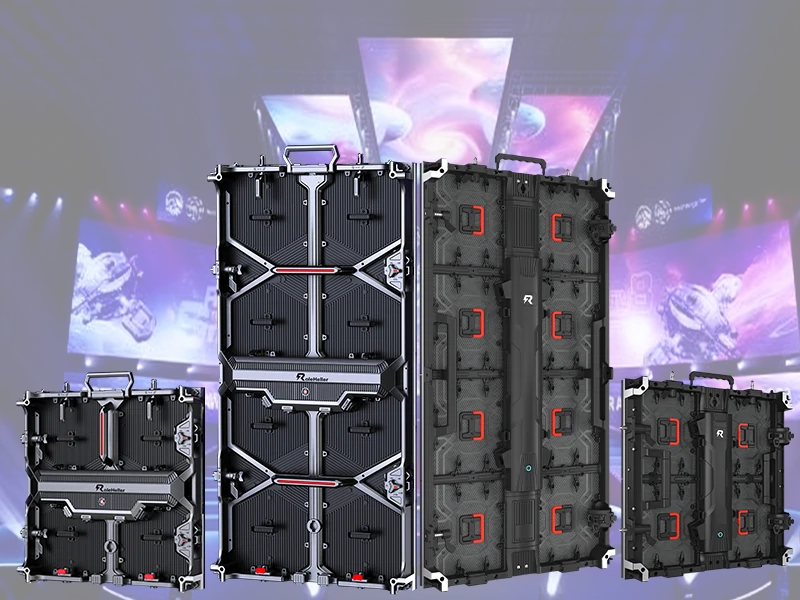
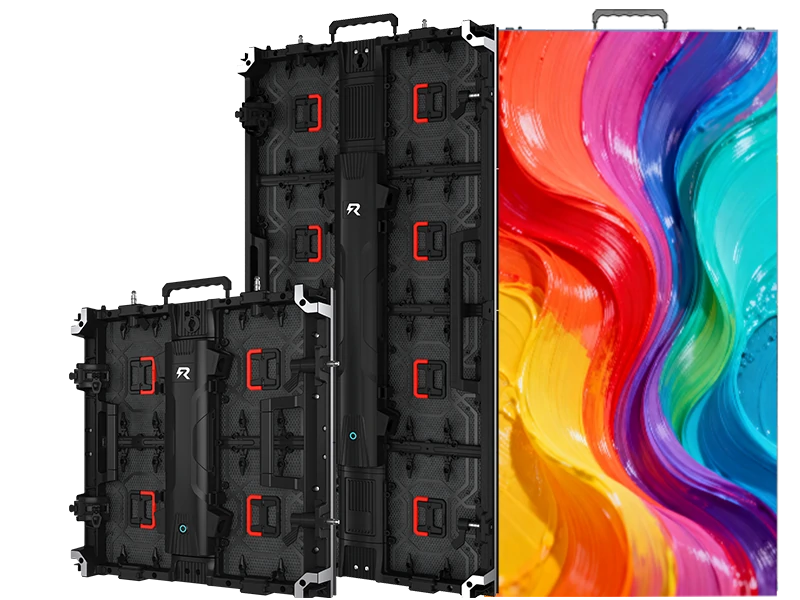
| Rental/touring cabinet (die-cast aluminium) | Lightweight, precision-machined, fast-lock, front & rear service | Concerts, corporate tours, TV studios, festivals | Cheap versions warp after a few hundred load-ins; seams appear on camera |
| Fixed-install stage backdrop | Heavier steel/aluminium, cheaper, not designed to move | Theatres, houses of worship, permanent stages, casinos | Fine for permanent use, disastrous if you ever try to tour it |
| Transparent / mesh LED | See-through panels, lower brightness, lighter structure | Stage reveals, fashion shows, layered set design | Resolution drops fast; content must be designed for it or it looks muddy |
| Creative/curved & irregular | Bendable or custom-shaped modules | Arcs, columns, rings, immersive sets | Needs experienced riggers; calibration is harder; lead times longer |
If you are moving the wall between venues, only row one applies. If someone tries to sell you a fixed-install cabinet as a "rental-grade" option because it is thirty percent cheaper, they are handing you a problem that will arrive roughly at the moment you least want it.
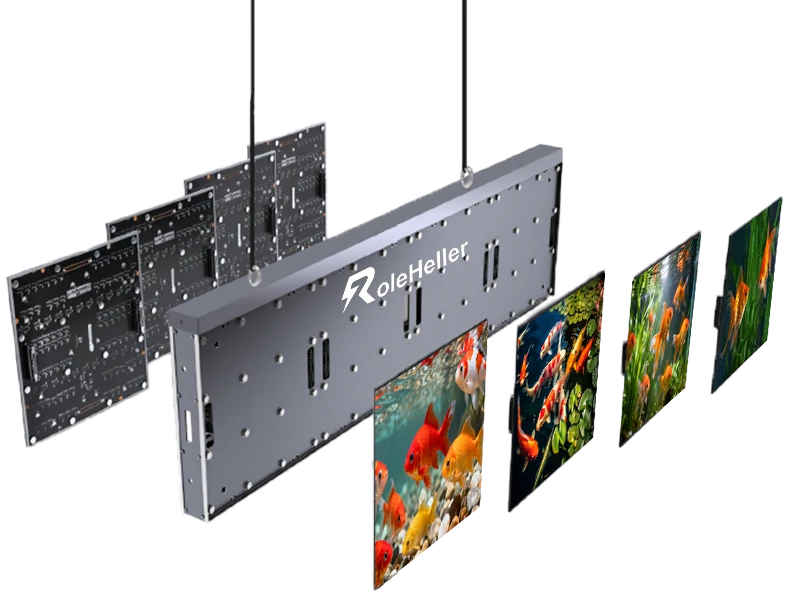
A stage wall is panels, controllers and signal distribution, power and cabling, plus flight cases and rigging hardware. Four separate disciplines. A factory can make excellent cabinets and still ship you signal chains that flicker under camera, or perfect panels packed in cases that split open on the second flight.
That is why two quotes look identical and differ by forty percent. The gap lives in the bits nobody photographs.
| Spec item | Budget quote | Decent quote | Why it matters on a live show |
|---|---|---|---|
| Cabinet material & flatness | Thin die-cast, tolerance loose | Precision die-cast, flatness within ~0.1–0.2 mm, tight-lock mechanism | Seams show up on camera before the audience notices anything else |
| Weight per panel | Not stated or optimistic | Real figure with handles, typically 7–12 kg for rental cabinets | Rigging points and labour depend on this; understated weight causes real problems |
| Refresh rate | 1920 Hz claimed | 3840 Hz+ with high grey scale | Below this, broadcast and phone footage shows rolling bands and colour shift |
| Brightness | High number, no control | 800–1500 nits indoor with smooth dimming curve | Stage walls run dim; poor low-grey performance makes dark scenes band and posterise |
| Power supply | Single, no-name, near full load | Redundant or oversized, Mean Well/Sosen class, hot-swap preferred | One supply dying mid-show should not kill the whole cabinet |
| Service access | Rear service only | Front AND rear service | On a tight stage with no access behind, rear-only service means dismantling the set |
| Signal | Daisy chain, no backup | Main + backup loop, spare cards, auto switchover | A failed card should not end the show |
| Flight cases | Thin plywood, basic latches | Reinforced cases with wheels, foam, stackable, labelled per position | Cases take more abuse than the panels; cheap cases destroy good panels |
| Spares | None included | Spare modules, PSUs, receiving cards, cables, tools, all labelled | This is what saves a show |
Notice neither table has a price in it. That is deliberate. Price follows spec, and if you let the supplier write the spec you will never know whether you saved money or simply bought the wrong wall.
Send these together and watch two things: how fast the reply lands, and how concrete it is. Speed does not prove quality. Vagueness proves quite a lot.
Can I see a live video call of the production floor right now?
Not a recorded tour. Live. Ask them to walk to the ageing test area and read a serial number off a running cabinet. Brokers send PDFs and say the engineer is out today. A real factory does this without drama during their working hours.
Which exact LED brand and driver IC are in this quote?
If the answer is "high quality brand, we can arrange", move on. Factories name parts because they hold purchase orders for them. Trading companies speak in adjectives.
What is the real refresh rate and grey scale, and can you show me footage shot on a phone?
Anyone can put a number on a datasheet. Ask for a video filmed with a phone camera at the factory showing the wall at low brightness. Low-grey performance is where budget panels fall apart on stage, because most of a show runs well below full white.
Do you understand the difference between rental and fixed cabinets?
Ask them to explain the difference back to you. If they describe weight and flatness and locking mechanisms, good. If they describe size and price, less good.
Will you include a spares kit and label it by function?
At minimum spare modules from the same batch, spare power supplies, spare receiving cards, extra cables and locks, and the tools needed to swap them. A wall going down twenty minutes before doors is not fixed by an email chain. It is fixed by a spare sitting in the case.
Can I speak to two customers who tour with your cabinets?
Then contact them and ask one question only: what broke, and how fast could you get it fixed on the road. You will learn more from that answer than from any certificate image.
Do your certifications sit in your own company name?
CE, RoHS, and for outdoor festival work, proper IP rating with a test report. A PDF proves nothing; the number can be checked on the registrar's site. People skip this and then wonder why freight or customs held the crate.
What pixel pitch do I actually need for a stage?
Work backwards from the nearest audience distance and whether it will be filmed. Rough rule: minimum comfortable viewing distance in metres is close to the pitch number. P3.9–P4.8 covers most concert and corporate work where the front row is five metres back and cameras are in play. P2.6–P2.9 for closer viewing, TV studios, theatre prosceniums, and anywhere the lens will be tight on the wall. P6 and above for large outdoor festival stages where the audience starts forty metres back. Buying finer pitch than you need costs more, adds weight, generates more heat, and gives you nothing the audience will perceive. Buying coarser pitch than you need shows up immediately on camera and there is no fixing it in post.
Does refresh rate really matter if nobody is broadcasting?
Yes. Someone will always film it. Even if the house camera does not catch it, a fan in row three will post a ten-second clip and that clip becomes your marketing whether you like it or not. Go 3840 Hz or higher when the budget allows, and prioritise good low-grey performance over raw brightness. This is the item most often cut to hit a price, and the one audiences notice most without knowing why.
How bright should a stage wall be?
Much less than you think. Indoor stage walls typically run a few hundred to around 1500 nits depending on the room, and for most shows you will be driving them well below maximum. What matters is not the top number but how cleanly the wall dims. Cheap panels band, shift colour, and lose detail in the darks when pulled down. Good panels hold the image together at ten percent. Ask specifically about low-grey calibration and whether the wall has been calibrated per module.
Front service or rear service?
Both, ideally. On a real stage there is often no room behind the wall and no time to fly it out. Front-service capability lets you swap a module from the audience side in minutes. If the quote is rear-service only, confirm exactly how much clearance is needed and build that into the set design now, not on load-in day.
What about outdoor festivals?
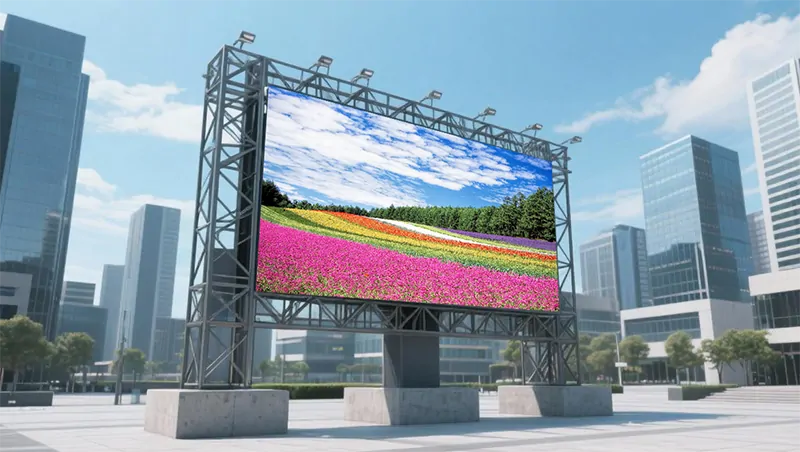
Then IP rating, wind loading, and sun load become the main conversation. You need a verified protection rating with a test report, proper sealing, and a structural plan that accounts for wind. Also plan for the fact that outdoor brightness needs are much higher and heat buildup in direct sun is brutal. Fine-pitch outdoor stage walls exist but they are a specialist job; treat any casual offer with caution unless they can show you verifiable installed cases.
Curved and creative shapes — worth it?
They transform a set when used with restraint. Flexible modules, curved cabinets, and custom geometries let you build arcs, columns, rings, and reveals that a flat wall cannot do. But they demand more from calibration, more from the content designer, and more from the rigger. Use a curve because the creative requires it, not because the brochure made it look exciting. And confirm lead time early, because creative formats rarely sit in stock.
Should I buy or rent?
If the wall moves more than a handful of times a year, or if this is for a single production, renting is usually the smarter play. Rental stock is built heavier, serviced between jobs, and comes with a crew who know how to align it fast. Buying makes sense when you have regular, predictable use, in-house technical staff, storage space, and a plan for maintenance. A very common mistake is buying a cheap wall for a one-off show: the money is spent, the show ends, and you own a lot of heavy boxes with nowhere to put them. Rent first, learn what size and what content actually works, then buy with knowledge.
Write your usage facts down first. Indoor or outdoor, audience distance, whether it will be broadcast, hours of operation per day, how often it moves, venue door and lift sizes, available rigging points and weight limits, local power standards, who operates it, and whether the content is ready. The tighter this list, the more comparable the quotes become.
Get three configuration sheets and compare line by line. Compare total price for the same configuration, not total price alone.
Lock the mechanical details. Cabinet dimensions, weight per panel, number of panels per case, total wall weight, locking type, rigging hardware included, and whether the cases stack safely.
Confirm signal architecture. Main and backup paths, processor compatibility, spare cards, cable lengths, and whether the system supports the resolution and frame rate you need.
Write the warranty in operational language. Response time, who pays freight on replacement parts, whether labour is covered, and whether support is available across your time zone during show hours.
Insist on a spares kit in the same shipment. Modules from the same production batch, power supplies, receiving cards, cables, locks, and tools. Labelled.
Arrange inspection before shipping. A third-party check at the factory catches mislabeled pitch, wrong components, missing spares, dead pixels, and case damage before the crate is sealed.
Confirm paperwork early. HS code, duty rate, electrical compliance, and any carnets needed for touring across borders.
Test on arrival and again at rehearsal. Build the full wall, run it for an extended period, check seams at low brightness, verify backup signal switchover, and actually swap a module using the spares kit.
Seams appearing or worsening over time points to cabinet flatness and locking mechanism quality — that cannot be adjusted away, only replaced. Rolling bands on camera means refresh rate or driver IC was cut. Colour shift and banding in dark scenes means poor low-grey calibration. Dead rows after a few months usually points to connector and cable quality rather than the LEDs themselves. Power supplies dying in clusters means undersized units running hot. Panels arriving cracked means the flight cases were inadequate. Each symptom maps to a corner that was cut. Knowing the map stops you accepting "just bad luck" as an explanation. It was not bad luck.
A brilliant wall playing dull content looks like a dull wall. Resolution earns about three seconds of attention; the creative decides whether anything sticks. Design for the actual viewing distance and for the camera, keep text minimal, use high contrast, and build movement that reads from the back row. Also plan for changeover: a wall saying the same thing in July as it said in March has stopped working even though it is still powered. Money spent on the content designer usually beats money spent on chasing one more parameter tier, and it costs far less than an extra panel.
Also worth saying: give your operator a simple template set and a clear cue sheet. The person running the wall at midnight on a Sunday should not need to interpret the designer's intentions.
Do not delete the spares kit to save money. It pays for itself the first time it saves a show.
Do not accept "we will match the colour later" on spare modules. Same-batch spares shipped with the order are the only reliable path to long-term uniformity.
Ask whether the supplier can provide a scaled-down demo or a visit to a local installation before you commit. Seeing and touching a wall beats any amount of brochure reading.
Confirm the wall's minimum dimming level and ask for it to be demonstrated. If they cannot show you the wall at ten percent brightness, they probably have not calibrated it there.
Keep the original flight cases and foam for as long as you own the wall. Shipping panels without proper packing is how you turn a warranty claim into an argument about transit damage.
After looking at enough of these projects, the pattern is boringly consistent. The buyers who end up happy wrote down how the wall would actually be used before speaking to a single supplier — audience distance, whether it gets filmed, how often it moves, who builds it, how much time they get on load-in, what the power situation is, whether anyone will touch it. The buyers who end up disappointed started with price and worked backwards. Specs can be padded, photos can be borrowed, certificates can be faked, but usage cannot be faked. Lay those facts out first and the wrong manufacturers remove themselves, because they cannot answer properly. The right ones respond with specifics, ask questions back, and sometimes tell you that you asked for the wrong pitch entirely or that your rigging plan will not work. That last behaviour is the strongest signal in the whole process. A supplier willing to talk you out of a sale is usually the one who has loaded enough trucks to know where the problems hide.
Trust that instinct more than any badge on a website. And insist on the spares kit, the backup signal path, and a phone number that works at midnight. You will thank yourself eventually.
What should I look for in stage LED display manufacturers?
Prioritise experience with rental and touring cabinets, transparent component specifications (LED brand, driver IC, power supply), proven refresh rate and low-grey performance, precision cabinet flatness, proper flight cases, a documented spares policy, and verifiable customer references. Price should be compared on matching configurations only.
What pixel pitch is best for a stage LED wall?
P3.9–P4.8 suits most concerts and corporate events; P2.6–P2.9 for close viewing, TV studios, and theatre; P6+ for large outdoor stages. Choose based on the nearest viewer distance and whether cameras will be used, not on budget.
How much does a stage LED display cost?
Cost varies widely with pitch, cabinet type, refresh rate, cases, and spares. Rather than chasing a per-panel figure, request full configuration sheets from several suppliers and compare line by line. Renting is often more economical for occasional or one-off use.
Do I need 3840 Hz refresh for a stage wall?
If the wall will be filmed or photographed at all, yes. Below that, footage shows rolling bands and colour shift. Equally important is good low-grey performance, since stage walls spend most of their time well below full brightness.
Can stage LED walls be used outdoors?
Yes, but only with verified IP rating, proper sealing, and a structural plan for wind and sun load. Outdoor work demands higher brightness and better heat management. Treat any casual offer of fine-pitch outdoor stage walls with caution unless backed by verifiable installed cases.
Front service or rear service?
Both is ideal. Front service is essential when there is no access behind the wall. If the quote is rear-service only, confirm the required clearance and design the set around it before ordering.
What spares should come with the order?
Modules from the same production batch, spare power supplies, spare receiving cards, extra cables and locks, and the tools to swap them, all clearly labelled. For stage work this is not optional.
What warranty terms should I insist on?
At minimum two years on modules and control system, plus clarity on response time, who pays freight for replacements, whether labour is covered, and whether technical support is available in your time zone during show hours. Negotiate these explicitly.
How long does delivery take?
Standard rental cabinets often run four to eight weeks from deposit plus freight time; creative formats and custom sizes take longer, and peak season adds buffer. Plan from the date you need the wall built, not the date you pay.
What if a section of the wall fails during a show?
With a proper spares kit and a backup signal path, most faults are swap-and-go jobs that a trained crew can handle in minutes. This is why insisting on spares, redundant signal, and included technical support matters more than chasing the lowest price.