English
You have probably typed china led sign display manufacturers into a search bar at least twice already, clicked three results, closed them all, and still not known who to email. The quotes come back in hours, the photos look identical, everybody claims "factory direct price" and "ISO certified" and "ten years export experience", and somehow the cheapest option is also the one with the best English website. It does not add up. What makes it worse is that nobody tells you which question actually matters, so you end up comparing brightness numbers while the real risk is sitting somewhere else entirely — in the power supply brand they did not list, the way the cabinet is braced, whether the person answering your message is the factory or a trading company with a WeChat group of suppliers. This piece tries to fix that part. Not by listing factories — names would not help you much anyway — but by showing how to separate the ones who build from the ones who broker, and what to put in writing before money moves.
An LED sign lasts five to ten years outdoors. The purchase takes a few weeks. That mismatch is where most regret comes from, not from the pixel pitch. A panel that looks great at handover can lose thirty percent of its brightness in two summers if the heat design was lazy, and the company that sold it may have changed its name by then. So the honest first filter is not price, it is longevity evidence: how long has this factory been shipping to your market, and can you speak to someone who bought from them four years ago.
| What you're comparing | Low-end quote | Mid/high quote | Why the gap exists |
|---|---|---|---|
| LED lamp beads | Unknown or recycled bin | Nationstar / Kinglight / Cree tier | Colour consistency, decay rate, batch matching |
| Driver IC | Generic | Macroblock / ICN / Chroma | Refresh rate, grey scale, no flicker on camera |
| Power supply | No-name, single unit per cabinet | Mean Well / Sosen, redundant design | This is what fails first, always |
| Cabinet | Thin steel, plastic latches | Die-cast aluminium, IP65–IP68, sealed | Warping causes seams you cannot fix on site |
| Pixel pitch claim | "P4.8" but real density lower | True pitch, verified | A fake pitch looks fine in a showroom photo |
| Brightness | 4500 nits claimed | 5500–7000 nits with auto sensor | Noon sun exposure is where cheap signs disappear |
| Control system | Basic card, USB only | NovaStar / Colorlight, remote + 4G | Remote scheduling saves trips, every time |
| Warranty wording | "1 year" no detail | 2–3 years, spare parts kit included | This is the clause that actually pays out |
Notice the table has no prices in it. That is deliberate. Price follows spec, and if you let a supplier set the spec you will never know whether you paid little or paid wrong.
Ask these in one message and watch how fast the reply comes back, and how specific it is.
Can I see a live video call of the production floor right now? Not a recorded tour. Live. Ask them to walk to the ageing test area and read a serial number off a running cabinet. A trading company will send you a PDF and say "our engineer is out today".
Which brand of LED bead and driver IC is in this exact quote? If the answer is "high quality brand" or "we can arrange", move on. Real factories name parts because they have purchase orders for them.
Can you give me three customer references in my country or region? Then actually contact them. Ask one question only: what broke, and how fast did they fix it. You learn more from that answer than from any certificate.
Is the screen produced in-house or assembled from purchased modules? Both models exist and both can be fine, but you need to know who owns the fault when a module dies in month fourteen.
Do you hold the certifications under your own company name? ISO9001, CE, RoHS, FCC, UL where relevant. A certificate image proves nothing; the number can be looked up on the registrar's site. People skip this step and then wonder why customs held their shipment.
Should I buy indoor or outdoor spec for a semi-outdoor space?
Go outdoor. Semi-outdoor — covered arcade, open-front shop, drive-thru canopy — still gets direct sun for part of the day and humidity all the time. Indoor cabinets are not sealed, they run cooler and cheaper, and they will fog up or warp. Paying extra now costs less than replacing in year two.
Is higher brightness always better?
No, and this is where a lot of buyers overspend. You want enough brightness to beat noon sun, roughly 5500 to 7000 nits for full sun, plus an auto light sensor that brings it down at night. Running a panel flat out at 8000 nits after dark draws complaints, wastes power, cooks the LEDs, and shortens life. The sensor matters more than the top number.
What pixel pitch do I actually need?
Work backwards from viewing distance, not from budget. A rough rule: minimum comfortable viewing distance in metres equals the pitch number. P4 means people need to stand about four metres away for it to look solid. If your audience passes at twenty metres, P10 reads just as well and costs far less. If they queue at two metres, go P2.5 or P3 and stop trying to save money there, because at close range a coarse pitch looks exactly like what it is.
Single colour, dual colour, or full colour?
Full colour RGB is the default now and the price gap over dual colour has narrowed enough that choosing anything else needs a reason. The reason would be: text-only messaging, very long viewing distance, or extreme budget. Full colour lets you use video, logos, and animation, and video holds attention longer than scrolling text. That is not a style opinion, it is what the eyeball does.
Fixed installation or something mobile?
If the sign moves — truck mount, trailer, pop-up — vibration becomes the main enemy, not weather. You need reinforced cabinets, proper damping, and connectors that lock. Standard fixed-install cabinets on a moving vehicle will develop dead rows within months. Say it is mobile up front, because a supplier who does not specialise in mobile will not tell you this.
These are the things worth writing into the quotation itself, because they do not appear unless asked.
Spare parts package. Ask for at least three spare modules, one spare power supply, one spare receiving card, and the exact tools needed to swap them. Insist they come in the same container, labelled. A sign going dark on a Friday night is not solved by an email chain, it is solved by a spare sitting in your store room.
Brightness and colour calibration report. Factory calibration per batch keeps colours consistent when you add modules later. Without it, a repair patch looks like a patch forever.
Software and control access. Make sure you get the control software, a licence that does not expire, and login credentials. Some deals leave the buyer dependent on the supplier for every content change. That is a trap disguised as service.
Mounting structure and wind load. The sign itself is often quoted cleanly while the steel behind it is vague. Get a structural drawing, wind rating, and anchor details suited to your local code. This is also where safety lives; a falling sign is not a warranty issue, it is a liability issue.
Installation and commissioning. Decide before signing whether installation is local or supplied. Flying a technician out costs money but saves mistakes; doing it locally saves money but requires clear instructions and a video call on the day. Both work, both fail, the difference is preparation.
Standard practice is a deposit with balance against copy of bill of lading, or better, against a pre-shipment inspection report you commission yourself. Do not skip inspection. A third-party check at the factory, one or two days, costs a few hundred dollars and catches mislabeled pitch, wrong power supplies, and missing spares. It is the cheapest insurance you will buy.
On paperwork: confirm HS code, duty rate, and any local electrical compliance before the goods ship, not after. Signs with integrated electronics get questioned at borders more often than people expect, and storage fees at the port accumulate faster than arguments resolve.
Also, spell out the warranty in operational terms: response time, who pays freight on replacement parts, whether labour is covered, and whether a failed module gets replaced or repaired. "Two years warranty" with no detail means nothing once you are six time zones apart.
Dead rows appearing after a few months usually point to connector or cable quality, not the LEDs themselves. Patchy colour across the face points to mixed batches or no calibration. Cabinets that bow and create visible seams point to thin material and poor rib design — this cannot be fixed, only replaced. Flicker visible on phone cameras points to a cheap driver IC. Power supplies dying in clusters points to undersized units running hot in a sealed cabinet. Each symptom maps to a cost corner that was cut, and knowing the map stops you from accepting "just bad luck" as an explanation. It was not luck.
If the sign is for a single campaign, a season, or a location you might lose, rent. Rental stock is built heavier, serviced between jobs, and comes with someone who knows how to rig it. Buying a cheap permanent sign for a temporary need is a familiar mistake: the money is spent, the lease ends, and you own a heavy object with no place to put it. Rent first, learn what content actually works at that site, then buy with knowledge instead of guessing.
A brilliant sign playing dull content looks like a dull sign. Brightness, pitch, and placement get you attention for three seconds; the creative decides whether anyone remembers anything. Put real money into the artwork and the motion design, keep text short, use high contrast, and change the message often enough that regular passers-by do not tune it out. This is also why remote scheduling matters — a sign that says the same thing in July as it did in March has stopped working even though it is still turned on.
After looking at enough of these deals, the pattern is boringly consistent: the buyers who end up happy are the ones who wrote down how the sign would actually be used before they spoke to a single supplier, and the ones who end up disappointed are the ones who started with price and worked backwards. Specs can be inflated, photos can be borrowed, certificates can be faked, but usage cannot be faked — how many hours a day it runs, what the sun does at that wall, who is allowed to change the message, whether there is a ladder, whether the landlord permits it. Lay those facts out first and the wrong suppliers remove themselves, because they cannot answer properly. The right ones respond with specifics, ask questions back, and sometimes tell you that you asked for too much or too little. That last behaviour is the strongest signal in the whole process. A supplier who pushes back on your spec is usually the one who has installed enough of them to know where the bodies are buried.
Trust that instinct more than you trust any badge on a website. And keep a spare module in the cupboard. You will thank yourself eventually.
What is the typical lead time from a China LED sign manufacturer?
Standard fixed signs usually run twenty-five to forty days from deposit to ex-factory, custom sizes or unusual pitches forty-five to seventy days, plus sea freight time. Peak season — roughly August to November — adds buffer, so plan from the date you need it working, not the date you place the order.
How do I verify a supplier is really a factory?
Live video walkthrough covering ageing test, soldering, and final assembly; certificate numbers checked on the registrar's site; and two or three customer references you contact yourself. Trading companies are not automatically bad, but you should know you are dealing with one and price accordingly.
What warranty terms should I insist on?
At minimum two years on modules and control system, clarity on whether freight for replacements is covered, a defined response window, and a spare parts kit shipped with the order. Anything shorter or vaguer is a negotiation point, not a dealbreaker, but negotiate it.
Can these signs be seen in direct sunlight?
Yes, provided brightness is in the 5500–7000 nit range and the panel has anti-UV treatment and an auto dimming sensor. Low-brightness indoor panels used outdoors will look washed out by mid-morning.
What is the realistic lifespan?
Well-built outdoor signs commonly deliver fifty thousand to one hundred thousand hours of rated life, which translates to roughly seven to ten years at normal daily use, with brightness gradually declining. Heat management and power supply quality determine where in that range you land.
Do I need planning permission or a permit?
Almost always yes for permanent outdoor installations. Size, illumination level, placement, and sometimes content rules apply, and they vary by city. Check with your local authority and your landlord before ordering, because a denied permit does not come with a refund.
How is content updated and who can do it?
Modern systems use PC software with USB, LAN, or 4G/5G remote update, and many support scheduled playlists and timed on/off. Staff can be trained in an hour or two; remote control is strongly recommended if the sign is not at your main office.
What is the difference between SMD and DIP?
SMD dominates now — better colour, wider viewing angle, suits closer viewing. DIP is older, brighter at long distance, and mostly found in very large pitch highway-style signs. For most commercial applications, SMD is the right choice.
How do I handle shipping, duty, and installation?
Suppliers commonly quote FOB or CIF; CIF gets it to your port but you handle import clearance and delivery. Use a forwarder experienced with electronic goods, confirm HS code and duty beforehand, and decide on local installation versus a visiting technician before signing.
What if something goes wrong after installation?
This is why the spare kit and the written warranty matter. Most faults — dead modules, failed power supplies, a bad receiving card — are swap-and-go jobs if you have the parts and basic instructions. Keep the supplier's technical contact handy and insist on video-call support being included, not offered as a favour.
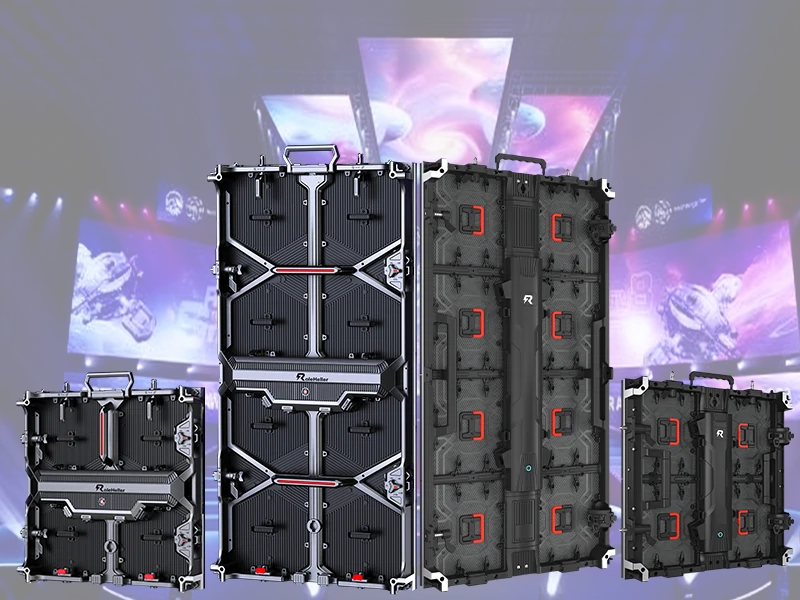
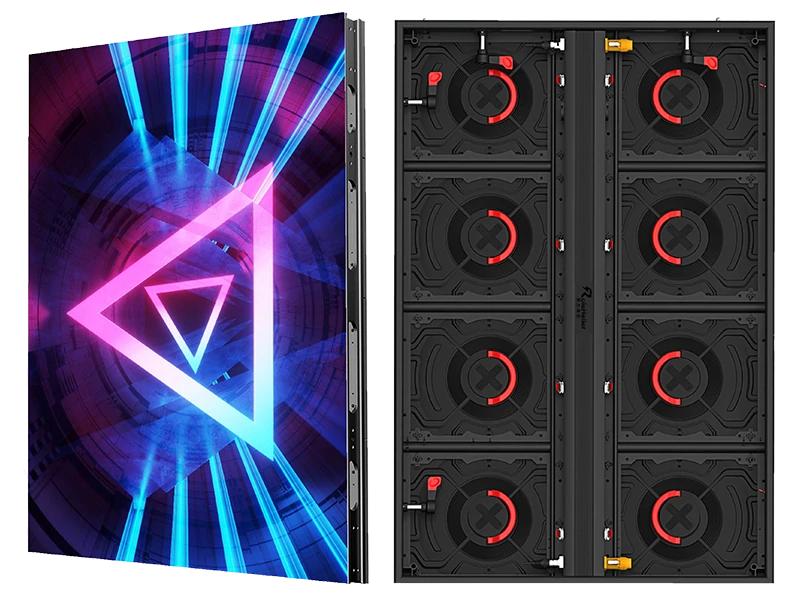
.jpg "How do you pick stage LED display manufacturers who won't let you down on show night?")
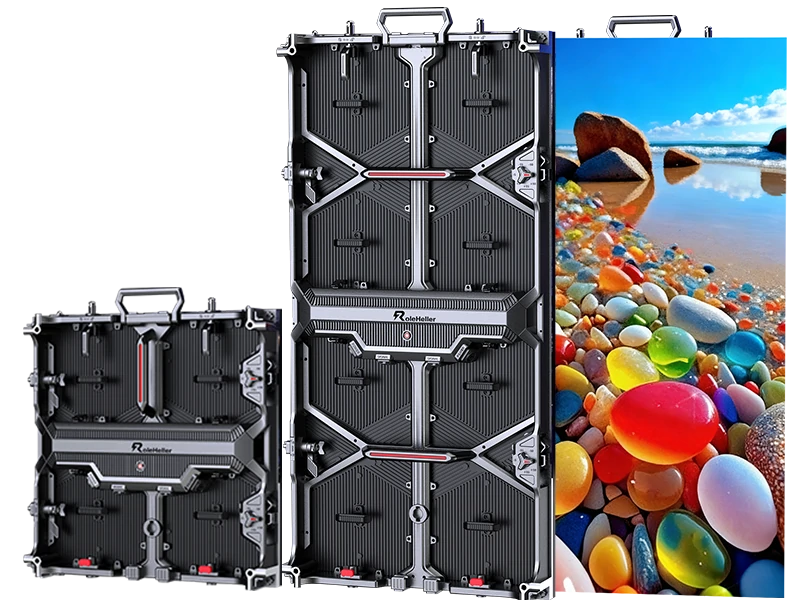
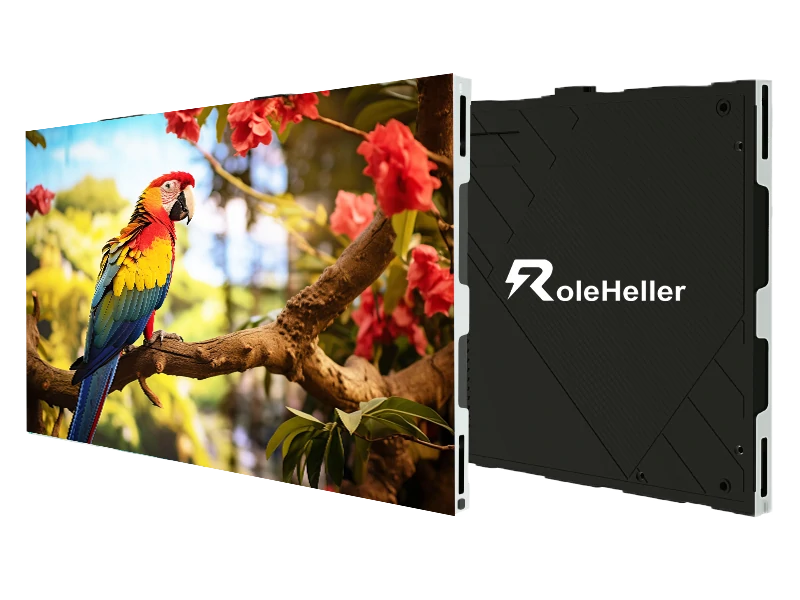
.jpg "P2.6 LED Video Wall Manufacturers | Price")