English
If you've been searching for wholesale P3 LED video wall manufacturers and getting lost between hundreds of nearly identical listings, you're not the only one dealing with this headache. I remember my first time trying to source P3 panels for a mid-size concert tour — I ended up with panels that looked perfect in the factory showroom but developed visible color banding after three weeks of outdoor use. Cost me a small fortune in replacements and a lot of sleepless nights. The thing is, P3 is one of the most popular pixel pitches for both indoor and outdoor stage applications, and the market is absolutely packed with manufacturers claiming to offer the best quality at the lowest price. But here's the reality: only a fraction of them can actually deliver on both promises simultaneously.
So what makes a reliable P3 LED video wall manufacturer stand out from the crowd? And more importantly, how do you avoid the costly mistakes that so many buyers make every single year? Let me break this down based on what I've learned over years of working directly with factories and helping buyers across North America and Europe get the panels they actually need.
P3 refers to a pixel pitch of 3 millimeters — meaning the distance between each LED pixel cluster is 3mm. This gives you roughly 111,111 pixels per square meter, which produces sharp, detailed images that look great from viewing distances of about 3 meters and beyond. The P3 pitch sits in what I'd call the "Goldilocks zone" of the LED display market — it's fine enough to deliver excellent image quality for most applications, but not so fine that the manufacturing costs spiral out of control.
The applications are broad, and this is where understanding your specific use case becomes critical:
Concert and event stages — P3 is the workhorse pitch for touring LED walls because it balances image quality with durability and cost
Corporate event spaces and conference halls — where audiences sit 5 to 15 meters from the screen
Houses of worship — P3 delivers readable text and clear video for medium-to-large sanctuaries
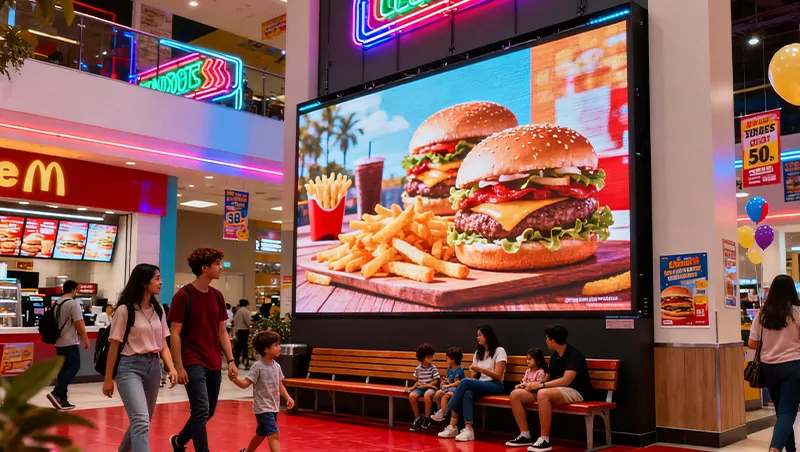
Retail environments and shopping malls — large-format advertising and brand displays
Control rooms and monitoring centers — where operators need clear detail without sitting right against the screen
Sports venues and arenas — scoreboard displays and supplemental content screens
The reason P3 gets chosen so often comes down to a simple equation: it delivers 90% of the visual performance of finer pitches like P2 or P2.5, but at a price point that's 30% to 45% lower. For most buyers who need panels that will be viewed from more than 3 meters away, P3 is the smart money choice.
I get asked all the time whether P3 is really the right choice, or whether buyers should go finer or coarser. Here's a comparison that should help clarify:
| Feature | P2.5 | P3 | P3.91 | P4.81 |
|---|---|---|---|---|
| Pixel Density (per m²) | 160,000 | 111,111 | 65,536 | 43,264 |
| Optimal Viewing Distance | 2.5m+ | 3m+ | 4m+ | 5m+ |
| Price per m² (USD) | $900–$1,400 | $650–$1,000 | $500–$800 | $400–$650 |
| Image Sharpness | Excellent | Very Good | Good | Adequate |
| Weight per Cabinet (500×500mm) | 7–9 kg | 7–8 kg | 6–7 kg | 5.5–6.5 kg |
| Best Use Case | Close viewing, broadcast | General stage, events | Large venues, outdoor | Large outdoor, long distance |
| Outdoor Suitability | Limited | Good (with proper IP rating) | Excellent | Excellent |
The takeaway here is straightforward. If your audience will be closer than 2.5 meters, go with P2.5 or finer. If they'll be 3 to 5 meters away, P3 hits the sweet spot. Beyond 5 meters, P3.91 or P4.81 saves you money without any noticeable quality loss at that distance.
This is the step where most buyers get burned, and I want to be really direct about it. The wholesale P3 LED video wall manufacturers market is absolutely swarming with trading companies that present themselves as factories. They'll have professional websites, factory photos (stolen from real manufacturers), and convincing sales pitches. But when it comes time to customize a product or handle a quality issue, you realize they have zero control over production.
Here's my vetting checklist that I've refined over years of sourcing:
Live video factory tour — Ask for a real-time video call where they walk you through the production floor. Not a pre-recorded video, not a virtual tour. A live call where you can ask them to point the camera at specific equipment. If they hesitate or make excuses, move on.
Own SMT lines — The surface mount technology lines are where LED beads and driver ICs get soldered onto the PCB boards. A real manufacturer will have multiple SMT lines running. Ask how many lines they operate and what brand of placement machines they use (Fuji, Yamaha, and Panasonic are the industry standards).
In-house cabinet fabrication — For P3 rental panels, you need die-cast aluminum cabinets machined to ±0.1mm tolerance. If the manufacturer outsources cabinet production, they can't guarantee the precision alignment that prevents visible seams between panels.
Aging test facility — Every quality panel needs 48 to 72 hours of continuous burn-in testing before shipping. This is where early-failure components get caught. No aging room equals no quality gate. Simple as that.
Monthly output capacity — For wholesale P3 LED video wall manufacturers serving international markets, I'd want to see at least 2,000 to 3,000 square meters of monthly production. Below that threshold, you're usually looking at a small workshop that might struggle with consistency on larger orders.
Certifications on file — CE, FCC, RoHS, and ETL/UL listings should be readily available. Ask for the actual certificate numbers so you can verify them through the issuing body's database.
I've developed a habit of asking manufacturers to show me their worst production day, not their best. The ones who are confident in their processes will happily oblige. The ones who aren't will suddenly become unavailable.
Not all quality control programs are created equal, and this is where you'll see the biggest differences between manufacturers who take pride in their output and those who just want to push volume out the door. The best wholesale P3 LED video wall manufacturers I've worked with implement these checkpoints:
Incoming LED chip inspection — Every batch of LED lamp beads gets tested for dominant wavelength (±1nm tolerance), luminous intensity, and forward voltage before entering production. This is where color consistency starts.
Post-SMT automated optical inspection (AOI) — Catches solder bridges, missing components, and misaligned parts immediately after the SMT process.
Module-level aging — Individual modules run for 24 hours before cabinet assembly to identify early failures at the component level.
Full-cabinet burn-in — Assembled cabinets run for another 48 to 72 hours with content cycling through various color temperatures and brightness levels.
Final calibration — Brightness and color get adjusted cabinet-by-cabinet to ensure visual consistency across the entire batch.
Here's a breakdown of what each stage actually catches:
| QC Stage | What Gets Tested | What Happens If This Step Gets Skipped |
|---|---|---|
| Incoming LED Inspection | Wavelength, brightness bin, voltage | Batch-to-batch color variation that's impossible to fix after assembly |
| Post-SMT AOI | Solder joints, component placement | Intermittent failures that show up weeks after deployment |
| Module Aging | Dead pixels, color shift, uniformity | Early-failure LEDs that become dead pixels in the field |
| Cabinet Burn-in | Full-system performance under load | Power supply failures and receiver card issues that only appear under sustained use |
| Final Calibration | Color temperature, brightness matching | Visible seams and color banding when cabinets are tiled together |
One thing I've learned the hard way — the module-level aging step gets skipped by some manufacturers who are trying to cut production time. It's tempting because it adds 24 hours to the timeline, but it's also the step that catches the majority of latent defects before they get sealed inside a cabinet. Skipping it is a false economy that always comes back to bite you.
Let's talk numbers because this is where expectations need to be grounded in reality. P3 panel pricing from China-based manufacturers varies based on cabinet size, component quality, brightness level, and order volume. Here's a realistic breakdown:
| Specification | Price per m² (USD) | Notes |
|---|---|---|
| Standard P3 indoor (SMD2121, 1000 nits, Novastar cards) | $650–$850 | Most common for corporate events, houses of worship |
| Standard P3 outdoor (SMD3535, 5000+ nits, IP65) | $750–$1,000 | For outdoor stages, building facades, stadiums |
| Premium P3 indoor (high-refresh 3840Hz, calibrated bins) | $850–$1,100 | For broadcast stages, live events with camera capture |
| Budget P3 (lower-grade LEDs, basic QC) | $450–$650 | Only recommended for non-critical short-term installations |
A critical note on what these prices include: The figures above typically cover LED display cabinets with modules, receiving cards, and power supplies pre-installed. They do NOT include video processors, sending boxes, mounting structures, signal cabling, flight cases, spare parts packages, or shipping. When you're budgeting a complete deployed system, plan to add roughly 35% to 55% on top of the panel-only cost for a fully functional installation.
I've watched buyers get excited about a quote that looks 30% cheaper than competitors, only to discover later that the lower price covered bare modules without cabinets or power supplies. Always confirm in writing exactly what's included in any quoted price.
Let me share some hard-won lessons. These are the mistakes I see buyers make over and over when sourcing P3 panels from wholesale manufacturers.
This is probably the single most common complaint. You order 15 square meters of P3 panels, they look great. Eight months later you need to expand, and the new batch has a visible color temperature difference next to the original panels. Here's what happens: LED lamp beads from different production batches can have slight wavelength and intensity variations. Even a 1 to 2 nanometer shift becomes noticeable when panels are tiled side by side. Reputable manufacturers address this by bin-sorting LEDs into tight wavelength groups (±1nm), maintaining detailed batch records so repeat orders pull from the same LED bin, and aging panels together for uniform brightness decay before shipment. When you place an order, specifically request all panels come from the same LED production batch, and put that in writing.
For P3 displays, dead pixel standards should be:
≤3 dead pixels per module
≤1 bright (stuck-on) pixel per module — bright pixels are far more visible than dead ones, especially on dark content
Zero dead pixels in the center 60% of any module
Some manufacturers quote "PPM ≤5" which sounds precise but can be misleading. Always clarify whether the spec applies per module, per cabinet, or per square meter.
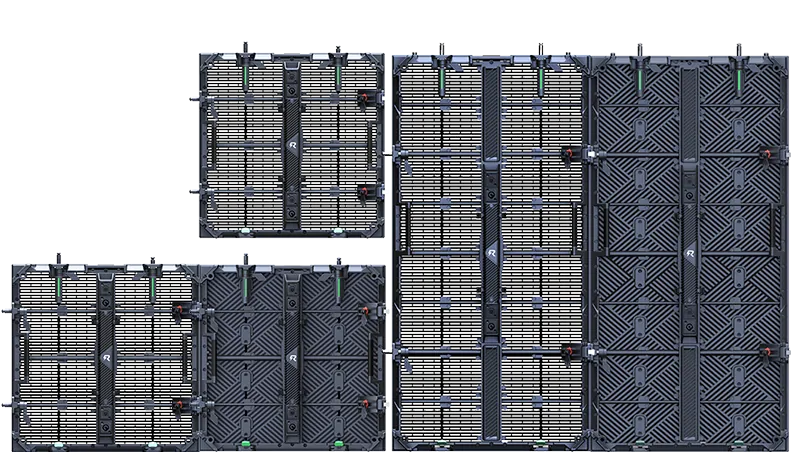
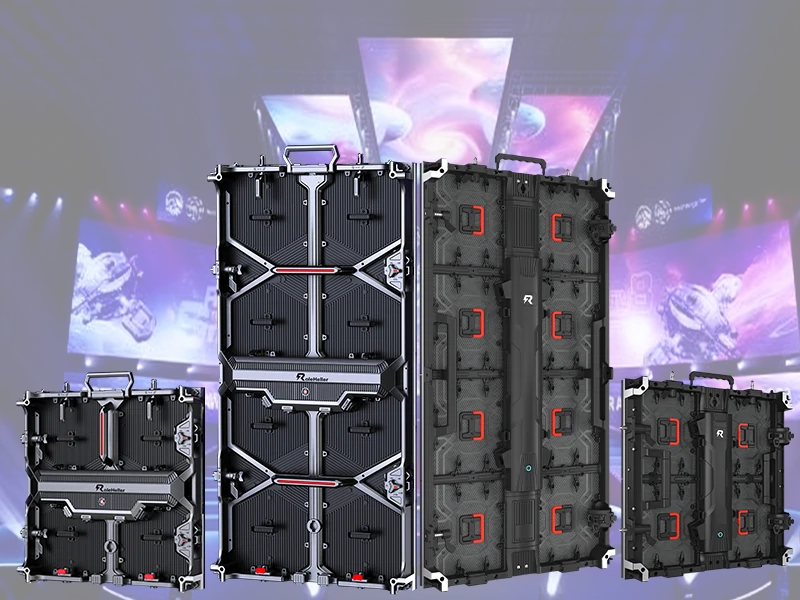
The cabinet is the skeleton of your LED wall, and cheap cabinets will cause problems no matter how good the modules are. For P3 rental panels, you need die-cast aluminum with precise machining (±0.1mm), tool-free fast-lock mechanisms, integrated rigging points rated for the cabinet weight, and adequate ventilation. I've seen P3 modules that were technically excellent get deployed in poorly designed cabinets, resulting in alignment issues, uneven seams, and overheating that negated all the benefits of the quality modules inside.
The major control platforms are Novastar (most widely adopted globally), Colorlight (strong value proposition), and Brompton Tessera (premium broadcast and virtual production). Make sure the receiving card model specified in your quote matches your preferred control system. Mixing platforms is possible but adds unnecessary complexity.
When purchasing from wholesale P3 LED video wall manufacturers, the panel price is only one piece of your total cost.
Sea freight (FCL) is the most cost-effective for orders over 10 m². A 20ft container holds roughly 30 to 40 square meters of P3 panels in flight cases, with transit times of 15 to 25 days to the US West Coast and 25 to 35 days to European ports. Air freight costs 4 to 6 times more but delivers in 5 to 7 days, usually only justified for urgent small orders.
Import duties: LED display panels typically fall under HS code 8528.59. US standard duty is around 0% to 5%, but Section 301 tariffs on Chinese-origin products can add 25%. EU standard duty is approximately 1.4% plus VAT. Always verify current rates with a licensed customs broker.
Spare parts: Order a spare parts package equal to 5% to 8% of your total panel quantity, including extra modules from the same batch, spare power supplies, additional receiving cards, and spare cables. This prevents a single failed module from becoming weeks of downtime.
The best wholesale deals don't come from one-off purchases. They come from building genuine relationships with manufacturers who understand your standards. Repeat buyers get priority production scheduling during peak season (Q3 through Q4), consistent LED batch allocation for color consistency, custom engineering support, better payment terms (moving from 100% upfront to 30% deposit / 70% before shipment), and dedicated account management.
I usually suggest starting with a trial order of 5 to 10 square meters to evaluate quality, communication responsiveness, and logistics reliability before committing to larger wholesale volumes.
From where I sit, the P3 LED video wall manufacturing landscape is in a genuinely interesting position. Production costs have dropped as volumes scaled, but quality variation between manufacturers has actually widened. You've got top-tier factories producing panels that rival any premium brand at a fraction of the cost, and you've got low-end workshops churning out panels that look fine on paper but fall apart in practice.
The buyers who consistently succeed are the ones who invest real time in due diligence. Visit the factory or do a live video tour. Request physical samples and test them in your actual environment. Build relationships based on transparency rather than chasing the lowest price per square meter.
If you're just starting to explore options, shortlist 3 to 5 manufacturers, get samples from each, and do a direct side-by-side comparison. Quality differences become obvious pretty quickly once you have actual panels running the same content. The extra time you invest upfront in evaluation will pay for itself many times over in reduced maintenance costs, longer panel lifespan, and fewer project headaches down the road.
Hope this guide helps you navigate the sourcing process with more confidence.
Most wholesale P3 LED video wall manufacturers set wholesale pricing thresholds at 5 to 10 square meters. Some offer wholesale rates from 3 m² for first-time buyers demonstrating repeat order potential. True factory-direct wholesale pricing typically starts at 10 m².
Well-manufactured panels carry a rated lifespan of 80,000 to 100,000 hours, roughly 9 to 11 years of continuous 24/7 operation. In typical commercial use running 8 to 12 hours daily, expect 15 to 20+ years before brightness degrades to 50% of original output.
P3 panels typically draw 120 to 350W per square meter during normal content display, depending on brightness settings and content. Peak consumption (full white at max brightness) can reach 500 to 750W/m². Plan electrical infrastructure based on peak figures with a 20% safety margin.
Request all panels be produced from the same LED bin — the same wavelength and brightness grouping. Reputable manufacturers maintain detailed batch records and can match repeat orders to your original LED bin. Always order spare modules from the same batch.
Most panels ship with receiving cards compatible with Novastar (most widely adopted globally), Colorlight, or Brompton Tessera systems. Specify your preferred control ecosystem when ordering so the manufacturer can install the correct receiving card model.
Industry standard is 2 years covering manufacturing defects in LED chips, driver ICs, power supplies, and PCB boards. Some premium manufacturers offer 3-year warranties. Confirm whether warranty covers on-site replacement or requires return-to-factory repair.
Panels with front-maintenance design and tool-free connections can be installed by trained AV technicians. However, post-installation calibration (color uniformity adjustment, brightness matching across cabinets) requires LED control software familiarity. For installations over 10 m², professional installation is strongly recommended.
Common methods include wall-mounted steel frames (most popular for fixed installs), floor-standing structures with base plates, ceiling-hung configurations using aluminum trusses, and recessed wall-mounted designs for seamless architectural integration.
P3 is the sweet spot for viewing distances of 3 to 5 meters. P2.5 is better for closer viewing (under 3m) but costs 30% to 50% more. P4 is a cost-effective option for viewing distances over 5m where the extra pixel density of P3 isn't necessary.
Quality panels typically need 20 to 30 working days for orders under 30 m². Larger orders (30 to 100 m²) may require 30 to 45 working days. During peak season (Q3 to Q4), lead times can extend by an additional 5 to 10 working days.
.jpg "How to Find Wholesale P1.2 LED Video Wall Manufacturers?")